
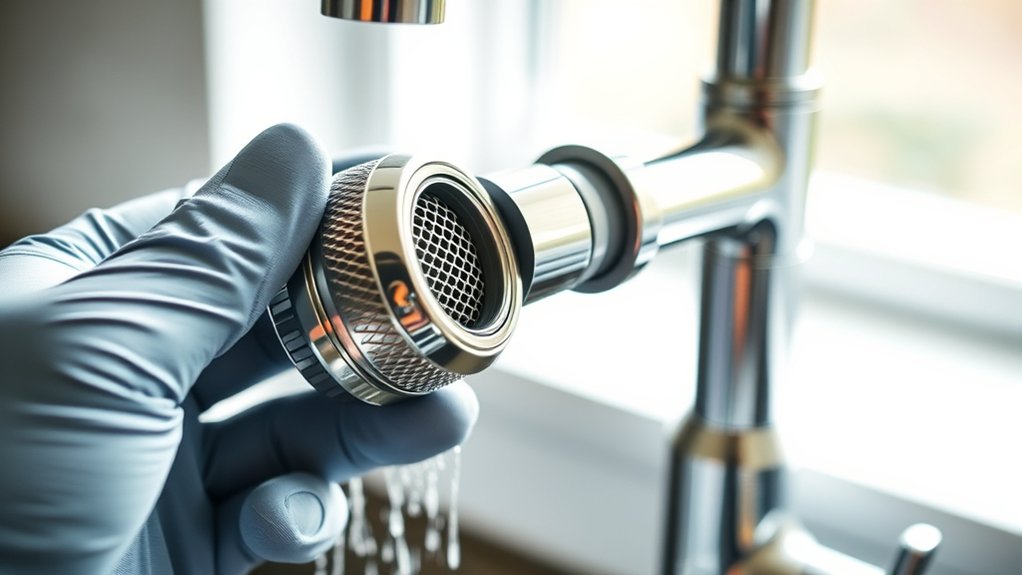
Not all faucet aerators are removable. Many common types, such as compression or cartridge aerators, can be unscrewed or have a removable cap for cleaning or replacement.
However, some models are molded directly into the faucet spout and cannot be taken off without special tools or disassembly. If you need to remove yours, start by looking for visible threads or a hex shape.
Knowing these details helps you maintain proper water flow and prevent damage.
There’s more to uncover on proper removal techniques and troubleshooting.
Key Takeaways
- Not all faucet aerators are removable; some are molded directly into the faucet spout and cannot be detached.
- Removable aerators typically have visible threads or a hexagonal shape for easy unscrewing.
- Fixed aerators complicate maintenance and usually require special tools or professional help to service.
- Identification of aerator type before removal helps avoid damage to faucet threads or body.
- Manufacturer guidelines often provide specific instructions for removable or fixed aerators on their faucets.
Common Faucet Aerator Types and How They Affect Removal
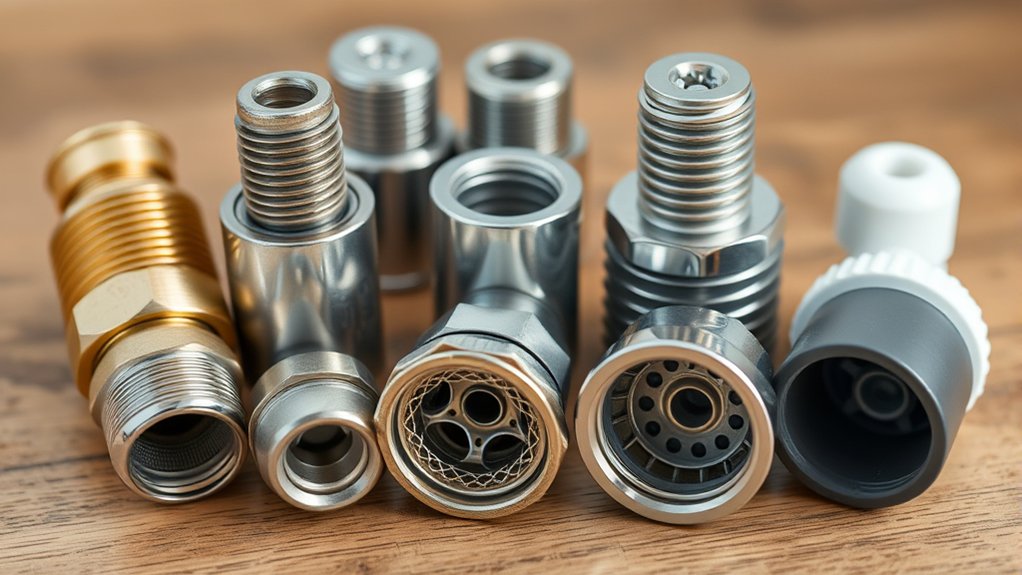
Although faucet aerators may look similar at a glance, their internal designs vary considerably, affecting how you remove them. Compression aerators, for example, use a threaded housing that compresses a rubber washer, securing the aerator tightly. You’ll typically unscrew these by hand or with a wrench, applying steady counterclockwise force.
Cartridge aerators, on the other hand, contain a replaceable internal cartridge that houses multiple flow components. These often require you to remove a retaining ring or cap before extracting the cartridge itself. Understanding these differences is essential because improper removal techniques can damage the aerator or faucet threads.
Always identify whether you’re dealing with compression aerators or cartridge aerators first, then use the appropriate method to avoid complications during maintenance or replacement.
Is Your Faucet Aerator Removable? How to Tell
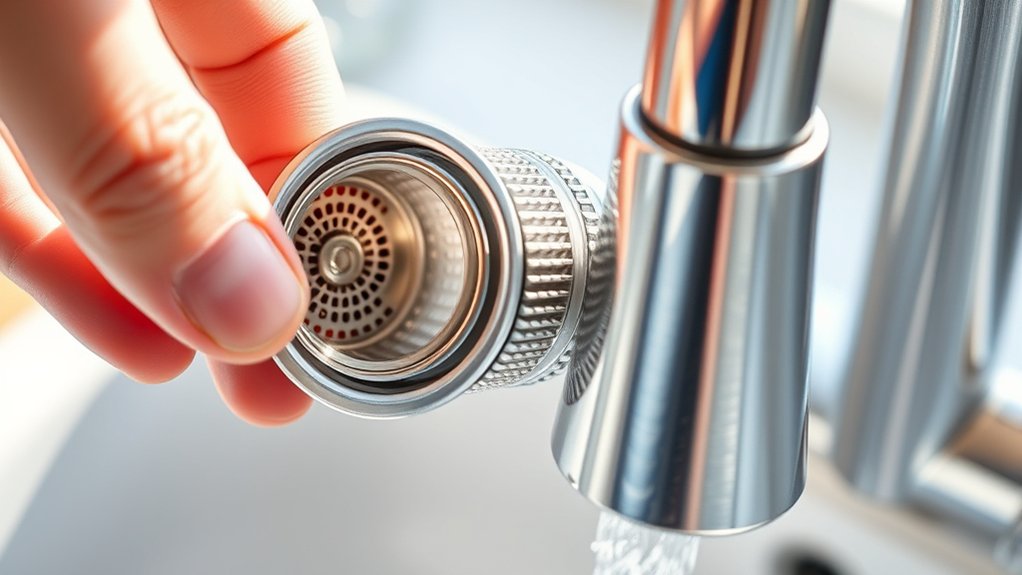
Knowing whether your faucet aerator is removable is the first step before attempting any maintenance or replacement. Most aerators are designed to be unscrewed for cleaning or upgrading, preserving aerator benefits such as water conservation and improved flow.
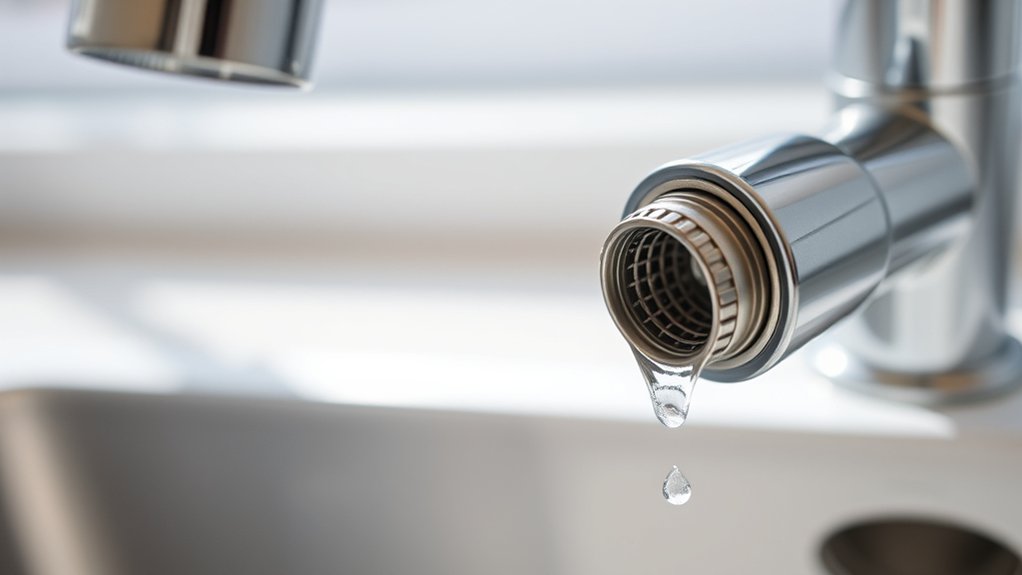
To determine removability, inspect the aerator’s edge. Removable types typically have visible threads or a hexagonal shape for tool grip. Fixed aerators may be molded directly into the faucet spout, complicating faucet maintenance.
| Feature | Removable Aerator | Non-Removable Aerator |
|---|---|---|
| Threaded Edge | Yes | No |
| Shape | Hexagonal or Round | Smooth or Integrated |
| Maintenance Ease | High | Low |
Verifying removability guarantees effective faucet maintenance and optimizes aerator benefits.
How to Remove a Stuck Faucet Aerator
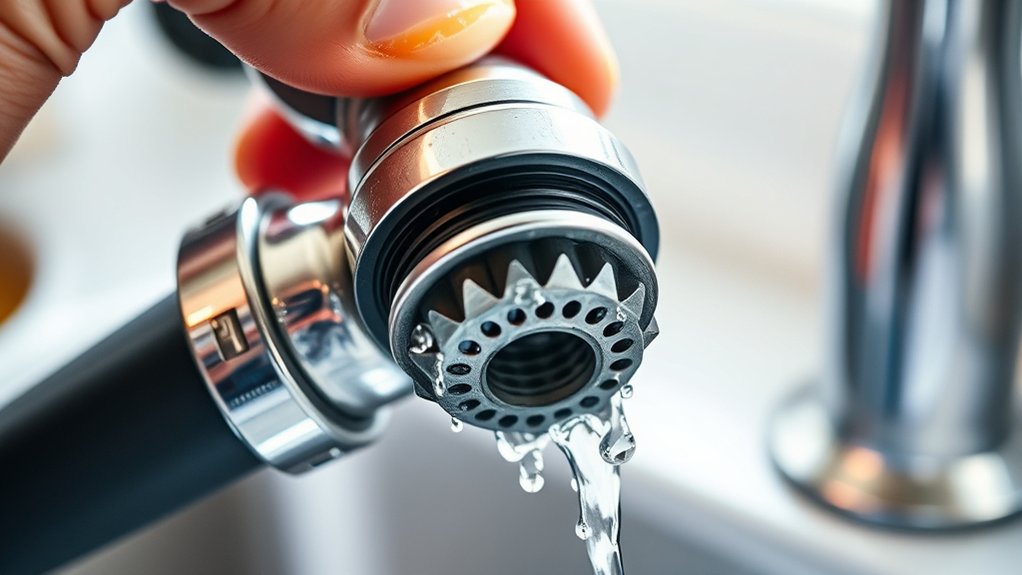
Removing a stuck faucet aerator requires careful application of the right tools and techniques to avoid damaging the fixture. Begin by selecting appropriate tools for removal, such as adjustable pliers or a strap wrench, which provide grip without scratching.
Apply penetrating oil to loosen mineral deposits, an essential aerator cleaning technique. Wait 10-15 minutes to let the solution work. Protect the aerator surface with a cloth before gripping to prevent damage. Then, gently turn counterclockwise to unscrew.
Key steps include:
- Use penetrating oil to dissolve deposits.
- Choose non-marring tools like strap wrenches.
- Protect the aerator with a soft cloth.
- Apply steady, controlled force to avoid stripping threads.
These aerator cleaning techniques and tools for removal guarantee safe, effective extraction without harm.
What to Do When Your Faucet Aerator Won’t Come Off
If your faucet aerator won’t come off despite using penetrating oil and proper tools, you’ll need to escalate your approach carefully to avoid damage. Begin by applying controlled heat with a hairdryer to expand metal components, which can loosen corrosion bonds.
Use a rubber strap wrench for enhanced grip without scratching the fixture. Avoid excessive force, which risks damaging threads or the faucet body.
If removal still fails, consider faucet maintenance tips like consulting manufacturer guidelines or a professional plumber. When removal is impossible, explore aerator replacement options that fit over the existing assembly or replace the entire faucet spout.
Documenting these steps guarantees you maintain faucet integrity while addressing stuck aerators efficiently and safely.
Frequently Asked Questions
Can Faucet Aerators Improve Water Conservation?
Yes, you can improve water efficiency with faucet aerators by reducing flow rate without sacrificing pressure. This lowers water consumption, lessening environmental impact and promoting sustainable water use in residential or commercial settings.
How Often Should I Clean My Faucet Aerator?
You should perform aerator maintenance by cleaning your faucet aerator every three to six months. This cleaning frequency prevents mineral buildup, guarantees ideal water flow, and maintains efficient water conservation performance in your plumbing system.
Do Faucet Aerators Affect Water Pressure?
Yes, faucet aerators affect water pressure by regulating water flow. Different aerator types control flow rates and spray patterns, so selecting the right one guarantees ideal pressure while conserving water efficiently in your plumbing system.
Can I Install a Faucet Aerator Myself?
Imagine tightening a standard compression faucet aerator using just an adjustable wrench. You can install various faucet aerator types yourself with basic installation tools like pliers, Teflon tape, and a cloth to prevent scratching during assembly.
Are There Filters Included in Some Aerators?
Yes, some types of aerators include built-in filters to trap debris. You’ll need regular filter maintenance to prevent clogging and maintain ideal water flow, especially in aerators designed for filtration or water purification applications.
Conclusion
Think of your faucet aerator as a gatekeeper controlling water flow—most are removable, but some cling tight like stubborn barnacles. By identifying your aerator type, you can confidently decide the best removal method.
When it won’t budge, applying the right tools and techniques will break its grip without damage. With careful attention and the right approach, you’ll master aerator removal like a pro.
Ensuring smooth water flow and hassle-free maintenance every time is possible once you understand that not all faucet aerators are removable.


Leave a Reply