
Are all faucet holes the same size? No, they are not. Most residential faucets fit holes about 1 3/8 inches wide, but sizes can range from 1 1/4 to 1 1/2 inches depending on the sink type and faucet style.
You’ll want to measure your sink’s holes carefully and check the manufacturer’s specs to guarantee compatibility.
Proper sizing helps prevent leaks and installation issues.
Keep exploring to understand how these variations impact your faucet installation process.
Key Takeaways
- Faucet hole sizes vary depending on sink type and faucet style, so not all holes are the same size.
- Most residential faucets typically require a hole diameter of about 1 3/8 inches (35 mm).
- Some sinks have hole sizes ranging from 1 1/4 inches to 1 1/2 inches, affecting faucet compatibility.
- Measuring existing holes before purchasing a faucet is essential to ensure a proper fit.
- Manufacturer specifications should be checked since hole sizes differ across brands and models.
Standard Faucet Hole Sizes You Should Know
When installing or replacing a faucet, you’ll need to know the standard hole sizes to guarantee a proper fit. Most residential faucets require a hole diameter of 1 3/8 inches (approximately 35 mm), which assures compatibility with the majority of sinks.
However, some kitchen or bathroom sinks may have holes ranging from 1 1/4 inches to 1 1/2 inches to accommodate different faucet designs. Understanding faucet hole dimensions is essential for sink compatibility. You’ll avoid leaks and installation issues by matching the faucet’s base to the sink’s holes precisely.
Always measure the sink’s existing holes before purchasing a faucet, and verify the manufacturer’s specifications for faucet hole requirements. This approach assures a secure and watertight installation without modifications.
Why Faucet Hole Sizes Vary: Sink Types, Faucet Styles, and Manufacturers
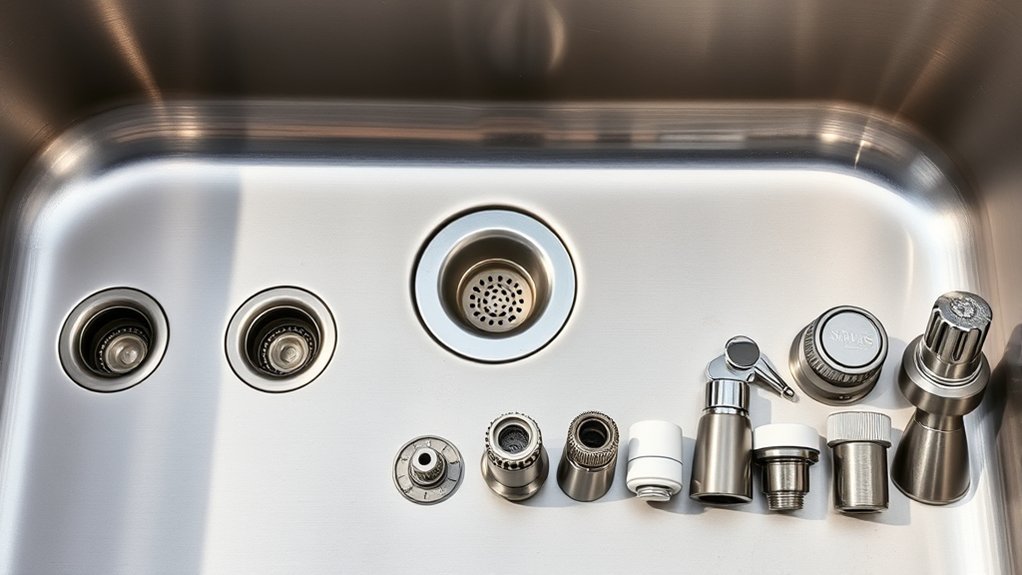
Matching the faucet hole size to your sink is just the starting point. Faucet hole sizes vary primarily because of differences in sink compatibility, faucet design, and manufacturer standards.
Different sink types, such as drop-in, undermount, or integrated, require specific hole sizes and configurations to guarantee proper installation and seal integrity. Meanwhile, faucet styles such as single-handle, widespread, or wall-mounted demand distinct hole counts and diameters that align with their functional components.
Manufacturers also implement varied hole sizing standards, influenced by regional norms and proprietary designs, which affects cross-brand compatibility. When selecting a faucet, you must consider both the sink’s hole layout and the faucet’s design specs to avoid misalignment or installation challenges.
Understanding these variables helps you achieve a secure, functional, and aesthetically coherent setup.
How to Measure Faucet Holes for Your Installation
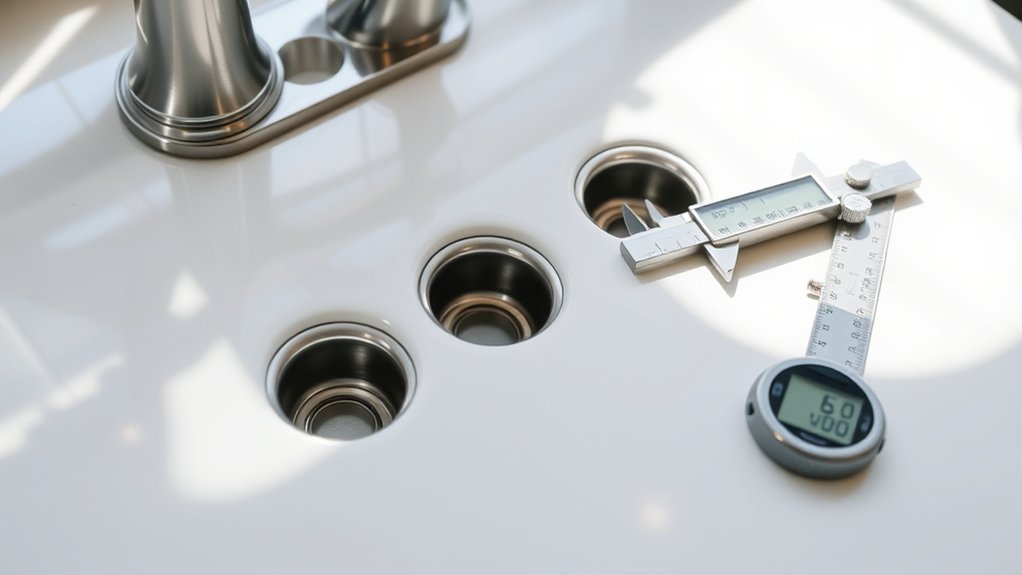
Accurately measuring faucet holes guarantees a seamless installation and prevents costly errors. To guarantee proper fit, follow these installation tips using the right measuring tools.
- Measure Hole Diameter: Use a caliper or ruler to determine the exact diameter of each faucet hole, noting variances if multiple holes exist.
- Check Hole Spacing: Measure the distance between the centers of adjacent holes to confirm compatibility with your faucet’s mounting specifications.
- Assess Sink Thickness: Measure the thickness of the sink deck around the holes, as this affects the length of faucet mounting hardware needed.
Preparing Your Sink for a New Faucet Installation
After confirming your faucet hole measurements, you need to prepare your sink to guarantee a secure and leak-free installation. First, clean the sink surface around the holes thoroughly to remove debris and old sealant.
Check the existing holes for any damage or irregularities, as these can affect faucet compatibility. If holes are too large or misshapen, consider using hole covers or mounting plates to ascertain a tight fit.
Next, apply plumber’s putty or silicone sealant around the faucet base area to prevent water infiltration during installation. Verify all sink components are dry before positioning the new faucet.
Proper sink preparation not only facilitates faucet compatibility but also minimizes the risk of leaks and instability, assuring your installation is both functional and durable.
Frequently Asked Questions
Can I Use an Adapter for Non-Standard Faucet Holes?
Yes, you can use adapter types like escutcheon plates or hole reducers for non-standard faucet holes. For smooth installation, guarantee precise measurements, clean surfaces, and secure fittings to prevent leaks and maintain stability.
Do Faucet Hole Sizes Affect Water Pressure?
Faucet hole sizes don’t directly affect water pressure, but they influence water flow. If the hole is too small, it restricts flow, making pressure regulation less efficient.
Proper sizing guarantees ideal water flow and pressure control.
Are There Universal Faucet Hole Covers Available?
Yes, you can find universal faucet hole covers made from various materials like stainless steel or plastic. Just follow installation guidelines carefully to guarantee a secure fit and prevent leaks or damage during setup.
How Do I Find Replacement Parts for Old Faucet Holes?
To find replacement parts for old faucet holes, first identify your faucet hole types precisely. Then, explore replacement part options from specialized plumbing suppliers or manufacturer catalogs to guarantee compatibility and proper fit for your vintage setup.
Can Faucet Hole Size Impact Sink Warranty?
Yes, faucet hole size can affect your faucet warranty implications. If you don’t meet installation requirements precisely, such as using the correct hole size, you risk voiding your sink’s warranty and facing costly repairs.
Conclusion
Not all faucet holes are the same size—standard holes typically measure 1 3/8 inches in diameter, but variations exist depending on sink type and faucet style. Knowing this is essential, especially since 60% of installation issues arise from incorrect hole sizing.
By accurately measuring your sink’s holes and understanding these differences, you’ll guarantee a smooth installation process and avoid costly adjustments or replacements. Always prepare carefully for a precise fit.
In conclusion, understanding that not all faucet holes are the same size is key to a successful faucet installation.




Leave a Reply