
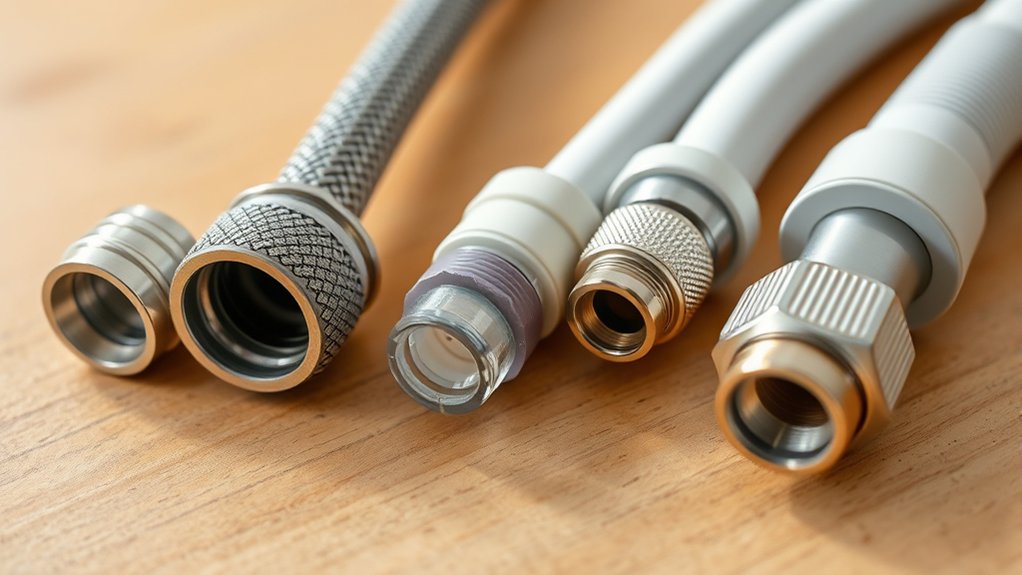
Are all faucet supply lines the same? The answer is no, because they differ in size, material, and connection type. You can’t use just any faucet supply line without considering these factors.
You’ll need to match the supply line’s diameter and connector style to your faucet and plumbing to guarantee a secure fit and prevent leaks.
Materials like braided stainless steel offer durability compared to plastic or vinyl options. Proper length and flexibility also matter for installation.
Understanding these factors helps avoid failures and guarantees performance.
Keep exploring to learn when and how to replace faucet supply lines effectively.
Key Takeaways
- Faucet supply lines vary in material, including braided stainless steel, plastic, and vinyl, affecting durability and suitability.
- Connection sizes differ, commonly 3/8-inch compression or 1/2-inch IPS, requiring compatibility with faucet and plumbing fittings.
- Length and flexibility vary; proper sizing prevents leaks and accommodates routing in tight spaces.
- Regional plumbing codes may restrict acceptable materials and connection types, impacting supply line selection.
- Signs of wear like corrosion, kinks, or leaks indicate the need for replacement, highlighting differences in lifespan and quality.
Types of Faucet Supply Lines and Their Uses
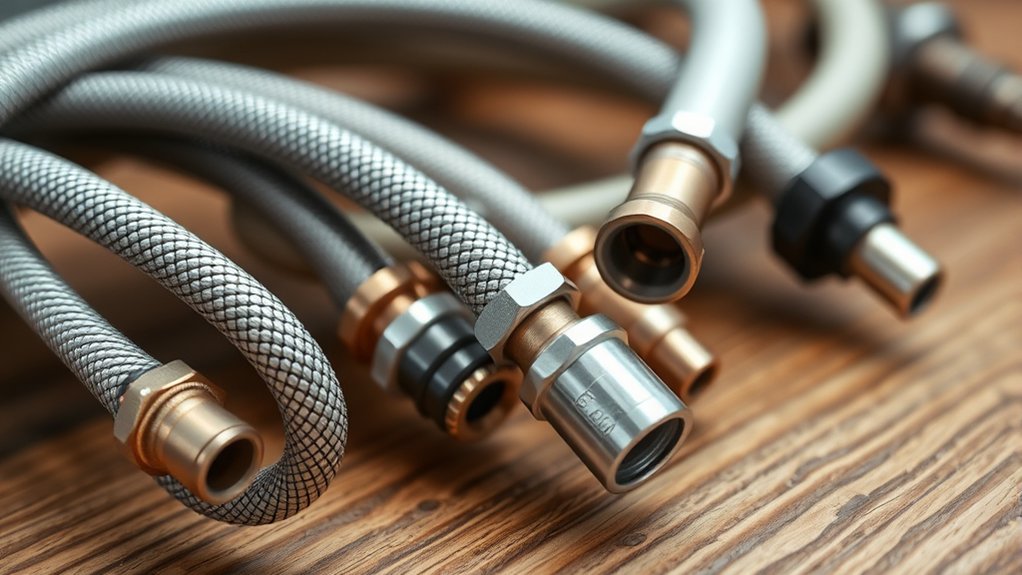
Faucet supply lines come in several types, each designed for specific installation needs and water sources. You’ll find braided stainless steel lines offering durability and corrosion resistance, ideal for modern plumbing. Plastic supply lines and vinyl hoses provide cost-effective, flexible connections, but they’re less durable and best suited for low-pressure systems.
When selecting supply lines, consider length and diameter compatibility to guarantee a secure fit. Installation tips include avoiding overtightening fittings to prevent damage and checking for leaks after connecting. Flexible connections simplify installation in tight spaces, but you must verify that they match your faucet’s thread size and water pressure requirements.
Choosing the correct type prevents future leaks and maintains water flow efficiency. Always inspect lines regularly and replace them if signs of wear appear.
How to Match Supply Lines to Your Faucet and Plumbing
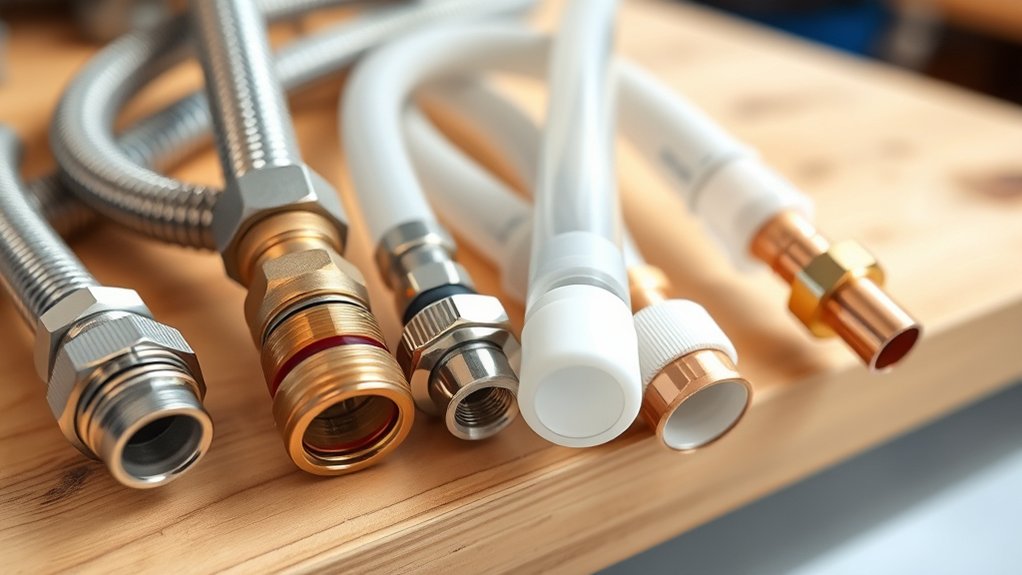
Selecting the right supply line means matching both the faucet’s connection type and your plumbing’s specifications. First, check your faucet compatibility by identifying the connection size and thread type, typically 3/8-inch compression or 1/2-inch IPS.
Next, verify your home’s plumbing standards to confirm the supply line’s connectors align with existing valves and pipes. Pay attention to regional plumbing codes, which may dictate acceptable materials and connection types.
Use a measuring tape to confirm inlet and outlet dimensions for a secure fit. Avoid assuming universal compatibility; mismatched fittings can cause leaks or installation issues.
Material and Length: What Matters for Performance and Durability
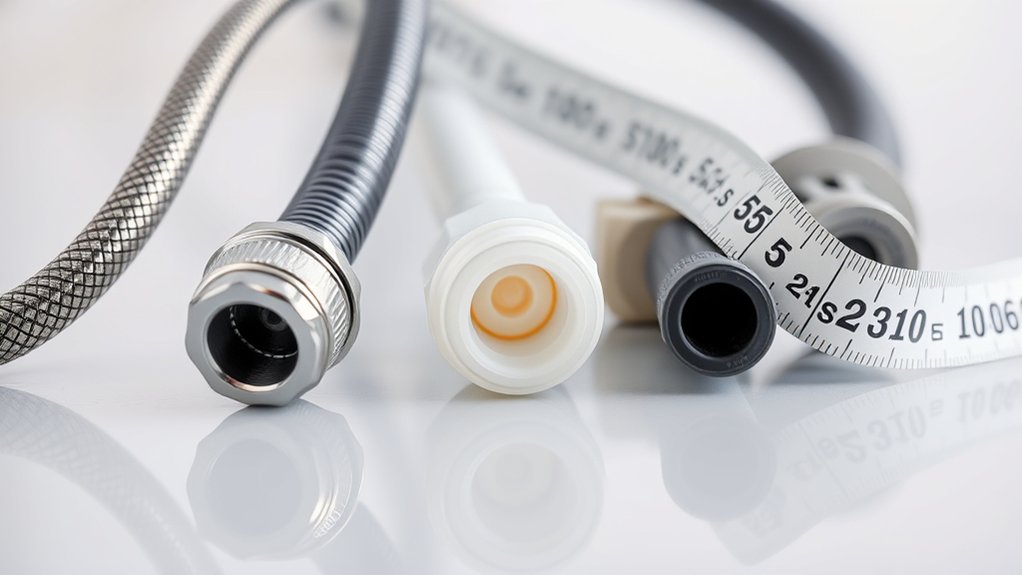
While choosing the correct material and length for supply lines might seem straightforward, these factors critically impact both performance and durability. You’ll want to take into account flexibility factors, as materials like braided stainless steel offer superior flexibility and resistance to kinking compared to rigid copper or PVC lines.
Selecting the proper length prevents unnecessary tension or slack, which can cause leaks or damage over time. When measuring, make sure you account for bends and routing paths.
For ideal installation, follow installation tips such as avoiding sharp bends and securing lines without overtightening fittings. Proper material choice combined with accurate length measurement guarantees reliable water flow and extends supply line lifespan, reducing maintenance needs and potential failure risks in your plumbing system.
When to Replace Faucet Supply Lines and How to Spot Problems
Because supply lines endure constant water pressure and environmental exposure, they can degrade over time and require timely replacement. You should watch for replacement indicators such as visible corrosion, kinks, bulges, or frayed outer coverings. Frequent leaks or water stains around connections also signal the need for replacement.
Common issues include internal rubber deterioration, which can cause reduced water flow or contamination. Additionally, stiff or brittle hoses lose flexibility, increasing rupture risk.
To spot problems early, inspect supply lines regularly, especially if they’re older than five years or if you notice fluctuations in water pressure. Replacing faulty lines promptly prevents water damage and maintains system integrity. Always select supply lines compatible with your faucet’s specifications for ideal performance and durability.
Frequently Asked Questions
Can I Install Faucet Supply Lines Myself Without Professional Help?
You can install faucet supply lines yourself by following faucet installation tips and DIY plumbing advice carefully. Confirm correct line size, use proper tools, and check for leaks to guarantee a secure, efficient connection without professional help.
Are There Any Eco-Friendly Faucet Supply Line Options Available?
You won’t find eco-friendly faucet supply lines made from plastic pretending to be sustainable. Instead, seek ones crafted from sustainable materials with eco certifications, ensuring durability and minimal environmental impact while maintaining technical performance and safety standards.
Do Faucet Supply Lines Affect Water Pressure?
Yes, faucet supply lines can affect water pressure and faucet efficiency. Narrow or kinked lines restrict flow, reducing pressure and performance.
Choosing appropriately sized, high-quality supply lines guarantees peak water pressure and maximizes faucet efficiency.
How Do I Prevent Faucet Supply Lines From Leaking?
Think of your faucet supply lines as veins; for leak prevention, you must regularly inspect and tighten connections. Replace worn washers and perform supply line maintenance to keep water flowing smoothly without drips or damage over time.
Are Braided Supply Lines Better Than Plastic Ones?
Yes, braided supply lines offer advantages like enhanced durability and resistance to kinks. Plastic lines have disadvantages, including vulnerability to cracking and bursting.
You’ll find braided lines provide more reliable, long-lasting performance for your faucet connections.
Conclusion
Not all faucet supply lines are the same—you need to take into account type, material, and length carefully. Choose braided stainless steel for durability, match connectors to your faucet and plumbing, and measure length precisely for a proper fit.
Replace supply lines at signs of wear, leaks, or corrosion to prevent damage. Regular maintenance helps avoid unexpected plumbing issues and keeps your system running smoothly.
By understanding these factors, you guarantee reliable water flow, avoid costly repairs, and maintain your plumbing system’s integrity efficiently and effectively. Knowing that not all faucet supply lines are the same is key to selecting the right one for your needs.

Leave a Reply