
Brita faucet filters are a popular choice for improving tap water quality. They use activated carbon and ion-exchange resin to effectively reduce chlorine taste, odor, lead, and other heavy metals. This process enhances your water’s flavor and safety.
These filters are easy to install without the need for special tools. They require filter replacement every two months or after filtering 100 gallons to maintain consistent performance.
While Brita faucet filters may not be the highest-end option on the market, they provide a balanced, cost-effective solution for everyday filtration needs.
Exploring further reveals how they compare to other water treatment methods.
Key Takeaways
- Brita Faucet Filters effectively reduce chlorine taste, odor, lead, and certain heavy metals for improved water quality.
- They use activated carbon and ion exchange resin to enhance water clarity and taste without altering mineral content.
- Filter cartridges last about 100 gallons or two months, requiring regular replacement for optimal performance.
- Installation is simple, tool-free, and includes clear instructions for quick setup and maintenance.
- Brita filters provide a cost-effective middle ground between basic tap water and expensive filtration systems.
Do Brita Faucet Filters Really Improve Your Water?
How effectively do Brita faucet filters enhance your tap water quality? These filters utilize activated carbon and ion exchange resin to reduce chlorine taste, odor, and certain particulates, thereby improving water quality.
You’ll notice a measurable difference in clarity and taste, though mineral content generally remains unaffected. The filter lifespan typically spans around 100 gallons or approximately two months, depending on water hardness and usage frequency.
Maintaining the recommended replacement schedule guarantees consistent filtration performance and prevents bacterial buildup. While the system doesn’t alter pH or remove all contaminants, it provides a reliable improvement in everyday tap water quality for most municipal supplies.
What Key Contaminants Do Brita Faucet Filters Remove?
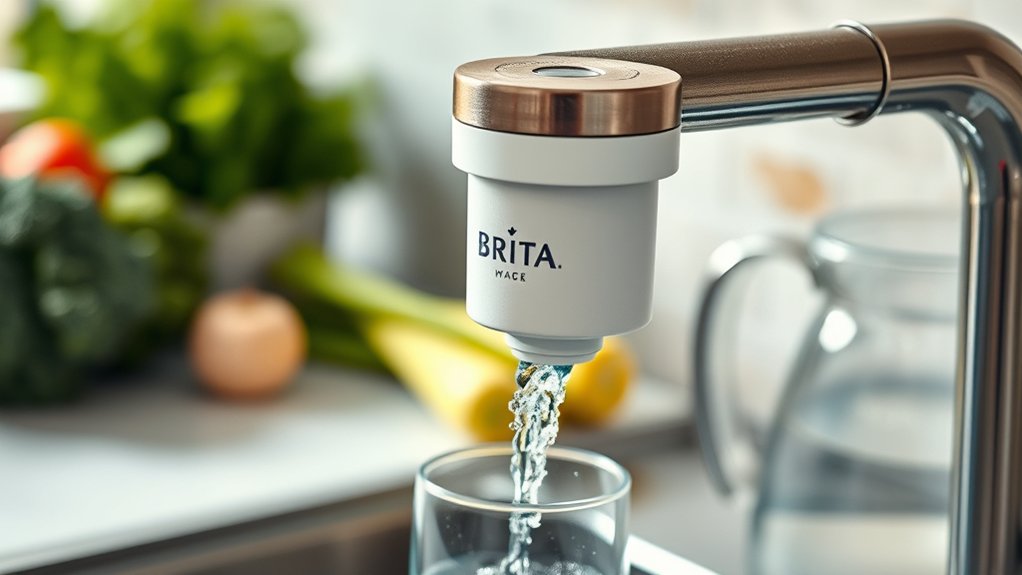
Understanding the specific contaminants that Brita faucet filters target helps clarify their impact on water quality. These filters primarily focus on reducing chlorine taste and odor, which greatly improves drinking water palatability.
In addition, they effectively reduce lead, a toxic heavy metal, through ion exchange and activated carbon. Brita filters also target other common contaminants like mercury, cadmium, and certain particulates, enhancing overall water safety.
Their contaminant removal relies on a combination of activated carbon and ion-exchange resin, which adsorb impurities and trap metals. Filter effectiveness depends on factors such as water quality and filter maintenance, but independent tests confirm considerable reductions in these key contaminants.
How Easy Is It to Install and Maintain Brita Faucet Filters?
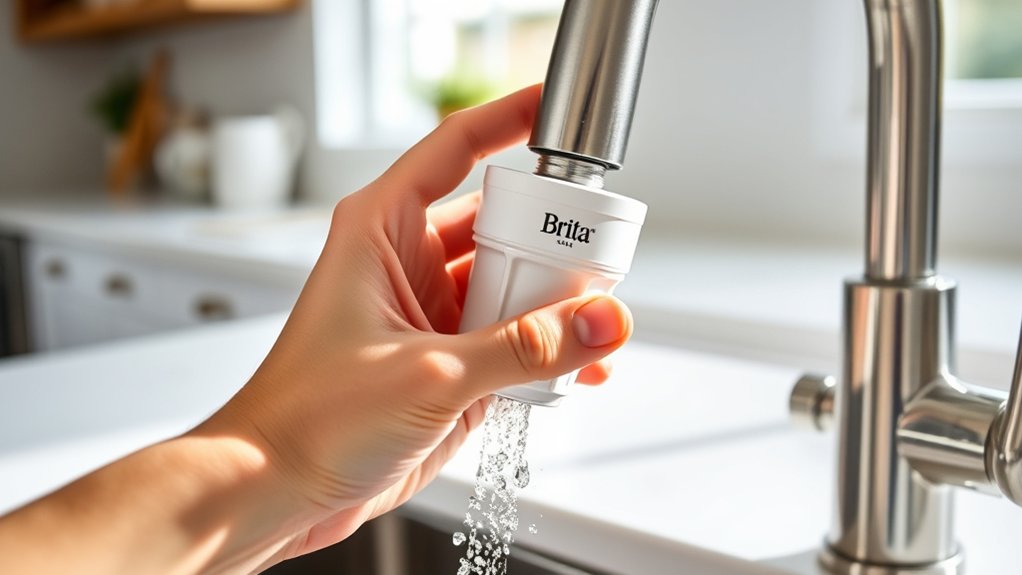
Installing and maintaining Brita faucet filters requires minimal effort, making them accessible for most users. The installation process involves removing your existing aerator, attaching the Brita adapter, and securing the filter unit to your faucet. No specialized tools are needed, and clear instructions guide you through each step, ensuring a straightforward setup.
For maintenance, Brita recommends replacing the filter cartridge approximately every two months or after filtering 100 gallons of water. To optimize performance, follow maintenance tips such as regularly cleaning the exterior and checking for leaks around connections. Resetting the filter indicator after each cartridge change helps track usage.
Are Brita Faucet Filters Worth the Cost Compared to Other Options?
When comparing Brita faucet filters to other filtration options, you’ll want to evaluate their cost-effectiveness based on factors like initial price, filter lifespan, and filtration capabilities. A thorough cost analysis shows Brita filters typically have a moderate upfront cost and a filter lifespan of approximately 100 gallons, which balances replacement frequency and expense.
Their filtration performance effectively reduces chlorine, lead, and particulates, but may fall short against contaminants addressed by more advanced systems. Alternative solutions like under-sink reverse osmosis units offer superior filtration but at a considerably higher price and installation complexity. Pitcher filters are cheaper but less convenient.
Ultimately, Brita faucet filters provide a middle ground, offering reliable water quality improvements with moderate ongoing costs, making them worth considering if you prioritize ease of use and consistent maintenance over maximum contaminant removal.
Frequently Asked Questions
How Long Does a Brita Faucet Filter Typically Last?
A Brita faucet filter’s lifespan typically lasts about 2-3 months or 100 gallons. You’ll want to follow maintenance tips like regular replacement to guarantee ideal filtration performance and avoid reduced water flow or contamination risks.
Can Brita Faucet Filters Be Used With All Types of Faucets?
You can’t just slam a Brita filter onto any faucet and expect a miracle. Faucet compatibility matters because threads and sizes differ. Installation requirements demand specific fittings, so check yours carefully to guarantee a snug, leak-free setup.
Do Brita Filters Affect Water Flow Rate?
Yes, Brita filters slightly reduce water pressure due to filtration media, but they maintain effective water flow rate. This balance guarantees ideal filter efficiency without considerably compromising your water pressure during use.
Are Replacement Filters Easy to Find in Stores?
You’ll find replacement filter availability for Brita faucet filters generally reliable, with multiple local store options like supermarkets and home improvement centers stocking them regularly. This ensures convenient access when you need to maintain ideal filtration performance.
Is Filtered Water Safe for Plants and Pets?
When it comes to your plants and pets, filtered water usually isn’t a wild card; it improves water quality by removing chlorine and contaminants, promoting plant health and ensuring safer hydration for your furry friends.
Conclusion
You might worry Brita faucet filters won’t remove all contaminants, but they effectively reduce chlorine, lead, and sediment, improving both taste and safety. Installation is straightforward, and maintenance is minimal, making them practical for everyday use.
While they may not be the most thorough filtration option available, their balance of performance, ease, and cost makes them a solid choice. If you’re looking to enhance your tap water quality without complex setups or expensive replacements, Brita faucet filters are a good option to consider.


Leave a Reply