
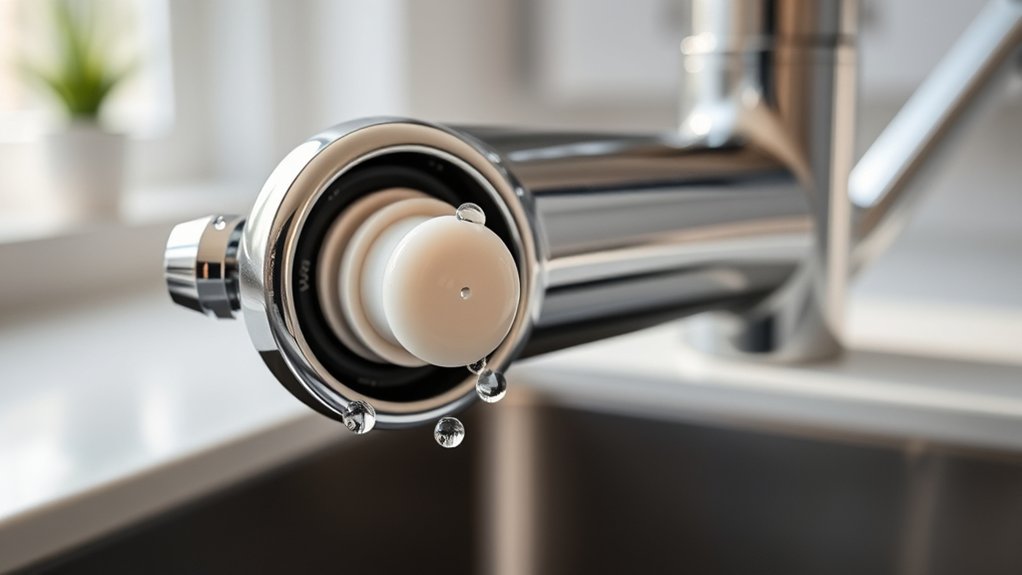
You’ll find ceramic faucet cartridges offer superior durability and precise control by using two smooth ceramic discs that resist wear and prevent leaks better than traditional rubber or plastic washers.
They provide smooth handle movement, corrosion resistance, and consistent water flow, reducing maintenance needs.
However, they cost more upfront and can require full replacement if damaged.
Understanding their benefits, drawbacks, and proper installation can help you decide if they’re the right fit for your faucet.
Key Takeaways
- Ceramic cartridges provide long-lasting, leak-resistant performance due to durable ceramic discs that prevent wear and drips over time.
- They offer smoother handle operation and precise water flow and temperature control compared to traditional washer-based cartridges.
- Ceramic cartridges resist corrosion and mineral buildup, extending faucet lifespan and maintaining consistent performance.
- Higher upfront costs and repair complexity may be drawbacks, but their durability reduces long-term maintenance needs.
- Proper installation and maintenance are essential to maximize the benefits and reliability of ceramic faucet cartridges.
How Ceramic Faucet Cartridges Work
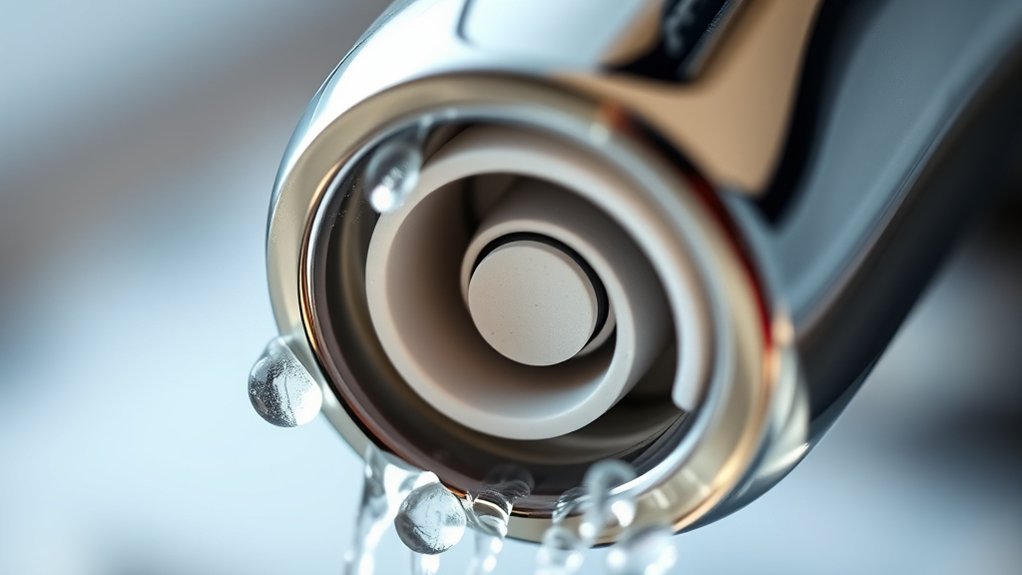
A ceramic faucet cartridge relies on two precisely engineered ceramic discs that control water flow and temperature. When you turn the handle, these discs slide against each other, aligning or misaligning holes that either allow or block water passage.
This operation mechanism guarantees smooth, precise control without the need for washers or seals prone to wear. The ceramic durability plays an essential role in maintaining long-term functionality; these discs resist scratching and erosion, preventing leaks and drips commonly seen in traditional cartridges.
Because the ceramics are extremely hard and stable, they maintain a tight seal even after thousands of cycles. Understanding this operation mechanism helps you appreciate why ceramic cartridges offer consistent performance and require minimal maintenance compared to other faucet technologies.
Ceramic vs. Traditional Faucet Cartridges: A Comparison
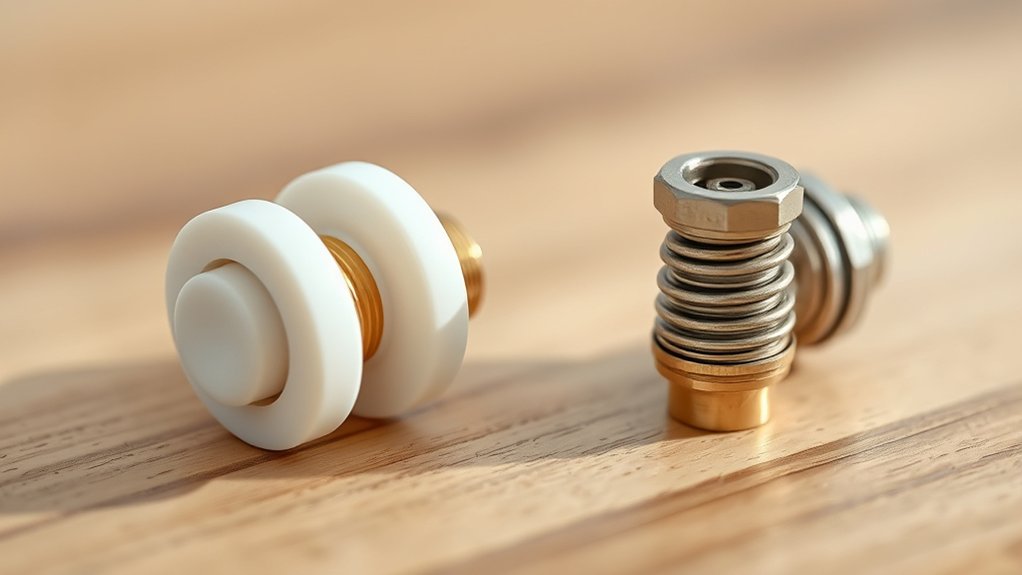
While both ceramic and traditional faucet cartridges regulate water flow, their designs and durability differ markedly. Ceramic cartridges utilize two smooth, hard ceramic discs that slide against each other, creating a precise seal that enhances valve performance.
This design minimizes wear, contributing to superior ceramic durability compared to traditional rubber or plastic washers, which tend to degrade over time. Traditional cartridges rely on flexible materials that compress to control flow, but these materials are prone to deterioration, leading to leaks and reduced valve efficiency.
Ceramic cartridges resist wear better than traditional rubber or plastic washers, reducing leaks and maintaining valve efficiency longer.
If you prioritize long-lasting operation and consistent valve performance, ceramic cartridges offer a more robust solution. However, traditional cartridges might be simpler to replace but typically require more frequent maintenance due to material wear.
Understanding these distinctions helps you select the appropriate cartridge for your faucet’s needs.
Benefits of Ceramic Faucet Cartridges
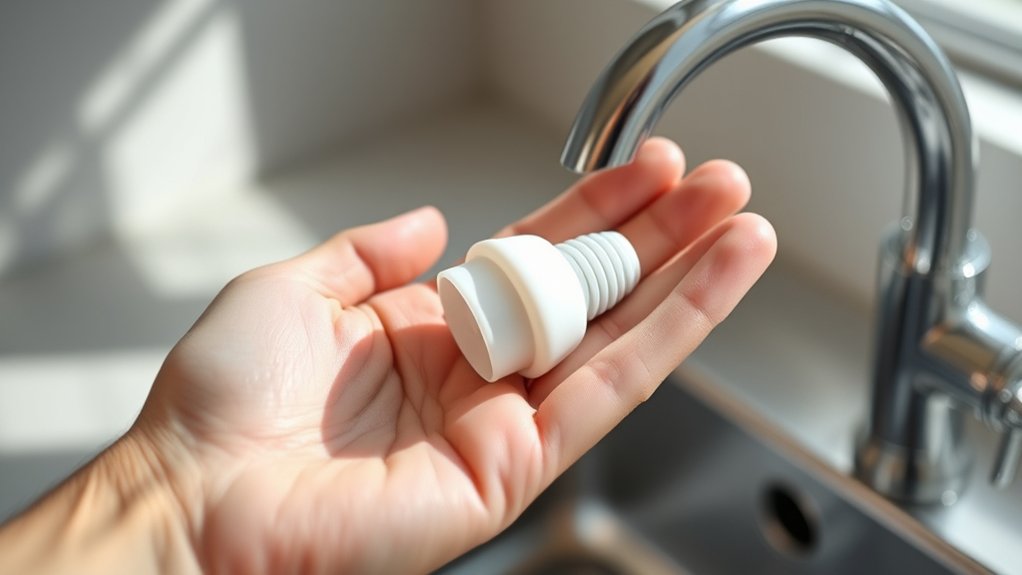
Because ceramic faucet cartridges feature two precisely engineered ceramic discs, they provide exceptional durability and leak resistance compared to traditional cartridge designs. You’ll notice significant durability advantages and enhanced performance efficiency when you choose ceramic cartridges.
Here are four key benefits:
- Long-lasting sealing: The ceramic discs maintain a tight seal over time, minimizing leaks and drips.
- Smooth operation: Their precision engineering allows for effortless handle movement, improving control and reducing wear.
- Corrosion resistance: Ceramic materials resist mineral buildup and corrosion better than metal parts, extending cartridge life.
- Consistent water flow: The design guarantees stable flow rates and temperature control, optimizing overall faucet performance.
Drawbacks of Ceramic Faucet Cartridges
Although ceramic faucet cartridges offer many advantages, they come with certain drawbacks that you should consider before installation. One primary concern involves cost considerations; ceramic cartridges tend to be more expensive upfront compared to traditional rubber or plastic alternatives. This higher initial investment may not suit every budget, especially for large-scale plumbing projects.
Additionally, you might encounter repair challenges. Ceramic cartridges are rigid and prone to cracking if mishandled during installation or maintenance. When damage occurs, repairs can be complicated due to the cartridge’s integrated design, often necessitating full cartridge replacement rather than simple part fixes. This can increase downtime and maintenance expenses.
Understanding these limitations will help you weigh the benefits against the potential drawbacks before deciding if ceramic faucet cartridges are right for your application.
Choosing the Right Cartridge for Your Faucet
When selecting a cartridge, you need to compare materials for durability and performance. Verify the cartridge matches your faucet type to guarantee proper fit and function.
Also, consider longevity and maintenance requirements to optimize your faucet’s lifespan.
Cartridge Material Comparison
Selecting the right cartridge material is essential for ensuring your faucet’s durability and performance. Different materials affect ceramic durability and overall cartridge performance markedly. Here’s a comparison to guide your choice:
- Ceramic: Offers exceptional durability and smooth operation, resistant to wear and mineral buildup, ensuring long-lasting cartridge performance.
- Plastic: Economical but less durable; prone to wear and potential leaks over time.
- Brass: Highly durable with excellent corrosion resistance but may require more maintenance to prevent mineral buildup.
- Stainless Steel: Combines strength and corrosion resistance, providing reliable performance but at a higher cost.
Choosing based on these materials helps optimize your faucet’s lifespan and functionality without compromising performance.
Compatibility With Faucet Types
Because faucet designs vary widely, choosing a cartridge that fits your specific faucet type is essential for ideal performance and ease of installation. You need to examine faucet type compatibility carefully, as single-handle, double-handle, and pull-out faucets often require different cartridge designs.
Pay close attention to cartridge size considerations. Diameter, length, and stem shape must match your faucet to guarantee a proper seal and smooth operation. Using an incompatible cartridge can cause leaks or malfunction.
Consult manufacturer specifications or measure your existing cartridge before purchasing. Ceramic cartridges are available in various standard sizes, but verifying compatibility prevents installation issues and extends faucet functionality.
Prioritizing precise cartridge selection based on your faucet type optimizes both performance and durability.
Longevity And Maintenance
Although ceramic faucet cartridges are known for their durability, choosing the right one directly impacts your faucet’s longevity and maintenance needs. To optimize performance, you should consider several durability factors and adopt specific maintenance tips tailored to ceramic cartridges.
- Material Quality: Select cartridges made from high-grade ceramic discs to resist wear and corrosion.
- Water Quality: Hard water can accelerate cartridge degradation; installing a water softener helps.
- Installation Precision: Proper alignment prevents premature wear on the ceramic surfaces.
- Routine Cleaning: Periodically remove mineral deposits using non-abrasive cleaners to maintain smooth operation.
When Ceramic Faucet Cartridges Are the Best Choice
When you need a faucet cartridge that offers long-lasting durability and smooth operation, ceramic cartridges stand out as the best choice. Their superior ceramic durability resists wear, guaranteeing consistent faucet performance even under frequent use.
You’ll find ceramic cartridges ideal in high-traffic areas or where precise control over water flow and temperature is essential.
| Feature | Ceramic Cartridge | Traditional Cartridge |
|---|---|---|
| Durability | High (ceramic durability) | Moderate |
| Performance | Smooth, precise control | Less consistent |
| Maintenance | Low | Higher |
| Water Leakage Risk | Minimal | Higher |
| Cost | Moderate to High | Low to Moderate |
Choosing ceramic cartridges guarantees reliable faucet operation with minimal issues over time.
Installation and Maintenance Tips for Ceramic Faucet Cartridges
Selecting ceramic faucet cartridges guarantees durability and smooth performance, but proper installation and maintenance keep them functioning effectively. To secure ideal results, follow these essential installation process steps and maintenance tips:
- Turn off water supply before removing the old cartridge to avoid leaks.
- Clean the valve seat thoroughly to prevent debris from damaging the new cartridge.
- Align the cartridge correctly according to manufacturer specifications to secure a proper seal.
- Lubricate O-rings lightly with plumber’s grease during installation to enhance longevity and prevent sticking.
For maintenance, inspect cartridges periodically for wear or mineral buildup, and replace them immediately if you notice leaks or stiffness. Adhering to these precise steps will maximize your ceramic faucet cartridge’s lifespan and performance.
Frequently Asked Questions
Can Ceramic Cartridges Help Reduce Water Waste?
Yes, ceramic cartridges enhance faucet efficiency by providing precise control over water flow, which supports water conservation. You’ll reduce leaks and drips, ultimately lowering water waste and improving overall faucet performance in your home or workplace.
Are Ceramic Faucet Cartridges Environmentally Friendly?
Yes, ceramic faucet cartridges are environmentally friendly because they use sustainable materials that last longer and reduce waste.
Plus, they often have recycling options, minimizing landfill impact and supporting eco-conscious water management in your home.
How Do Ceramic Cartridges Affect Water Pressure?
Like a well-tuned engine, ceramic cartridges maintain consistent water flow and pressure stability by tightly controlling valve movement. You’ll notice smoother operation and reduced pressure fluctuations, ensuring efficient faucet performance without compromising water delivery.
Do Ceramic Cartridges Fit All Faucet Brands?
Ceramic cartridges don’t fit all faucet brands universally. You need to check brand compatibility and cartridge dimensions carefully to guarantee a proper fit.
Always compare specifications before purchasing to avoid installation issues or leaks.
What Is the Average Lifespan of a Ceramic Cartridge?
You can expect a ceramic cartridge’s average lifespan to be about 10 to 15 years. For durability comparison, their wear resistance surpasses traditional cartridges.
Follow installation tips carefully to maximize longevity and prevent leaks.
Conclusion
Now that you understand how ceramic faucet cartridges work and their pros and cons, you can make an informed choice. They offer superior durability and smooth operation compared to traditional cartridges, though they may come at a higher price.
Think of them as the “steampunk” upgrade to your faucet’s inner workings—blending timeless reliability with modern precision. With proper installation and maintenance, ceramic cartridges guarantee long-lasting performance and fewer leaks.
Choose wisely for your faucet’s best fit. When considering longevity and efficiency, ceramic faucet cartridges are often the better option to ensure reliable and smooth faucet operation.

Leave a Reply