
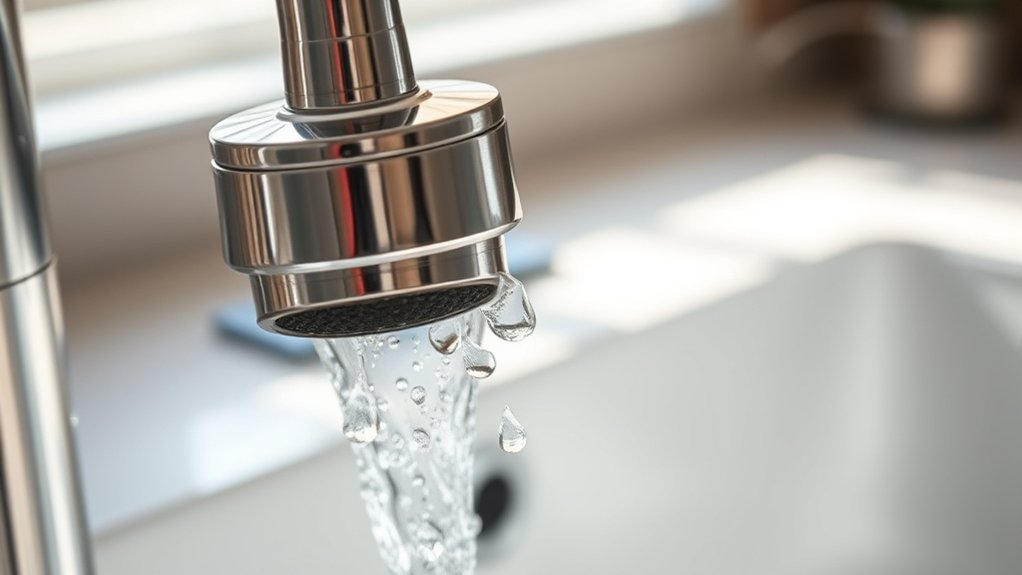
You need a faucet aerator because it effectively controls water flow by mixing air with water, reducing consumption by up to 30% and lowering your utility bills.
A faucet aerator fits most standard faucets, minimizes splashing, and maintains strong water pressure for everyday tasks.
Plus, it reduces hot water use, saving energy and extending your plumbing’s lifespan.
If you want to understand which faucets benefit most and how to choose or install one properly, keep exploring this topic.
Key Takeaways
- Faucet aerators reduce water usage by up to 30%, making them essential for water conservation and cost savings.
- They improve water flow control and reduce splashing, enhancing faucet usability and comfort.
- Aerators help maintain effective water pressure despite lowering total flow, optimizing performance.
- Installing aerators extends plumbing fixture lifespan by reducing pressure stress and wear.
- They are simple to install and compatible with most faucets, providing quick efficiency improvements.
What’s a Faucet Aerator and How Does It Work?
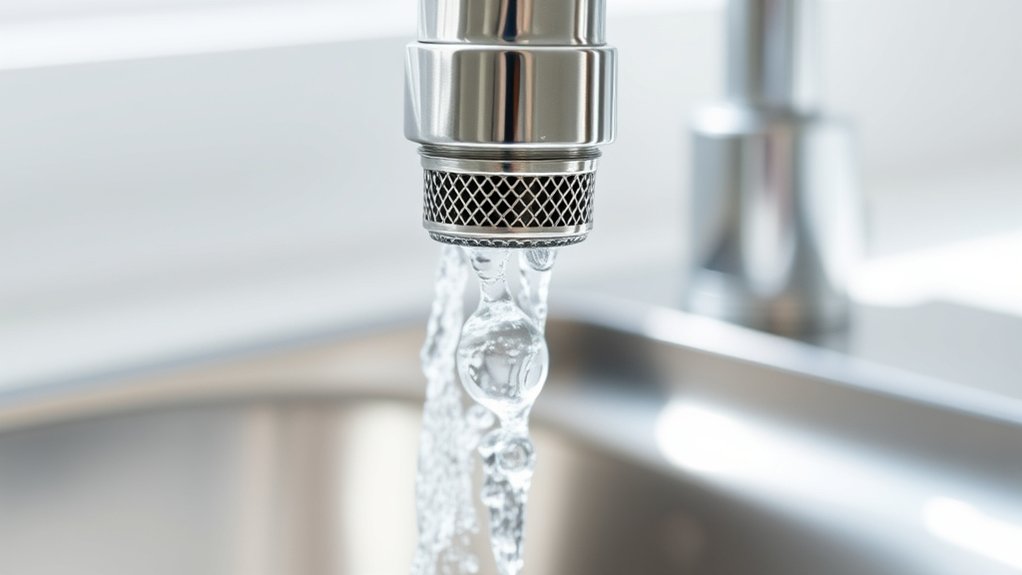
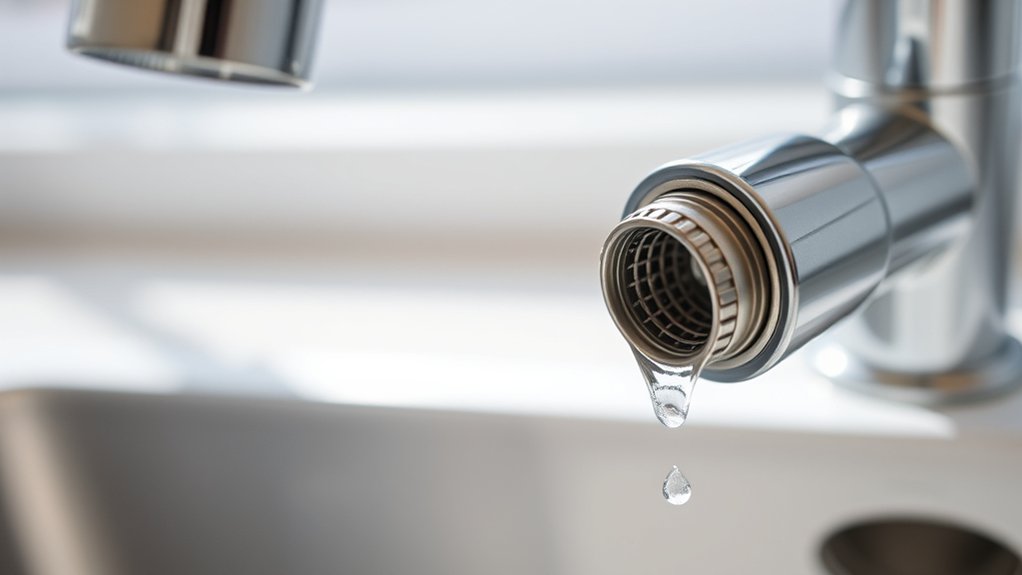
A faucet aerator is a small device attached to the tip of your faucet that controls water flow by mixing air with the water stream. You’ll find various aerator designs tailored to different faucet types, including standard, pull-out, and commercial faucets.
Each design optimizes flow rate and pressure while minimizing splash. Inside the aerator, a mesh screen breaks water into fine droplets and introduces air, which maintains a steady, aerated flow. This mechanism improves water efficiency without sacrificing performance.
Depending on your faucet type, you may encounter aerators with adjustable flow restrictors or swivel capabilities. Understanding these variations helps you select the right aerator design to guarantee compatibility and maximize water conservation in your specific faucet setup.
Which Faucets Can Really Benefit From Aerators?
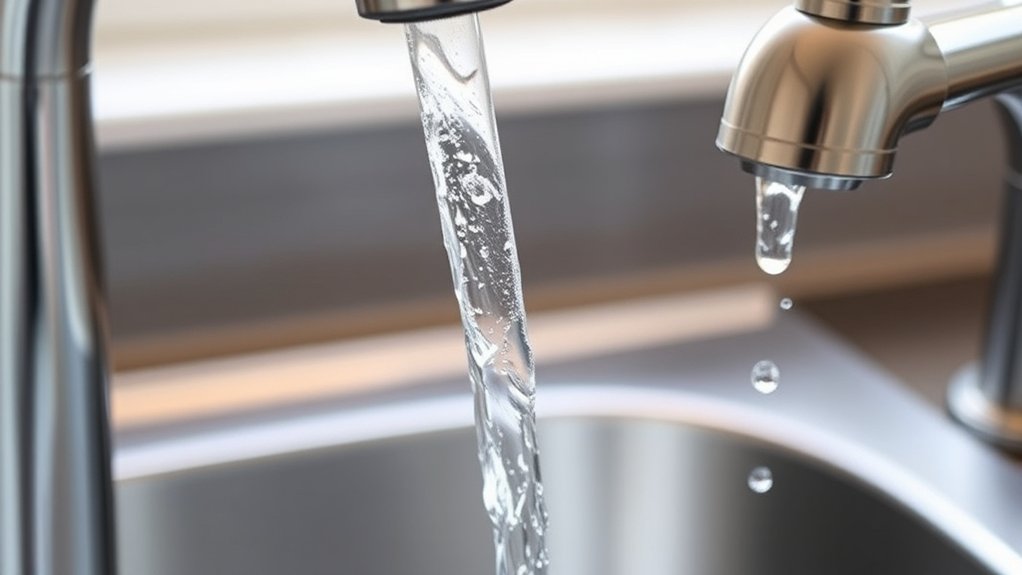
Where do faucet aerators provide the most value? Primarily, kitchen faucets and bathroom faucets benefit greatly from aerator installation. In kitchen faucets, aerators optimize water flow by mixing air with water, enhancing pressure while reducing splashing. This is ideal for tasks like washing dishes or filling containers.
Bathroom faucets also gain efficiency through aerators, delivering a steady, controlled stream suitable for handwashing and brushing teeth. This improves user experience without compromising water availability. Not all faucets require aerators, but those with high flow rates or prone to splashing will see the most improvement.
Additionally, faucets with standard threading accommodate aerators easily, ensuring simple installation. By focusing on kitchen and bathroom faucets, you’ll maximize functionality and control over water output, making aerators a practical addition in these areas.
How Faucet Aerators Save You Water and Money
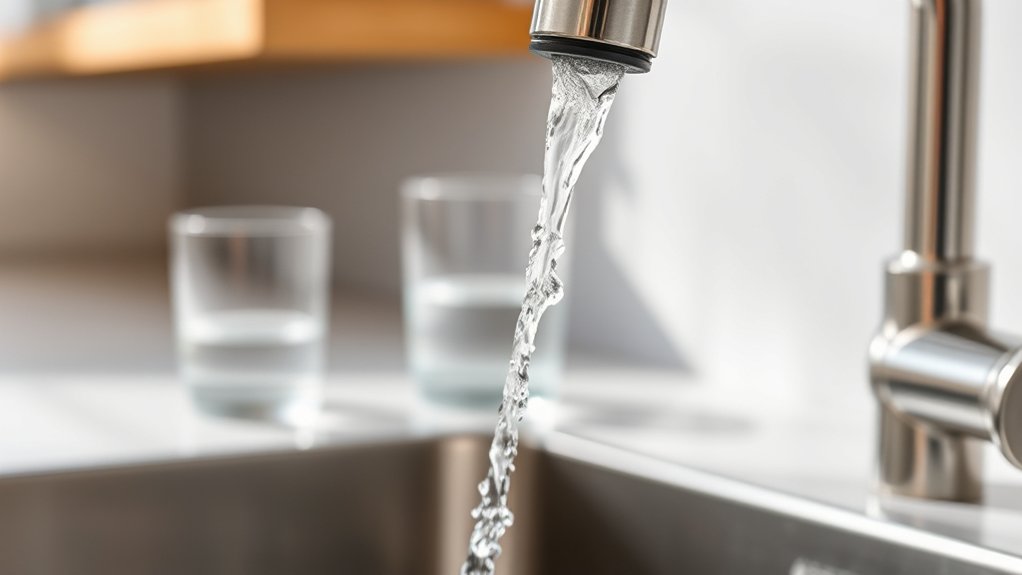
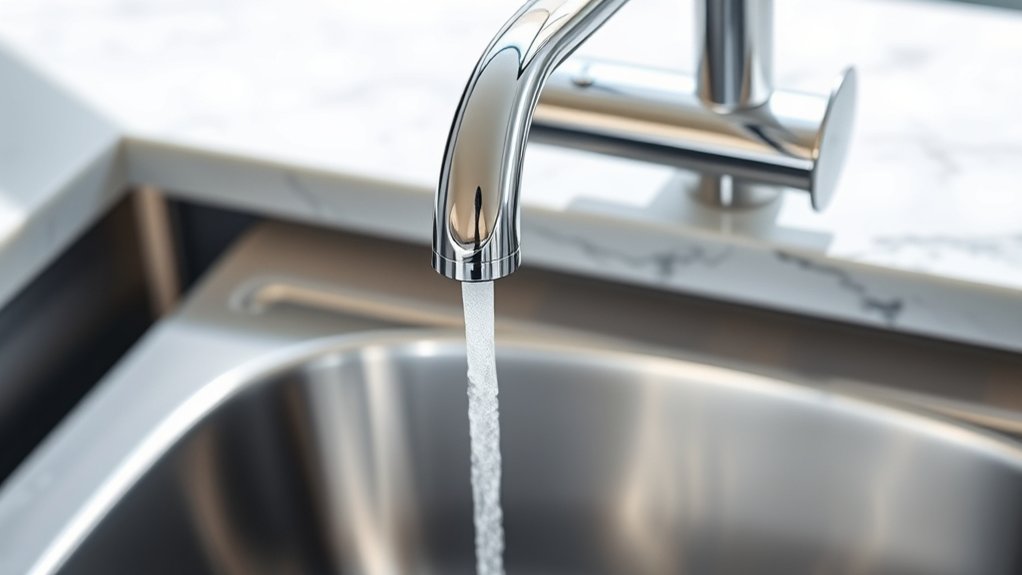
Because faucet aerators mix air into the water stream, they reduce the overall water flow without compromising pressure, helping you use less water during everyday tasks. This efficient design promotes water conservation and leads to significant cost savings on your utility bills.
By installing aerators, you’ll:
- Decrease water consumption by up to 30%, lowering your monthly water usage.
- Reduce hot water demand, cutting energy costs associated with heating.
- Minimize water waste during activities like washing hands or rinsing dishes.
- Extend the lifespan of plumbing fixtures by reducing water pressure stress.
These benefits translate directly into financial savings, making faucet aerators a practical investment for both environmental and economic reasons.
Will a Faucet Aerator Affect Your Water Pressure?
You might notice a slight change in water pressure when you install a faucet aerator, as it regulates flow rate by mixing air with water. This adjustment can reduce overall water output without greatly compromising the force you feel at the tap.
Understanding how aerators balance efficiency and pressure helps you choose the right model for your needs.
Impact On Flow Rate
Although a faucet aerator introduces additional components to your plumbing, it generally doesn’t reduce your water pressure considerably. Instead, it optimizes flow efficiency while promoting water conservation.
Here’s how it impacts flow rate:
- Regulates flow: Aerators mix air with water, maintaining a steady stream without excess volume.
- Prevents splashing: By controlling water velocity, they reduce splash and improve usability.
- Enhances perceived pressure: The aerated stream feels strong despite lower actual flow, preserving user experience.
- Limits maximum flow rate: Most aerators cap flow rates to comply with water-saving standards, cutting unnecessary water waste.
Pressure Changes Explained
Understanding how a faucet aerator influences water pressure requires examining the interaction between flow regulation and system dynamics. When you install an aerator, it introduces a controlled restriction that reduces flow velocity, which can cause minor pressure fluctuations downstream. These fluctuations are typically imperceptible but depend on your plumbing system’s baseline pressure and pipe diameter.
The aerator’s mesh or screen design plays a critical role in minimizing turbulence, thereby enhancing aerator effectiveness without greatly impacting pressure. If your system already experiences low pressure, adding an aerator may slightly decrease perceived pressure at the outlet.
However, in well-maintained systems, the aerator balances water conservation with steady pressure output by stabilizing flow patterns. Consequently, understanding these mechanics helps you evaluate whether an aerator suits your water pressure requirements.
Balancing Efficiency And Pressure
While installing a faucet aerator can improve water efficiency considerably, it may also alter your water pressure. Understanding this balance is essential for ideal water conservation and flow efficiency. Here’s what you should consider:
- Aerator design: Different designs restrict flow differently, impacting pressure.
- Flow rate: Lower flow rates save water but can reduce perceived pressure.
- Faucet type: Some faucets handle flow restrictions better, maintaining pressure.
- Water system: Your home’s plumbing pressure influences how an aerator affects flow.
How to Pick the Right Faucet Aerator for Your Home
How do you determine which faucet aerator suits your home’s needs best? Start by considering your faucet styles, whether you have standard, pull-out, or commercial faucets, as aerators vary in threading and size compatibility. Measure the diameter of your faucet’s spout to guarantee a proper fit.
Next, evaluate aerator materials; brass offers durability and corrosion resistance, while plastic is lightweight and cost-effective but less robust. Consider the flow rate that matches your water pressure and conservation goals, typically between 0.5 to 2.2 gallons per minute.
Also, select an aerator with the appropriate spray pattern, such as stream, spray, or aerated flow, to optimize water use and comfort. By aligning these technical specifications with your home’s fixtures, you’ll choose an aerator that enhances performance and efficiency effectively.
How to Install a Faucet Aerator Yourself: It’s Easy!
Once you’ve selected the right faucet aerator based on size, material, flow rate, and spray pattern, installing it yourself is straightforward and requires minimal tools. Different faucet types may need specific installation steps, but these general tips apply:
- Turn off the water supply to prevent leaks during installation.
- Remove the old aerator by unscrewing it counterclockwise; use pliers with a cloth to avoid scratching.
- Clean the faucet threads to remove debris and guarantee a tight seal.
- Screw the new aerator onto the faucet by hand, then tighten gently with pliers if necessary.
Remember to follow faucet types compatibility and these installation tips to avoid cross-threading or leaks. This approach guarantees an efficient, precise installation every time.
Frequently Asked Questions
Can Faucet Aerators Filter Out Contaminants From Water?
You shouldn’t rely on faucet aerators to filter contaminants; their primary function is to improve water quality by reducing flow and splash, not filtration. Their filtration efficiency is minimal compared to dedicated water filtration systems.
Do Faucet Aerators Require Regular Cleaning or Maintenance?
Yes, faucet aerators require regular cleaning. Maintain peak performance by cleaning every 3-6 months.
Use a vinegar soak to remove mineral buildup. Follow maintenance tips: unscrew, rinse, and reinstall carefully to guarantee proper water flow.
Are Faucet Aerators Compatible With All Types of Plumbing Systems?
Compatibility concerns aren’t usually a big deal; most faucet aerators fit standard plumbing types. However, you’ll want to double-check specific models against your system to avoid surprises and guarantee peak performance and water efficiency.
Can Faucet Aerators Help Reduce Splashing in Sinks?
You’ll find faucet aerators effective for splash control by regulating water flow and stream shape, which also promotes water conservation. Their design minimizes water turbulence, reducing splashing while maintaining efficient water usage during sink use.
Are There Any Health Benefits to Using Faucet Aerators?
You can kill two birds with one stone by using faucet aerators. They improve water quality by filtering debris and bacteria, and enhance energy savings through reduced water flow, ultimately promoting a healthier, more efficient home environment.
Conclusion
Faucet aerators function flawlessly to fortify water flow while fighting waste. By fitting faucets with these fine fixtures, you’ll find fantastic savings on water and wallet alike. Whether you’re tackling tap tasks in the kitchen or bathroom, aerators offer an efficient, eco-friendly edge without sacrificing pressure.
Selecting and installing the suitable size and style is simple, so start saving smartly today with this small, savvy solution for sustainable water use. In conclusion, faucet aerators are necessary for conserving water and reducing utility bills effectively.

Leave a Reply