
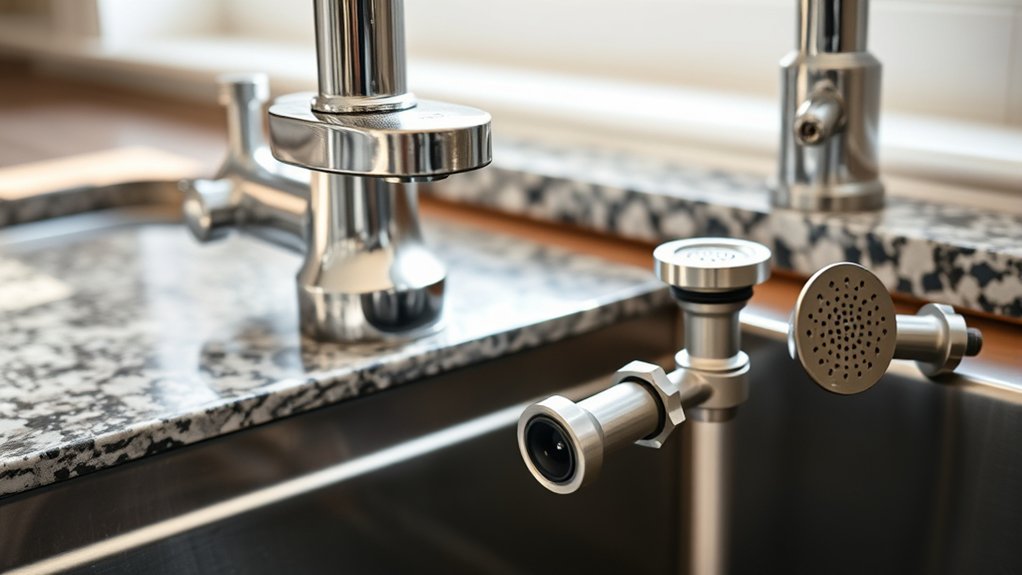
Are faucet aerators universal? You can’t assume they are because they come in different thread sizes and types designed to match specific faucets.
Most standard faucets use common male or female threads, but unique designs may require specialized aerators.
Measuring your faucet’s thread diameter and pitch is essential to finding the right fit. This helps avoid leaks and performance issues.
Aerators also vary by flow style and function, so choosing one depends on your needs.
Keep exploring to find the perfect aerator for your faucet.
Key Takeaways
- Faucet aerators are not universally compatible due to varying thread types and sizes on faucet spouts.
- Most aerators fit standard male or female threads but may not suit unique or specialty faucet designs.
- Universal aerators exist but typically accommodate only common thread sizes and may not fit all faucets.
- Correct identification of faucet thread type and diameter is essential for selecting a compatible aerator.
- Proper measurement of faucet threads prevents leaks and ensures optimal aerator performance and water flow.
What Are Faucet Aerators and Why Do They Matter?
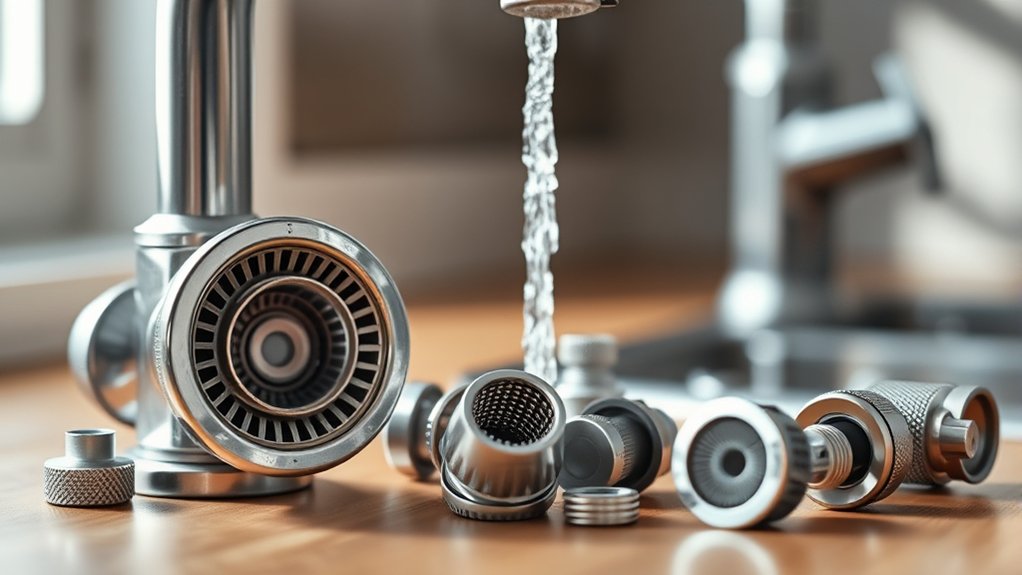
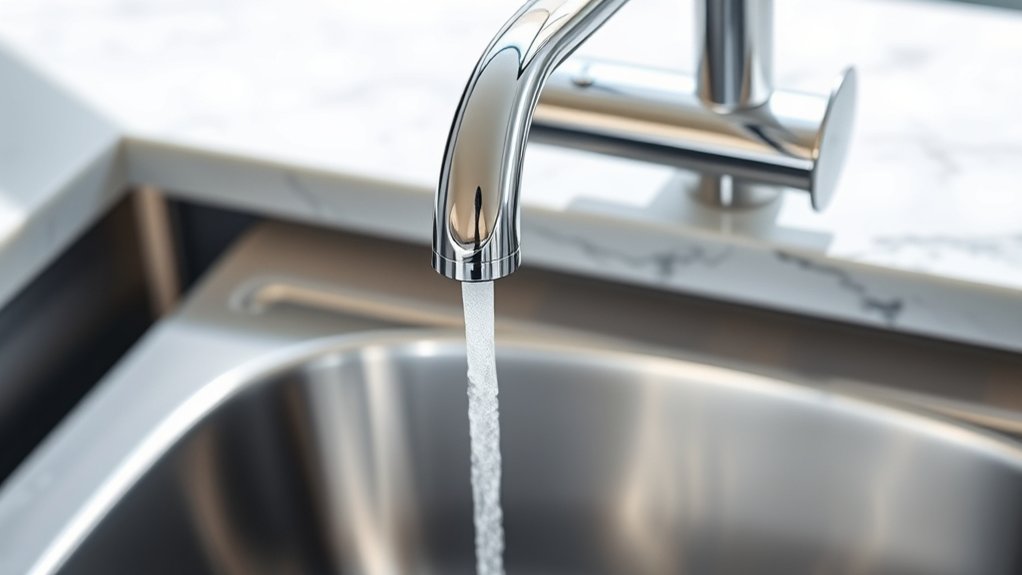
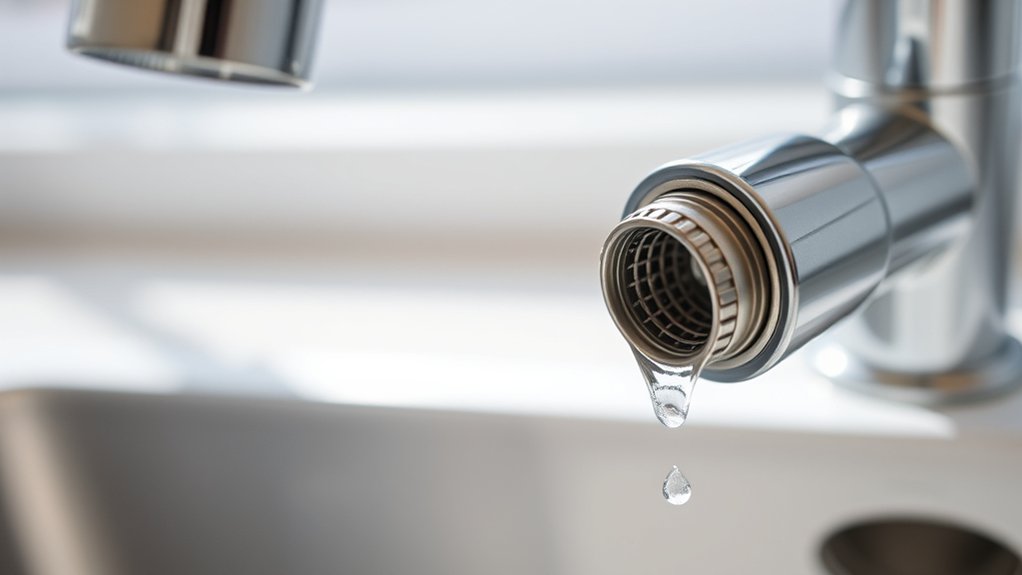
A faucet aerator is a small device attached to the tip of your faucet that regulates water flow by mixing air with the water stream. This mechanism improves faucet efficiency by reducing water volume without compromising pressure, ensuring a steady, strong flow.
By introducing air, it minimizes water waste, directly supporting water conservation efforts. You’ll notice less splashing and a more consistent stream, which enhances usability and reduces overall consumption.
Installing an aerator can greatly cut household water usage, lowering utility bills and promoting sustainable resource management. Understanding how faucet aerators function helps you make informed decisions about water-saving fixtures, optimizing both performance and environmental impact in everyday water use.
Are Faucet Aerators Universal? What Fits Most Faucets
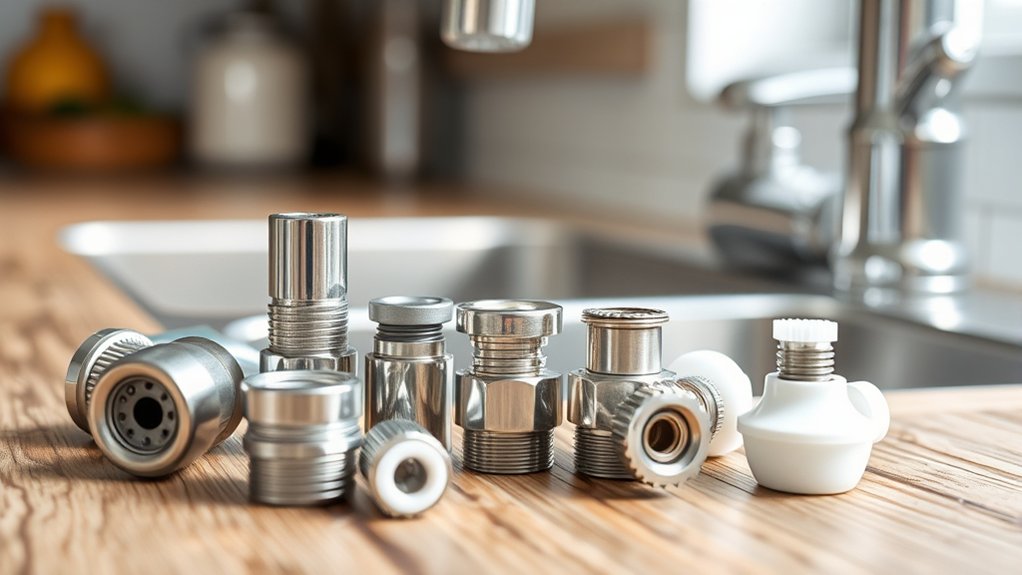
How do you know if a faucet aerator will fit your faucet? Aerator compatibility depends primarily on the threading and size of your faucet’s spout.
Determining faucet aerator fit depends mainly on your faucet’s thread type and spout size.
Faucet types vary, including male-threaded, female-threaded, and non-threaded designs, each requiring specific aerator fittings. While many aerators are marketed as “universal,” they only fit a broad range of standard male or female threads.
To guarantee proper compatibility, you must identify your faucet’s thread type and diameter, typically measured in inches or millimeters. Additionally, some faucets use proprietary or unique designs, limiting standard aerator fitment.
Understanding these distinctions helps you select an aerator that matches your faucet type, ensuring a secure fit and best performance without leaks or reduced water flow.
Which Aerators Fit Standard Faucets and Why Size Matters
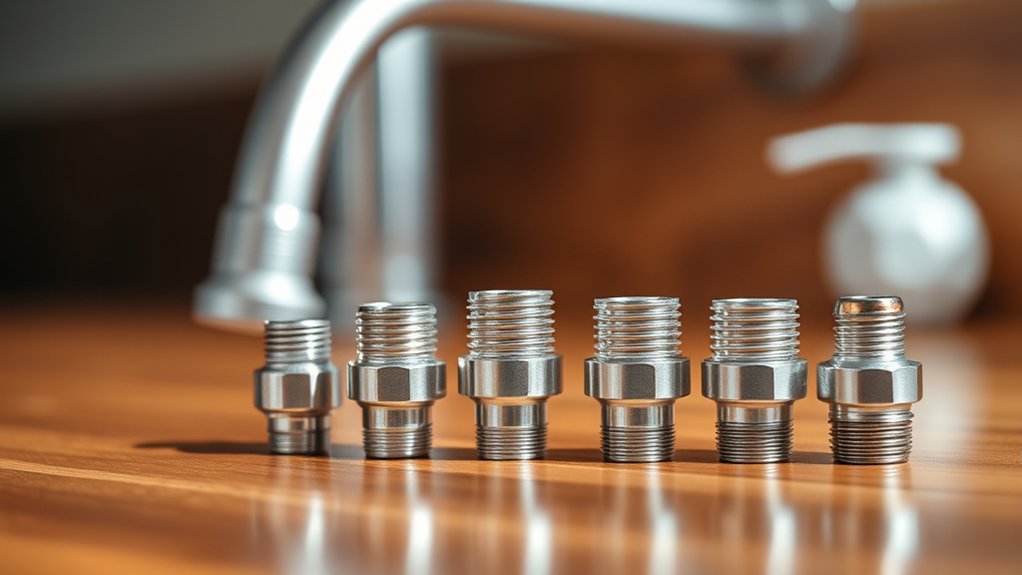
You need to know the common aerator sizes to guarantee a proper fit for your standard faucet, typically ranging from 15/16″-27 to 55/64″-27 thread diameters. Thread compatibility is essential because even slight differences can cause leaks or prevent installation.
Matching both size and thread type assures peak performance and water flow control.
Common Aerator Sizes
Several common aerator sizes dominate the market, each designed to fit specific faucet models and threading standards. When selecting an aerator, understanding the precise aerator dimensions such as diameter and thread count is essential for guaranteeing faucet compatibility.
The most prevalent sizes include 15/16”–27 for male threads and 55/64”–27 for female threads, typically used in kitchen faucets. Bathroom faucets often use smaller sizes like 13/16”–27 for male threads.
Matching these dimensions accurately prevents leaks and guarantees ideal water flow. If you know your faucet’s thread type and dimensions, you can confidently choose an aerator that fits perfectly.
Proper sizing not only assures physical compatibility but also maintains the faucet’s efficiency and water-saving capabilities.
Thread Compatibility Differences
Because thread compatibility directly affects both installation and performance, selecting an aerator that matches your faucet’s thread type and size is vital. Faucet aerators typically come with either male or female threads, and their diameters vary, leading to common compatibility issues if mismatched.
You must identify whether your faucet has an internal (female) or external (male) thread and measure its diameter, commonly 15/16″–27 for standard male threads or 55/64″–27 for female threads. Using an incompatible thread type can result in leaks or difficulty securing the aerator.
Additionally, thread pitch and diameter differences mean not all aerators fit all faucets, so verifying thread types and sizes before purchase guarantees proper installation and ideal water flow. Understanding these technical distinctions prevents compatibility issues and preserves faucet functionality.
How to Measure Your Faucet for the Right Aerator
To select the correct aerator, start by identifying your faucet’s thread size using a thread gauge or ruler.
Next, measure the aerator’s diameter and length to guarantee a precise fit. Accurate measurements prevent leaks and optimize water flow performance.
Identifying Faucet Thread Size
Measuring your faucet’s thread size accurately guarantees you select an aerator that fits perfectly and functions efficiently. Start by identifying your faucet type, kitchen or bathroom, as thread sizes vary. Use a caliper or ruler to measure the outer diameter of the faucet’s threaded tip. Then, determine the thread pitch by counting the threads per inch or millimeter. These thread measurements confirm compatibility with standard aerators.
| Faucet Type | Common Thread Size (inches) |
|---|---|
| Kitchen | 15/16”-27 (male) |
| Bathroom | 55/64”-27 (male) |
| Specialty Faucets | Varies, measure required |
| European Models | M22 x 1 (metric) |
Verify your thread size before purchasing to avoid mismatches and confirm proper installation.
Measuring Aerator Dimensions
Three key dimensions determine whether an aerator fits your faucet properly: the diameter of the aerator body, the thread size, and the aerator’s length. To measure these aerator dimensions accurately, you’ll need precise measuring tools like a caliper or a ruler with millimeter markings.
First, measure the outer diameter of the aerator body to confirm it matches your faucet’s spout. Next, determine the thread size by measuring the diameter of the threaded section; this guarantees compatibility with your faucet’s threading.
Finally, measure the length from the base to the aerator tip to avoid protrusion issues. Taking these measurements carefully will help you select an aerator that fits securely and functions efficiently, preventing leaks and optimizing water flow.
Common Aerator Types and Their Uses
Although faucet aerators may seem similar at a glance, they come in several distinct types designed for specific functions and flow rates. The most common types include standard aerators, laminar flow aerators, and spray aerators.
Standard aerators mix air with water, reducing splash and conserving water while maintaining pressure, highlighting key aerator benefits. Laminar flow aerators produce a non-aerated, clear stream ideal for medical or laboratory settings. Spray aerators disperse water into multiple streams, increasing coverage for tasks like rinsing.
When installing, follow precise installation tips: verify thread compatibility (male or female), clean faucet threads, and avoid overtightening to prevent damage. Understanding these types helps you optimize water efficiency and faucet performance without trial and error.
How to Choose the Best Aerator for Your Faucet
Why does selecting the right aerator matter for your faucet? Choosing an appropriate aerator optimizes water efficiency and maintains performance. Start by checking your faucet’s thread size and type to ascertain compatibility.
Consider aerator materials: brass offers durability and corrosion resistance, while plastic is lightweight and cost-effective but less robust. Next, evaluate flow rates, typically ranging from 0.5 to 2.2 gallons per minute (GPM).
Lower flow rates conserve water but may reduce pressure, while higher rates increase flow but use more water. Match flow rates to your household needs and local regulations. Finally, assess the aerator’s design; some include flow restrictors or filters that improve water quality.
Frequently Asked Questions
Can Faucet Aerators Help Reduce Water Bills?
Yes, faucet aerators boost water conservation by limiting flow without reducing pressure, helping you save water and lower consumption. This leads to significant cost savings on your water bills over time, making them efficient upgrades.
How Often Should I Clean or Replace a Faucet Aerator?
You should perform cleaning frequency every 3-6 months to maintain ideal flow.
Replace the aerator when you notice decreased water pressure, visible corrosion, or persistent clogging despite thorough cleaning to guarantee efficient performance.
Are There Aerators Designed to Improve Water Pressure?
Think of your faucet as a river; certain aerators act like dams, enhancing water flow by pressure regulation. You’ll find models designed specifically to boost pressure, improving stream strength without wasting water.
Can Aerators Filter Out Harmful Contaminants?
You can’t rely on all aerator types to filter harmful contaminants; most primarily improve water flow and reduce splashing. For enhanced water quality, you’ll need specialized aerators with built-in filtration or separate filter systems.
Do Aerators Affect Water Temperature Control?
Think of temperature regulation as a dance; your aerator functionality doesn’t lead here. Aerators mix air and reduce flow, but they don’t control water temperature. You won’t see any shifts in warmth from their presence.
Conclusion
Faucet aerators aren’t entirely universal, but about 90% of standard faucets use either a male or female aerator with common sizes like 15/16”-27 or 55/64”-27. Knowing your faucet’s exact measurements guarantees you pick the right fit, preventing leaks or poor flow.
By understanding aerator types and sizes, you’ll improve water efficiency and maintain peak performance. Always measure carefully before buying to get the best aerator for your needs.
In conclusion, while faucet aerators are not completely universal, knowing the specifics of your faucet can help you select the right aerator for optimal function.

Leave a Reply