
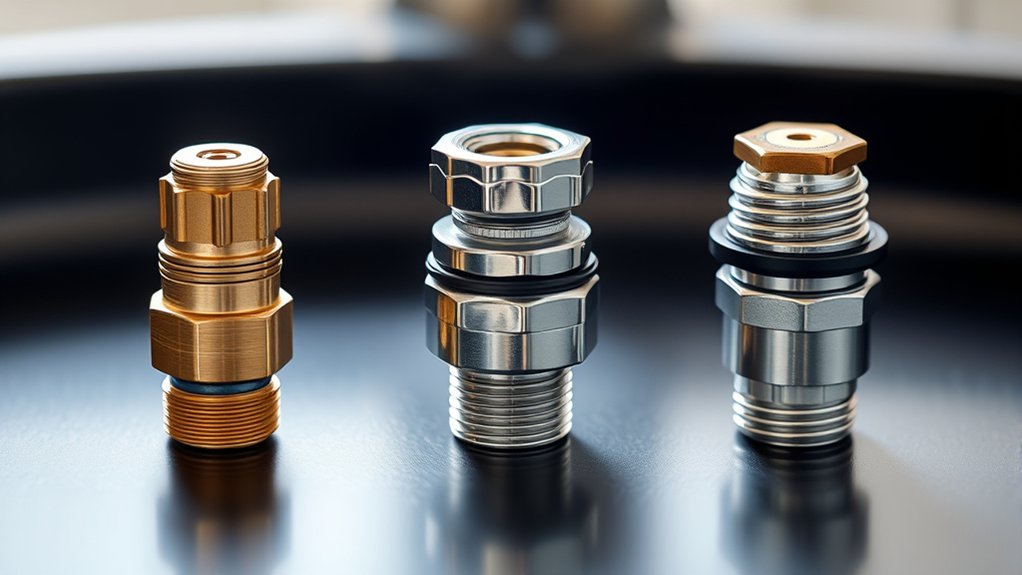
Are faucet cartridges universal? The simple answer is no; you can’t use just any faucet cartridge because they’re not universal.
Cartridges vary in design, size, and materials to match specific faucet types and brands. Using the wrong cartridge risks leaks or poor temperature control.
To guarantee fit and function, you need to identify your faucet model and measure the cartridge precisely. Knowing these details helps avoid compatibility issues.
Keep exploring to understand how to find and replace the right cartridge properly.
Key Takeaways
- Faucet cartridges are not universal and must match specific faucet designs and dimensions for proper function.
- Different faucet types require distinct cartridge models, including variations in stem size and connection style.
- Material composition, such as ceramic or brass, also affects cartridge compatibility with faucets.
- Checking manufacturer manuals and using compatibility charts is essential before selecting a replacement cartridge.
- Specialized suppliers and retailers provide accurate cartridge matches and reduce compatibility issues during replacement.
What Is a Faucet Cartridge and Why It Matters
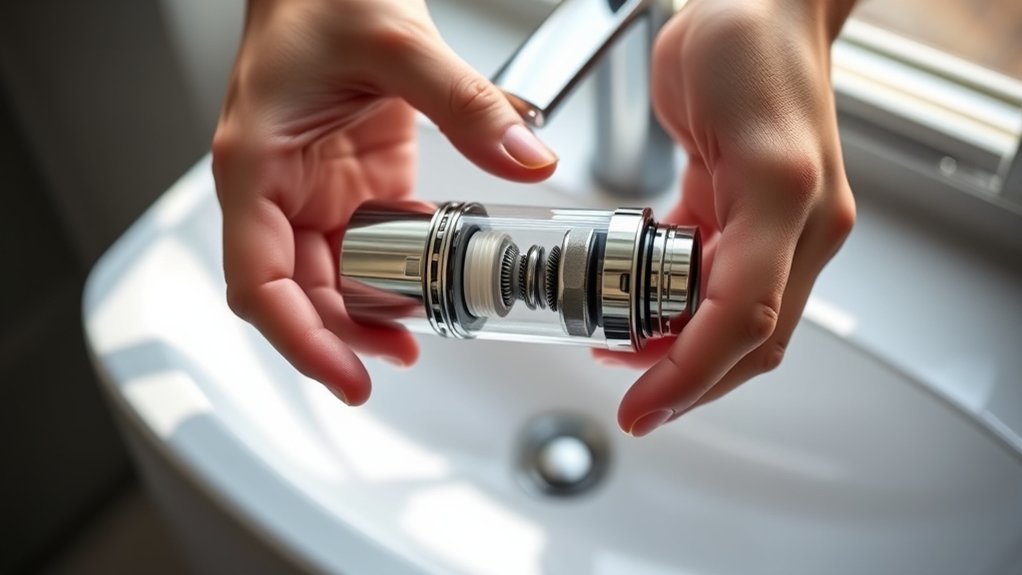
Although often overlooked, a faucet cartridge plays a critical role in controlling water flow and temperature within your faucet assembly. The cartridge function involves regulating the mix of hot and cold water, guaranteeing smooth operation and preventing leaks.
When you turn the handle, the cartridge moves to adjust water output precisely. Understanding this component’s role highlights the maintenance importance; neglecting it can cause dripping, inconsistent temperatures, or complete failure.
Regular inspection and timely replacement help maintain ideal faucet performance and extend its lifespan. Since the cartridge is central to water control, addressing issues early prevents damage to other faucet parts and water waste.
Are Faucet Cartridges Universal?
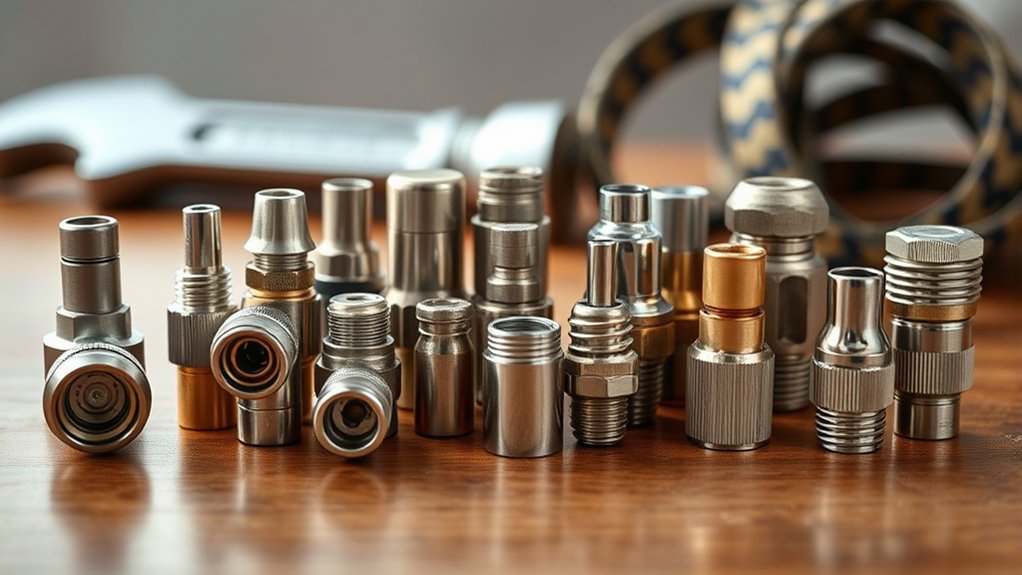
How do you know if a faucet cartridge will fit your faucet? Faucet cartridges are not universally compatible due to variations in faucet types and cartridge materials. You must match the cartridge to your faucet’s specific design, dimensions, and material composition for proper function.
| Faucet Type | Common Cartridge Material | Compatibility Notes |
|---|---|---|
| Single-handle | Ceramic, Brass | Requires precise diameter match |
| Double-handle | Plastic, Brass | Check stem length and spline |
| Pull-out | Ceramic | Unique cartridge shapes |
| Wall-mounted | Brass | Custom fittings often needed |
| Commercial | Stainless Steel, Brass | High durability, specific sizes |
Always verify the cartridge’s specs against your faucet’s requirements to ascertain compatibility.
How Brands and Models Affect Compatibility
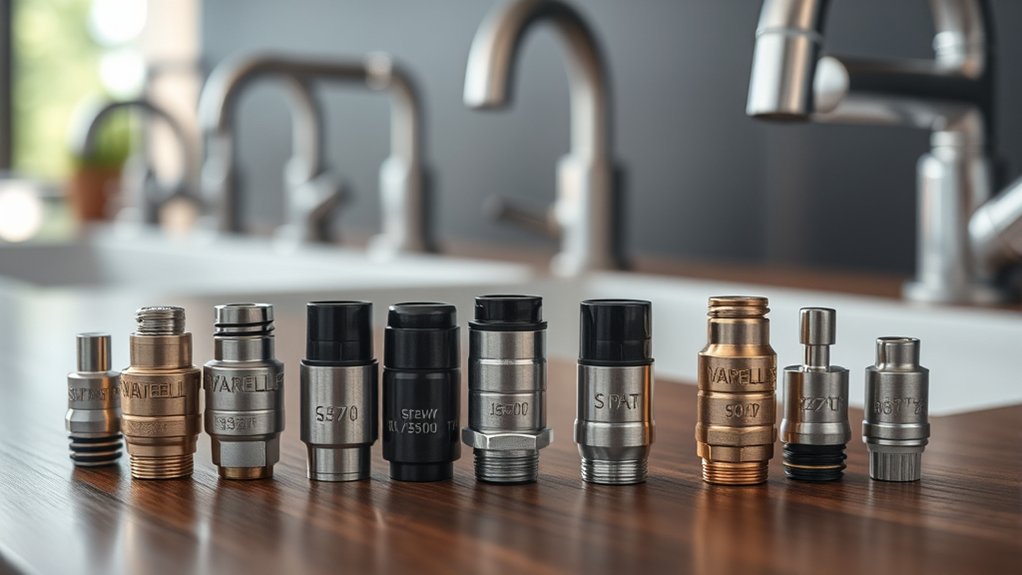
You’ll find that brand-specific design variations play a vital role in faucet cartridge compatibility, as manufacturers tailor dimensions and mechanisms to their models. Understanding model compatibility factors helps you identify which cartridges fit your faucet without leaks or malfunctions.
Additionally, some cartridges offer cross-brand fit options, but verifying exact specifications is essential before making replacements.
Brand-Specific Design Variations
Because faucet cartridges must fit precisely to function correctly, variations in design among brands and models greatly impact compatibility. You’ll find that brand features such as cartridge stem shape, length, and the number of ports differ considerably.
These design differences affect how a cartridge seats within the faucet body and interfaces with internal mechanisms. For example, some brands use a flat-sided stem for secure turning, while others opt for round stems with specific groove patterns.
Additionally, cartridge diameter and seal placement vary, influencing water flow control and leak prevention. When replacing or upgrading cartridges, you must consider these brand-specific design differences carefully.
Ignoring them can lead to improper fit, reduced functionality, or damage to your faucet’s internal components. Always consult manufacturer specifications to guarantee compatibility.
Model Compatibility Factors
When selecting a faucet cartridge, understanding the specific model compatibility is essential to confirm seamless operation. Each model has unique design specifications and installation requirements that affect cartridge fit and function.
Even within the same brand, variations in cartridge stem size, sealing mechanisms, and mounting style can prevent interchangeability. Refer to manufacturer data to match cartridges precisely.
| Brand | Model | Stem Diameter | Mounting Style |
|---|---|---|---|
| Brand A | Model X123 | 15mm | Single-slot |
| Brand A | Model X124 | 18mm | Double-slot |
| Brand B | Model Y210 | 15mm | Single-slot |
| Brand B | Model Y215 | 20mm | Threaded mount |
Always verify these parameters to confirm compatibility.
Cross-Brand Cartridge Fit
Although some faucet cartridges appear similar across brands, their compatibility often varies due to subtle differences in dimensions and design. When evaluating cross-brand compatibility, you need to carefully measure cartridge dimensions such as diameter, stem size, and length.
Even minor variances can prevent a cartridge from fitting properly or functioning correctly. Manufacturers often use proprietary designs or proprietary seals, which further reduce cross-brand cartridge fit.
To guarantee reliable replacement, compare the cartridge’s specifications to your faucet’s model requirements. Avoid assuming universal fit based solely on visual similarity.
Instead, verify technical details and consult manufacturer datasheets or compatibility charts. By focusing on precise cartridge dimensions and brand-specific features, you’ll avoid installation issues and maintain ideal faucet performance across different brands and models.
How to Identify the Right Faucet Cartridge
How can you accurately determine the correct faucet cartridge for your fixture? First, identify your faucet type: single-handle, double-handle, or thermostatic, as cartridges are designed specifically for each.
Next, remove the old cartridge carefully to examine its shape, size, and connection style. Measure dimensions precisely, including stem length and diameter.
Note the cartridge materials; common ones include plastic, brass, and ceramic, each affecting durability and compatibility. Consult your faucet’s manufacturer manual or model number, which often specifies compatible cartridges.
If unavailable, compare your cartridge’s characteristics with manufacturer catalogs or online databases. Avoid assuming universality, as subtle differences in cartridge design can affect fit and function.
Tips for Replacing Your Faucet Cartridge
Before replacing your faucet cartridge, make certain you accurately identify its type to guarantee compatibility. Follow a step-by-step replacement guide that includes shutting off the water supply, removing the handle, and extracting the old cartridge carefully.
Properly reinstall the new cartridge to avoid leaks and restore smooth faucet operation.
Identifying Cartridge Type
Where do you start when replacing a faucet cartridge? Begin by identifying the cartridge type accurately. First, measure the faucet dimensions, specifically the cartridge’s height, diameter, and stem size, as even slight variations impact compatibility.
Next, inspect the cartridge materials; common types include ceramic, plastic, and brass, each affecting durability and performance. Examine the cartridge’s shape and connection style, noting whether it uses a single or double handle design.
Remove the old cartridge carefully to compare it directly with replacement options. Keep the manufacturer’s model number handy if available, as it simplifies sourcing.
Proper identification guarantees you select a cartridge that fits precisely, avoids leaks, and maintains peak function. Skipping these steps risks mismatched parts and costly repairs later.
Step-by-Step Replacement Guide
After accurately identifying your faucet cartridge type and verifying compatibility, you can proceed with the replacement process. First, turn off the water supply and open the faucet to relieve pressure.
Use appropriate installation tools, like a screwdriver and adjustable wrench, to remove the handle and retaining nut. Carefully extract the old cartridge, noting its orientation.
Insert the new cartridge, aligning it precisely to avoid leaks. Reassemble the faucet components in reverse order.
Turn on the water supply and test the faucet for proper function. If you encounter issues, consult troubleshooting tips such as checking for debris or incorrect cartridge positioning.
Using the right tools and following these steps verifies a smooth, efficient replacement, restoring your faucet’s performance reliably.
Where to Buy Faucet Cartridges Without Compatibility Issues?
Although finding faucet cartridges that fit universally can be challenging, you can avoid compatibility issues by purchasing from specialized suppliers who provide detailed specifications and model matching tools. When seeking faucet cartridge retailers, prioritize those offering extensive product datasheets and compatibility charts.
These resources help you identify the exact cartridge model based on your faucet’s make and model number. Many online shopping options now feature advanced filters allowing you to narrow down cartridges by dimensions, type, and brand compatibility.
Additionally, reputable retailers often provide customer support for verification before purchase, reducing the risk of errors. Avoid generic marketplaces lacking detailed technical data. By selecting dedicated faucet cartridge retailers with precise matching tools and clear specifications, you’ll guarantee you buy the correct cartridge without compatibility complications, streamlining your replacement process.
Frequently Asked Questions
How Long Does a Typical Faucet Cartridge Last?
A typical faucet cartridge lasts 5 to 10 years, but cartridge lifespan factors like water quality and usage frequency affect durability.
For ideal performance, follow faucet maintenance tips such as regular cleaning and timely replacement to prevent leaks and wear.
Can I Clean a Faulty Faucet Cartridge Instead of Replacing It?
You can restore your faucet’s smooth flow by using cleaning techniques like soaking the cartridge in vinegar to dissolve mineral buildup. Regular cartridge maintenance prevents leaks, but if damage persists, replacement is the safer, long-term solution.
What Tools Are Needed to Replace a Faucet Cartridge?
You’ll need an adjustable wrench, screwdriver, pliers, and possibly hex keys. The replacement process varies by cartridge types, so make certain you have the correct tools for disassembling and resealing to avoid damaging components during installation.
How Do I Know if My Faucet Cartridge Is Leaking?
You’ll detect leaks by inspecting around your faucet base and handles for drips or moisture. Different cartridge types may leak uniquely, so perform leak detection carefully to identify whether the cartridge or seals need replacement or repair.
Are There Eco-Friendly Faucet Cartridges Available?
Certainly, sustainable selections showcase smart solutions. You’ll find eco-friendly faucet cartridges crafted from eco friendly materials like recycled plastics and brass.
These options offer durability, efficiency, and sustainability. They help reduce waste and conserve water without compromising performance or quality.
Conclusion
While faucet cartridges aren’t universal, over 60% of replacements fit within a handful of common types. Knowing your faucet’s brand and model is essential to avoid costly mistakes. By accurately identifying the cartridge, you guarantee a precise fit, preventing leaks and extending your faucet’s lifespan.
Always double-check compatibility before purchasing to save time and money. This technical insight helps you maintain efficient, hassle-free plumbing repairs. Understanding that faucet cartridges are not universal ensures you choose the right part for your faucet.

Leave a Reply