
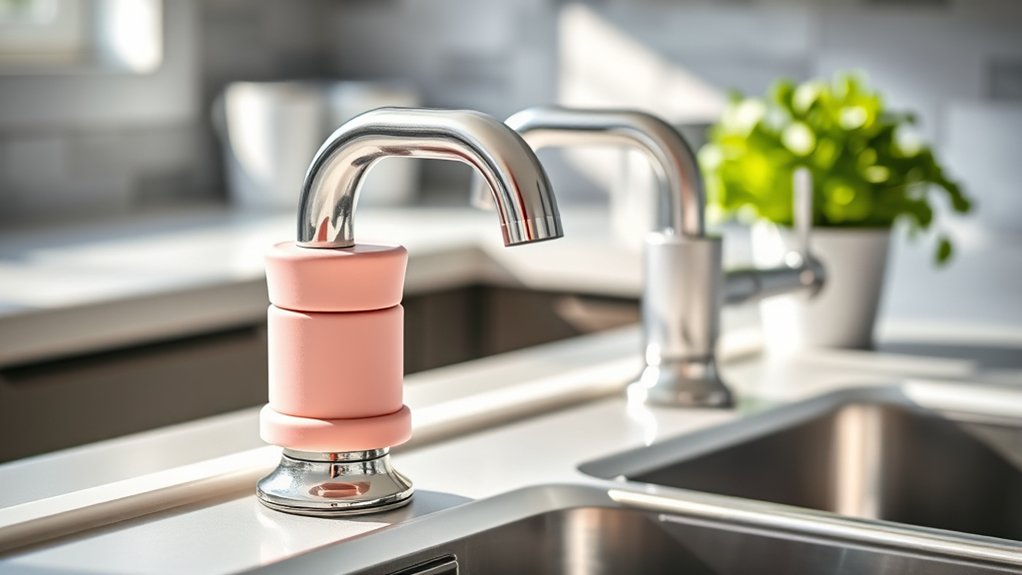
Are faucet covers necessary for your home? You’ll want faucet covers to cushion sharp edges and prevent your baby from touching hot metal, reducing injury risks effectively.
Silicone covers are durable and absorb impact well, while foam offers extra softness but may wear out faster.
Not all faucets need covers—rounded or recessed designs might be safer without them.
Choosing the right cover means considering material, fit, and ease of installation. Exploring additional faucet safety tactics can further protect your little one.
Key Takeaways
- Faucet covers cushion sharp edges, reducing injury risk for infants and toddlers during bathroom or kitchen exploration.
- They prevent direct contact with hot or cold metal surfaces, protecting children from burns or bruises.
- Covers increase caregiver awareness through color contrast and tactile feedback, enhancing overall child safety.
- Faucet covers are less necessary for rounded or recessed faucets and minimal child access areas.
- Choosing durable, mold-resistant silicone covers with easy installation maximizes safety and convenience.
Do Faucet Covers Really Make Your Home Safer for Babies?
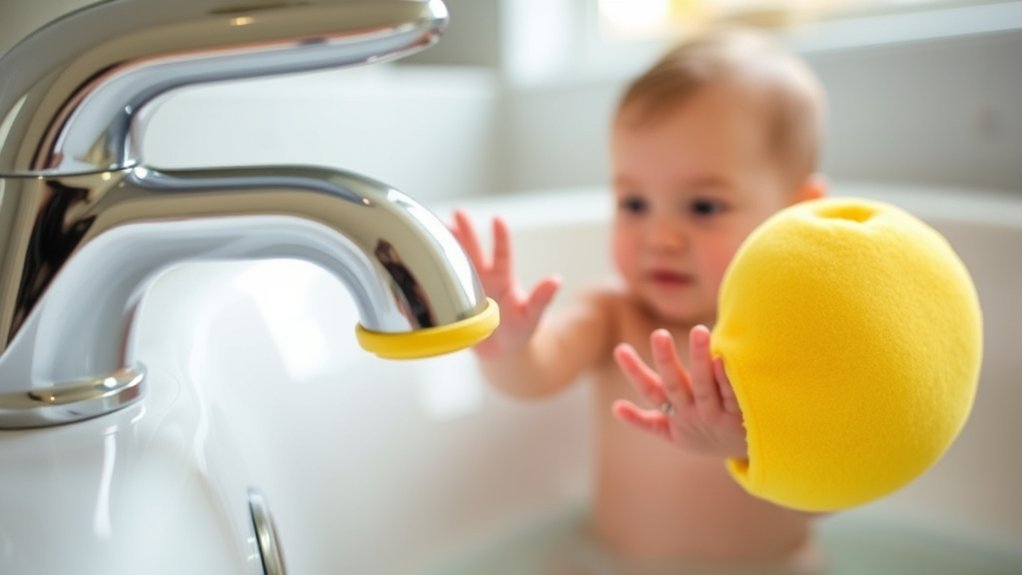
How effectively do faucet covers enhance safety for babies in your home? Faucet covers provide tangible safety benefits by cushioning sharp faucet edges and reducing injury risk during accidental bumps. They act as a physical barrier, preventing babies from directly contacting cold or hot metal surfaces, which can cause burns or bruises.
By increasing baby awareness through color contrast and tactile feedback, these covers help alert caregivers to potential hazards near sinks or bathtubs. Their installation is straightforward, ensuring consistent protection without complicating faucet use.
In practical terms, faucet covers minimize head injuries in active infants and toddlers exploring their environment. Consequently, incorporating faucet covers into your baby-proofing strategy offers a precise, effective measure to enhance overall safety and prevent common accidents at water fixtures.
What Types of Faucet Covers Are Available?
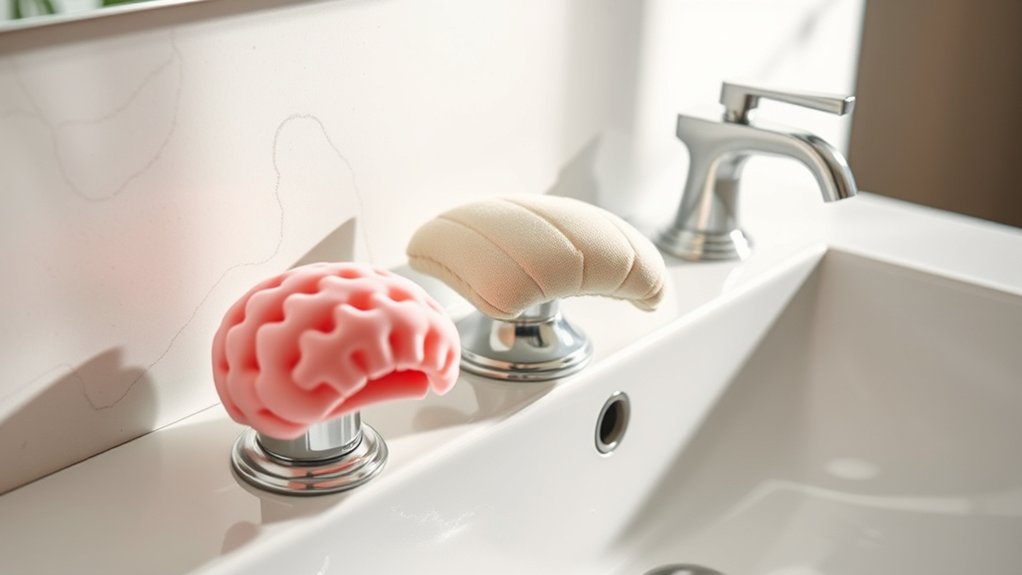
Several types of faucet covers are available, each designed to address specific safety and usability needs. You’ll find silicone models that offer flexibility and durability, perfect for absorbing impact and preventing injuries.
Silicone faucet covers provide flexible, durable protection to absorb impact and enhance safety in your home.
Plastic covers, usually rigid, provide a sturdy barrier but may require precise fitting. Foam options excel in cushioning but can degrade faster with water exposure.
When selecting, consider material options based on your faucet’s shape and your household’s usage patterns. Installation tips include ensuring the cover fits snugly over the faucet to avoid slipping and securing it with adhesive strips or straps if included.
Some covers are designed for tool-free installation, while others might require minor adjustments or tightening for maximum safety. Choosing the right type depends on balancing protection, ease of use, and maintenance.
When You Might Skip Using a Faucet Cover
Although faucet covers enhance safety, you might skip using one if your faucet design minimizes injury risk, such as rounded edges or recessed installation. In some scenarios, faucet cover alternatives like soft silicone guards or strategically placed padding provide sufficient protection without bulky covers.
Seasonal considerations also affect your choice. During warmer months, exposed faucets may pose less risk, reducing the need for covers.
| Scenario | Recommended Action |
|---|---|
| Rounded or recessed faucets | Skip cover; use silicone guards |
| Minimal child access areas | Use padding as alternative |
| Warmer seasons (low risk) | Consider removing covers |
Evaluate your faucet’s design and environment before deciding to forgo a cover to maintain safety effectively.
How to Pick the Right Faucet Cover for Your Family
Choosing a faucet cover that suits your family’s specific needs involves evaluating factors like material durability, ease of installation, and compatibility with your faucet type. Start by examining design considerations such as size and shape to guarantee a snug fit without obstructing faucet functionality.
Next, consider material types; opt for impact-resistant silicone or rubber for effective cushioning and longevity. Finally, assess installation methods. Snap-on covers offer quick application, while adhesive types provide a more permanent solution.
Choose impact-resistant silicone or rubber covers for durability; snap-on for easy use or adhesive for lasting protection.
- Confirm compatibility with your faucet’s dimensions and style
- Prioritize materials resistant to mold and easy to clean
- Choose designs that balance safety with aesthetic appeal
Other Easy Ways to Baby-Proof Your Faucets
When you want to enhance faucet safety beyond covers, implementing additional baby-proofing measures can provide extra protection. Start by installing faucet handle locks or knobs that require a push-and-turn motion, preventing easy access by little hands.
Consider applying anti-scald devices to regulate water temperature and avoid burns. You can also use adhesive-backed foam or silicone sleeves around faucets to soften edges and reduce injury risk.
Keep cleaning supplies and hazardous liquids stored securely away from the sink area. For childproofing kitchen faucets, confirm that pipes under the sink are insulated or covered to prevent contact with hot surfaces.
Regularly inspect these safety installations to confirm they remain secure. These faucet safety tips help create a safer environment while complementing the use of faucet covers.
Frequently Asked Questions
Can Faucet Covers Prevent Scalding From Hot Water?
Yes, faucet covers enhance scald protection by insulating the tap, reducing direct contact with hot surfaces. They improve hot water safety practically, especially for children, by minimizing burn risks during bathing or washing activities.
Are Faucet Covers Compatible With All Faucet Designs?
You might worry faucet covers won’t fit your unique faucet design, but many offer adjustable features ensuring broad faucet design compatibility. Follow installation tips carefully for a secure fit on most standard faucets, enhancing safety effortlessly.
How Do You Clean and Maintain Faucet Covers?
You clean faucet covers using mild soap and warm water; avoid harsh chemicals to preserve material. Maintenance tips include regular inspections for damage and ensuring covers dry completely to prevent mold or mildew buildup, extending their lifespan effectively.
Do Faucet Covers Affect Water Flow or Temperature Control?
Like a well-fitted glove, faucet covers don’t hinder water flow or temperature regulation. You’ll notice no change in pressure or control since covers sit externally, ensuring your faucet’s function remains precise and uninterrupted.
Are Faucet Covers Safe for Pets as Well as Children?
You’ll find faucet covers safe for both pet safety and child safety when made from non-toxic, durable materials. They prevent injuries by cushioning sharp edges, but always check for secure fittings to avoid choking hazards.
Conclusion
When it comes to baby-proofing, faucet covers can add an extra layer of safety, but they’re not always essential. Remember, “an ounce of prevention is worth a pound of cure.” Choosing the right cover depends on your faucet type and your child’s activity level.
If you decide to skip it, make sure other precautions are in place, like adjusting water temperature and supervising closely. Practical measures combined guarantee your home stays safe and functional.
In conclusion, while faucet covers are not strictly necessary, they can be a helpful addition to your overall safety strategy. Faucet covers are a smart choice for added protection in your home.


Leave a Reply