
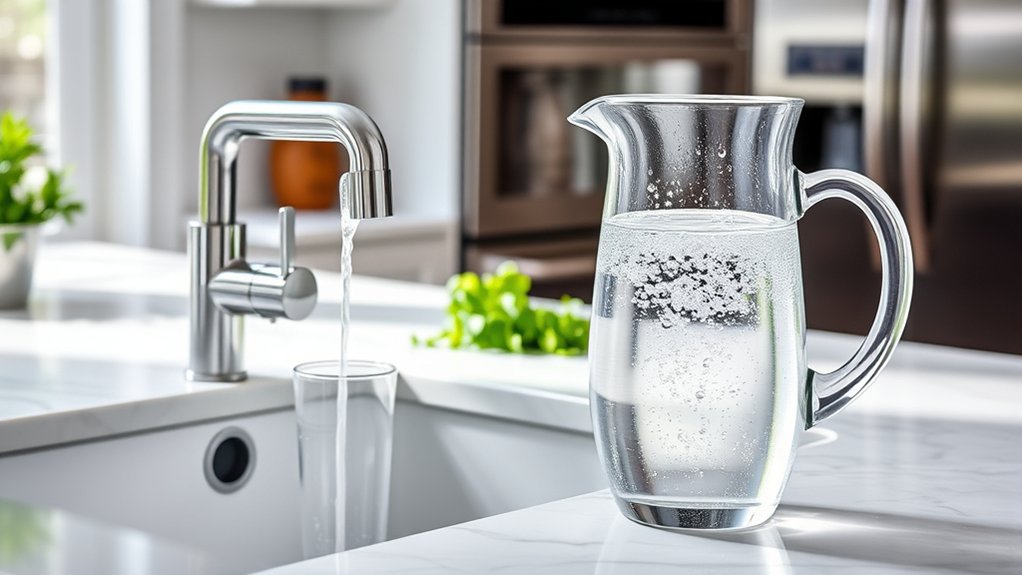
If you want more effective contaminant removal and continuous filtered water flow, faucet filters outperform pitchers by using advanced multi-stage filtration.
Faucet filters handle chlorine, heavy metals, and some microbes better than pitchers’ simpler activated carbon filters. This makes faucet filters better than pitchers for those seeking higher water quality.
Faucet filters require installation and periodic cartridge changes but offer steady performance for larger households.
Pitchers, on the other hand, are easy to use and portable but need more frequent maintenance. They may also miss certain contaminants that faucet filters can catch.
Understanding these differences helps you choose the best option for your water needs.
Whether you prioritize convenience or thorough filtration will guide your decision between faucet filters and pitchers.
Key Takeaways
- Faucet filters provide continuous, on-demand filtration with advanced multi-stage media, offering higher contaminant removal than most pitchers.
- Water filter pitchers use simpler activated carbon filters, effectively reducing chlorine taste but less efficient against heavy metals and pathogens.
- Faucet filters require installation and occasional cartridge replacement every 2–3 months, while pitchers need frequent filter changes and manual cleaning.
- Faucet filters involve a higher initial cost but moderate ongoing expenses, whereas pitchers have lower upfront costs but more frequent filter replacements increase long-term costs.
- Large households and high-contaminant water users benefit more from faucet filters, while singles or couples with lower usage may prefer the convenience of pitchers.
Faucet Filters vs. Water Filter Pitchers: How They Work Differently
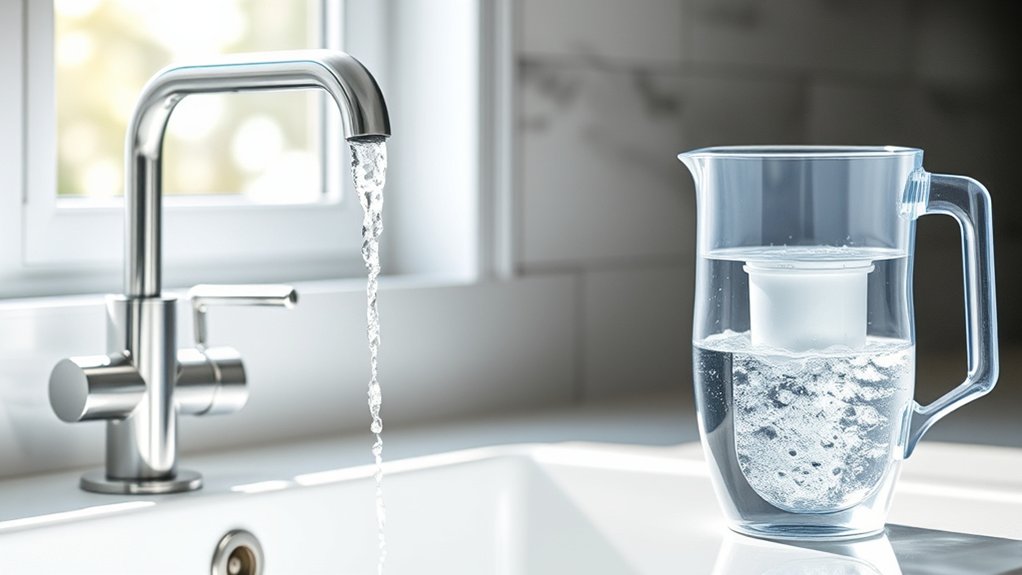
Although both faucet filters and water filter pitchers aim to improve your drinking water quality, they operate through distinct mechanisms. Faucet filters attach directly to your tap, using advanced filter technology such as activated carbon and ion exchange resins.
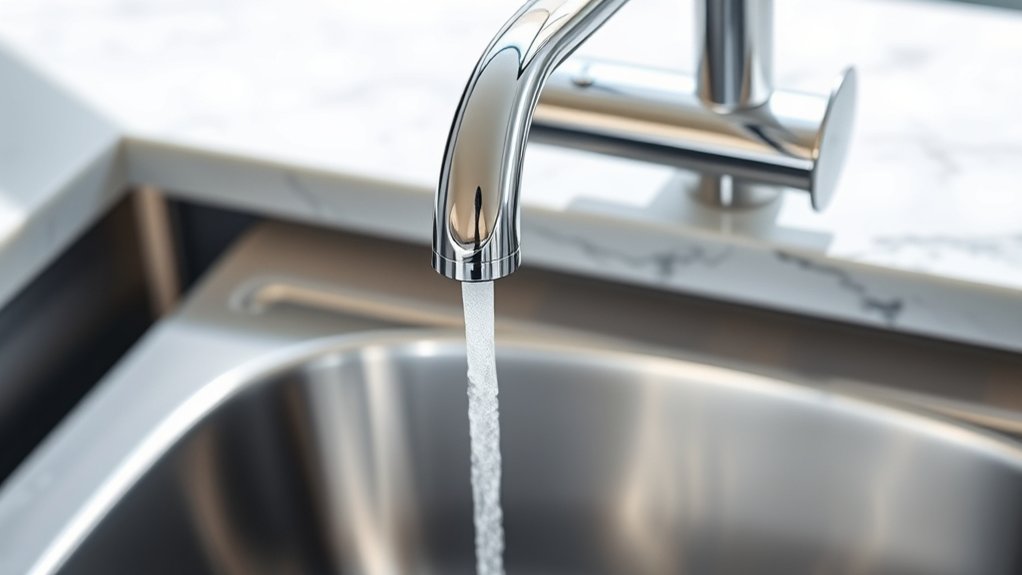
This setup allows water to flow continuously through the filter media as you turn on the tap, providing filtered water on demand with minimal delay. In contrast, water filter pitchers rely on gravity-driven filter technology; water is poured into the reservoir, passes slowly through a filter cartridge, and collects in the pitcher below.
This process affects the water flow rate, making filtering slower but portable. Understanding these operational differences helps you choose the system that fits your usage patterns and filtration needs efficiently.
How Faucet Filters and Pitchers Compare in Removing Contaminants
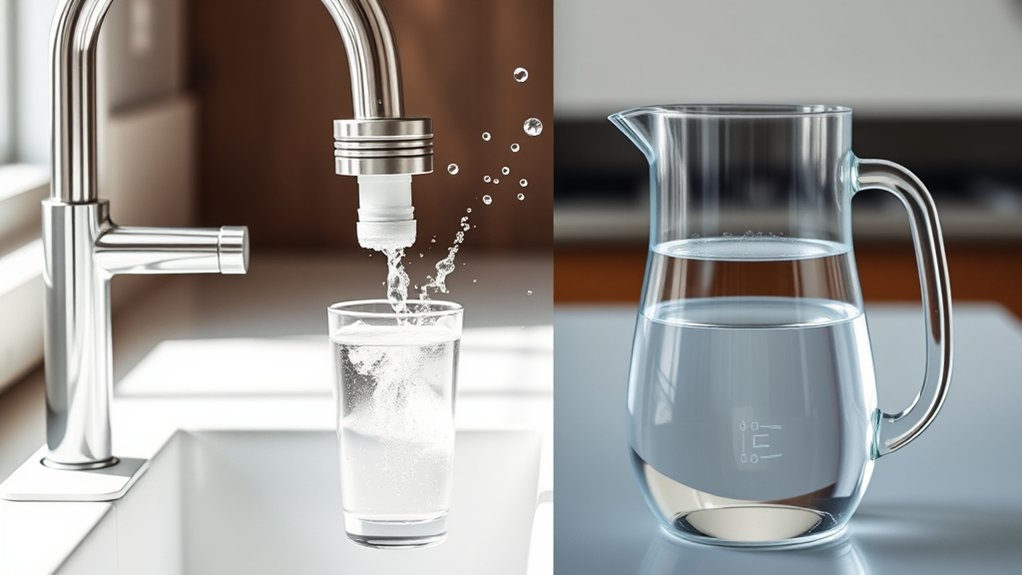
While faucet filters and pitchers differ in their operation, their effectiveness in removing contaminants is a key factor to take into account. Faucet filters typically employ advanced multi-stage filtration systems, integrating activated carbon and ion exchange resins, which provide higher filtration efficiency.
This results in more thorough contaminant removal, including chlorine, lead, and certain microbial cysts. Pitchers, by contrast, usually utilize simpler activated carbon filters that reduce chlorine taste and odors but may be less effective against heavy metals and pathogens.
You’ll find that faucet filters maintain consistent contaminant removal due to direct water flow, whereas pitchers depend on gravity, which can limit filtration speed and effectiveness. Understanding these differences in filtration efficiency helps you choose the system best suited for your water quality needs.
Installation and Maintenance: Faucet Filters vs. Pitchers
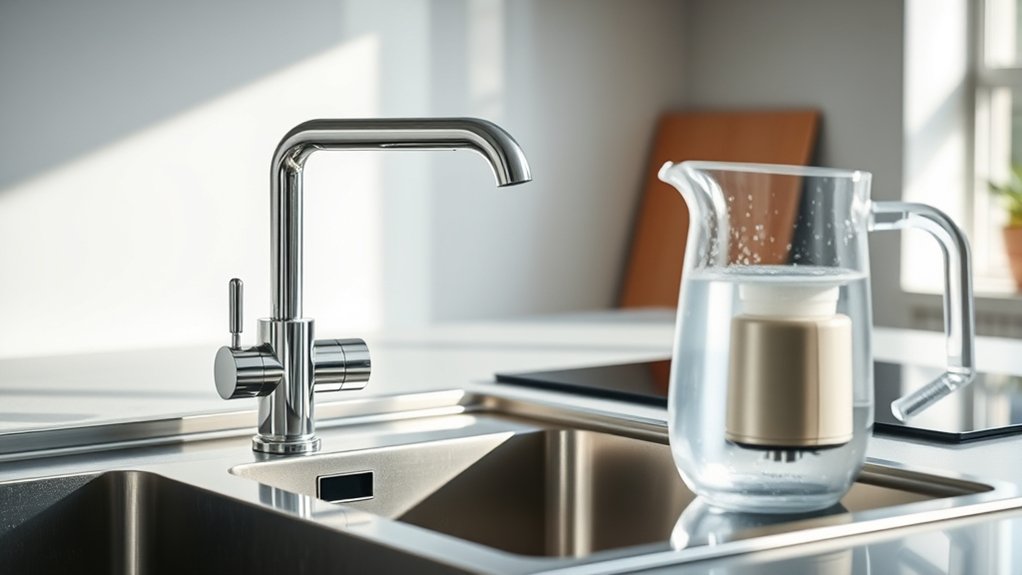
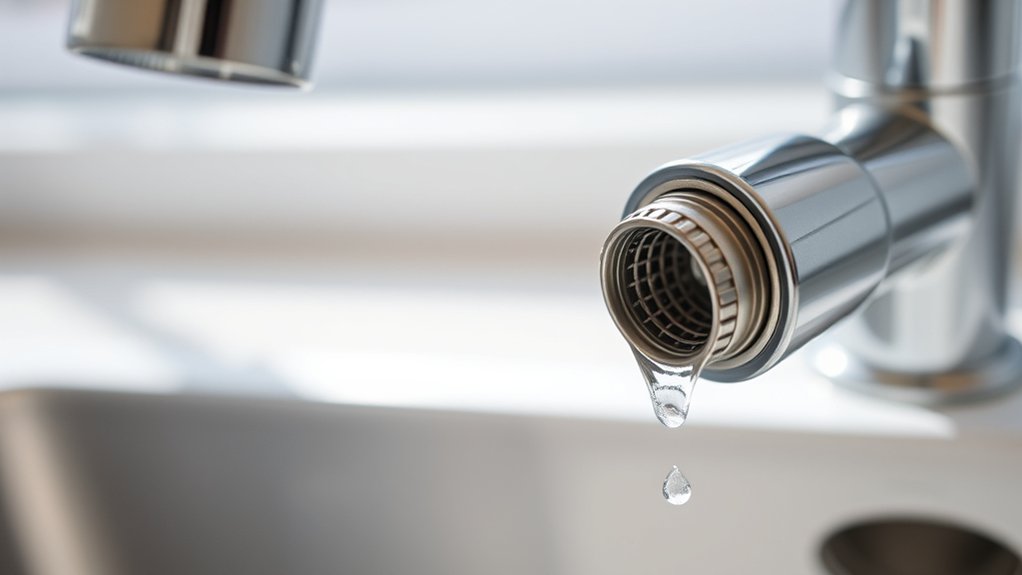
Installation and maintenance requirements vary considerably between faucet filters and pitchers, impacting their convenience and long-term usability. When considering installation ease, faucet filters usually require simple attachment to your existing faucet but may need tools or adapters. Pitchers need no installation; just fill and use.
Maintenance frequency differs too; faucet filters demand timely cartridge replacements to maintain filtration efficiency, while pitchers require regular filter changes and cleaning.
- Faucet Filters: Moderate installation ease; cartridge replacement every 2–3 months.
- Pitchers: No installation; filter replacement every 1–2 months; manual cleaning needed.
- Both systems require monitoring to avoid bacterial growth or clogging.
Your choice depends on how much installation effort and maintenance frequency you prefer managing over time.
Cost and Long-Term Value of Faucet Filters and Pitchers
When weighing the cost and long-term value of faucet filters versus pitchers, you should consider both upfront expenses and ongoing maintenance costs. Faucet filters generally require a higher initial investment due to installation components and durable hardware. However, their ongoing expenses, primarily replacement cartridges, tend to be moderate and spaced out over several months.
Pitchers, on the other hand, have a lower initial investment since they’re simple and portable, but their filter replacements often occur more frequently, increasing cumulative ongoing expenses. Evaluating the total cost of ownership involves calculating how often you’ll need to replace filters and the price difference between models. By analyzing these factors, you can determine which option offers better cost-efficiency and aligns with your budget over time.
Which Filter Fits Your Lifestyle and Water Needs?
Understanding your daily habits and the quality of your tap water will help you select the filter that best suits your lifestyle and water needs. Consider your lifestyle preferences and typical water usage to determine whether a faucet filter or a pitcher is more appropriate.
Assess your habits and water quality to choose between a faucet filter or a pitcher for your needs.
Faucet filters offer continuous filtration, ideal for high water consumption and convenience. Pitchers provide portability and simplicity, fitting well with lower water usage or shared living spaces.
Evaluate these factors:
- Water Source Quality: High contaminant levels favor faucet filters with advanced media.
- Usage Volume: Large households benefit from faucet filters; singles or couples may prefer pitchers.
- Installation and Maintenance: Choose based on willingness for installation and routine filter changes.
Matching these criteria guarantees you select a filtration system aligned with your daily requirements and water quality.
Frequently Asked Questions
Are Faucet Filters Compatible With All Types of Faucets?
You’ll find faucet compatibility varies; not all faucets support every filter installation. Check your faucet’s threading and size specifications carefully to guarantee the filter fits properly. Adapting kits may help if direct installation isn’t possible.
Can Water Filter Pitchers Improve Taste and Odor Better Than Faucet Filters?
You can expect water filter pitchers to offer superior taste enhancement and odor removal because their activated carbon filters often have longer contact time with water. This improves purification compared to the faster flow rates in faucet filters.
How Often Should the Filters in Pitchers and Faucets Be Replaced?
You’ll replace pitcher filters about every two months, while faucet filters last three to six months. Despite faucet filters’ longer filter lifespan, both require regular maintenance frequency to guarantee peak performance and water quality.
Do Faucet Filters Reduce Water Pressure Significantly?
You won’t notice a significant drop in water pressure with a quality faucet filter, as they’re designed to maintain faucet efficiency while removing contaminants. This ensures steady flow without compromising your tap’s performance.
Are There Any Environmental Benefits to Using One Filter Type Over the Other?
When push comes to shove, faucet filters often have a smaller sustainability impact due to consistent use and less frequent cartridge replacement. This promotes better waste reduction compared to pitchers, which require more plastic filter changes and packaging disposal.
Conclusion
Choosing between faucet filters and pitchers comes down to your priorities. Faucet filters offer continuous, hands-free filtration with higher upfront costs and installation. Pitchers provide portability and simplicity but require frequent refills and filter changes.
If you want seamless integration and consistent water flow, faucet filters excel. However, if convenience and budget matter more, pitchers might suit you better.
Understanding these contrasts helps you select the best fit for your specific water quality and lifestyle needs. When deciding are faucet filters better than pitchers, consider how each aligns with your daily routine and water consumption habits.

Leave a Reply