
You’ll find faucet filters worth it if you want convenient, on-demand filtered water that reduces chlorine, heavy metals, sediments, and improves taste right at the tap.
Faucet filters are easy to install and cost-effective compared to buying bottled water. They are also backed by independent certifications for contaminant removal, ensuring you get clean water.
Regular cartridge replacement keeps performance efficient and maintains water quality.
While faucet filters are not as thorough as under-sink systems, their balance of convenience and effectiveness makes them a smart choice for many households.
Explore the factors that can help you decide if a faucet filter is ideal for your needs.
Key Takeaways
- Faucet filters improve water taste, odor, and safety by reducing chlorine, heavy metals, and sediments effectively.
- They are easy to install and require minimal plumbing changes, offering convenient on-demand filtered water.
- Regular cartridge replacements every 2-3 months ensure optimal filtration performance and contaminant removal.
- Certified filters with independent lab testing guarantee reliable water quality improvement and health benefits.
- Faucet filters reduce bottled water reliance, providing long-term cost savings and environmental benefits.
How Do Faucet Filters Actually Clean Your Water?
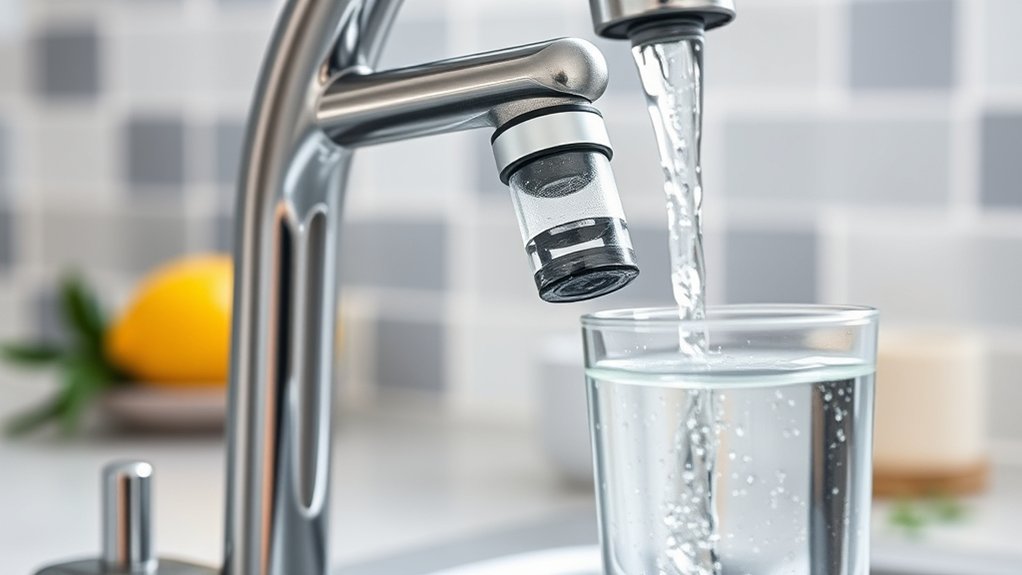
A faucet filter works by forcing your tap water through a specialized cartridge designed to trap contaminants and impurities. You rely on various filtration methods within this cartridge, such as activated carbon to adsorb chlorine and organic compounds, or ion exchange resins that reduce heavy metals.
Some advanced filters also employ mechanical filtration to remove particulate matter. These combined filtration methods guarantee effective water purification directly at the tap.
As water passes through, the filter captures unwanted substances without greatly reducing flow rate. This targeted process improves taste and odor while enhancing safety.
What Contaminants Can Faucet Filters Remove?
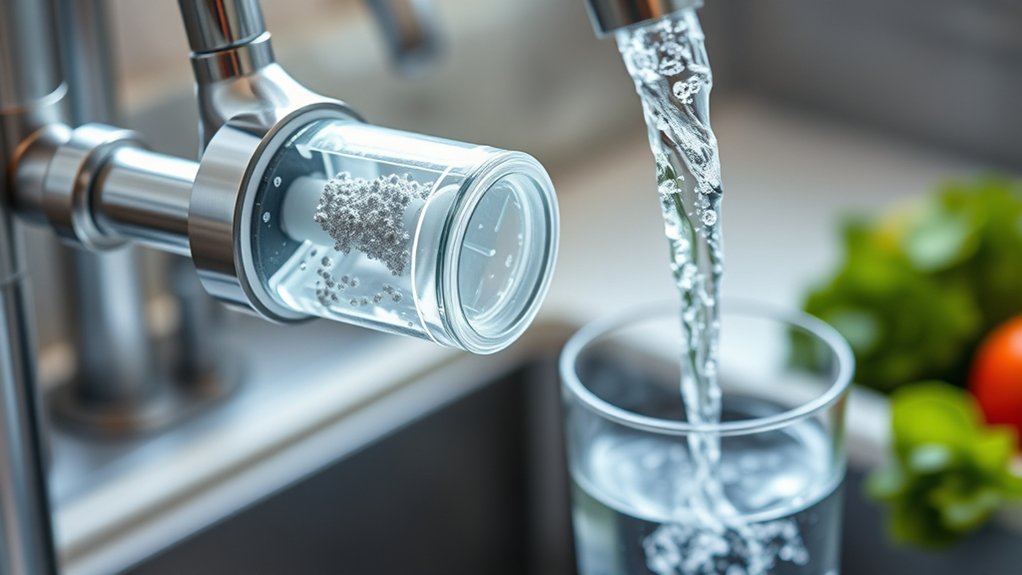
Understanding the filtration mechanisms helps clarify which contaminants faucet filters are designed to target. These devices typically use activated carbon and ion exchange resins to reduce harmful substances in your tap water.
You can expect effective removal of lead contaminants, which pose serious health risks even at low levels. They also reduce chlorine and other chemicals responsible for unpleasant tastes and odors.
Additionally, faucet filters remove sediments and particulate matter that cloud your water.
What Are the Pros and Cons of Faucet Filters?
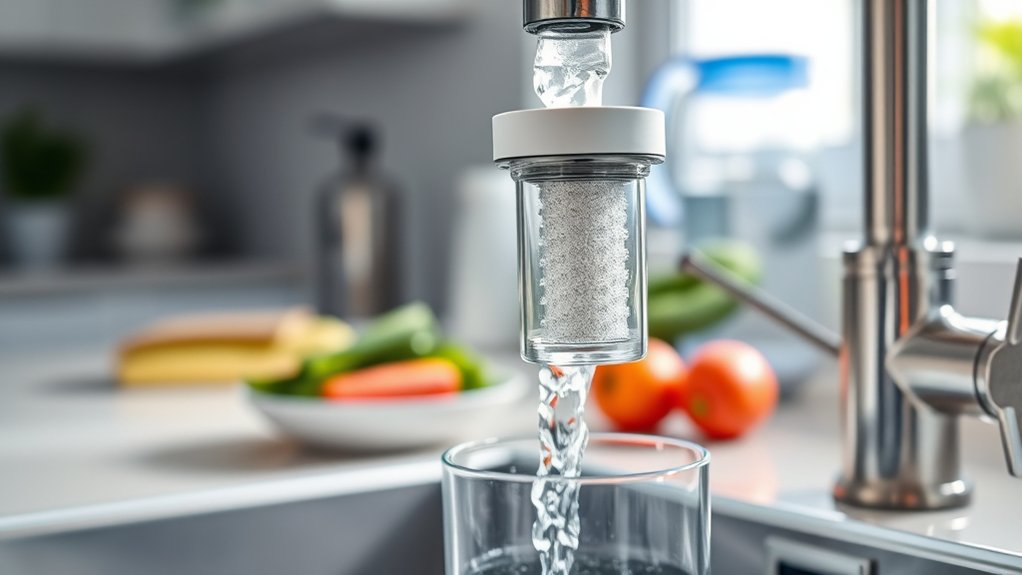
You’ll notice faucet filters greatly improve water quality by reducing contaminants effectively. However, you’ll need to take into account the ease of installation and regular maintenance requirements.
Additionally, weigh the cost against the filter’s durability to determine if it fits your needs.
Water Quality Improvement
Although faucet filters can markedly enhance water quality by removing contaminants like chlorine, lead, and sediment, they also come with limitations that you should consider. These filters improve your water taste and provide health benefits by reducing harmful substances. However, their effectiveness depends on the filter type and water source quality.
Here’s what you need to know about water quality improvement with faucet filters:
- They effectively reduce common contaminants, improving water clarity and odor.
- Some filters may not eliminate all microorganisms or chemical pollutants.
- The filtration capacity varies, requiring timely replacement to maintain performance.
Understanding these factors helps you gauge how well a faucet filter can improve your tap water quality and protect your health.
Installation And Maintenance
Since faucet filters require regular upkeep to function effectively, evaluating their installation and maintenance demands is essential. When installing, follow installation tips closely: verify your faucet type is compatible, use the correct adapters, and securely tighten connections to prevent leaks.
Most models attach directly to the faucet or replace the aerator, making installation straightforward for those with basic tools. Regarding maintenance guidelines, you’ll need to replace filter cartridges periodically, usually every 2 to 3 months, to maintain water quality and flow rate.
Neglecting this can clog the filter and reduce efficiency. Additionally, clean the unit’s exterior regularly to avoid mineral buildup. While installation is generally simple, adhering to these maintenance guidelines guarantees peak performance and prolongs your filter’s lifespan.
Cost And Durability
While faucet filters offer a convenient way to improve water quality, understanding their cost and durability is essential before making a purchase. Conducting a thorough cost analysis helps you weigh initial expenses against long-term maintenance and replacement costs.
Filter lifespan varies greatly depending on the model and water usage, affecting overall value.
Consider these factors:
- Upfront cost: Basic models are affordable, but advanced filtration increases price.
- Filter lifespan: Most filters require replacement every 2-6 months, influencing ongoing costs.
- Durability: Materials and build quality determine how well a filter withstands daily use and potential wear.
How Do Faucet Filters Compare to Other Kitchen Water Filters?
When evaluating kitchen water filtration options, you’ll find that faucet filters offer a distinct balance of convenience and performance compared to under-sink or countertop models. Faucet filter comparison highlights their ease of installation directly onto your tap, requiring no additional plumbing, unlike under-sink systems.
They provide on-demand filtered water without occupying counter space, a key advantage over countertop options. However, their filtration capacity and flow rate tend to be lower than more extensive under-sink filters, which often feature multi-stage purification.
Countertop filters may offer similar or enhanced filtration but lack the seamless integration of faucet-mounted units. When considering kitchen filter options, faucet filters strike a practical middle ground, delivering adequate contaminant reduction with user-friendly access, though they may not match the depth of filtration provided by more complex systems.
What Should You Look For When Choosing a Faucet Filter?
When choosing a faucet filter, you need to evaluate the filtration technology to guarantee it targets the contaminants in your water. Consider how easy the unit is to install and maintain, as this affects long-term usability.
Finally, verify certifications like NSF/ANSI standards to confirm the filter’s effectiveness and safety.
Filtration Technology Types
Because water contaminants vary widely, choosing the right filtration technology is essential to guarantee your faucet filter effectively addresses your specific water quality concerns. Different systems target various impurities, so understanding their mechanisms helps you make an informed decision.
- Activated carbon filters excel at removing chlorine, volatile organic compounds (VOCs), and improving taste and odor by adsorbing contaminants onto their porous surface.
- Reverse osmosis systems provide thorough purification by forcing water through a semipermeable membrane, eliminating dissolved solids, heavy metals, and many microorganisms.
- Ceramic filters physically block bacteria and sediment with fine pores, ideal for particulate removal but less effective against chemical contaminants.
Installation And Maintenance
Understanding the filtration technology is only part of selecting the right faucet filter; installation and ongoing maintenance greatly impact its performance and convenience. When evaluating the installation process, look for filters that offer straightforward, tool-free attachment compatible with your faucet type.
A complex installation can lead to leaks or improper fit, reducing filtration efficiency. For maintenance, prioritize models with easily accessible filter cartridges to simplify filter replacement. Check the recommended replacement frequency and verify replacements are readily available and affordable.
Filters requiring frequent or complicated replacements may increase long-term costs and effort. Additionally, consider if the filter design includes indicators for timely replacement, helping you maintain ideal water quality without guesswork. By focusing on installation ease and maintenance demands, you guarantee sustained performance and user satisfaction.
Certification And Standards
Although faucet filters vary widely in features and performance, certification and adherence to established standards provide objective measures of their effectiveness. When choosing a faucet filter, you should prioritize products verified by reputable certification agencies.
These agencies rigorously test filters to confirm they meet stringent industry standards for contaminant reduction and material safety. Look for certifications such as:
- NSF/ANSI standards (e.g., 42, 53) verifying filtration claims
- Water Quality Association (WQA) Gold Seal confirming performance and safety
- Independent lab testing results validating contaminant removal
These certifications guarantee the filter’s ability to reduce specific pollutants like chlorine, lead, and cysts under controlled conditions. By selecting a faucet filter with recognized certification, you confirm reliable, consistent water quality improvement aligned with industry standards, safeguarding your health and investment.
Are Faucet Filters Worth It for Your Health and Wallet?
How do faucet filters impact both your health and your budget? Faucet filters provide notable health benefits by reducing contaminants like chlorine, lead, and microbial cysts, which can improve water quality and lower your exposure to harmful substances. This reduction supports better hydration and overall wellness.
From a financial perspective, while initial costs for purchase and installation exist, faucet filters often lead to financial savings over time. They decrease reliance on bottled water, cutting recurring expenses considerably. Additionally, many filters require minimal maintenance, further limiting costs.
Frequently Asked Questions
How Often Do Faucet Filters Need to Be Replaced?
You should follow the replacement schedule specified by the manufacturer, typically every 2 to 6 months. The filter lifespan depends on water quality and usage, so monitoring flow rate helps guarantee timely replacement for ideal performance.
Can Faucet Filters Affect Water Pressure?
Yes, faucet filters can affect water flow because clogged or aging filters reduce water flow, impacting filter efficiency. Regular replacement guarantees ideal water pressure and filtration performance, maintaining both adequate flow and effective contaminant removal.
Are Faucet Filters Easy to Install Without Professional Help?
Yes, you’ll find the installation process straightforward with basic tools. Follow DIY tips like turning off water, unscrewing the aerator, and securely attaching the filter.
Precise alignment guarantees no leaks and ideal filtration performance.
Do Faucet Filters Remove Chlorine Taste and Odor?
You’ll find that most faucet filters achieve up to 95% chlorine removal, greatly improving taste and odor. This technical efficiency means you can enjoy cleaner, fresher water directly from your tap without lingering chlorine flavors.
Can Faucet Filters Be Used With Hard Water?
Yes, you can use faucet filters with hard water, but you should monitor for mineral buildup. Hard water’s minerals may clog filters faster, reducing efficiency.
Regular maintenance and filter replacement guarantee peak performance against contaminants.
Conclusion
You’ll find that faucet filters improve your water by reducing contaminants, enhancing taste, and offering convenience. They save you money compared to bottled water, require minimal installation, and demand regular maintenance to stay effective.
While they may not remove every pollutant, they strike a balance between cost and performance. This makes them a practical choice for many households looking to improve their tap water quality.
Ultimately, choosing a faucet filter means choosing cleaner water, greater ease, and smarter spending—making faucet filters worth it for your health and wallet.


Leave a Reply