
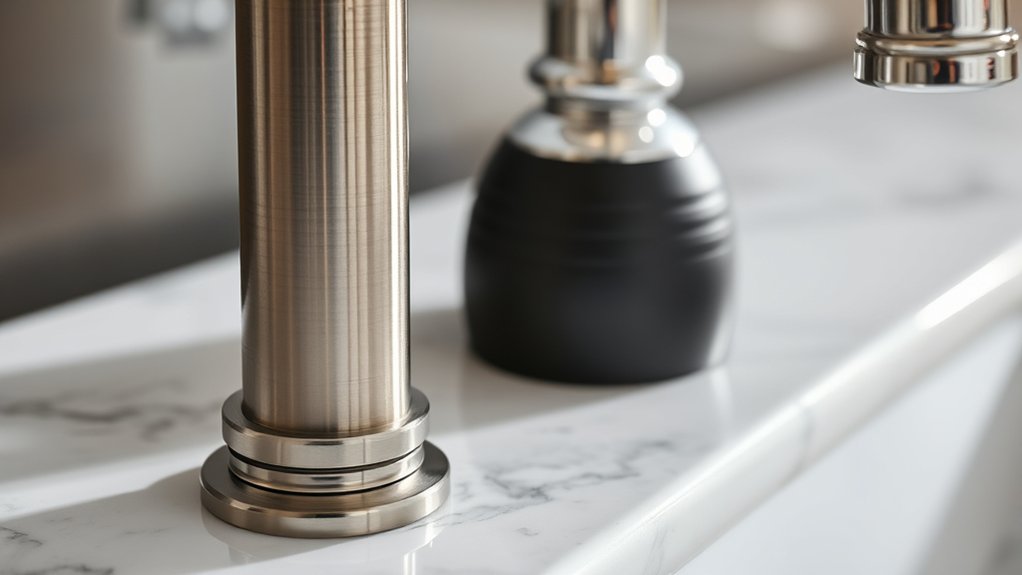
Are Faucet Handles Interchangeable?
You can replace faucet handles, but they’re rarely fully interchangeable.
Handles must match your faucet’s stem size, attachment method, and cartridge type to fit and function properly. Differences in spline count, diameter, and securing mechanisms often prevent swaps between brands or styles.
To find the right replacement, measure stem dimensions and verify attachment style. Choosing a handle that suits your faucet’s design and mechanism guarantees usability and durability.
Understanding these factors will help you select the best handle for your needs.
Key Takeaways
- Faucet handle interchangeability depends on matching stem size, shape, and attachment method precisely.
- Different manufacturers use varied stem designs, making many handles incompatible across brands.
- Attachment mechanisms like set screws, splines, or push-on fittings influence handle fit and function.
- Internal valve types and handle design variations often prevent universal handle swaps.
- Proper compatibility checks and measurements are essential before replacing or swapping faucet handles.
What Types of Faucet Handles Are Common?

Faucet handles come in several common types, each designed for specific installation and usage needs. You’ll typically encounter lever, knob, and cross handles. Lever handles offer ease of use and suit modern design styles, while knob handles provide a traditional look and require a firm grip. Cross handles combine classic aesthetics with functional grip.
When selecting or replacing handles, consider handle materials such as metal, plastic, or ceramic. Metal handles, often brass or stainless steel, provide durability and corrosion resistance. Plastic handles are cost-effective but less durable, and ceramic handles add a decorative touch but can be fragile.
Matching handle materials with your faucet’s design style guarantees both performance and aesthetic cohesion in your kitchen or bathroom setup.
Are Faucet Handles Interchangeable?
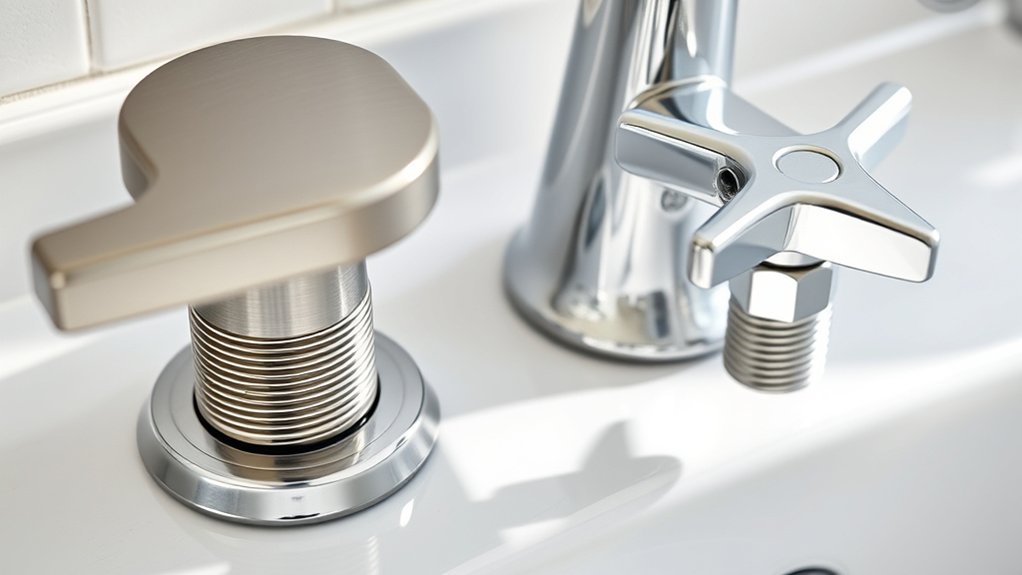
Choosing the right handle type and material sets the foundation, but you might wonder if you can swap out handles without replacing the entire faucet. Handle compatibility depends heavily on the faucet design, including the stem size, attachment method, and the type of cartridge or valve.
Here are key factors affecting interchangeability:
- Stem and Adapter Compatibility: Handles must fit the stem’s shape and size precisely for proper function.
- Attachment Mechanism: Some handles use set screws, others use splines or push-on fittings, influencing replacement options.
- Design and Aesthetics: Even if mechanically compatible, matching the faucet design guarantees functional and visual harmony.
Before swapping handles, verify these compatibility aspects to avoid installation issues or damage.
Why Don’t Faucet Handles Always Fit?
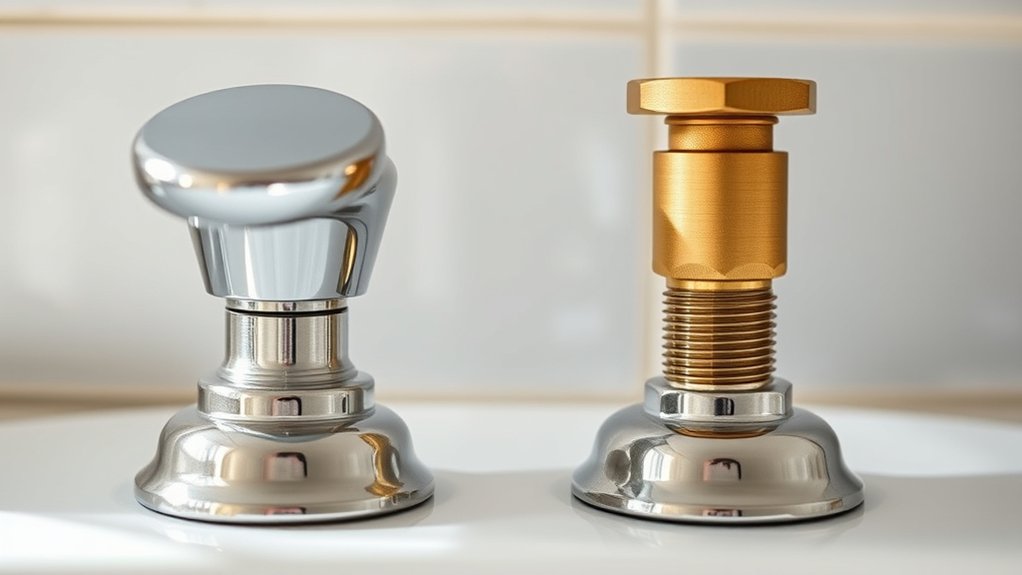
Even if two handles look similar, they often won’t fit because manufacturers use different stem sizes, attachment methods, and internal mechanisms. When you encounter faucet compatibility issues, it usually stems from handle design variations like spline counts, diameters, or set screw placements.
Some handles secure with a single screw, while others use clips or threaded collars, affecting fit. Additionally, the internal valve types—compression, cartridge, or ceramic disc—influence handle compatibility. If the handle’s internal bore doesn’t align precisely with the faucet stem, you’ll struggle to install it properly.
Understanding these technical differences helps you avoid mismatches. So, when replacing or upgrading faucet handles, you’ll notice that slight design changes can prevent interchangeability despite visual similarities, making it essential to verify specifications before attempting a swap.
How to Choose the Right Replacement Handle
Before selecting a replacement handle, you need to identify your faucet’s stem type, size, and attachment method. This guarantees compatibility and ideal performance. Next, consider replacement handle materials. Metal offers durability, while plastic is lightweight and cost-effective.
Identify your faucet’s stem type, size, and attachment before choosing a durable, compatible replacement handle material.
Also, evaluate faucet handle styles to match your bathroom or kitchen décor and maintain functional ergonomics.
- Measure the stem diameter and length to match the new handle precisely.
- Determine the attachment method: set screw, spline, or push-on to guarantee secure fitting.
- Choose replacement handle materials and styles that balance durability with aesthetics.
Frequently Asked Questions
Can I Paint or Customize My Faucet Handles?
You can paint or customize your faucet handles by using durable, water-resistant paint designed for metal or plastic. Proper surface prep and sealing guarantee lasting results when customizing faucet designs effectively and professionally.
How Do I Remove a Stuck Faucet Handle Safely?
You’ll safely remove a stuck faucet handle by applying handle lubrication, such as WD-40, then gently prying with a handle puller or flat tool. Use steady pressure, avoiding excessive force to prevent damage during removal techniques.
Are There Eco-Friendly Faucet Handle Options Available?
Think of eco-friendly faucet handles as the green roots nourishing your water system. You’ll find options made from eco-friendly materials with sustainable designs, ensuring durability while reducing environmental impact without sacrificing style or function.
What Tools Do I Need to Replace a Faucet Handle?
You’ll need a screwdriver, Allen wrench, adjustable wrench, and plumber’s grease. Identify your faucet handle types first, then follow handle installation tips like removing the cap and screws carefully to guarantee proper fit and smooth operation.
Can Faucet Handles Affect Water Pressure or Flow?
Think of your faucet handle as a gatekeeper; if it’s faulty or poorly fitted, it can cause flow restriction, leading to decreased water pressure. You’ll want to guarantee smooth operation for ideal water performance.
Conclusion
When replacing faucet handles, remember that about 60% of homes have unique handle designs, making interchangeability less common than you might expect. Don’t assume all handles fit every faucet—differences in mounting styles, sizes, and mechanisms matter.
To avoid frustration, always check compatibility before buying. Choosing the right replacement handle guarantees smooth operation and longevity, saving you time and money on repairs or returns.
Stay practical and precise when selecting your faucet handles. Understanding whether faucet handles are interchangeable is key to a successful replacement.

Leave a Reply