
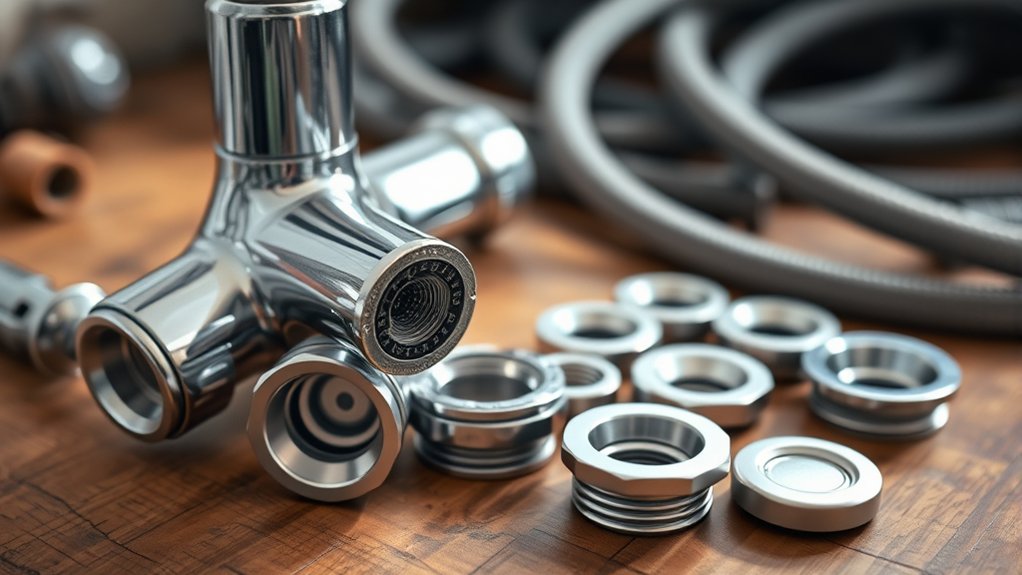
You can’t assume faucet seats are universal because their sizes, threading, and designs vary widely between brands and models.
Faucet seats come in different dimensions and styles, which means a one-size-fits-all approach doesn’t work.
To guarantee a proper seal and avoid leaks, you need to measure the inner diameter, check the thread type, and identify the seat shape before replacement.
Using the wrong seat can cause damage or persistent dripping.
Understanding these specifics will help you confidently choose the right faucet seat and maintain peak faucet performance.
Taking the time to select the correct seat ensures your faucet works efficiently and lasts longer.
Key Takeaways
- Faucet seats are not universal due to differences in size, threading, and design across brands.
- Compatibility depends on precise measurements like inner diameter, thread pitch, and seat shape.
- Material variations (brass, stainless steel, plastic) affect durability and fit, influencing compatibility.
- Manufacturer-specific specifications and part numbers must be checked for correct faucet seat replacement.
- Assuming universal fit often leads to leaks or improper sealing due to mismatched seats.
What Are Faucet Seats and Why Do They Matter?
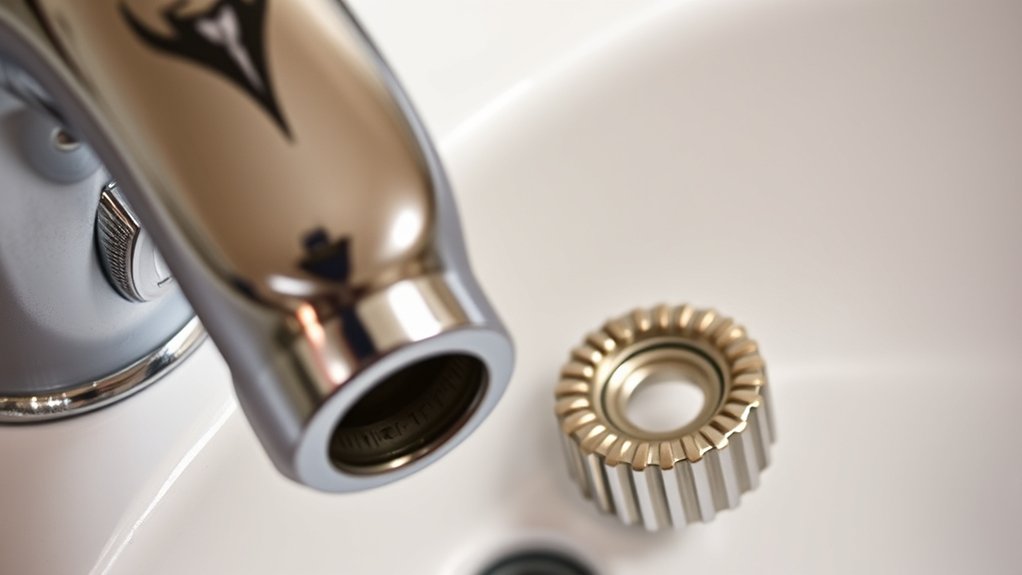
A faucet seat is a vital component inside your faucet where the valve washer rests to create a watertight seal. Understanding faucet seat importance is significant because it directly influences your faucet’s ability to prevent leaks.
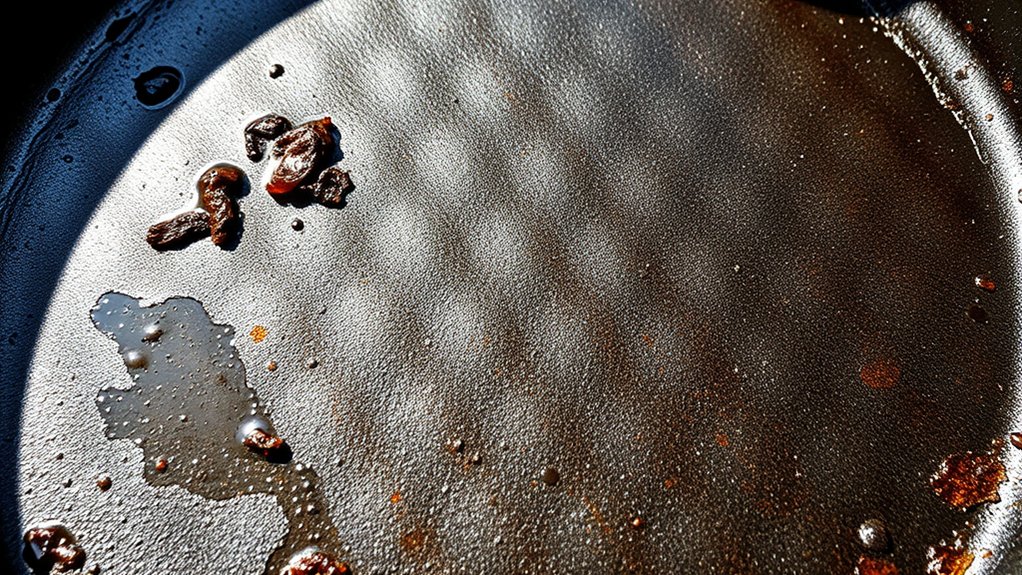
The faucet seat functionality guarantees that when you close the tap, water flow stops completely, avoiding drips and water waste. If the seat becomes corroded or damaged, the washer cannot seal properly, leading to leaks.
Maintaining the faucet seat’s integrity is essential for the overall performance and longevity of your faucet. By recognizing its role, you can troubleshoot issues effectively and replace the seat when necessary, ensuring your faucet operates efficiently and conserves water without unnecessary wear or damage.
Are Faucet Seats Universal or Brand-Specific?
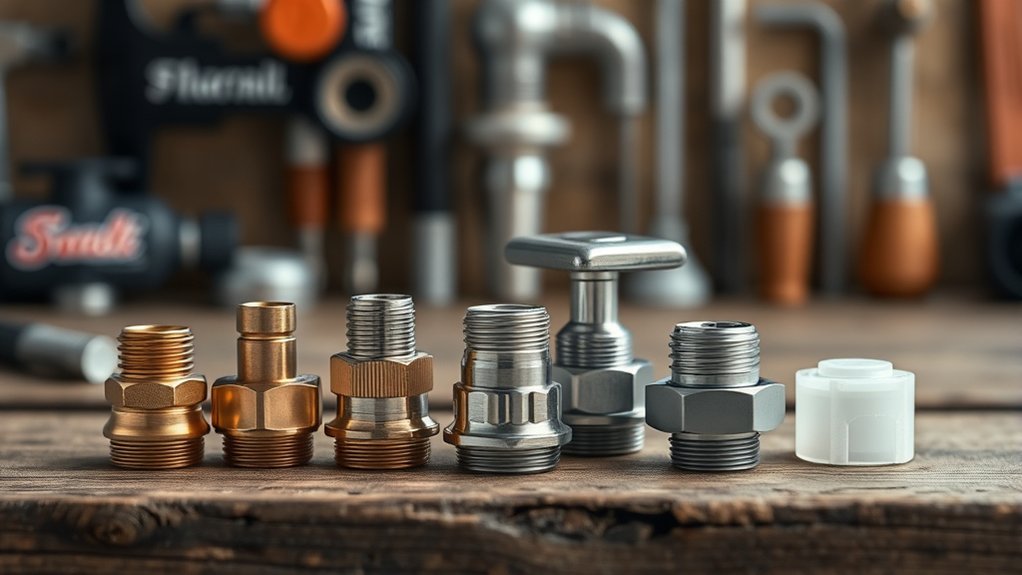
You’ll find that faucet seats vary in compatibility across different brands due to specific material compositions and design features. To guarantee a proper fit, you need to identify the exact seat specifications, including size and threading.
Understanding these details helps you determine whether a universal or brand-specific seat is required for your repair.
Compatibility Across Brands
Although some faucet seats appear similar, they are often designed with brand-specific dimensions and threading that affect compatibility. When considering faucet seat compatibility, you must account for subtle differences in diameter, thread pitch, and material that vary across manufacturers. A detailed brand comparison reveals these nuances and helps you select the right replacement part.
| Brand | Diameter (in) | Thread Type | Compatibility Notes |
|---|---|---|---|
| Delta | 0.75 | Fine thread | Compatible with Delta parts only |
| Moen | 0.78 | Coarse thread | Not interchangeable with Delta |
| Kohler | 0.76 | Fine thread | Similar to Delta but unique seal |
| American Standard | 0.75 | Mixed thread | Limited cross-brand compatibility |
Understanding these specifics guarantees proper function and prevents leaks.
Material and Design Variations
Since faucet seats must withstand constant water pressure and exposure to minerals, manufacturers design them using specific materials and structural features tailored to their brand’s standards. You’ll find that material options range from brass and stainless steel to plastic composites, each chosen for durability and corrosion resistance.
Additionally, design features such as seat diameter, depth, and threading vary to match the valve assembly precisely. These variations mean faucet seats aren’t always universal; they’re often brand-specific to guarantee a proper seal and prevent leaks.
When replacing a seat, you need to take into account both the material options and the design features to maintain compatibility and performance. Understanding these differences helps you avoid improper fits and guarantees your faucet operates efficiently over time.
Identifying Seat Specifications
How can you determine whether a faucet seat will fit your specific valve assembly? Start by measuring the seat dimensions precisely, including diameter and depth.
Different faucet types, such as compression, cartridge, or ceramic disc, often require distinct seat specifications. Since seats are not universally interchangeable, you must consult the manufacturer’s guidelines or use model numbers to identify the correct replacement.
Additionally, some brands design proprietary seats tailored to their valve assemblies, making compatibility brand-specific rather than universal. Using a seat with incorrect dimensions can cause leaks or damage.
Consequently, accurately identifying seat dimensions in relation to your faucet type guarantees peak performance and durability. Always verify compatibility before installation to maintain the integrity of your plumbing system.
Common Types and Sizes of Faucet Seats Explained
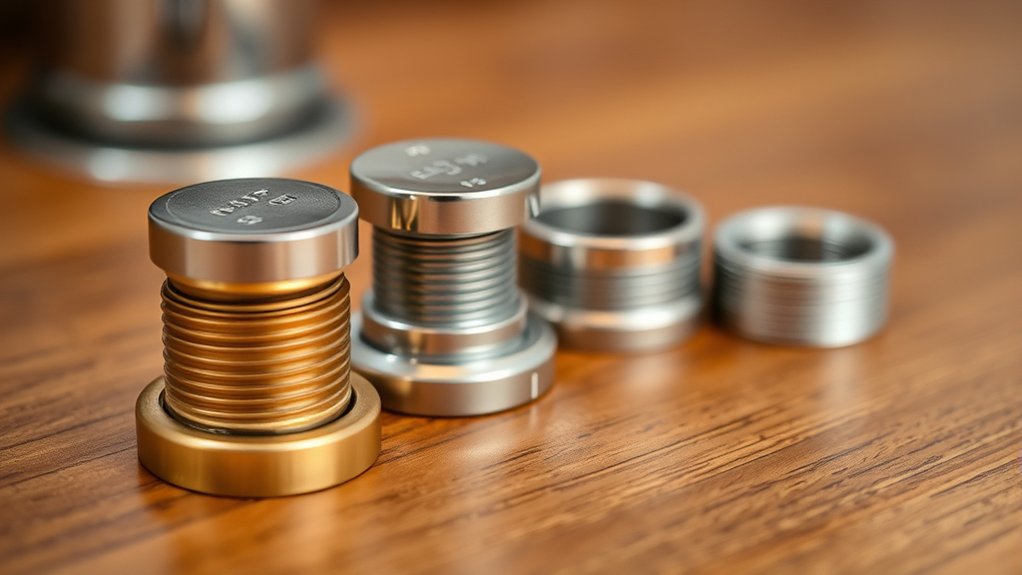
You’ll find faucet seats come in standard sizes like 3/8, 7/16, and 1/2 inches, designed to fit various valve stems. Materials vary from brass to plastic and stainless steel, affecting durability and compatibility.
Understanding these differences helps you select seats that work seamlessly across multiple faucet brands.
Standard Faucet Seat Sizes
Understanding the most common faucet seat sizes is essential when selecting or replacing parts to guarantee a proper fit and best performance. Faucet seat dimensions generally range from 3/8 inch to 7/8 inch in diameter, with 5/8 inch being one of the most prevalent sizes.
These dimensions correspond to various faucet seat types, including flat, beveled, and conical designs, which affect compatibility with different valve stems and washers. When measuring, make sure you gauge the inner diameter and depth accurately, as even minor deviations can cause leaks or improper sealing.
Familiarizing yourself with standard faucet seat sizes allows you to identify the correct replacement parts quickly and avoid costly mismatches. Precise knowledge of these dimensions helps maintain effective faucet function and extends the lifespan of your plumbing fixtures.
Material Variations Explained
Although faucet seats come in standard sizes, their material composition greatly impacts durability and performance. Common materials include brass, plastic, and stainless steel.
Brass offers excellent material durability, resisting corrosion and wear over time, making it ideal for high-use faucets. Plastic seats are cost-effective but less durable, often requiring more frequent replacement.
Stainless steel balances corrosion resistance with strength, suitable for various water conditions. When selecting a faucet seat, consider how material durability aligns with your usage needs.
Installation techniques differ slightly based on material; for instance, brass seats require careful threading to avoid stripping, while plastic seats demand gentle handling to prevent cracking.
Understanding these material differences helps you guarantee peak performance and longevity in your faucet maintenance.
Compatibility Across Brands
Since faucet seats vary across manufacturers, knowing the common types and sizes is essential to secure compatibility during replacement or repair. Different faucet brands often use unique seat dimensions and threading specifications, which impacts seat compatibility.
When you select a replacement seat, you must verify its size, commonly measured in diameter and thread pitch, to match the original. Standard sizes like 3/8-inch or 7/16-inch are frequent, but variations exist.
Additionally, the seat’s shape, whether flat or tapered, also affects fit. Using a seat from a different brand without confirming these parameters can result in leaks or improper sealing.
To guarantee proper seat compatibility, consult technical specifications or manufacturer guides for your specific faucet brand before purchase or installation. This approach prevents compatibility issues and prolongs faucet functionality.
How to Identify the Correct Faucet Seat for Your Faucet
How do you determine the correct faucet seat for your faucet? Start with faucet seat identification by removing the handle and valve stem to expose the seat. Examine its shape, such as flat, beveled, or rounded, as this influences compatibility.
Use seat measurement techniques: measure the inner diameter of the seat bore with a caliper for accuracy. Also, note the seat’s depth and threading type, as these are essential for a proper fit.
Compare these dimensions against manufacturer specifications or replacement seat charts. Documenting these measurements guarantees you select a seat matching your faucet’s model and design.
Accurate faucet seat identification prevents leaks and extends faucet life, so precision here is key before proceeding to replacement or repair.
How to Replace a Faucet Seat Step-by-Step
Replacing a faucet seat involves a series of precise steps to assure a proper seal and prevent leaks. First, turn off the water supply and remove the faucet handle to expose the valve stem. Use appropriate faucet seat tools, such as a seat wrench or extractor, to unscrew and remove the damaged seat.
Inspect the valve body for debris and clean it thoroughly to guarantee proper faucet seat maintenance. Next, insert the new seat carefully, threading it by hand before tightening it securely with the seat wrench. Avoid overtightening to prevent damage.
Finally, reassemble the faucet, restore water flow, and check for leaks. Regular faucet seat maintenance extends valve life, so perform inspections periodically to catch wear early and maintain ideal function.
Where to Find Compatible Faucet Seats and Common Buying Mistakes
When you’re searching for compatible faucet seats, it’s crucial to verify the exact model and dimensions to guarantee a proper fit. Start by checking manufacturer specifications or measuring the old seat precisely.
You can find compatible faucet seats at specialized plumbing supply stores, online marketplaces, or directly from the faucet brand. Prioritize sellers who provide detailed product descriptions and compatibility charts to avoid errors.
Common buying mistakes include assuming all seats fit universally, neglecting to check thread size or seat diameter, and overlooking material quality. To improve faucet seat compatibility, always compare part numbers and consult technical diagrams when available.
These purchasing tips will help you avoid costly returns and installation issues, ensuring your replacement seat performs reliably and fits perfectly.
Frequently Asked Questions
Can I Use Faucet Seats in Outdoor Plumbing Systems?
You can use faucet seats in outdoor plumbing if they match the faucet compatibility requirements. Ascertain the seat material resists weather conditions and fits precisely to prevent leaks and maintain system integrity in outdoor environments.
Do Faucet Seats Affect Water Pressure or Flow Rate?
You might think faucet seats don’t impact water pressure or flow rate, but they actually do. If a seat’s worn or damaged, it can restrict flow, reducing water pressure and causing uneven performance in your plumbing system.
Are There Eco-Friendly Materials for Faucet Seats?
Yes, you can find eco-friendly faucet seats made from biodegradable options and sustainable materials like bioplastics or recycled metals. These choices reduce environmental impact while maintaining durability and performance in your plumbing system.
How Often Should Faucet Seats Be Inspected or Replaced?
You should inspect faucet seats every six months, as 40% of leaks stem from worn seats. Regular faucet maintenance tips include timely replacement to prevent damage, ensuring peak performance and avoiding costly repairs due to neglect or extended inspection frequency.
Can a Damaged Faucet Seat Cause Leaks in Other Plumbing Parts?
Yes, a damaged faucet seat can cause faucet seat leaks that lead to water escaping and affecting nearby plumbing parts. You’ll want prompt plumbing repairs to prevent further damage and guarantee system integrity.
Conclusion
Choosing the right faucet seat is like finding the perfect puzzle piece—it guarantees a seamless fit that prevents leaks and extends your faucet’s life. Since faucet seats aren’t universal, you need to identify your specific type and size carefully.
By following precise steps and sourcing compatible parts, you’ll avoid common pitfalls and achieve a durable repair. With the right approach, replacing your faucet seat becomes a straightforward, effective task.
Remember, faucet seats are not universal, so taking the time to find the exact match is essential for lasting results.

Leave a Reply