
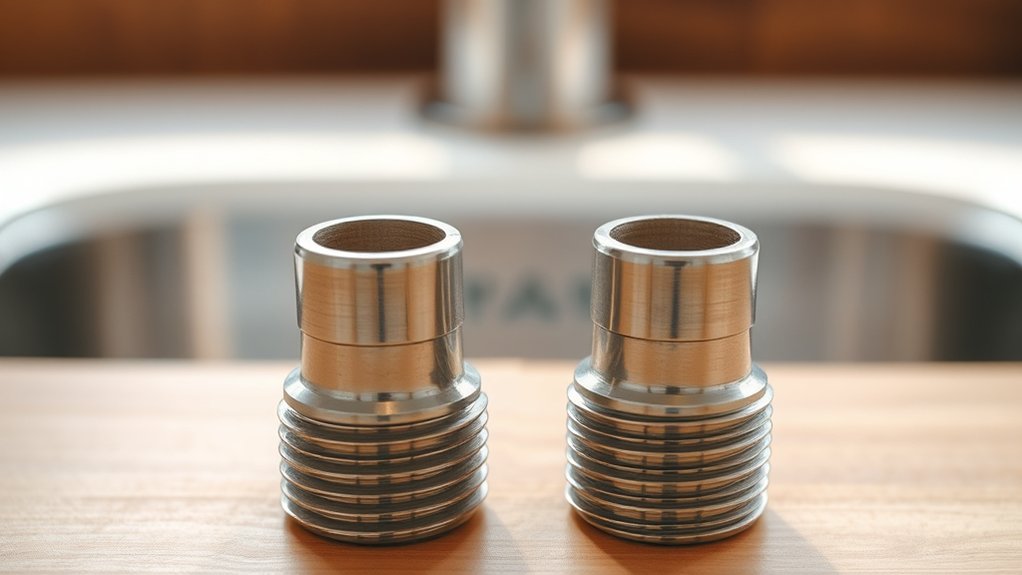
Are faucet stems interchangeable? Generally, you can’t just swap faucet stems between different models because their size, threading, and design often differ.
Each stem controls water flow and temperature in a unique way, so precise measurements—like diameter, length, and spline type—are essential for compatibility.
Manufacturer specifications usually guide proper replacements to avoid leaks or malfunction. Knowing how to identify the correct stem and recognizing when a full faucet replacement is better will help you maintain your plumbing efficiently.
If you want to understand these factors better, keep exploring.
Key Takeaways
- Faucet stems are generally not interchangeable due to differences in size, threading, and design variations across brands and models.
- Proprietary dimensions and spline types often prevent stems from fitting faucets outside their original manufacturer specifications.
- Accurate measurement of diameter, length, and thread type is essential before attempting to replace or interchange stems.
- Compatibility depends on matching the stem’s pressure and flow control mechanisms to the faucet’s design.
- Consulting manufacturer guides or parts databases ensures selecting the correct compatible stem for replacement.
Can You Swap Faucet Stems Between Models?
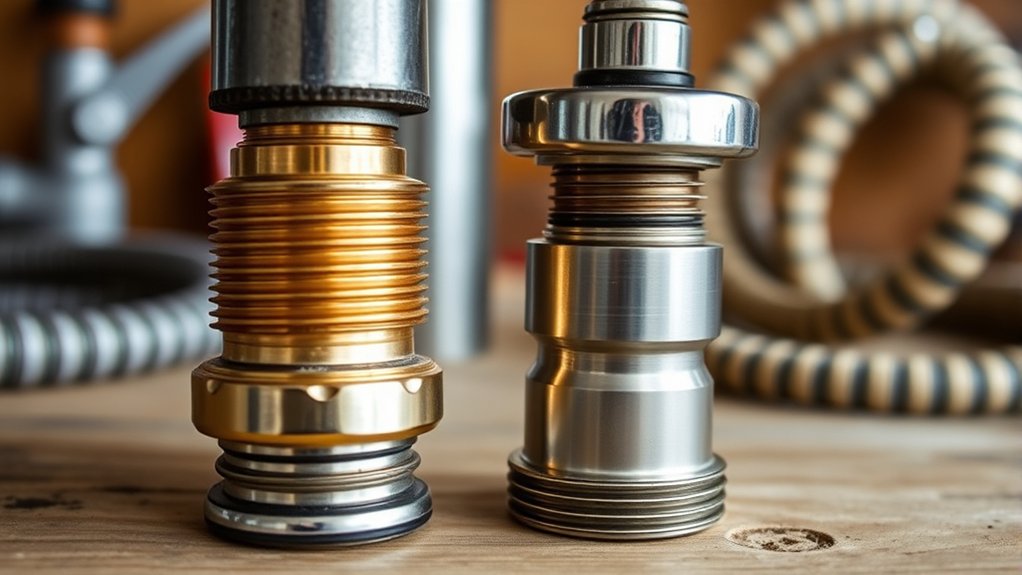
How easily can you swap faucet stems between different models? Generally, faucet compatibility depends heavily on stem variations, including size, threading, and design. You can’t assume all stems fit interchangeably.
Manufacturers often use proprietary dimensions or unique threading, which means a stem from one brand or model might not align with another. To guarantee proper fit, you need to match the stem’s specifications precisely—measure diameter, length, and check the spline type if applicable.
Additionally, pressure and flow control mechanisms integrated into stems vary, affecting performance. Before attempting a swap, verify compatibility through manufacturer guides or parts databases.
Without careful assessment, you risk leaks, improper sealing, or damaged components. So, while some stems interchange easily, many require exact matches for ideal function.
What Are Faucet Stems and How Do They Work
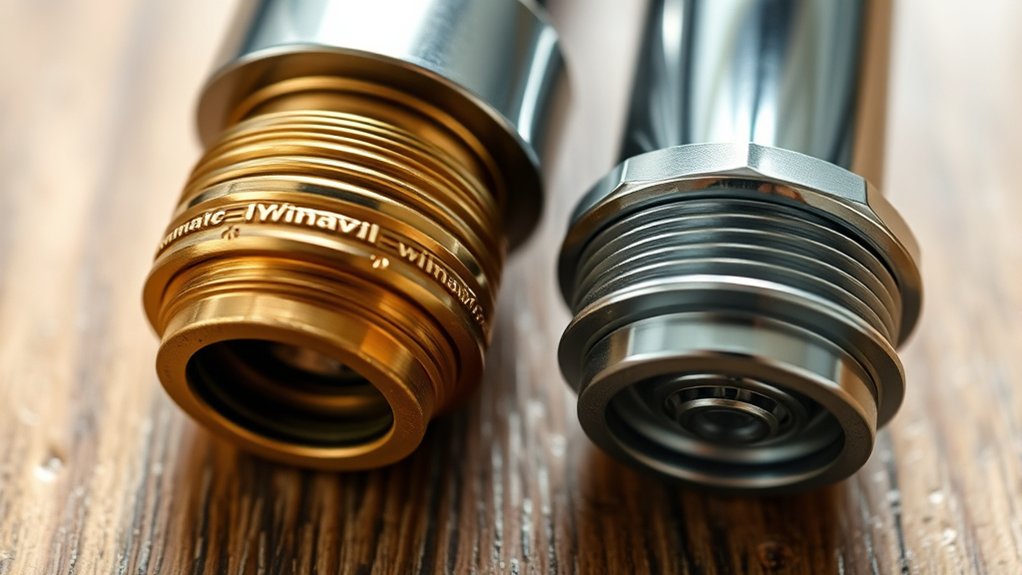
A faucet stem acts as the crucial internal component that controls water flow and temperature in your faucet. It regulates the opening and closing of water passages when you turn the handle. Understanding faucet stem functions helps you troubleshoot issues like leaks or inconsistent water pressure.
Here’s how it works:
- It moves up or down, aligning or blocking water flow from the supply lines.
- It adjusts the mix of hot and cold water for desired temperature control.
- It seals tightly to prevent drips when fully closed.
To keep your faucet operating smoothly, follow stem maintenance tips: regularly inspect for wear, lubricate moving parts, and replace worn washers or O-rings. This guarantees longevity and peak performance.
What Makes Faucet Stems Different: Design and Size Factors

Since faucet stems come in various designs and sizes, selecting the right one for your faucet is essential to guarantee proper fit and function. Design variations include cartridge, compression, and ball stems, each with distinct internal mechanisms and handle interfaces. Understanding these differences helps prevent leaks and operational issues.
Size specifications matter too; stems vary in length, diameter, and threading type. These dimensions must match your faucet’s valve body precisely to secure a connection and smooth operation. Additionally, the number and placement of O-rings and seals can differ, affecting water-tightness.
How to Find the Right Faucet Stem for Your Faucet
To find the right faucet stem, you need to measure key dimensions such as length, diameter, and thread type accurately. Next, identify your faucet’s brand and model number, which helps match compatible parts. Combining these details guarantees you select a stem that fits and functions correctly.
Measure Faucet Stem Dimensions
Accurately measuring your faucet stem dimensions verifies you select a compatible replacement that fits perfectly and functions properly. To guarantee precise faucet stem measurements, focus on key dimensions that impact fit and operation.
- Measure the stem length from the base to the tip, as stem length comparison is essential when matching replacements.
- Record the diameter of the stem, typically at the widest point, to confirm it fits the faucet body.
- Note the type and size of the stem’s splines or grooves, which engage with the handle assembly.
Identify Faucet Brand Model
Understanding your faucet stem measurements lays the groundwork, but matching those dimensions to the correct faucet brand and model guarantees compatibility and reliable performance.
Begin faucet brand identification by examining your faucet body for logos or embossed names. If unavailable, consult any documentation or receipts.
Next, locate the model number, often found on the faucet’s underside or inside the handle assembly. Accurate model number verification is critical, as stems vary even within the same brand depending on model and production year.
Use the model number to cross-reference manufacturer parts lists or databases. This step assures you select a faucet stem precisely designed for your unit, preventing leaks or malfunctions.
Proper identification streamlines repair and maintains faucet integrity, confirming your stem choice is both functional and durable.
Tips for Safe and Easy Faucet Stem Swaps
Before swapping your faucet stem, make certain you identify the correct stem type to guarantee compatibility. Always shut off the water supply to prevent leaks or water damage during the process.
Use proper tools like a wrench and screwdriver to safely remove and install the stem without damaging surrounding parts.
Identify Correct Stem Type
How do you determine the correct faucet stem type for your repair? Ensuring stem compatibility is essential to a successful faucet repair. Start by accurately identifying the stem style and dimensions. Here’s how:
1. Remove and Inspect the Old Stem
Examine the shape, length, and threading type. Take note of any manufacturer markings.
2. Consult Manufacturer Specifications
Use model numbers or brand details to find exact stem replacements, ensuring proper fit and function.
3. Measure Critical Dimensions
Measure stem diameter, length, and spline count precisely with calipers for compatibility verification.
Shut Off Water Supply
Two simple steps can save you from water damage when swapping a faucet stem: locating and shutting off the correct water supply valves. Start by identifying the shutoff valves beneath the sink or the main water supply valve if individual valves are absent.
Turn these valves clockwise to stop water flow, reducing water pressure in the pipes. This step is essential for leak prevention during the stem replacement.
After closing the valves, open the faucet to drain residual water and relieve pressure. Confirm no water flows before proceeding to avoid unexpected sprays or leaks.
Taking these precautions guarantees a controlled environment, minimizing risk and facilitating a safe, efficient faucet stem swap without damage or mess.
Use Proper Tools
Once you’ve securely shut off the water supply and relieved pipe pressure, gather the correct tools to guarantee a smooth faucet stem replacement. Using appropriate plumbing tools not only streamlines faucet maintenance but also prevents damage to delicate components.
Here are essential tools you’ll need:
- Adjustable wrench for loosening and tightening nuts without stripping.
- Screwdriver set to remove and reinstall screws accurately.
- Plumber’s grease to lubricate the new stem for maximum operation.
Avoid makeshift tools; they risk damaging the faucet and complicating repairs. Proper tools guarantee precise handling of parts, minimize wear, and maintain the integrity of seals and washers.
When to Replace the Entire Faucet Instead of Just the Faucet Stem
Although replacing a faucet stem can resolve many common issues, you should consider replacing the entire faucet when corrosion, extensive wear, or outdated design compromises the unit’s functionality or compatibility. Evaluate the faucet lifespan; if it exceeds 10-15 years, internal components may deteriorate beyond repair, making stem replacement insufficient.
Conduct a cost analysis comparing stem repair versus full faucet replacement. Often, older faucets have non-standard parts, increasing repair difficulty and risk of repeated failures. Additionally, modern faucets offer improved water efficiency and durability, which can justify replacement.
If leaks persist after stem replacement or if multiple components fail, replacing the entire faucet guarantees reliability and long-term performance. Prioritize faucet replacement when repair costs approach or exceed 50% of a new faucet’s price, promoting cost-effectiveness and peak function.
Frequently Asked Questions
How Do I Prevent Leaks After Replacing a Faucet Stem?
To guarantee leak prevention after stem installation, you should tighten the stem securely, replace worn washers or O-rings, and apply plumber’s grease.
Test water flow carefully to spot and fix leaks promptly for a durable, watertight seal.
Can Faucet Stems Affect Water Pressure?
Over 30% of household water issues stem from faucet components like stems. Yes, faucet stems directly impact water pressure; a worn or damaged stem reduces faucet performance, causing inconsistent flow and pressure drops you can detect easily.
Are There Universal Faucet Stems Available?
You won’t find universal compatibility in faucet stems because various stem types differ by size, threading, and design. Always match your faucet’s specific stem type to guarantee proper function and avoid leaks or pressure issues.
How Long Do Faucet Stems Typically Last?
You’ll find a faucet stem lifespan typically ranges from 10 to 15 years. Regular maintenance tips like cleaning mineral buildup and lubricating seals help guarantee smooth operation and extend your faucet’s reliable performance over time.
What Tools Are Essential for Faucet Stem Replacement?
You’ll need an adjustable wrench, screwdriver, pliers, and plumber’s grease. Understanding faucet stem types helps you apply proper replacement techniques, ensuring a secure fit and smooth operation while preventing leaks during your faucet stem replacement process.
Conclusion
Now that you know faucet stems aren’t always interchangeable due to design and size differences, the key is finding the exact match for your model.
But what if a stem swap doesn’t fix the issue? Sometimes, the problem runs deeper, and replacing the entire faucet might be the smarter move.
Before you plunge into it, make sure you’ve thoroughly assessed compatibility—your faucet’s longevity depends on it. Ready to make the right call when it comes to faucet stems interchangeability?




Leave a Reply