
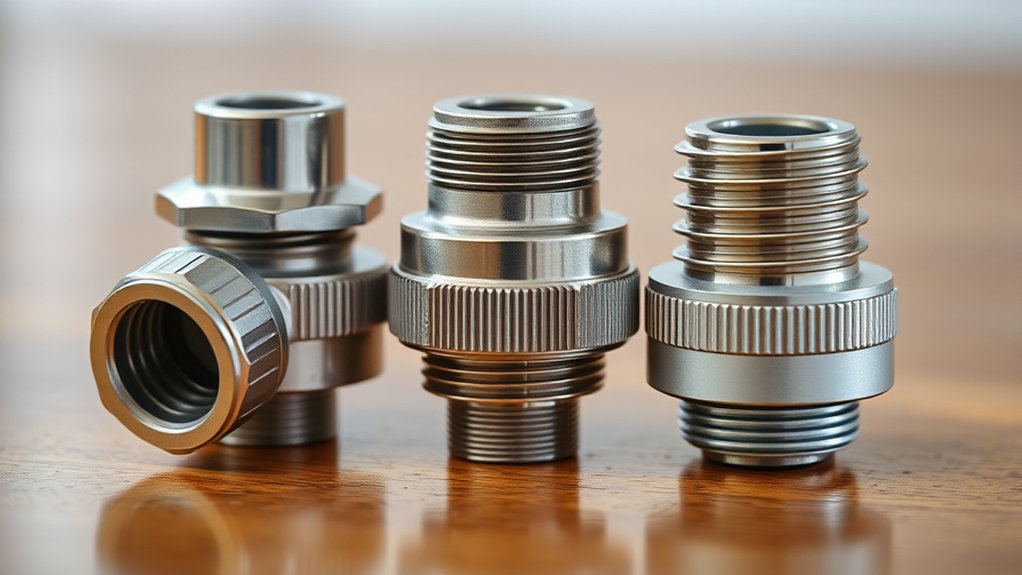
You can’t assume faucet valves are universal because their size, threading, and cartridge type differ widely between brands and models.
Faucet valves come in various designs, and while some may fit multiple faucets, precise matching of dimensions and installation methods is crucial to avoid leaks or malfunctions.
Manufacturers often design valves specific to certain faucets, so blindly swapping parts risks damage and poor performance.
Understanding these technical details will help you confidently select the right valve for your faucet and guarantee proper function.
Key Takeaways
- Faucet valves are not truly universal due to variations in size, threading, and cartridge type across brands and models.
- Universal valves aim for broad compatibility but require verifying precise technical specifications for proper fit and function.
- Different valve types, such as compression, cartridge, and ball valves, fit specific faucet styles and have unique installation methods.
- Manufacturer-specific designs and mounting mechanisms often prevent cross-brand valve interchangeability.
- Accurate measurement of valve dimensions and thread details is essential to avoid leaks and installation issues with replacements.
Are Faucet Valves Universal? The Quick Answer
How universal are faucet valves really? They aren’t as universal as you might think. While many valves share standard dimensions, variations in design, threading, and material compatibility affect valve installation.
If you’re performing faucet maintenance, you’ll notice some valves fit specific faucet models only. Using the wrong valve can lead to leaks or poor water flow, so precise matching is essential.
Some valves fit only specific faucet models; using the wrong one can cause leaks or poor flow.
Manufacturers often design valves tailored to their fixtures, making cross-brand replacements tricky. When selecting a valve for maintenance or replacement, check specs carefully—consider thread size, valve type, and compatibility with your faucet model.
This approach guarantees proper installation, ideal function, and longevity. In short, don’t assume all faucet valves are interchangeable; precise selection is key for successful valve installation and faucet maintenance.
What Does “Universal” Really Mean for Faucet Valves?
When you hear “universal” in faucet valves, it means the valve is designed to fit multiple faucet models by addressing key compatibility factors like size, threading, and cartridge type.
You’ll find several common universal valve types that accommodate various plumbing standards and installation methods. Understanding these specifics helps you choose the right valve without guesswork or costly errors.
Definition Of Universal
Understanding the term “universal” in the context of faucet valves is crucial for selecting compatible parts. Universal typically implies that a valve meets specific universal standards, allowing it to fit multiple faucet models or brands. However, this doesn’t guarantee absolute interchangeability.
Valve specifications such as size, threading, and cartridge type must align with the faucet’s design for proper functionality. Universal standards aim to streamline manufacturing and repairs by establishing common dimensions and operational parameters.
When you choose a valve labeled as universal, check these specifications carefully to ascertain compatibility. Relying solely on the “universal” label without verifying technical details can lead to installation issues or leaks.
Fundamentally, universal means broadly applicable but within defined engineering limits, not one-size-fits-all.
Compatibility Factors Explained
While the term “universal” suggests broad compatibility, several key factors determine whether a faucet valve will fit and function correctly in your specific fixture. You need to take into account these compatibility elements:
- Valve Materials: Different materials like brass, plastic, or stainless steel affect durability and corrosion resistance. Matching material with your fixture ensures longevity and proper sealing.
- Dimensional Standards: Thread size, stem type, and cartridge dimensions vary. Even “universal” valves may not align with your faucet’s specifications without precise measurements.
- Installation Techniques: Proper installation depends on your fixture’s design, including mounting style and connection type. You must follow manufacturer guidelines to avoid leaks or malfunction.
Understanding these factors helps you select a truly compatible valve, rather than relying solely on the “universal” label.
Common Universal Valve Types
Faucet valves labeled as “universal” typically fall into specific categories based on their design and compatibility features. When you select faucet valve types, understanding these categories helps guarantee smooth valve installation techniques.
The three most common universal valve types are:
| Valve Type | Compatibility | Installation Technique |
|---|---|---|
| Compression Valve | Standard two-handle faucets | Requires threading and sealing |
| Cartridge Valve | Single and double-handle | Push-fit or screw-in |
| Ball Valve | Single-handle faucets | Snap-in or threaded |
Each valve type offers adaptability across multiple faucet brands and models. Knowing the distinct installation methods allows you to replace or service valves without compatibility issues, making “universal” a practical term rather than absolute.
Common Types and Sizes of Faucet Valves
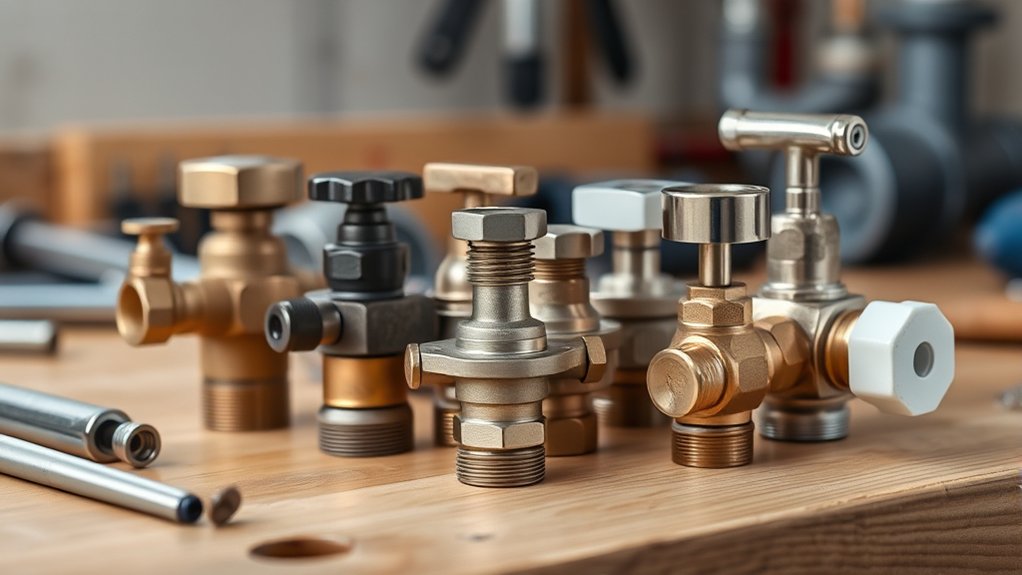
Several common types and sizes of faucet valves dominate the market, each designed to meet specific plumbing needs and installation requirements. When selecting a valve, you’ll want to evaluate valve materials and installation techniques for durability and ease.
1. Compression Valves
Typically made from brass or stainless steel, these valves use a washer system and require screwing on both hot and cold water lines. Sizes often range from 1/2″ to 3/4″.
2. Cartridge Valves
Featuring ceramic or plastic cartridges, these valves offer smooth operation and are usually sized at 1/2″. They simplify installation with fewer parts.
3. Ball Valves
Constructed from brass or chrome-plated materials, ball valves use a rotating ball to control flow and commonly come in 1/2″ sizes, ideal for single-handle faucets.
Understanding these types helps you choose the right valve for your installation.
How Faucet Brands and Models Affect Valve Compatibility
You’ll notice that faucet valve designs vary considerably between brands, often requiring brand-specific replacements. Even within a single brand, different models can feature unique valve sizes and configurations that affect compatibility.
These variations create challenges when attempting cross-compatibility or universal fitting solutions.
Brand-Specific Valve Designs
Valve compatibility hinges greatly on the specific designs employed by different faucet brands and models. Understanding brand differences and design variations is essential when replacing or repairing valves. You’ll find that:
- Valve Cartridge Shapes vary considerably. Some brands use cylindrical cartridges, while others employ flat or irregular shapes, affecting interchangeability.
- Seal and O-ring Specifications differ, impacting how well replacement valves prevent leaks and maintain pressure.
- Mounting Mechanisms are often unique; for example, certain brands may use snap-in valves, whereas others rely on threaded fittings.
Because of these design variations, you can’t assume valves are universal across brands. Always check manufacturer specifications or consult compatibility guides to verify you select the correct valve for your faucet’s brand and design features.
Model Variations Impact
Understanding brand-specific designs sets the foundation, but variations within individual faucet models further influence valve compatibility. Each faucet design incorporates unique valve technology tailored to specific functional and aesthetic requirements.
Even within the same brand, you’ll find differences in valve size, cartridge type, and mounting mechanisms that directly affect interchangeability. For example, a single-handle model may use a ceramic disc cartridge, while a two-handle variant employs compression valves, making direct replacements incompatible.
Additionally, newer models might feature updated valve technology that isn’t backward compatible with older versions. When you’re selecting replacement valves, it’s critical to identify the exact model number and corresponding valve specifications to guarantee proper fit and function.
Precision in matching valve technology to your faucet design prevents leaks and maintains peak performance.
Cross-Compatibility Challenges
Although many faucet brands seem similar at first glance, significant differences in their valve designs create cross-compatibility challenges that can complicate repairs and replacements. When you attempt to swap valves between brands or even models, you’ll encounter specific issues that hinder straightforward installation.
Here are three key reasons for these cross compatibility issues:
- Valve Dimensions: Variations in valve size and shape often prevent direct replacements, requiring adapters or custom fittings.
- Connection Types: Different brands use distinct threading or attachment mechanisms, causing installation challenges when mixing components.
- Internal Mechanisms: Cartridge designs and sealing methods vary, affecting valve function and durability if mismatched.
Understanding these factors helps you anticipate potential problems and select compatible parts, ensuring efficient repairs without unnecessary trial and error.
When Can You Replace Faucet Valves Between Faucets?
How do you know the right moment to replace faucet valves between faucets? It hinges on valve compatibility and your faucet maintenance routine. You can replace valves when they match in size, type, and threading. Also, consider replacing valves if leaks persist or when performing an upgrade to improve functionality.
Here’s a quick compatibility check:
| Valve Type | Compatible Faucet Types | Replacement Indicator |
|---|---|---|
| Compression | Traditional faucets | Persistent leaks, wear |
| Ceramic Disc | Modern faucets | Stiff handle, water drip |
| Ball Valve | Single-handle faucets | Inconsistent water flow |
Ensuring valve compatibility reduces installation issues and enhances faucet longevity, streamlining your maintenance efforts effectively.
How to Measure Your Faucet Valve for Replacement
Before replacing your faucet valves, you need to accurately measure them to confirm compatibility and proper fit. Precise faucet measurements and understanding valve specifications are essential for selecting the right replacement.
Accurate faucet valve measurements ensure compatibility and a smooth replacement process.
- Measure the valve’s diameter: Use a caliper or ruler to determine the outer diameter of the valve stem, noting whether it’s metric or imperial.
- Measure the valve length: From the base to the tip of the valve stem, record the total length to confirm the new valve fits within your faucet assembly.
- Identify valve type and threading: Check if the valve is compression, cartridge, or ball type, and note thread count or pitch if applicable.
These steps confirm you gather accurate valve specifications for a seamless replacement process.
Tips for Finding Compatible Faucet Valve Replacements : And What to Do If You Can’t Find One
Finding a compatible faucet valve replacement often requires careful matching of specifications to guarantee proper function and fit. Start by noting the valve type, size, and threading, then consult manufacturer catalogs or online databases for exact replacement options.
Use compatibility tips such as verifying pressure ratings and material compatibility to avoid premature failure. If you can’t find an exact match, consider universal valves designed to adapt to multiple brands, or contact the faucet manufacturer directly for guidance.
Alternatively, seek professional plumbing assistance to explore custom adapters or valve modifications. Avoid forcing incompatible parts, as this risks leaks or damage. Prioritize precise measurement and thorough research to verify your replacement valve restores peak performance without compromising system integrity.
Frequently Asked Questions
How Do I Fix a Leaking Faucet Valve?
You’ll first identify your faucet valve type, then turn off the water supply. Disassemble the faucet and inspect for worn washers or seals causing common faucet issues.
Replace damaged parts and reassemble to stop the leak efficiently.
What Tools Are Needed to Replace a Faucet Valve?
Measure twice, cut once. You’ll need adjustable wrenches, screwdrivers, pliers, and a valve seat wrench.
Consider faucet types and valve materials to guarantee compatibility and avoid damage during your precise valve replacement.
Can I Upgrade My Faucet Valve to a Water-Saving Model?
You can upgrade your faucet valve to a water-saving model, but confirm valve compatibility first. Doing so improves water saving benefits considerably, reduces consumption, and maintains efficiency without compromising your plumbing system’s performance or durability.
How Long Does a Typical Faucet Valve Last?
You probably expect faucet valve longevity to rival your smartphone’s lifespan. Nope! Typically, they last 10-15 years with proper maintenance tips like cleaning and replacing seals promptly to avoid leaks and guarantee smooth operation.
Are There DIY Kits for Faucet Valve Replacement?
Yes, you’ll find DIY faucet kits designed for various valve replacement options, including cartridge, ball, and ceramic valves. These kits come with tools and instructions, making valve replacement manageable even if you’re not a professional plumber.
Conclusion
Faucet valves aren’t universal, so you can’t simply swap them without checking compatibility. You need to measure carefully, understand the valve type, and consider brand-specific designs.
You’ll avoid leaks by choosing the right size, guarantee smooth operation by matching the valve model, and save time by sourcing compatible replacements.
When in doubt, consult manufacturer specs or experts to find the exact fit. Precision matters—don’t guess, measure and match every time to ensure your faucet valves work perfectly.

Leave a Reply