
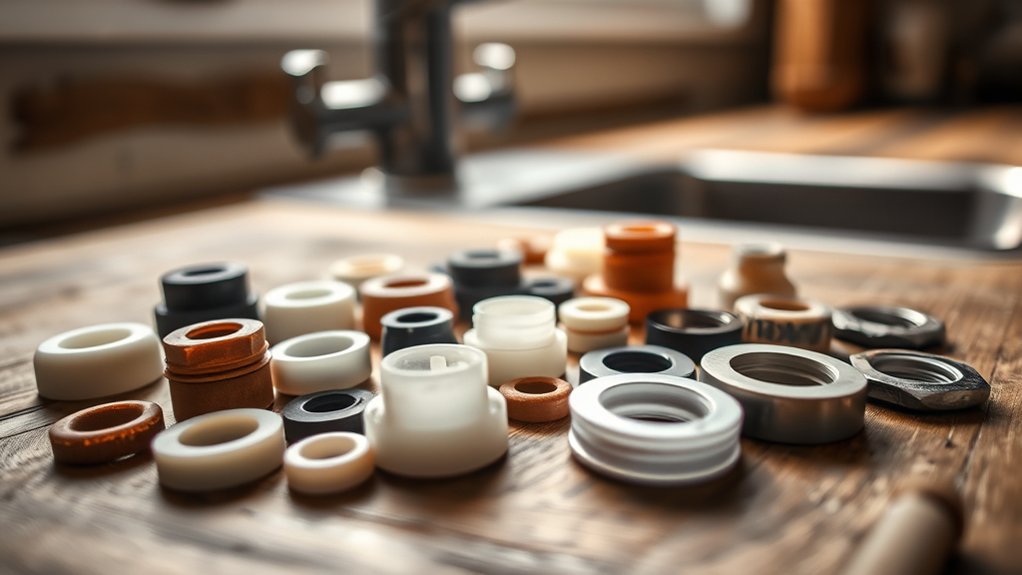
You can’t assume faucet washers are universal because each brand designs them with specific dimensions and materials for their models.
Using the wrong washer may cause leaks or poor sealing. To find the right one, you need to identify your faucet type and measure the washer size precisely.
Material and shape also impact performance. Knowing where to source compatible washers and how to install them properly guarantees a leak-free fix.
Keep exploring to fully understand these details.
Key Takeaways
- Faucet washers are not universal due to varying dimensions and specifications across manufacturers.
- Different faucet types require specific washer sizes and shapes for proper sealing.
- Using the wrong washer can cause leaks, poor fit, and faucet damage.
- Measuring old washers or consulting faucet manuals ensures correct replacement selection.
- Hardware and plumbing stores offer compatible washers when provided with the faucet model or old washer.
Are Faucet Washers Universal Across Brands?
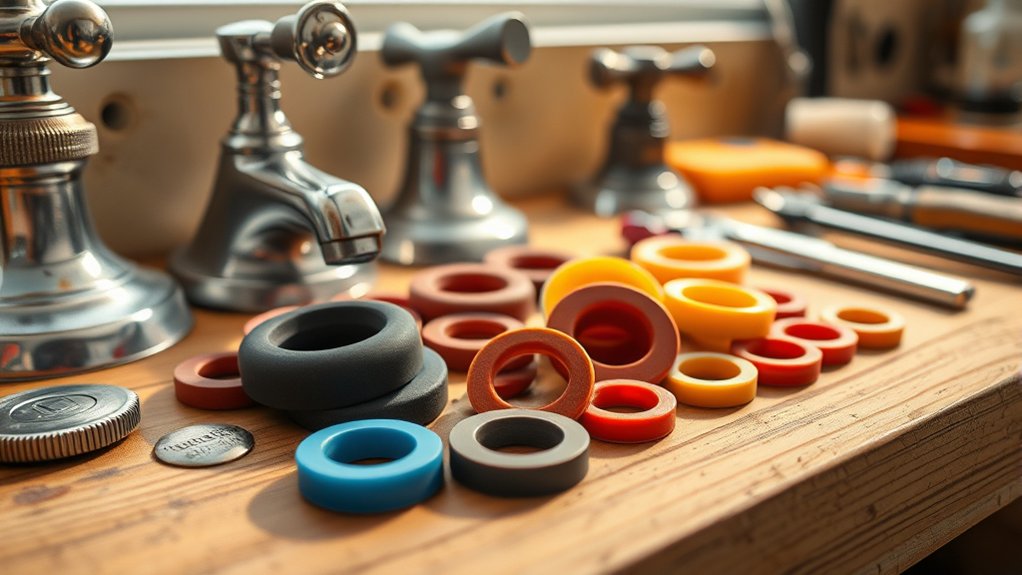
When replacing a faucet washer, you might wonder if any washer will fit your specific brand and model. The truth is, brand compatibility plays a significant role.
Brand compatibility is crucial when selecting a faucet washer to ensure proper fit and function.
Washers are not universally interchangeable because different manufacturers design their faucets with unique dimensions and specifications. Various washer types, such as flat, beveled, or rubber, exist to accommodate these differences.
Using the wrong washer type or ignoring brand compatibility can lead to leaks or improper sealing. Consequently, while some washers may appear similar, it is vital to match the washer precisely to your faucet’s brand and model to guarantee peak performance and durability.
Don’t assume universal fit; instead, verify compatibility to maintain your faucet’s integrity and prevent plumbing issues.
How to Identify the Right Washer for Your Faucet
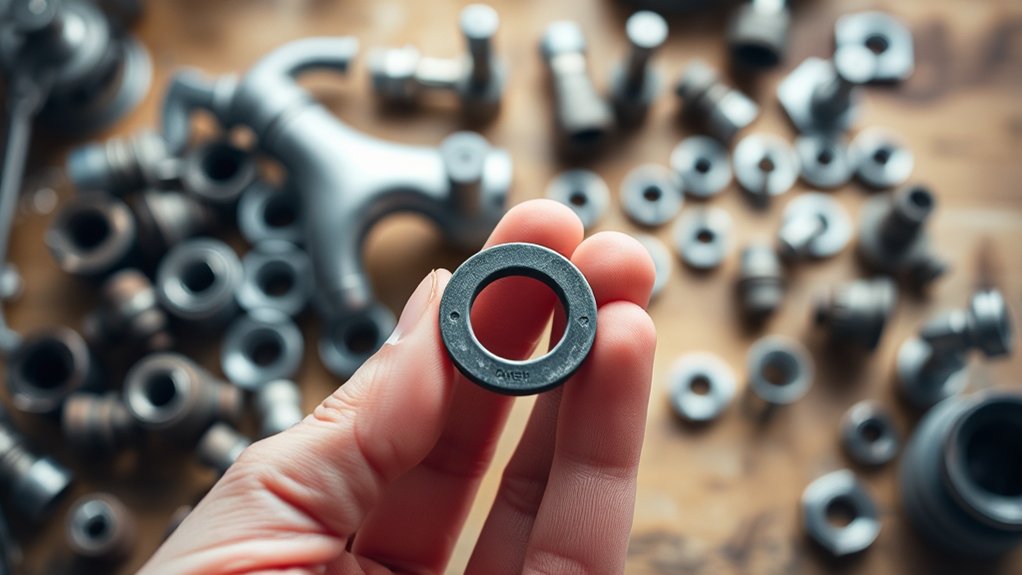
Understanding that washers vary by brand and design, you need to accurately identify the right washer for your faucet to guarantee a proper fit and function. Start by determining your faucet type: compression, cartridge, ball, or ceramic disc, since washer requirements differ accordingly.
Next, measure the washer size precisely. Note the inner diameter, outer diameter, and thickness using calipers or a ruler. Consult your faucet’s manual or manufacturer specifications to cross-reference washer sizes compatible with your model.
If documentation isn’t available, remove the old washer and compare it against standard washer sizes. Accurate identification prevents leaks and guarantees smooth operation. Remember, selecting the correct washer size based on your faucet type is essential for maintaining performance and avoiding premature wear.
Why Material and Shape Matter in Faucet Washers
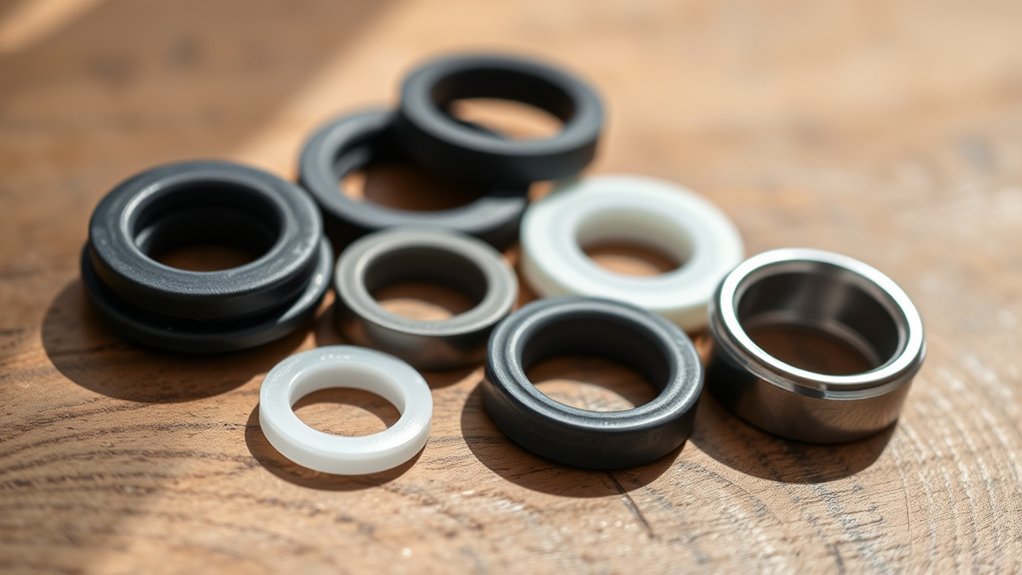
Since washers serve as the essential seal between your faucet’s moving parts, choosing the right material and shape directly affects durability and leak prevention. Washer materials vary, including rubber, neoprene, and silicone, each offering distinct resistance to water pressure, temperature, and wear.
Rubber washers provide flexibility but may degrade faster, while neoprene offers improved longevity and chemical resistance. Washer shapes also play a crucial role; flat washers create a broad seal, whereas beveled or cupped washers fit specific valve designs to guarantee tighter closure.
Using an incompatible washer shape can cause improper sealing and leaks. By understanding the precise requirements of your faucet’s design, you can select washer materials and washer shapes that optimize performance, extend lifespan, and maintain efficient water flow without drips or damage.
Where to Find Compatible Faucet Washers Near You
Selecting the right material and shape for your faucet washer sets the foundation for effective repairs, but finding washers that match your faucet’s specifications can be challenging. Start by visiting your local hardware store; they often stock a range of standard washers compatible with various faucet models.
If you need specialized sizes or materials, a dedicated plumbing supply store is your best bet. They offer professional-grade components and technical advice. Before you buy, bring your old washer or faucet model number to guarantee compatibility.
Additionally, some local hardware and plumbing supply outlets provide measuring tools to verify washer dimensions. By sourcing washers from these trusted locations, you ascertain you get precise replacements that maintain your faucet’s integrity and prevent leaks.
Tips for Replacing a Faucet Washer Without Leaks
Although replacing a faucet washer may seem straightforward, ensuring a leak-free installation requires careful attention to detail. Start by turning off the water supply to prevent accidental flooding. Remove the handle and access the valve stem carefully to avoid damage.
Inspect the old washer for wear patterns and match the new washer precisely in size and thickness. This is essential for leak prevention. Apply plumber’s grease lightly to the washer to enhance sealing and ease installation.
Tighten the valve stem nut snugly but avoid overtightening, which can deform the washer and cause leaks. After reassembly, slowly restore water flow and check for drips. Follow these installation tips meticulously to secure a durable, leak-free faucet repair.
Frequently Asked Questions
How Often Should I Replace My Faucet Washer?
You should replace your faucet washer every 1 to 2 years, depending on usage and water quality. Monitor for leaks or wear, as washer lifespan varies.
Timely replacement frequency guarantees peak faucet performance and prevents damage.
Can a Worn Washer Cause Low Water Pressure?
Yes, a worn washer can reduce water pressure by restricting flow. Different washer types, like rubber or neoprene, wear differently, so regularly inspect and replace them to maintain ideal water pressure and prevent leaks.
Are There Eco-Friendly Faucet Washers Available?
Picture durable, eco-friendly materials like natural rubber or silicone crafted for sustainable plumbing; you’ll find these washers reduce waste and chemical use, ensuring your faucet operates efficiently while supporting environmental responsibility with precision-engineered performance.
What Tools Do I Need to Replace a Faucet Washer?
You’ll need an adjustable wrench, screwdriver, and pliers to replace faucet washers. Consider your faucet type and washer materials such as rubber, silicone, or neoprene. Ensure compatibility for proper sealing and durability during replacement.
Can I Reuse an Old Faucet Washer After Cleaning?
You shouldn’t reuse an old faucet washer after cleaning because washer cleaning techniques can’t restore its integrity. Consider washer lifespan considerations; worn washers lose sealing ability, so replacing guarantees peak performance and prevents leaks effectively.
Conclusion
While faucet washers aren’t one-size-fits-all, knowing how to identify the right size, material, and shape puts you ahead of the game. Don’t just grab any washer off the shelf—taking a measured approach guarantees a leak-free fit every time.
With the right knowledge and tools, replacing your faucet washer becomes as easy as pie, saving you time and preventing water damage down the line. Stay precise, and you’ll keep your plumbing in top shape.
Remember, faucet washers are not universal, so selecting the correct one is essential for a proper repair.

Leave a Reply