
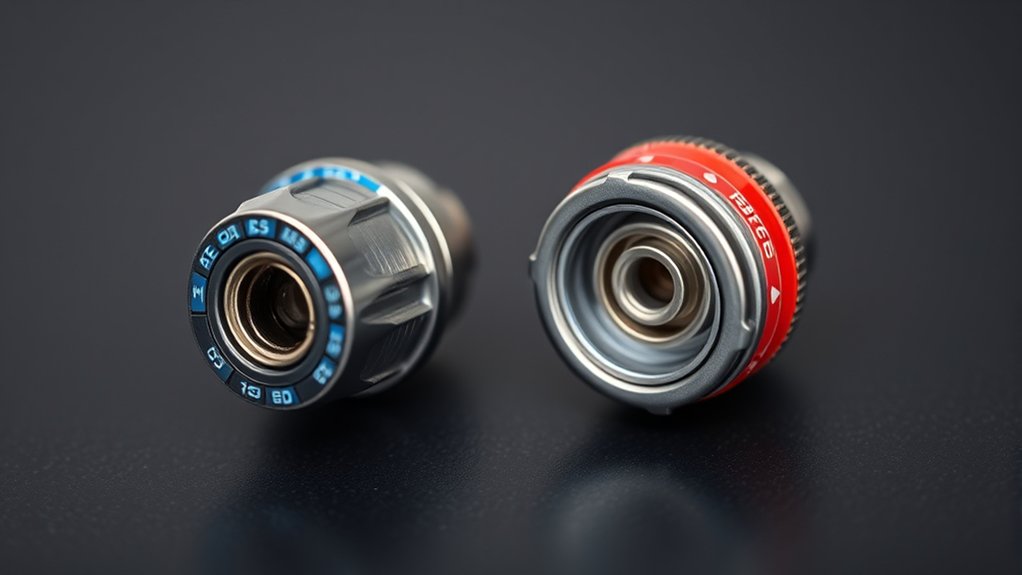
Yes, hot and cold faucet cartridges are different because each is built to handle distinct temperature and pressure conditions.
Hot cartridges use materials and seals that resist thermal expansion and degradation, while cold cartridges focus on preventing mineral buildup and functioning smoothly at lower temperatures.
Swapping them isn’t advisable, as it can cause leaks or premature failure.
Understanding these temperature-specific designs helps you maintain faucet performance longer.
Exploring further will reveal how to identify and select the right cartridge for your needs.
Key Takeaways
- Hot and cold faucet cartridges differ in materials and seals to handle specific temperature ranges.
- Hot cartridges are designed to endure thermal expansion and higher temperatures without leaking.
- Cold cartridges focus on resisting mineral buildup and smooth operation in cooler water conditions.
- Using hot and cold cartridges interchangeably can cause leaks and premature cartridge failure.
- Proper cartridge selection depends on verifying model compatibility and manufacturer specifications.
How Hot and Cold Faucet Cartridges Differ
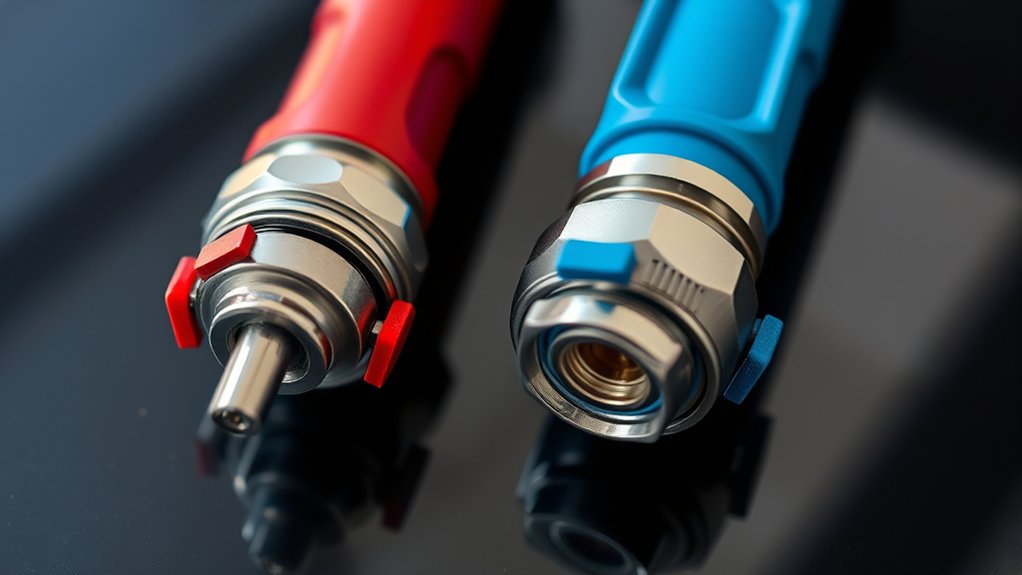
Although hot and cold faucet cartridges may look similar, they differ considerably in design and function to accommodate the specific temperature and pressure requirements of their respective water supplies. When you examine cartridge types, you’ll notice hot cartridges often feature enhanced seals and materials designed to endure higher temperatures without degrading.
Cold cartridges, on the other hand, prioritize resistance to mineral buildup, as cold water typically carries more dissolved solids. Temperature sensitivity plays an essential role in these distinctions; hot cartridges must withstand thermal expansion and prevent leaks, while cold cartridges focus on maintaining smooth operation under cooler conditions.
Understanding these technical differences helps you select the right cartridge, ensuring ideal performance, durability, and safety in your faucet’s operation.
Why Temperature Matters for Cartridge Performance
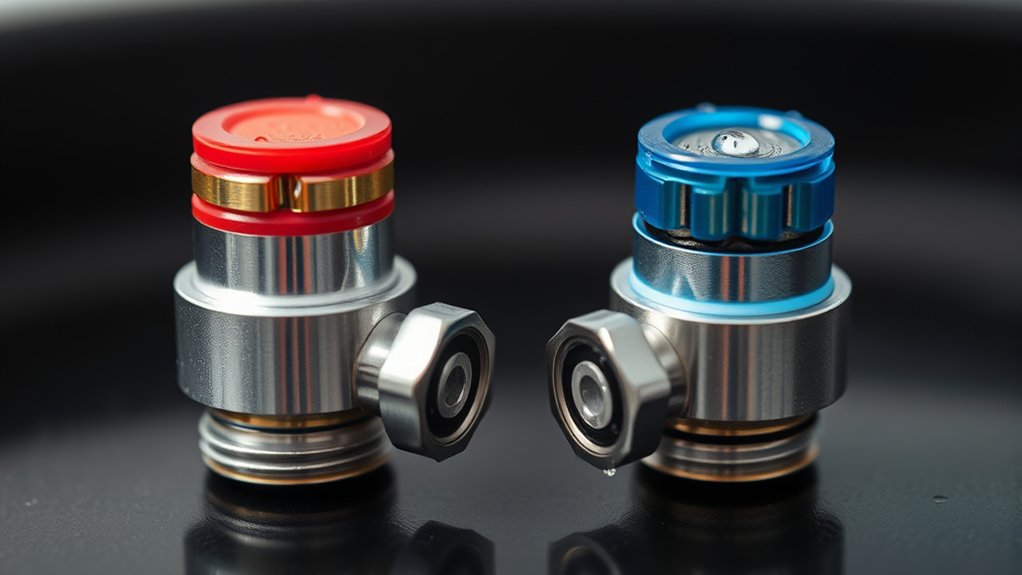
The distinct design features of hot and cold faucet cartridges directly relate to how temperature influences their performance. You need to understand that cartridge durability depends on the temperature tolerance engineered into each type.
Hot cartridges endure higher temperatures, so manufacturers use materials resistant to thermal expansion and degradation. Cold cartridges, exposed to lower temperatures, prioritize different structural integrity factors.
Hot cartridges resist thermal expansion and degradation; cold cartridges focus on maintaining structural integrity at lower temperatures.
Consider these aspects:
- Material composition tailored for heat resistance or cold stability.
- Seals designed to maintain integrity despite temperature fluctuations.
- Internal components calibrated to prevent warping or brittleness.
- Lubricants optimized for temperature-specific viscosity to guarantee smooth operation.
Signs Your Hot or Cold Faucet Cartridge Needs Replacement
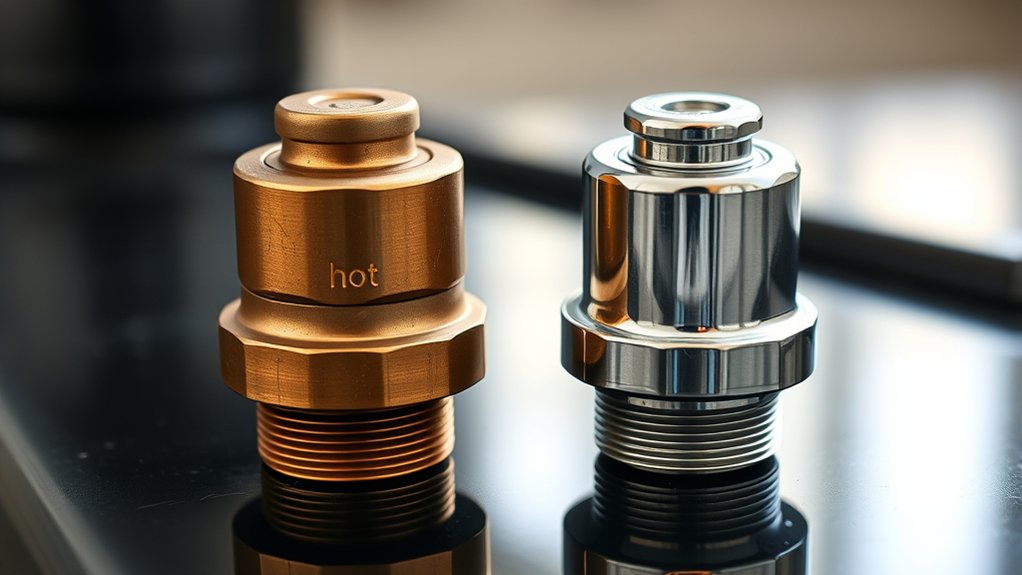
How can you tell when your hot or cold faucet cartridge needs replacement? First, persistent faucet leaks, especially drips from the spout when the handle is off, indicate cartridge wear. These leaks often result from worn seals or damaged internal components.
You might also notice difficulty in adjusting water temperature or flow, which suggests the cartridge’s internal parts have degraded. Stiff or loose handle movement further signals cartridge wear, affecting smooth operation.
Additionally, inconsistent water pressure or sudden temperature fluctuations can point to cartridge malfunction. If you observe any of these signs, it’s essential to replace the cartridge promptly to prevent water waste and potential damage to the faucet assembly.
Monitoring these symptoms helps maintain ideal faucet performance and extends its service life.
Can You Swap Hot and Cold Faucet Cartridges?
Can you interchange hot and cold faucet cartridges without causing issues? Generally, swapping these cartridges isn’t advisable due to cartridge compatibility concerns. Each cartridge is engineered for specific temperature regulation and pressure tolerances, affecting faucet performance.
When considering faucet installation or replacement, you should:
- Verify cartridge model numbers for hot and cold sides.
- Check manufacturer specifications for compatibility.
- Avoid using a cold cartridge in the hot side to prevent seal damage.
- Ascertain the cartridge’s internal components match intended water temperature control.
Ignoring these steps can lead to leaks, improper temperature control, or premature cartridge failure. Always use the correct cartridge type to maintain faucet functionality and longevity. Proper cartridge compatibility is essential for reliable faucet installation and operation.
Choosing the Right Hot and Cold Faucet Cartridge
Selecting the right hot and cold faucet cartridge demands careful attention to compatibility, materials, and design specifications. You need to verify cartridge compatibility with your faucet model to guarantee proper fit and function. Check the manufacturer’s specifications for cartridge size, stem type, and pressure ratings.
Material choice affects durability; ceramic discs resist wear better than rubber seals, extending faucet maintenance intervals. Additionally, consider the cartridge’s design—some are engineered specifically for hot or cold water to handle temperature-induced expansion and contraction. Using mismatched cartridges can cause leaks or premature failure.
Always consult technical datasheets and, if possible, original equipment manufacturer parts to maintain peak performance. Proper selection streamlines faucet maintenance and prevents operational issues, saving you time and repair costs in the long run.
Frequently Asked Questions
How Do You Install a Faucet Cartridge Properly?
You’ll first turn off the water supply, remove the handle, then identify cartridge types. Next, extract the old cartridge carefully, insert the new one aligned properly, and reassemble the faucet.
Ensure all installation steps are precisely followed for proper function.
What Tools Are Needed to Replace a Faucet Cartridge?
You’ll need an adjustable wrench, screwdriver, pliers, and a cartridge puller for some cartridge types.
Don’t forget plumber’s grease and installation tips like turning off water before removing the old cartridge to avoid damage.
Can a Faulty Cartridge Cause Water Leakage?
Imagine water trickling from your faucet base; faulty cartridge types often cause leakage by failing to seal properly. Identifying these leakage causes early helps you replace cartridges precisely, preventing damage and ensuring efficient water flow in your plumbing system.
How Long Do Faucet Cartridges Typically Last?
Faucet cartridge lifespan typically ranges between 5 to 10 years, depending on usage and water quality.
You should follow maintenance tips like regular cleaning and avoiding harsh chemicals to extend your cartridge’s functional life effectively.
Are All Faucet Cartridges Compatible With Any Faucet Brand?
You can’t fit a square peg in a round hole. Faucet compatibility depends on cartridge types. Not all cartridges match every faucet brand, so you must check specifications carefully to verify proper fit and function.
Conclusion
Understanding the differences between hot and cold faucet cartridges is essential for maintaining your plumbing’s efficiency. Did you know that 60% of faucet issues stem from worn-out cartridges? This highlights the significance of choosing the right cartridge for each side to guarantee peak performance and longevity.
Remember, swapping cartridges isn’t always advisable due to temperature-specific materials. Regularly inspecting and replacing your cartridges when needed will keep your faucets functioning smoothly and prevent costly repairs.
In conclusion, knowing whether hot and cold faucet cartridges are different helps ensure you select the appropriate cartridge, enhancing your faucet’s durability and performance.

Leave a Reply