
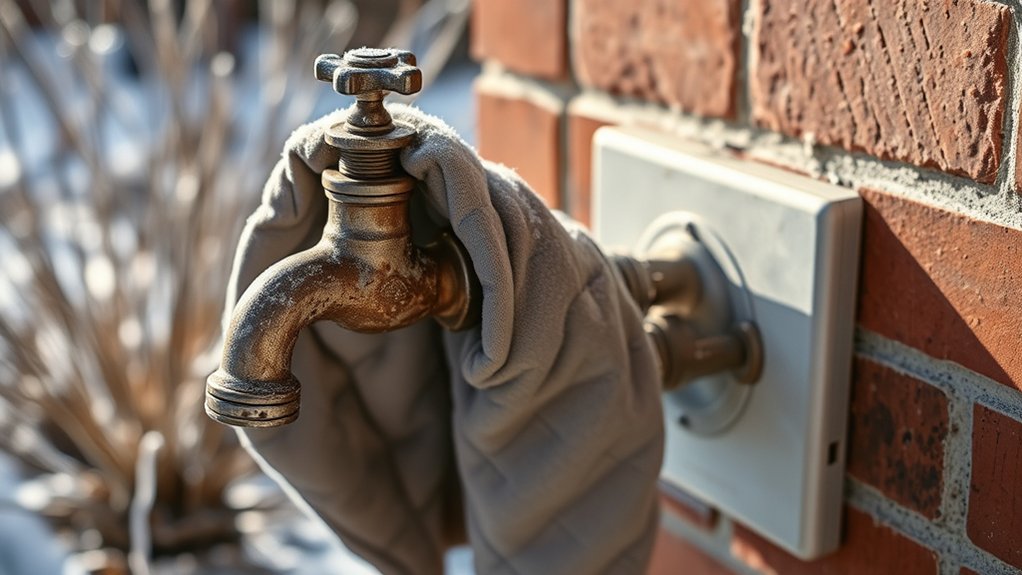
You need outdoor faucet covers to prevent pipes from freezing and bursting, which can cause costly water damage and repairs.
Outdoor faucet covers are essential, even in mild climates, because sudden cold snaps can threaten unprotected faucets.
These covers provide insulation, reduce corrosion, and extend the faucet’s lifespan with minimal effort.
Proper installation before freezing temperatures strike guarantees peak protection.
If you’re aiming to avoid emergency expenses and maintain plumbing integrity throughout winter, exploring how faucet covers work and when to use them will prove valuable.
Key Takeaways
- Outdoor faucet covers protect plumbing from freezing and potential pipe bursts during cold weather.
- In mild climates, covers prevent damage from sudden cold snaps and reduce corrosion risk.
- Installing covers before the first hard freeze ensures optimal insulation and protection.
- Covers are easy to install, cost-effective, and help avoid expensive emergency plumbing repairs.
- Alternatives like heat tape exist, but covers provide a simple, proactive preventive solution.
What Happens If Outdoor Faucets Freeze in Winter?
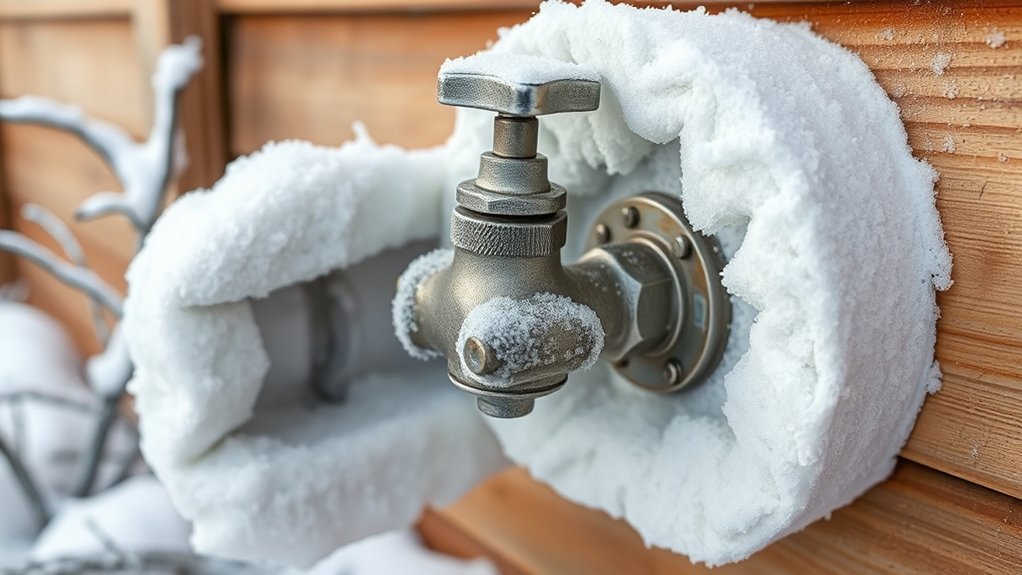
If outdoor faucets freeze in winter, the water inside the pipes can expand and cause the pipes to crack or burst. When this happens, frozen pipes become a serious issue, leading to costly plumbing repairs.
You’ll notice reduced water flow or none at all, signaling that the pipes are blocked by ice. Once the ice thaws, the damage may result in leaks or flooding.
To prevent frozen pipes, it’s essential to insulate outdoor faucets and shut off interior valves controlling outdoor water supply during freezing temperatures. Ignoring these steps increases the risk of pipe failure, forcing you to undertake emergency plumbing repairs.
Insulate outdoor faucets and shut off interior valves to prevent frozen pipes and costly emergency repairs.
Proactive measures protect your plumbing system, ensuring functionality and avoiding unnecessary expenses caused by frozen pipes.
Are Outdoor Faucet Covers Necessary in Mild or Warm Climates?
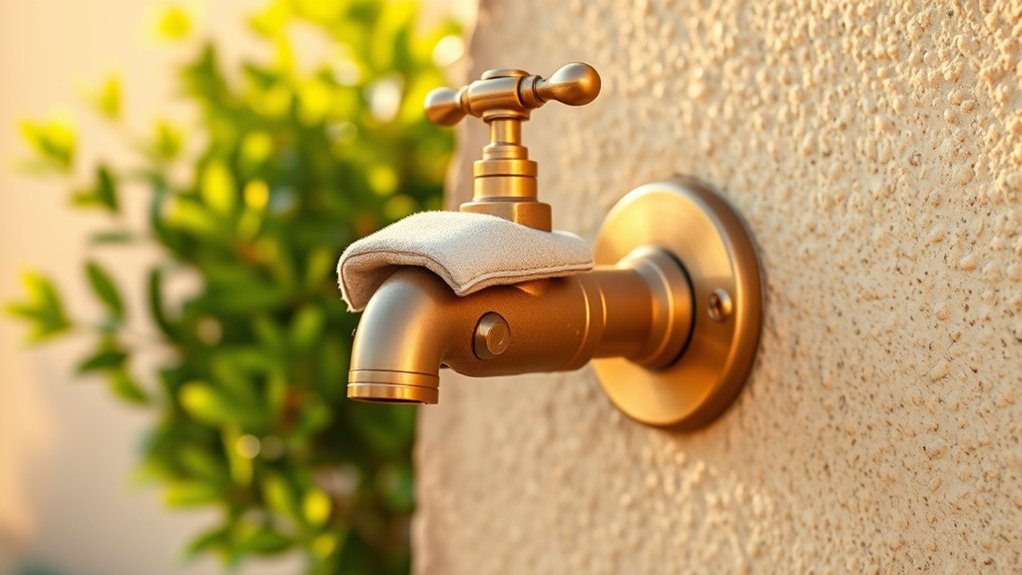
How necessary are outdoor faucet covers in regions with mild or warm climates? In these areas, the risk of freezing is minimal due to consistently higher temperatures. However, faucet insulation still plays a role in protecting your plumbing system from other outdoor climate factors like sudden cold snaps or temperature fluctuations at night.
Installing faucet covers can prevent moisture buildup and reduce the risk of corrosion or damage caused by exposure to wind and rain. While you may not require heavy-duty insulation, lightweight covers offer practical protection, extending the lifespan of your outdoor faucets.
Ultimately, faucet covers in mild climates serve as a preventative measure rather than an essential winter safeguard, helping you maintain plumbing integrity with minimal effort.
Types of Outdoor Faucet Covers and How They Protect Your Plumbing
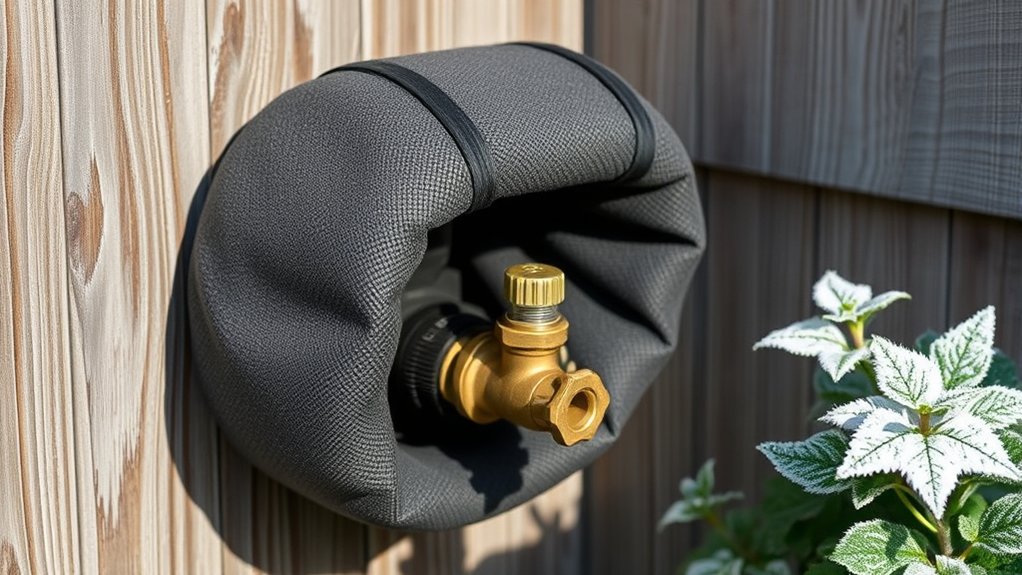
Although outdoor faucet covers come in various designs, each type serves a specific function to shield your plumbing from environmental stressors. Foam covers use dense insulation materials that provide effective heat retention, preventing water in the pipes from freezing. Plastic covers often feature rigid insulation inserts, enhancing durability while maintaining thermal protection.
Fabric or neoprene covers rely on layered insulation materials that trap heat close to the faucet, reducing exposure to cold air. Some models combine hard outer shells with internal foam for dual protection against physical damage and temperature drops. By selecting a cover with appropriate insulation materials, you guarantee consistent heat retention, minimizing the risk of pipe bursts during cold weather.
Properly chosen faucet covers offer a practical, precise defense tailored to your local climate demands.
When to Install Outdoor Faucet Covers for Best Protection
Selecting the right outdoor faucet cover is only part of protecting your plumbing; timing your installation is equally important. Proper installation timing guarantees maximum defense against freezing temperatures and potential pipe damage.
You should install the cover before the first hard freeze to prevent water inside the faucet from freezing and expanding. Weather considerations play an essential role; monitor local forecasts for consistent temperatures below 32°F (0°C).
Additionally, consider installing covers during dry conditions to guarantee proper adhesion and fit. Remove covers in early spring once temperatures consistently stay above freezing. Check for early cold snaps that may require premature installation.
Easy DIY Tips for Installing and Removing Faucet Covers
Once you’ve chosen the right cover, installing and removing it correctly guarantees effective protection and longevity. For faucet cover installation, first verify the outdoor faucet is dry and free of debris. Place the cover snugly over the faucet, aligning any insulation or foam to fully encase the spout and handle.
Secure the cover using built-in clips, straps, or screws, whichever your model requires, to prevent wind displacement.
During seasonal maintenance, remove the cover carefully by loosening fasteners without forcing the material to avoid damage. Inspect the faucet and cover for cracks or wear before reinstalling.
Storing the cover in a dry location during warmer months preserves its integrity. Following these straightforward steps verifies your faucet cover remains effective, protecting your plumbing from freezing temperatures year after year.
Alternatives to Faucet Covers for Winterizing Outdoor Faucets
While faucet covers offer reliable insulation, some situations call for alternative methods to winterize outdoor faucets effectively. You’ll want to explore various faucet insulation options and winterization techniques that suit your setup. Consider these practical alternatives:
Foam pipe insulation sleeves: Cut to size and secured around the faucet and connecting pipes, these minimize heat loss.
Heat tape or heat cables: Electrically powered, these provide consistent warmth to prevent freezing in extremely cold environments.
Indoor shutoff valves with drain lines: Installing an indoor valve allows you to shut off water supply and drain outdoor pipes, eliminating freeze risk.
Each method requires precise application to guarantee ideal protection. Evaluate your specific conditions to select the most efficient winterization technique beyond traditional faucet covers.
How Outdoor Faucet Covers Prevent Costly Plumbing Damage
You rely on outdoor faucet covers to shield your plumbing from freezing temperatures, which can cause pipe bursts and leaks. These covers create a tight seal that prevents water intrusion and minimizes the risk of damage.
Freeze Protection Benefits
Because outdoor faucets are exposed to freezing temperatures, water inside their pipes can expand and cause significant damage. Using faucet insulation during your winter preparation is vital to prevent pipe bursts. Outdoor faucet covers act as a thermal barrier, maintaining a stable temperature around the faucet and connected pipes.
They minimize heat loss and protect against frost buildup. By installing covers, you reduce the risk of costly repairs and water damage.
Key freeze protection benefits include:
- Maintaining consistent insulation to prevent freezing
- Shielding faucets from direct cold air and wind exposure
- Complementing winter preparation efforts to safeguard outdoor plumbing
Incorporating faucet insulation covers into your routine guarantees reliable freeze protection, preserving your plumbing’s integrity throughout harsh winter conditions.
Leak Prevention Mechanisms
Even if freezing temperatures are managed, leaks can still develop from outdoor faucets due to wear, pressure fluctuations, or minor damage. Using faucet insulation as part of your winter preparation helps reduce stress on faucet components by maintaining a stable temperature around the valve and pipe connections.
Outdoor faucet covers act as a protective barrier, preventing moisture intrusion and minimizing exposure to temperature swings that contribute to material fatigue. By reducing thermal expansion and contraction cycles, these covers help maintain seal integrity and prevent small cracks or gaps that lead to leaks.
Additionally, the covers shield faucets from debris and physical impacts, further lowering the risk of damage. Incorporating faucet insulation with a properly fitted cover guarantees your outdoor plumbing remains secure, reducing the likelihood of costly leaks during winter months.
Cost Savings Explained
When outdoor faucet covers prevent freezing and damage, they directly reduce the risk of costly plumbing repairs. You can achieve significant cost efficiency by investing in these covers, as they minimize the financial impact of burst pipes and water leaks.
By maintaining the integrity of your outdoor plumbing, you avoid emergency repair fees and potential water damage remediation.
Consider these key cost-saving factors:
- Prevention of pipe bursts during freezing temperatures, which often require expensive repairs.
- Reduction in water waste and higher utility bills caused by undetected leaks.
- Elimination of secondary damage costs, such as foundation or landscaping repair due to water infiltration.
Using outdoor faucet covers is a practical, proactive approach that enhances cost efficiency and protects your home’s plumbing infrastructure from costly failures.
Frequently Asked Questions
Can Outdoor Faucet Covers Improve Water Pressure?
No, outdoor faucet covers don’t improve water pressure. They provide faucet insulation and winter protection, preventing freezing and damage.
You’ll maintain consistent flow by avoiding pipe bursts, but pressure depends on your plumbing system, not the cover itself.
Do Faucet Covers Help Reduce Water Bills?
Imagine crisp water droplets frozen in winter. Faucet covers prevent leaks and pipe bursts, promoting water conservation and energy savings. By maintaining system integrity, you reduce waste, directly lowering your water bills with practical, precise protection.
Are Faucet Covers Effective Against Pests or Insects?
Yes, you’ll find faucet covers effective for pest prevention, as they act as insect barriers, sealing entry points around outdoor faucets. This reduces nests and infestations. Properly fitted covers enhance protection against pests efficiently.
How Long Do Outdoor Faucet Covers Typically Last?
You’ll find outdoor faucet covers last around 3-5 years unless you treat them like fragile antiques. Durability factors like material quality and seasonal usage heavily impact lifespan, so pick wisely and swap covers each season for best protection.
Can Faucet Covers Be Painted to Match Home Exteriors?
You can paint faucet covers to match your home’s exterior, but using custom color options or specialized outdoor paint guarantees durability.
Consider seasonal decoration ideas to blend functionality with aesthetic appeal effectively and practically.
Conclusion
You might think skipping outdoor faucet covers is no big deal—until a sudden freeze turns your pipes into fragile ice sculptures. Without proper protection, you risk costly repairs that could’ve been avoided with a simple cover.
Even in milder climates, unexpected cold snaps can strike. So, before winter hits, take action.
Installing those covers isn’t just smart—it’s essential for safeguarding your plumbing and peace of mind. Don’t wait until it’s too late to use outdoor faucet covers.

Leave a Reply