
You should clean your cast iron skillet after use, but avoid washing it with soap every time to protect its seasoning.
Are you supposed to wash a cast iron skillet? Typically, rinsing with hot water and scrubbing with a brush or coarse salt works well to remove food residue.
If you do use soap, apply oil afterward to maintain the skillet’s protective layer. Thoroughly dry the skillet to prevent rust.
Understanding how and when to clean your skillet properly helps guarantee it lasts for years.
Keep exploring for expert care tips to ensure your cast iron skillet remains in excellent condition. Proper maintenance is key to enjoying its benefits for a long time.
Key Takeaways
- Cast iron skillets do not require daily soap washing; rinsing with hot water and scrubbing is usually sufficient.
- Use soap only for removing strong flavors, stuck-on food, or rust, then reapply oil afterward.
- Avoid harsh detergents to protect the skillet’s seasoning layer.
- Dry the skillet thoroughly and heat it to evaporate moisture to prevent rust.
- Apply a thin layer of cooking oil after cleaning to maintain seasoning and prevent rust.
Do You Need to Wash Your Cast Iron Skillet?
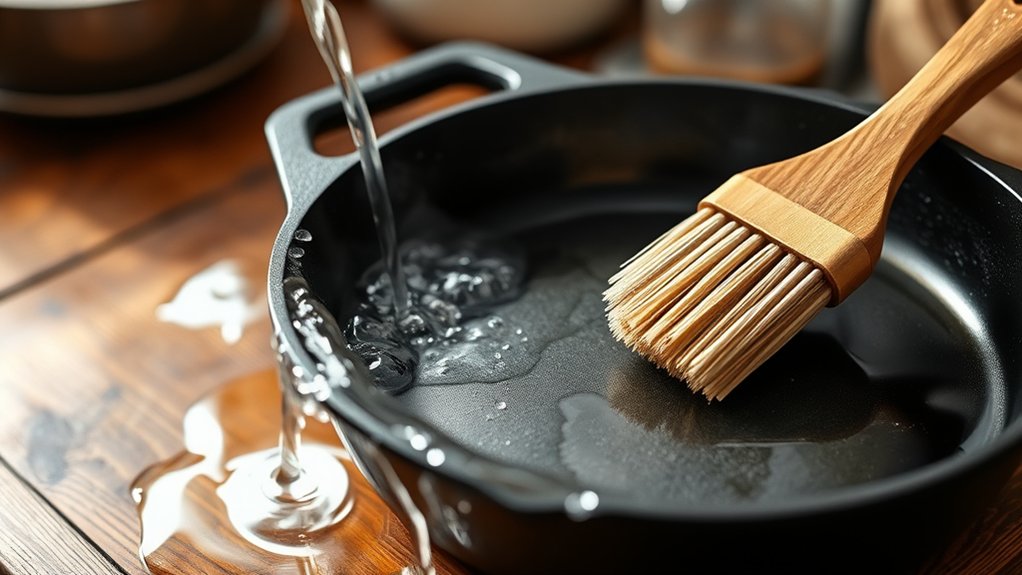
How often should you wash your cast iron skillet? The answer depends on how you use it. Unlike other cookware, your cast iron skillet doesn’t need daily washing with soap, which can strip its seasoning.
Instead, focus on skillet maintenance by removing food residues immediately after cooking. Common cleaning methods involve rinsing with hot water and scrubbing with a stiff brush or sponge. No soap is needed unless absolutely necessary.
You should wash it thoroughly only when switching between strong flavors or if stuck-on food remains. Proper drying and applying a thin coat of oil afterward help maintain the skillet’s seasoning and prevent rust.
How to Clean a Cast Iron Skillet Without Losing Seasoning
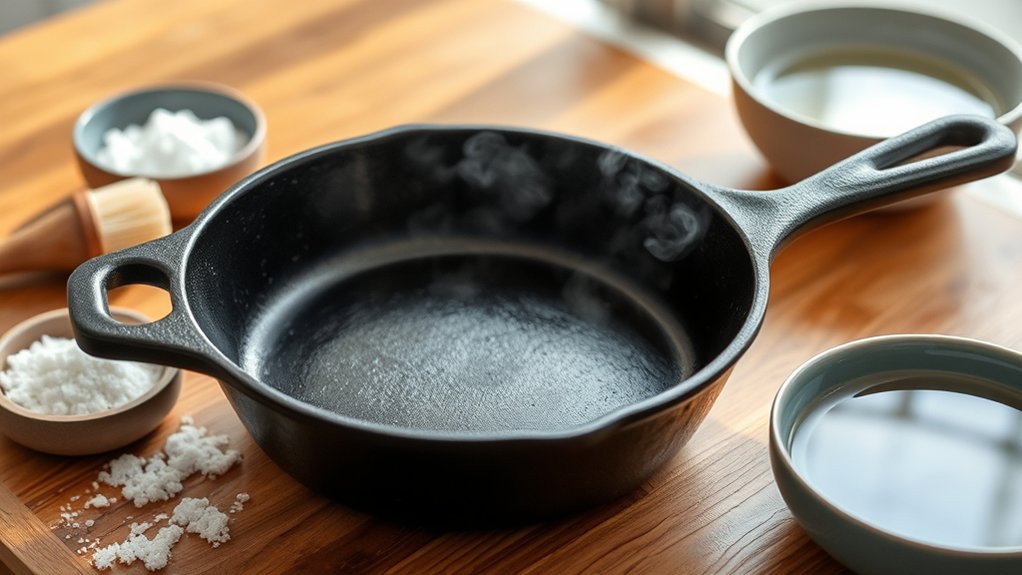
Maintaining the seasoning on your cast iron skillet means choosing cleaning methods that protect its seasoned surface while effectively removing food residue. Start by wiping the skillet with a paper towel or soft cloth immediately after cooking to remove excess oil and food particles.
For stuck-on bits, use a stiff brush or non-metal scrubber with warm water. Avoid harsh detergents. Dry your skillet thoroughly with a clean towel, then heat it on the stove for a few minutes to evaporate all moisture.
Once dry, apply a thin layer of cooking oil to preserve the seasoning and prevent rust. These cleaning methods, combined with regular maintenance tips like avoiding prolonged soaking, guarantee your skillet stays well-seasoned and ready for use.
When Should You Avoid Soap on Your Cast Iron Skillet?
You should avoid soap when your cast iron skillet has a well-established seasoning that you want to preserve, as soap can strip away those essential oils. Skip soap if the skillet isn’t heavily soiled. Warm water and a scrub brush usually do the job without damaging the seasoning.
Use soap only when necessary, such as to remove stubborn food residues or rust. Always reapply oil afterward to maintain the protective layer.
Soap Effects on Seasoning
Although many believe that soap will ruin a cast iron skillet’s seasoning, using it occasionally and correctly won’t necessarily damage the protective layer. Soap can remove surface oils and food residue without stripping the seasoning if you avoid harsh detergents and excessive scrubbing.
To maintain seasoning protection, consider soap alternatives like coarse salt or hot water for routine cleaning.
| Cleaning Method | Effect on Seasoning Protection |
|---|---|
| Mild Soap | Safe if used sparingly |
| Soap Alternatives | Preserve seasoning, ideal for daily use |
| Harsh Detergents | Risk stripping seasoning, avoid if possible |
When To Skip Soap
Since soap can strip away seasoning if misused, you should avoid it in specific situations to preserve your cast iron skillet’s non-stick surface. Skip soap when your skillet only has light residue or after cooking fatty foods that naturally leave a protective layer.
Instead, rely on soap alternatives like coarse salt scrubs combined with a stiff brush or non-metallic scrubbing pads. These cleaning tools effectively remove stuck-on bits without harming the seasoning.
Also, avoid soap if your skillet is well-seasoned and you plan to reapply oil after cleaning, which helps maintain the surface. Save soap for deep-cleaning rare occasions when you must remove stubborn grime or rust.
How to Remove Stubborn Food and Rust From Cast Iron
When stubborn food or rust clings to your cast iron skillet, tackling the problem promptly preserves its cooking surface and longevity. For food residue, scrub the skillet with a stiff brush or non-metallic scrubber using hot water. Avoid soap to protect seasoning. If residue persists, sprinkle coarse kosher salt and scrub; the salt acts as an abrasive.
For rust removal, gently scrub the affected areas with steel wool or a wire brush until the rust is gone. Rinse thoroughly with hot water. After rust removal, your skillet will need re-seasoning to restore its protective layer. Avoid soaking the pan, as prolonged moisture exposure encourages rust.
Addressing food residue and rust quickly guarantees your cast iron remains durable, non-stick, and ready for your next culinary adventure.
How to Dry and Re-Season Your Cast Iron Skillet Properly
After washing your cast iron skillet, you need to dry it thoroughly to prevent rust. Using a towel and warming it on the stove works best.
Once dry, apply a thin layer of oil evenly across the surface to restore its protective seasoning. Heating the skillet in the oven or on the stove for a few minutes will lock in that layer, keeping your pan non-stick and rust-free.
Effective Drying Techniques
Mastering three key steps will guarantee your cast iron skillet dries thoroughly and stays rust-free. Proper drying methods are essential for moisture prevention, which protects your skillet’s seasoning and longevity. Follow these steps:
- Immediate Towel Drying: Right after washing, use a clean, dry towel to wipe away all water. This prevents standing moisture that causes rust.
- Heat Drying: Place the skillet on a low burner or in a warm oven for 5-10 minutes. This guarantees any residual moisture evaporates completely.
- Oil Application: While still warm, apply a thin layer of cooking oil to the skillet’s surface. This seals out moisture and maintains the non-stick surface.
These drying methods combine to protect your skillet, keeping it in prime cooking condition and free from rust or damage.
Steps to Re-Season
Three essential steps will help you properly dry and re-season your cast iron skillet, ensuring it remains durable and non-stick. First, dry the skillet immediately after washing by heating it on low heat until all moisture evaporates.
Next, apply a thin layer of oil using a cloth or paper towel. This is vital for effective re seasoning techniques. Finally, bake the skillet upside down in a preheated oven at 450°F for one hour, then let it cool gradually.
These steps restore the seasoning benefits, protecting the skillet from rust and enhancing its cooking surface.
| Step | Action | Purpose |
|---|---|---|
| Drying | Heat on low | Remove moisture |
| Oiling | Thin oil layer | Build protective seasoning |
| Baking | 450°F for 1 hour | Polymerize oil, strengthen coating |
| Cooling | Let cool in oven | Set seasoning layer |
Tips to Maintain Your Cast Iron Skillet Between Washes
Even when you’re not giving your cast iron skillet a full wash, you can take simple steps to keep it in top condition. Proper seasoning maintenance guarantees your skillet stays non-stick and rust-free, enhancing your cooking techniques every time you use it.
Follow these practical tips between washes:
- Wipe the skillet clean with a paper towel or cloth immediately after cooking to remove food residue.
- Apply a thin layer of cooking oil to the surface while the skillet is still warm to reinforce the seasoning.
- Store your skillet in a dry place, ideally with a paper towel inside to absorb moisture and prevent rust.
Frequently Asked Questions
Can Cast Iron Skillets Be Used on Induction Cooktops?
Yes, cast iron skillets are induction compatible because their magnetic properties work perfectly with induction cooktops.
You’ll appreciate their excellent heat distribution, which guarantees even cooking and maximizes your induction cooking efficiency.
Is It Safe to Cook Acidic Foods in Cast Iron?
Picture sizzling tomatoes bubbling in your cast iron; acidic food compatibility is fine if your skillet’s well-seasoned.
To protect flavors and maintain cast iron maintenance, avoid prolonged cooking of acidic dishes, preserving that rich, non-stick surface.
How Long Does Seasoning on Cast Iron Typically Last?
Seasoning longevity on cast iron typically lasts months with proper care. You’ll maintain it by cleaning gently, drying thoroughly, and applying light oil after each use.
Regular maintenance tips help prevent rust and preserve the non-stick surface.
Can Cast Iron Skillets Go in the Dishwasher?
Dishwashers are like storms for cast iron skillets; they cause dishwasher damage by stripping seasoning and causing rust. You shouldn’t use them.
Instead, stick to hand washing with minimal soap and thorough drying for best cleaning methods.
What’s the Best Oil for Seasoning Cast Iron?
You should season your cast iron with flaxseed oil for a durable, non-stick layer, though vegetable oil works well too. Both polymerize under heat, but flaxseed oil creates a harder, longer-lasting seasoning coat.
Conclusion
Remember, “a stitch in time saves nine” when it comes to caring for your cast iron skillet. You should wash it carefully to preserve the seasoning—avoid harsh soap unless necessary, and always dry it thoroughly.
When stubborn food or rust appears, tackle it promptly with the right techniques to maintain your skillet’s performance. This ensures it stays in top condition and ready for your next meal.
By following these practical steps, you’ll guarantee your cast iron remains a reliable, long-lasting kitchen companion. Proper washing of a cast iron skillet is key to preserving its seasoning and durability.



Leave a Reply