
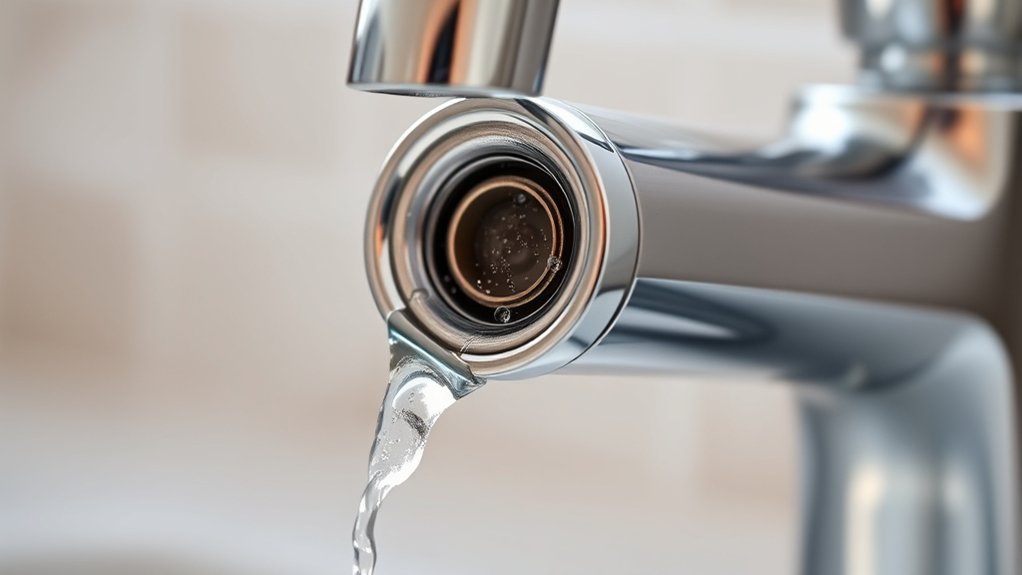
Yes, a bad faucet cartridge can cause low water pressure. This happens because the cartridge may wear out, become clogged with debris, or fail to open fully, restricting the water flow.
You might notice reduced pressure even when the faucet is fully open, leaks, or stiff handle movement.
Cleaning or replacing the cartridge often restores proper flow.
If you want to guarantee a complete fix and avoid worsening issues, exploring the causes and solutions in detail will help you handle the problem effectively.
Key Takeaways
- A worn or damaged faucet cartridge can restrict water flow, causing noticeably low water pressure.
- Misaligned internal components in a faulty cartridge create blockages that reduce pressure output.
- Mineral buildup and debris inside the cartridge hinder its smooth operation and limit water flow.
- Reduced water pressure often occurs despite the faucet handle being fully opened due to cartridge issues.
- Replacing or cleaning the cartridge usually restores normal water pressure by removing flow obstructions.
How a Faulty Faucet Cartridge Causes Low Water Pressure
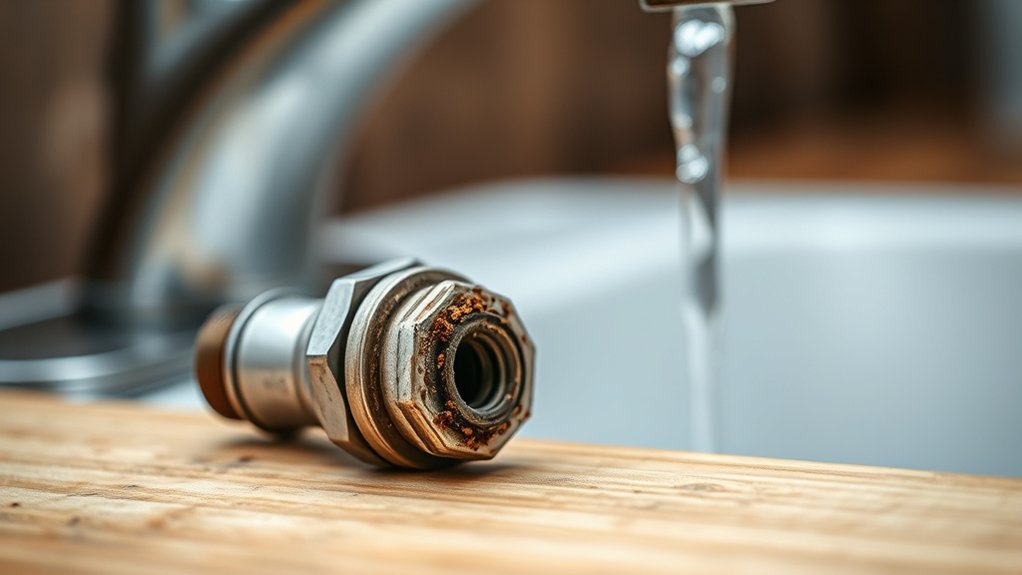
When a faucet cartridge wears out or becomes damaged, it restricts water flow by preventing the valve from opening fully. You’ll notice reduced water pressure because the internal components no longer align properly, creating partial blockages.
Different cartridge types, such as ceramic disc, ball, and compression, each have unique mechanisms but all rely on smooth valve movement to control flow. Faulty cartridges accumulate debris or develop wear, leading to inefficient sealing and flow restrictions.
To prevent this, follow regular faucet maintenance tips: clean cartridges periodically, inspect seals, and replace damaged parts promptly. By understanding your cartridge type and maintaining it correctly, you can avoid low water pressure issues and extend your faucet’s lifespan with minimal hassle.
What Are the Signs of a Bad Faucet Cartridge?
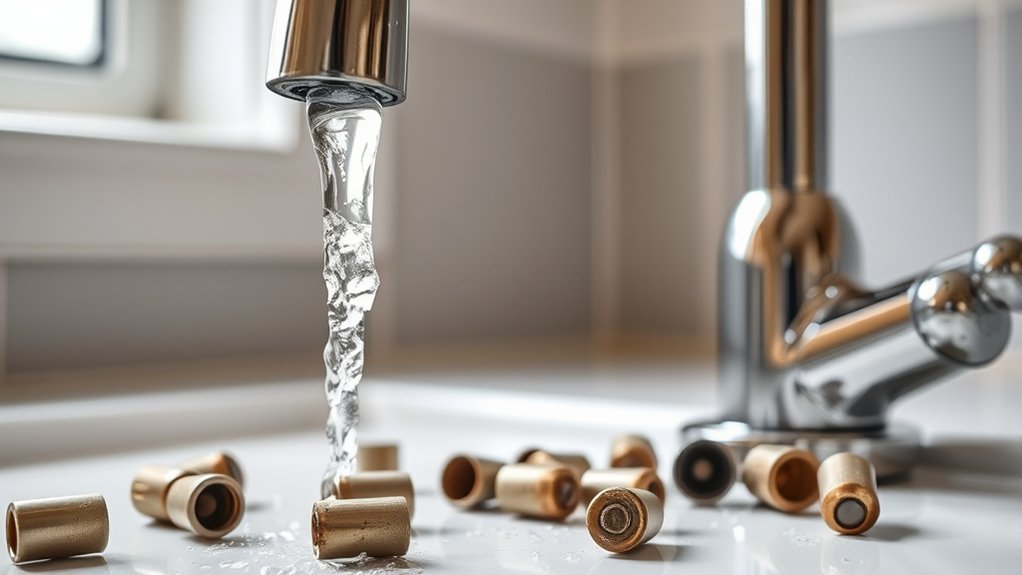
If you notice inconsistent water flow or difficulty adjusting temperature, these often signal a bad faucet cartridge. Recognizing early signs of wear can save you from more extensive repairs. Here are four key indicators to watch for:
- Reduced water pressure despite fully opening the faucet.
- Dripping or leaking even after turning the handle off.
- Stiff or loose handle movement, making temperature control challenging.
- Unusual noises like screeching or grinding when operating the faucet.
Incorporate these faucet maintenance tips by regularly inspecting these signs of wear. Catching problems early guarantees efficient water flow and prolongs cartridge life. Addressing these symptoms promptly maintains peak faucet performance and prevents low water pressure issues.
How to Clean or Replace a Faucet Cartridge
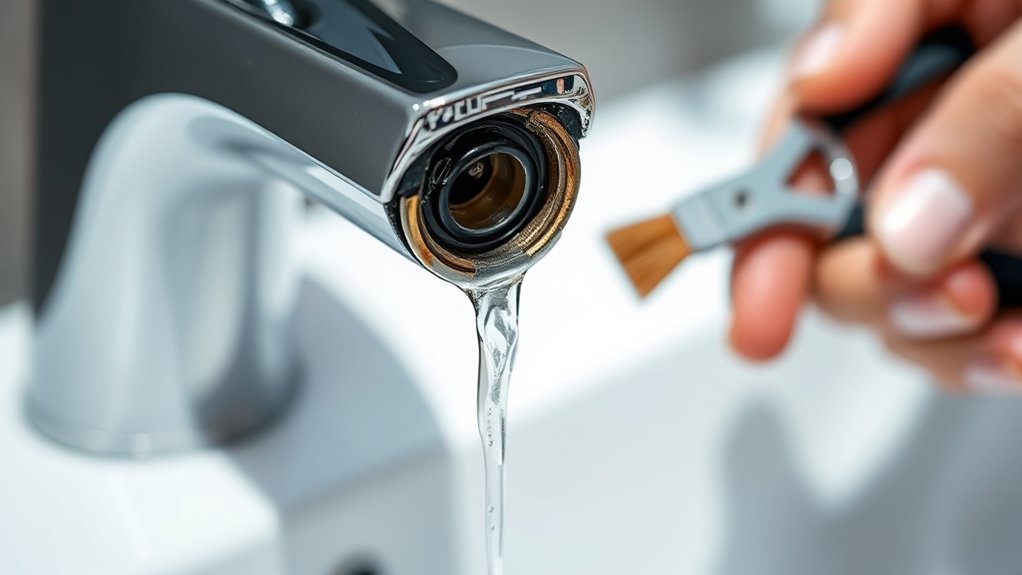
Start by turning off the water supply to prevent leaks before removing the faucet handle to access the cartridge. For cartridge maintenance, inspect it for mineral buildup or damage.
Turn off the water supply before removing the faucet handle to inspect the cartridge for buildup or damage.
Soak the cartridge in vinegar to dissolve deposits, then scrub gently with a soft brush. If cleaning doesn’t restore function, replace the cartridge by unscrewing the retaining nut and removing the old cartridge.
When installing the new cartridge, align it correctly according to the manufacturer’s specifications to avoid leaks or poor water flow. Tighten the retaining nut securely but avoid overtightening.
Reattach the handle and restore water supply to test for proper operation. Following these installation tips guarantees peak performance and extends the cartridge’s lifespan, preventing low water pressure issues effectively.
When Should You Call a Plumber for Faucet Cartridge Problems?
Properly cleaning or replacing a faucet cartridge often resolves common issues like low water pressure or leaks. However, you should call a plumber for faucet cartridge problems when:
- You’ve followed standard faucet maintenance steps, but the problem persists.
- You notice water pooling or damage around the faucet base, indicating a potential seal failure.
- The cartridge is inaccessible or requires specialized tools to remove.
- Low water pressure affects multiple fixtures, suggesting a broader plumbing issue.
These plumbing tips help you avoid causing further damage or wasting time on ineffective repairs. A professional plumber can accurately diagnose complex issues and perform precise cartridge replacements or other necessary repairs.
Don’t hesitate to seek expert help to maintain peak faucet performance and prevent costly water damage.
Frequently Asked Questions
Can a Bad Faucet Cartridge Damage My Plumbing System?
Yes, a bad faucet cartridge can cause leaks or pressure issues that strain your plumbing system. Regular faucet maintenance helps prevent costly plumbing repairs and guarantees your water flow remains consistent and damage-free.
What Tools Do I Need to Replace a Faucet Cartridge?
Before you grab your trusty quill, gather a wrench, screwdriver, pliers, and plumber’s grease for your faucet maintenance tips. These tools streamline the cartridge replacement process, ensuring precise, efficient repairs and long-lasting faucet performance.
Are Certain Faucet Brands More Prone to Cartridge Issues?
Certain faucet brands use specific cartridge types that might wear out faster. You’ll want to research each brand’s reputation for durability and compatibility, ensuring you pick cartridges designed for longevity and reduced maintenance needs.
How Long Does a Typical Faucet Cartridge Last?
Like a trusty pocket watch, your faucet cartridge typically lasts 5-10 years. Watch for cartridge replacement signs such as leaks or drips.
Follow faucet maintenance tips to guarantee precise function and avoid premature wear or failure.
Can Water Quality Affect the Lifespan of a Faucet Cartridge?
Yes, water hardness and contaminants influence your faucet cartridge’s lifespan considerably. Hard water causes mineral buildup, while contaminants accelerate wear.
You should consider installing a water softener or filter to extend your cartridge’s durability effectively.
Conclusion
If you’re facing low water pressure, a faulty faucet cartridge might be the culprit—studies show that clogged or worn cartridges cause up to 30% of household faucet issues. By identifying signs like inconsistent flow or leaks, you can clean or replace the cartridge yourself and restore ideal pressure.
However, if problems persist, don’t hesitate to call a plumber. Addressing cartridge issues promptly guarantees efficient water use and prevents further damage.
In conclusion, a bad faucet cartridge can indeed cause low water pressure, so timely inspection and maintenance are key to keeping your faucet functioning properly.

Leave a Reply