
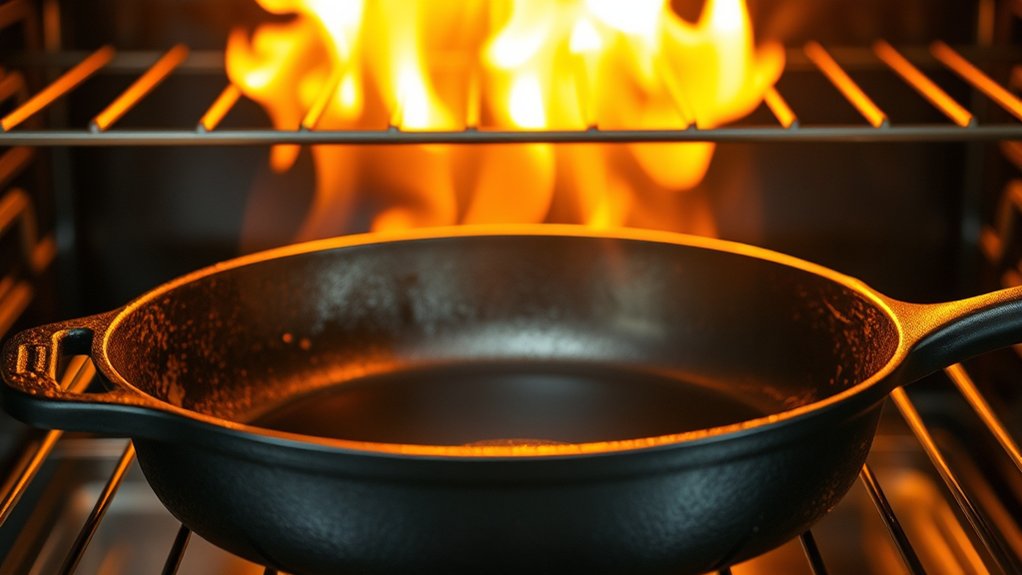
You can safely use your cast iron skillet in the broiler as long as you avoid sudden temperature changes and guarantee the handle is oven-safe.
Preheat the skillet gradually and keep it a few inches from the heat source for even cooking.
High broiler heat can stress the seasoning, so regular maintenance is important.
After broiling, clean and oil it promptly to preserve its finish.
Keep these tips in mind to get the best results and care techniques.
Key Takeaways
- Cast iron skillets are safe to use in the broiler as they withstand intense, direct heat without warping or cracking.
- Ensure the skillet handle is oven-safe, avoiding wooden or plastic handles when broiling.
- Preheat the skillet gradually and avoid placing a cold skillet directly under the broiler to prevent thermal shock.
- Broiling can stress the seasoning; regular re-seasoning is necessary to maintain the non-stick surface and durability.
- After broiling, cool slightly, clean gently without harsh detergents, dry immediately, and apply oil to protect the skillet.
Can a Cast Iron Skillet Safely Go in the Broiler?
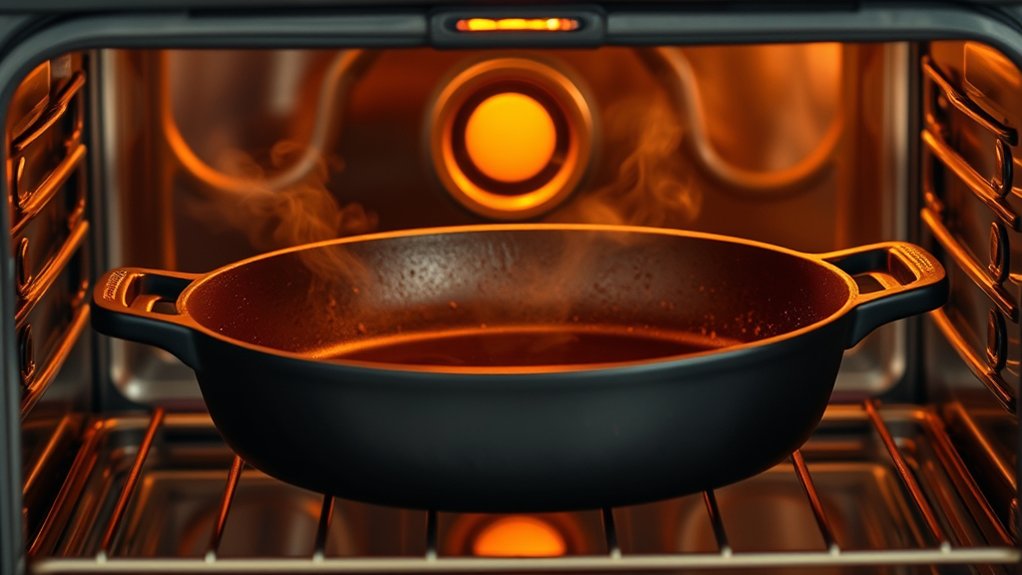
Wondering if you can safely use a cast iron skillet in the broiler? The answer is yes, cast iron is well-suited for broiler use due to its excellent heat retention and durability.
When it comes to broiler safety, cast iron stands out because it can withstand the intense, direct heat without warping or cracking. However, you need to guarantee your skillet’s handle is oven-safe, as some cast iron pans come with wooden or plastic handles that can be damaged under broiler conditions.
Always preheat the skillet gradually to avoid thermal shock. Additionally, avoid sudden temperature changes, like placing a hot skillet into cold water.
Following these guidelines guarantees you can confidently use your cast iron skillet under the broiler, combining broiler safety with cast iron’s unmatched performance.
What High Broiler Heat Does to Cast Iron Seasoning
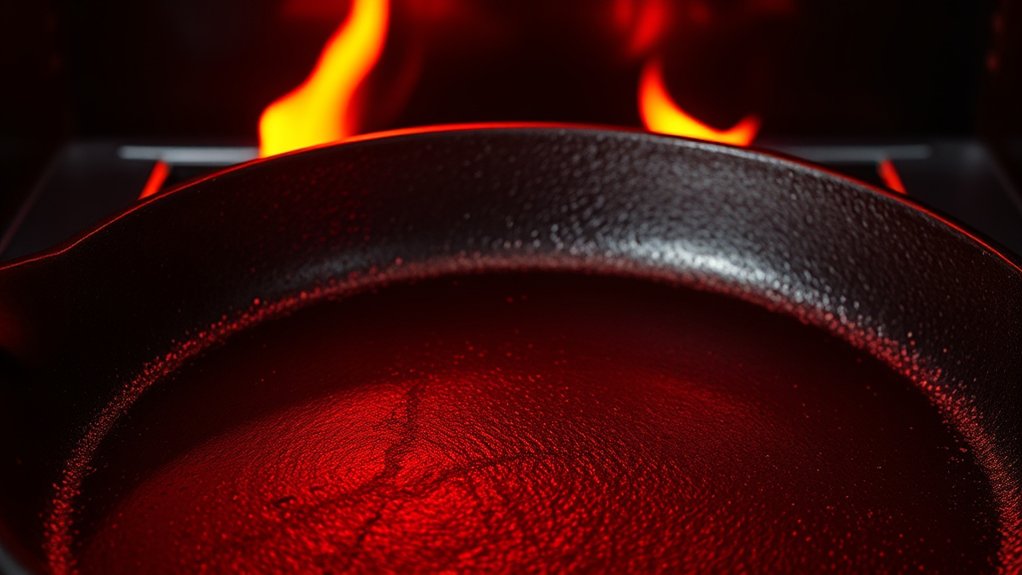
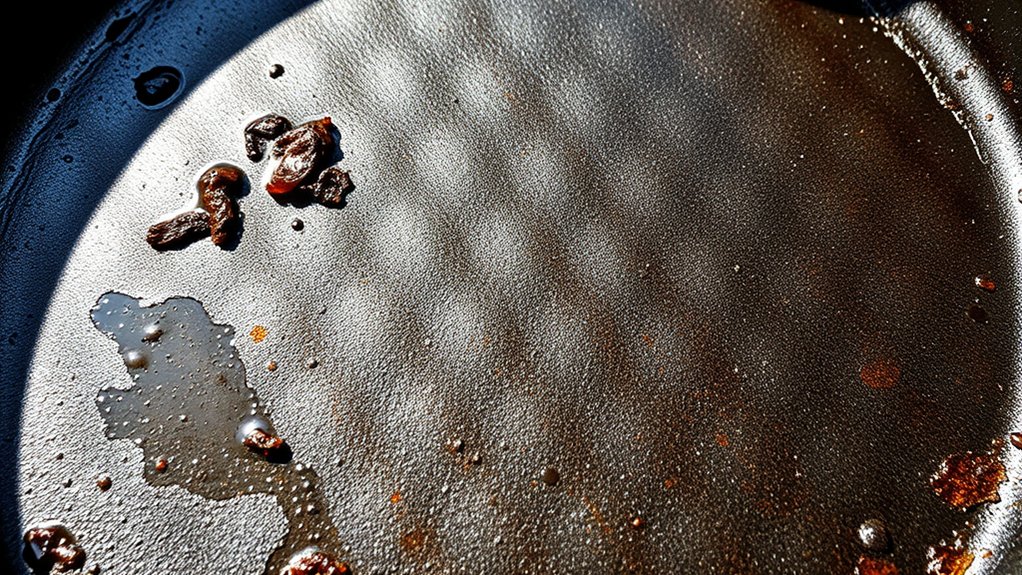
When you expose your cast iron skillet to the broiler’s intense heat, the seasoning layer can undergo significant changes. High temperatures may strengthen the polymerized oil coating but can also cause it to blister or flake if overheated.
Understanding this heat impact helps you maintain a durable, non-stick surface over time.
Effects On Seasoning Layer
Although high broiler heat can quickly sear food, it can also compromise the seasoning layer on your cast iron skillet by causing it to blister, flake, or burn. This intense heat stresses the polymerized oils that create the non-stick surface, reducing seasoning durability over time.
If you frequently expose your skillet to broiler temperatures without proper seasoning maintenance, you risk accelerating wear and weakening the protective coating. To preserve your skillet’s seasoning layer, avoid prolonged broiler exposure and promptly re-season if you notice damage.
Consistent seasoning maintenance strengthens the skillet’s resilience, ensuring it withstands occasional high-heat use without degrading. By understanding how broiler heat affects the seasoning, you can protect your cast iron’s performance and longevity effectively.
Heat Impact On Coating
Because high broiler heat subjects your cast iron skillet to extreme temperatures rapidly, it can break down the polymerized oils that form the seasoning layer. This intense heat challenges the coating integrity by causing thermal stress, which may lead to flaking or uneven seasoning.
When you use the broiler, the seasoning durability decreases if the skillet isn’t properly maintained or if the seasoning is thin. However, a well-seasoned pan with multiple robust layers can often withstand broiler heat without significant damage.
To preserve coating integrity, avoid prolonged exposure to the broiler’s highest settings and reapply seasoning regularly. Understanding how this rapid, intense heat impacts your skillet helps you maintain seasoning durability and guarantees your cast iron performs effectively over time.
How to Use Your Cast Iron Skillet Safely Under the Broiler
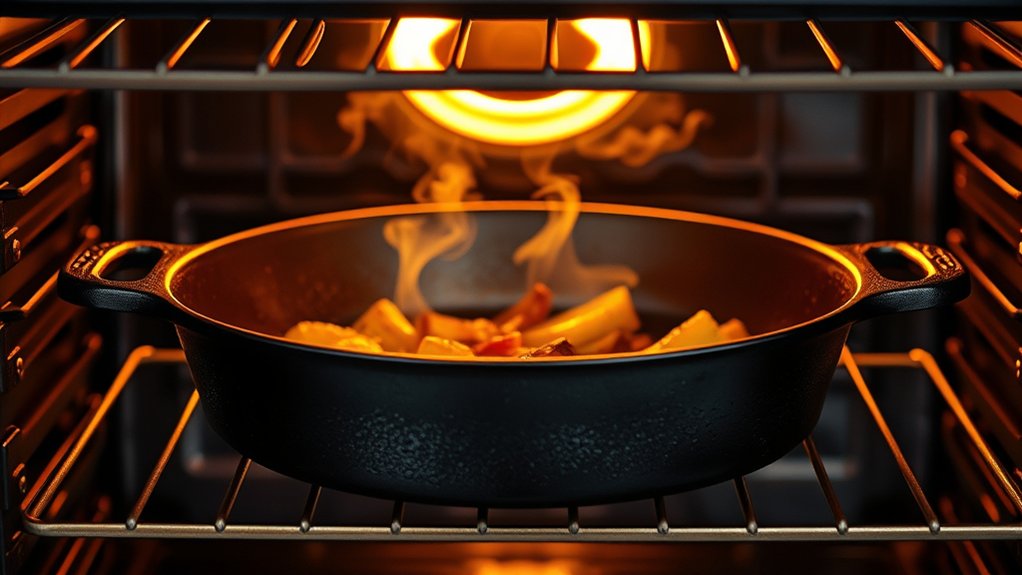
You need to guarantee your cast iron skillet can handle the intense heat of the broiler by preheating it gradually and avoiding sudden temperature changes to prevent thermal shock.
Always position the skillet properly in the broiler, keeping it at a safe distance from the heating element to maintain even cooking and protect your pan. Following these steps will help you use your cast iron safely and extend its lifespan.
Heat Resistance Tips
When using your cast iron skillet under the broiler, guaranteeing proper heat resistance is essential to prevent damage and maintain its seasoning. Cast iron has excellent heat tolerance, but extreme or uneven heating can cause metal fatigue over time.
To protect your skillet, preheat it gradually rather than exposing it to sudden, intense heat. Avoid placing a cold skillet directly under the broiler; this can stress the metal and compromise its structural integrity.
Always monitor cooking closely to prevent overheating, which can degrade the seasoning layer and weaken the skillet. By respecting your skillet’s heat tolerance and minimizing rapid temperature changes, you’ll extend its lifespan and preserve its performance under the broiler.
This approach guarantees safe, effective use without risking costly damage.
Avoiding Thermal Shock
Protecting your cast iron skillet from rapid temperature changes is key to maintaining its durability under the broiler. Thermal expansion causes the metal to expand when heated, and sudden exposure to extreme heat can create uneven temperature gradients across the skillet.
This disparity leads to stress within the iron, increasing the risk of cracking or warping. To avoid thermal shock, always preheat your skillet gradually before placing it under the broiler. Never transfer a cold skillet directly into a hot oven or broiler, and avoid adding cold liquids to a hot pan.
Proper Broiler Placement
Although cast iron skillets handle high heat well, placing them correctly under the broiler is essential to guarantee even cooking and prevent damage. You should maintain an ideal broiler distance, typically 4 to 6 inches from the heating element, to avoid scorching. Adjust your skillet position to center it under the broiler for uniform heat exposure.
Avoid placing it too close or too far, which causes uneven cooking or excessive smoke.
| Broiler Distance | Skillet Position | Outcome |
|---|---|---|
| 3 inches | Off-center | Burnt edges |
| 5 inches | Centered | Even cooking |
| 7 inches | Centered | Slow browning |
Proper broiler distance and skillet position guarantee safety and ideal results when broiling with cast iron.
Caring for Your Cast Iron Skillet After Broiler Use
Because the broiler exposes your cast iron skillet to intense heat, proper care afterward is vital to maintain its seasoning and prevent damage. Start by allowing the skillet to cool slightly, then use gentle cleaning methods such as warm water and a non-abrasive brush or sponge.
Avoid harsh detergents that can strip the seasoning. For stubborn residue, scrub with coarse salt and a little water, then rinse thoroughly. After cleaning, dry the skillet immediately to prevent rust. Apply a thin layer of cooking oil to restore its protective coating.
Regular maintenance tips include seasoning the skillet periodically and storing it in a dry place. Following these steps guarantees your cast iron skillet remains durable and performs well after broiler use.
When to Avoid Using Cast Iron in the Broiler
When you use a cast iron skillet in the broiler, you need to take into account its condition and the type of food you’re cooking. Avoid using a skillet with cracks or warped surfaces to prevent breakage and guarantee broiler safety.
Also, steer clear of foods with high sugar content, as they can burn quickly and damage the seasoning. Remember the cast iron limitations related to extreme temperature shock; never move the skillet directly from the fridge to the broiler.
| Condition | Food Type | Reason for Avoidance |
|---|---|---|
| Cracked or warped | Sugary or sticky foods | Risk of breakage and seasoning damage |
| Cold from refrigerator | Delicate baked goods | Temperature shock and uneven cooking |
| Poorly seasoned | Thin cuts of meat | Sticking and uneven browning |
Best Broiler Recipes for Cast Iron Skillets
Cast iron skillets excel under the broiler, delivering intense, even heat that enhances flavors and textures. For a perfect broiler steak, preheat your skillet under the broiler, then sear the steak evenly to lock in juices and achieve a caramelized crust. This method guarantees a restaurant-quality finish without a grill.
Another standout recipe is cast iron nachos: layer tortilla chips, cheese, and toppings in the skillet, then broil until the cheese bubbles and crisps. The skillet’s heat retention assures an evenly melted, golden topping.
Both recipes showcase the skillet’s versatility and ability to withstand high broiler temperatures. When you use your cast iron skillet with these techniques, you’ll maximize flavor and texture while maintaining the pan’s seasoning and integrity.
Frequently Asked Questions
Can Cast Iron Skillets Be Used on Induction Cooktops?
Yes, your cast iron skillet works perfectly on induction cooktops thanks to its induction compatibility. You’ll enjoy excellent skillet performance with even heating and quick temperature adjustments, making it a reliable choice for induction cooking.
How Do I Remove Rust From My Cast Iron Skillet?
Imagine your skillet hosting a rusty party, uninvited guests! Scrub with steel wool, rinse, dry thoroughly, then re-season to kick rust out and prevent future invasions. That’s your rust removal and rust prevention done, perfectly.
What Is the Difference Between Cast Iron and Carbon Steel Pans?
Cast iron advantages include superior heat retention and durability, while carbon steel benefits are its lighter weight and faster heating.
You’ll choose cast iron for steady cooking and carbon steel for quick, responsive heat control.
Can I Use Soap to Clean My Cast Iron Skillet?
Sure, you can use soap if you want your skillet to throw a rusty tantrum. Stick to gentle cleaning methods; a little soap won’t ruin it, but don’t overdo soap usage or scrub away seasoning.
How Often Should I Reseason My Cast Iron Skillet?
You should reseason your cast iron skillet every few months, depending on use. Frequent cooking or scrubbing may require more frequent reseasoning.
Stick to proven seasoning methods like applying thin oil layers and heating properly.
Conclusion
You can definitely use your cast iron skillet in the broiler, but treat it like a wild stallion—respect its power and handle with care. High heat can wear down seasoning, so preheat gradually and re-season afterward to keep it in top shape. Avoid broiling acidic foods that might strip its finish.
With the right precautions, your cast iron will thrive under the broiler, delivering perfectly seared, flavorful dishes every time. Remember, knowing that a cast iron skillet can go in the broiler will expand your cooking possibilities and help you get the most out of this versatile kitchen tool.


Leave a Reply