
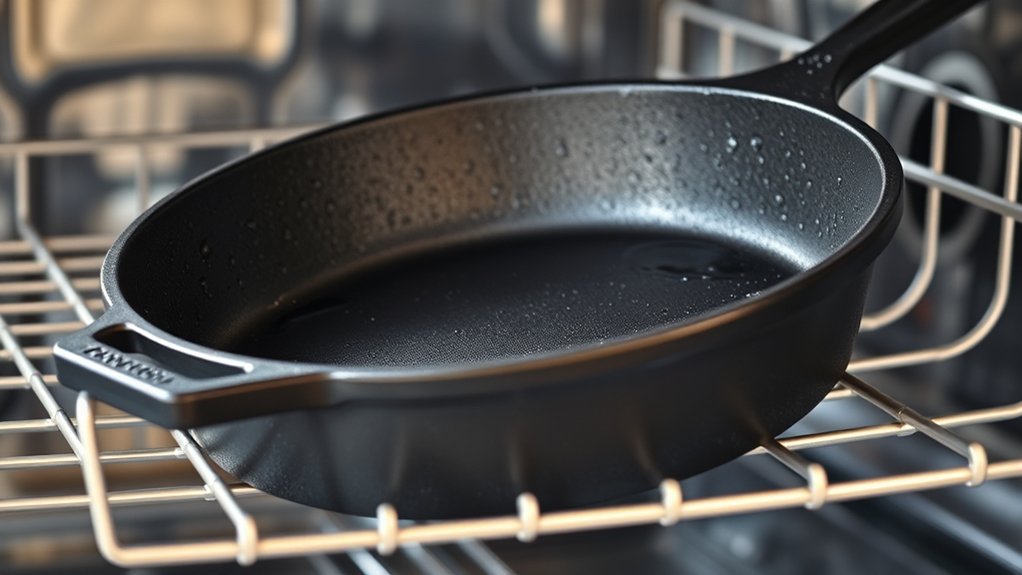
You shouldn’t put your cast iron skillet in the dishwasher because it strips away the essential seasoning that prevents rust and keeps it non-stick.
Dishwashers use harsh detergents and high heat, which damage the skillet’s protective layer and leave it vulnerable to rust and warping.
Instead, clean your skillet by hand with warm water and scrub gently.
Avoid using soap or harsh abrasives that can remove the seasoning.
After washing, dry it immediately with a towel to prevent moisture from causing rust.
Then, reapply a thin layer of oil to maintain its seasoning.
Keep caring for your cast iron skillet properly, and you’ll preserve its performance and durability for years.
Learn how to maintain your skillet’s quality effectively with simple, regular care.
Key Takeaways
- Cast iron skillets should not go in the dishwasher as harsh detergents strip away their protective seasoning.
- High dishwasher heat and moisture exposure cause rust and damage the skillet’s surface.
- Dishwashers can warp or crack cast iron due to extreme temperature changes.
- Manual cleaning with warm water and a brush preserves seasoning and prevents rust.
- Proper drying and oiling after hand washing maintain the skillet’s durability and non-stick qualities.
Dishwasher Safety for Cast Iron Skillets
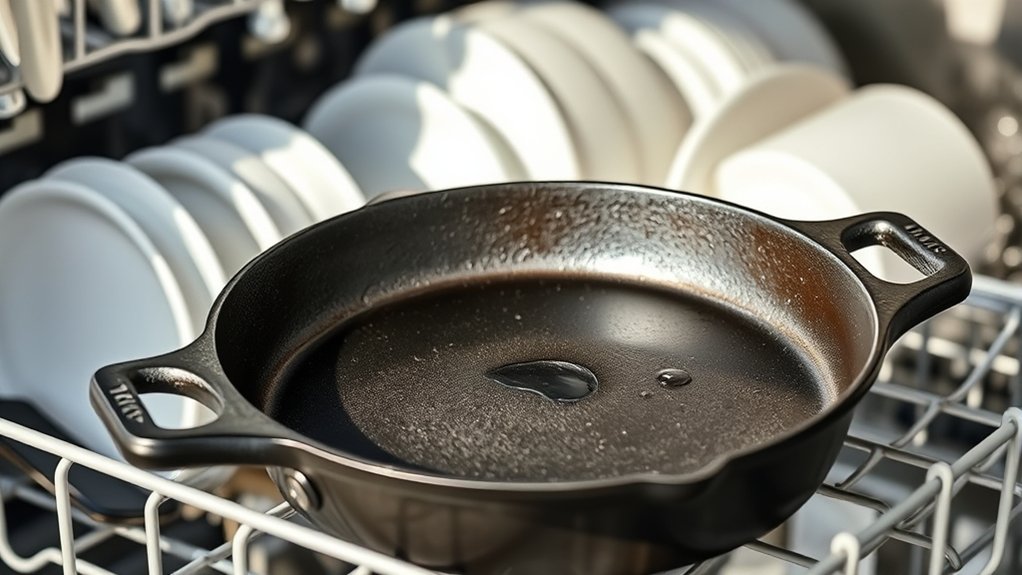
Although dishwashers offer convenience, you shouldn’t put your cast iron skillet in one. The harsh detergents and high heat strip away the skillet’s seasoning, a vital layer that prevents rust and guarantees non-stick performance.
Dishwashers also expose cast iron to prolonged moisture, causing it to rust quickly. For effective cast iron maintenance, avoid these conditions by choosing dishwasher alternatives.
Instead of automated cleaning, opt for manual methods that preserve the skillet’s integrity. Proper care involves rinsing with warm water and drying immediately to prevent moisture damage.
Using a brush or non-abrasive scrubber helps remove food residues without harming the seasoned surface. Prioritizing these dishwasher alternatives will extend your skillet’s lifespan and maintain its cooking quality, assuring your investment remains in top shape.
How to Properly Clean a Cast Iron Skillet by Hand
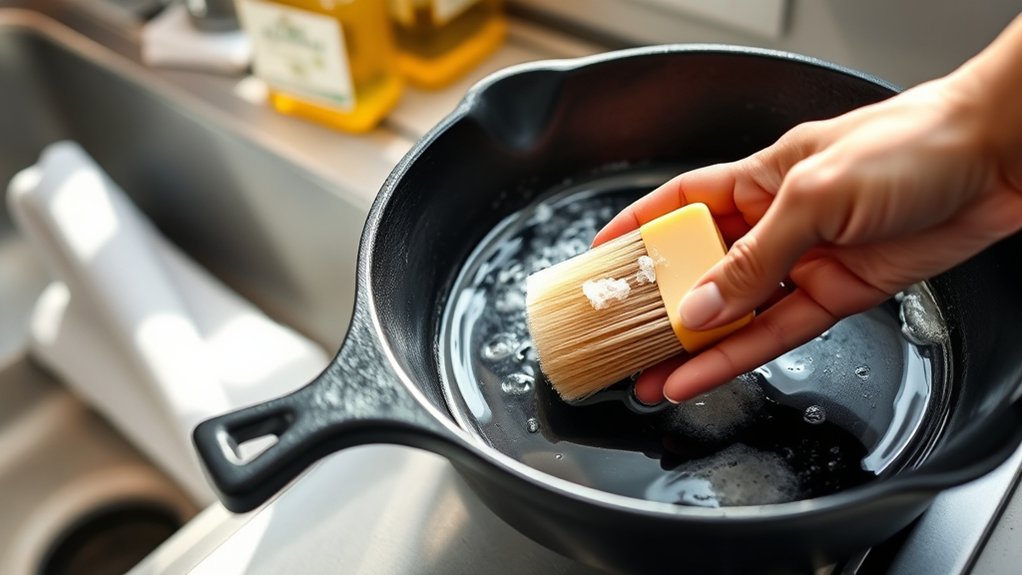
Properly cleaning a cast iron skillet by hand guarantees its seasoning stays intact and the pan remains rust-free. Start by rinsing the skillet with warm water immediately after use. Avoid soap or harsh detergents that can strip the seasoning.
Use a stiff brush or non-metal scrubber to remove stuck-on food. For stubborn residue, sprinkle coarse salt inside and scrub gently. This natural abrasive helps without damaging the surface.
Dry the skillet thoroughly with a towel to prevent moisture buildup. After drying, apply a thin layer of cooking oil to maintain the skillet’s protective coating.
These cleaning techniques and maintenance tips will extend your pan’s lifespan and guarantee peak cooking performance. Hand cleaning remains the most effective method for preserving your cast iron skillet’s quality.
Risks of Washing a Cast Iron Skillet in the Dishwasher
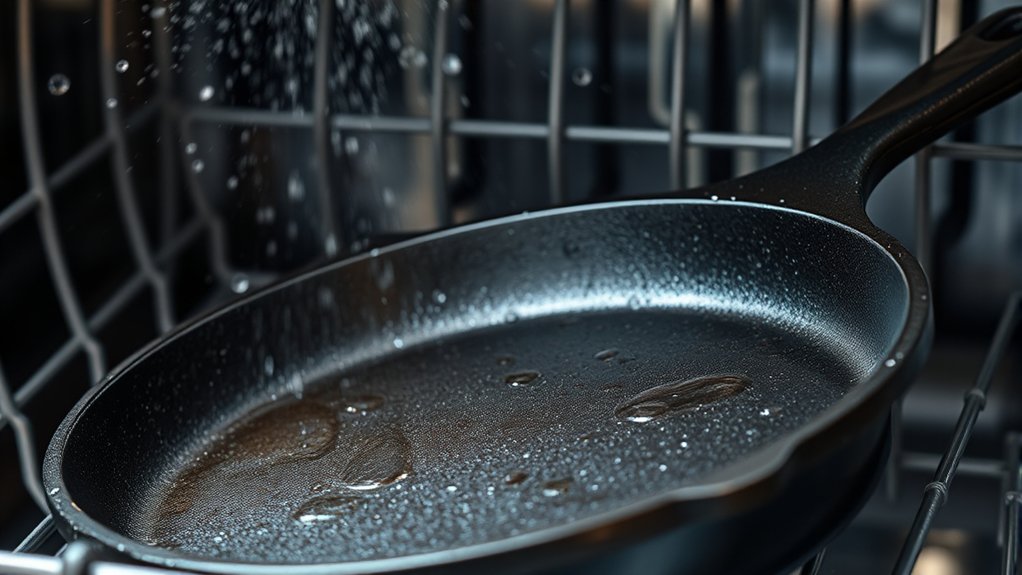
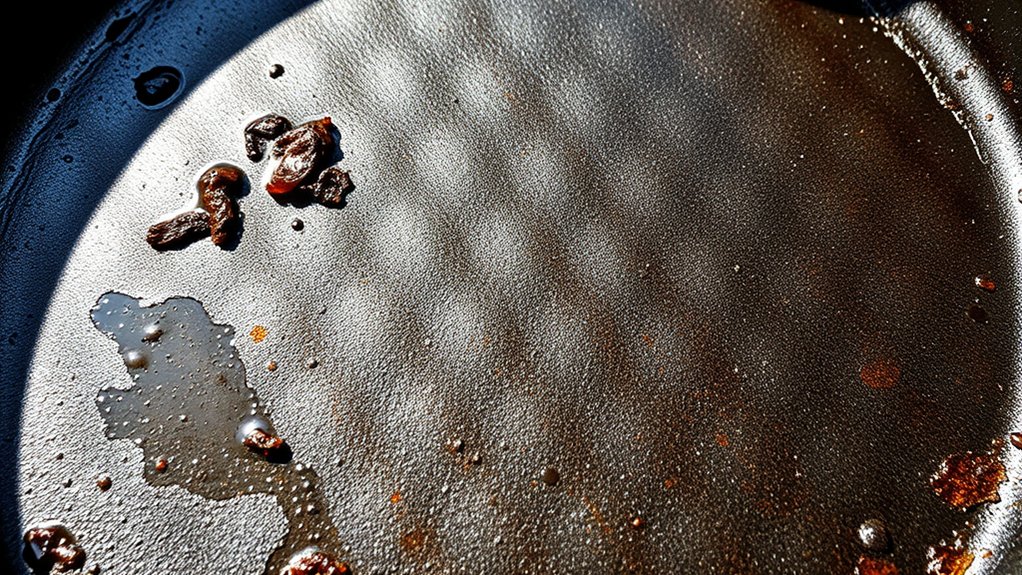
If you put your cast iron skillet in the dishwasher, you risk stripping away its seasoning and exposing the pan to moisture that promotes rust. Dishwasher damage to cast iron occurs because the harsh detergents and high-temperature water cycles aggressively break down the protective oil layer you’ve carefully built.
This leads to loss of non-stick seasoning, causing food to stick and cook unevenly. There is also an increased likelihood of surface rust forming quickly due to trapped moisture. Additionally, potential warping or cracking can be caused by extreme temperature fluctuations.
Dishwasher detergents are designed for stainless steel and ceramics, not porous cast iron. Using the dishwasher can degrade the skillet’s performance and lifespan. To preserve your cast iron, avoid dishwasher use entirely and opt for gentle hand washing instead.
Fixing Your Cast Iron Skillet’s Seasoning After Dishwasher Use
Once your cast iron skillet has been through the dishwasher, you’ll need to restore its seasoning to prevent rust and maintain its non-stick surface. Start by thoroughly drying the skillet to avoid moisture buildup.
Next, scrub off any rust or residue with steel wool or a stiff brush. For seasoning restoration, apply a thin, even layer of high-smoke-point oil, like flaxseed or grapeseed oil, over the entire surface, inside and out.
Place the skillet upside down in a preheated oven at 450°F (230°C) for one hour, with a baking sheet beneath to catch drips. Allow it to cool completely before use. This oil application and heat treatment rebuilds the protective layer, ensuring your cast iron skillet regains its durability and cooking performance after dishwasher damage.
How to Keep Your Cast Iron Skillet in Great Shape
Restoring your cast iron skillet’s seasoning after dishwasher use is just one part of maintaining its performance. To keep your skillet in great shape, you need consistent care and the right seasoning techniques. Follow these essential maintenance tips:
Clean your skillet immediately after use with hot water and a brush; avoid soap to preserve seasoning. Dry thoroughly and apply a thin layer of cooking oil before storing to prevent rust.
Re-season regularly by coating with oil and baking upside down at 375°F for an hour, allowing it to cool in the oven.
Frequently Asked Questions
Can Cast Iron Skillets Be Used on Induction Cooktops?
Yes, your cast iron skillet works perfectly on induction cooktops due to its induction compatibility.
You’ll enjoy excellent cast iron performance with even heating and great heat retention, making it ideal for induction cooking.
How Long Does Seasoning a Cast Iron Skillet Last?
Your seasoning lasts weeks to months, depending on your cooking and maintenance habits. Don’t expect it to be eternal. Regular oiling, avoiding soap, and proper drying keep that non-stick magic alive longer.
Can You Use Soap on a Cast Iron Skillet?
You can use soap on a cast iron skillet occasionally, but avoid frequent use since it reduces seasoning. Rely on hot water and scrubbing for cleaning; soap effectiveness is limited and may strip your skillet’s protective layer.
What Is the Best Oil for Seasoning Cast Iron?
You’ll want to use oils like flaxseed, grapeseed, or vegetable oil for seasoning cast iron. These oil types polymerize well, creating a durable non-stick layer when applied with proper seasoning techniques, ensuring lasting protection.
Can Cast Iron Skillets Be Used in the Oven?
Like a well-trained dancer, your cast iron skillet thrives in the oven. Its oven safety and excellent heat distribution make it perfect for roasting or baking, ensuring even cooking and durability under high temperatures.
Conclusion
Think of your cast iron skillet as a trusted old friend—it thrives on gentle care, not the harsh tumble of a dishwasher. Tossing it in there strips away its hard-earned seasoning, leaving it vulnerable and rusty.
Instead, wash it by hand with warm water and a soft brush. Then dry and oil it like you’re tucking it in for the night.
Treat it right, and your skillet will reward you with a lifetime of perfect sears and savory meals. Remember, a cast iron skillet should never go in the dishwasher.



Leave a Reply