
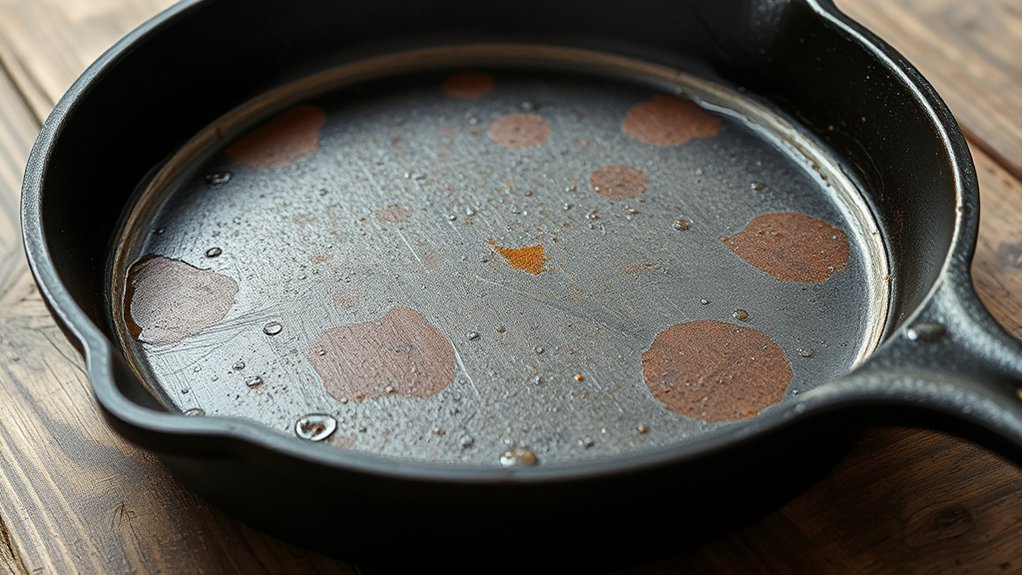
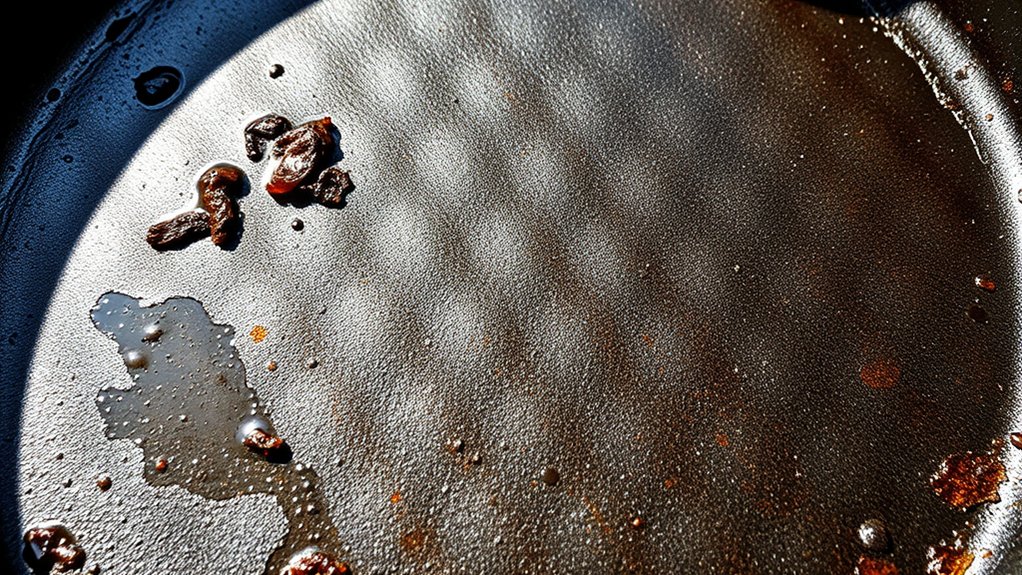
Yes, a cast iron skillet can rust if moisture and oxygen come into contact with its surface.
Since cast iron is porous, it easily absorbs water, which leads to rust if not properly cared for.
You’ll want to avoid leaving it wet and consistently season it.
Applying a thin coat of oil after each use helps keep it protected.
If rust starts to form, you can remove it and restore the skillet’s seasoning.
This will get it back in good shape.
Uncover how to prevent and fix rust effectively.
Key Takeaways
- Yes, cast iron skillets can rust when exposed to moisture and oxygen without proper care.
- Rust forms more easily if the skillet is left wet or not dried thoroughly after use.
- Lack of consistent seasoning weakens the protective layer, increasing rust susceptibility.
- Improper cleaning methods, like soaking or using harsh detergents, can strip seasoning and promote rust.
- Regular maintenance, including drying and oiling after use, prevents rust and preserves the skillet’s surface.
Can a Cast Iron Skillet Rust? Why It Happens
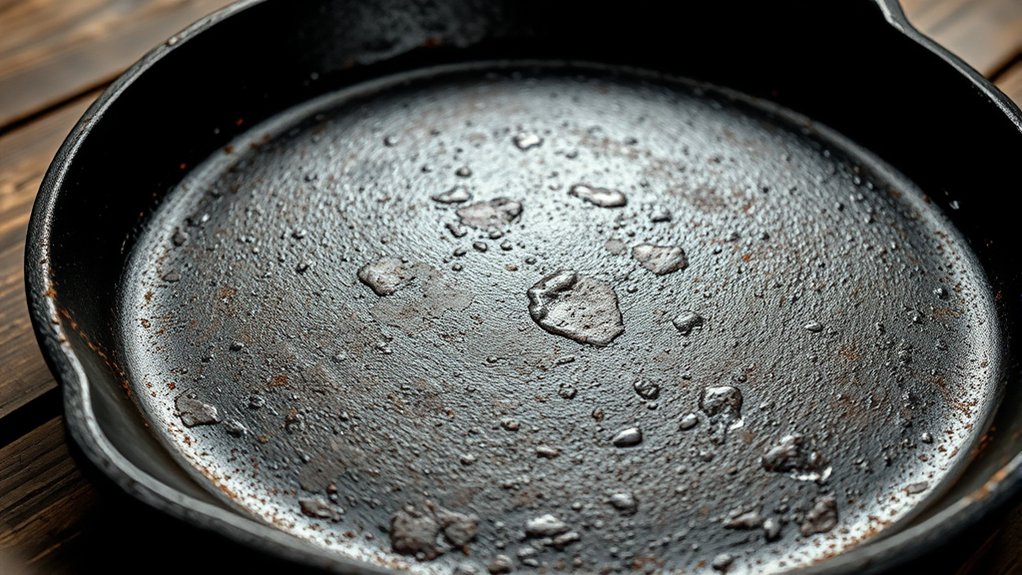
Why does a cast iron skillet rust despite its sturdy build? Rust forms when iron reacts with moisture and oxygen, creating iron oxide. Even though cast iron is durable, it’s porous and prone to this reaction if not properly cared for.
Effective cast iron maintenance hinges on preventing moisture exposure and maintaining a protective layer. Seasoning techniques play an essential role here: they create a polymerized oil coating that shields the metal from air and water. Without consistent seasoning or if you leave your skillet wet, rust can develop quickly.
How to Prevent Rust on Your Cast Iron Skillet
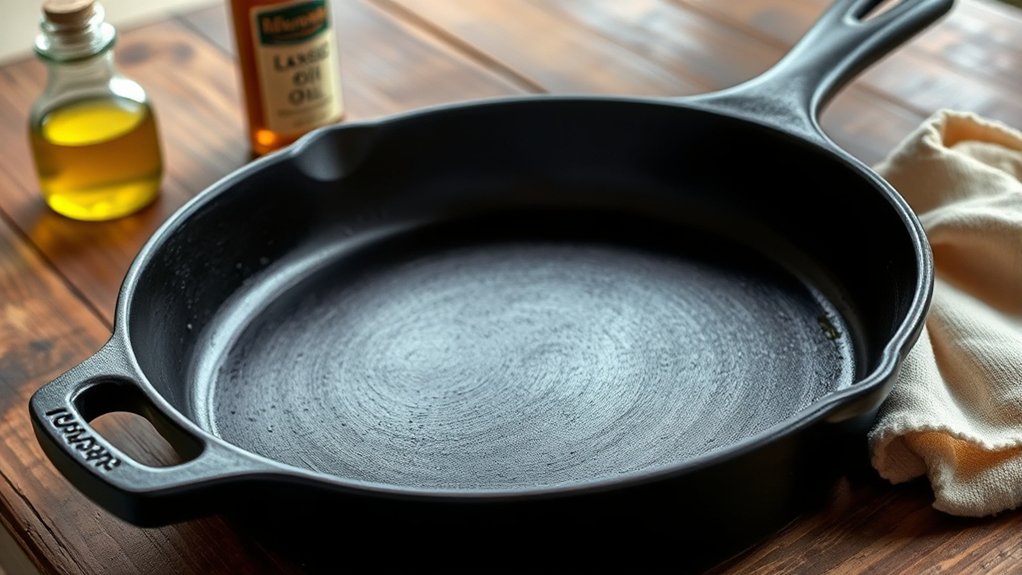
Although cast iron skillets are prone to rust, you can easily prevent it by following a few straightforward care practices. Proper seasoning techniques create a protective layer that repels moisture and prevents oxidation.
Equally important are cleaning tips: avoid soaking, dry thoroughly, and never use harsh detergents. After cleaning, apply a thin coat of oil to maintain the seasoning and block humidity.
| Step | Action | Purpose |
|---|---|---|
| Seasoning | Apply oil, bake skillet | Builds rust-resistant surface |
| Cleaning Tips | Hand wash, dry quickly | Prevents water exposure |
| Storage | Store in dry place | Minimizes moisture contact |
Stick to these steps, and your skillet will stay rust-free and ready for cooking every time.
What to Do When Your Cast Iron Skillet Starts Rusting
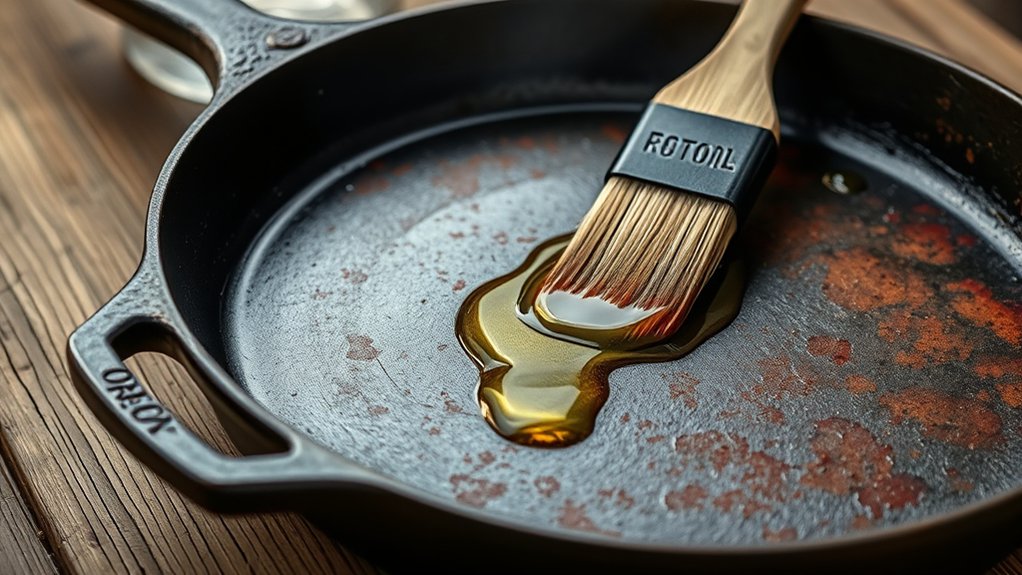
If your cast iron skillet starts rusting, you should act quickly to restore its surface and prevent further damage. Begin rust removal by scrubbing the affected areas with a stiff brush or steel wool under warm water. Avoid harsh detergents that strip seasoning.
Once rust is removed, dry the skillet thoroughly to prevent moisture retention. Apply a thin layer of cooking oil to maintain the protective seasoning layer.
Dry thoroughly and apply a thin oil layer to protect your skillet’s seasoning and prevent rust.
Regular maintenance tips include drying the skillet immediately after washing and storing it in a dry place. Always reapply oil after each use to reinforce the skillet’s barrier against rust.
Taking these steps promptly guarantees your cast iron remains durable and rust-free, preserving its cooking performance and longevity.
How to Restore and Reseason a Rusted Cast Iron Skillet
When your cast iron skillet has developed rust, restoring and reseasoning it is essential to bring back its non-stick surface and protect it from future corrosion. Start with effective restoration techniques: scrub rust off using steel wool or a wire brush, then wash and dry thoroughly.
Next, apply seasoning methods by coating the skillet with a thin layer of vegetable oil and heating it in the oven at 450°F for an hour. Repeat this process 2-3 times for best results.
| Step | Action | Tip |
|---|---|---|
| Remove Rust | Scrub with steel wool | Use gloves to protect hands |
| Clean Skillet | Wash with mild soap and water | Dry immediately to prevent rust |
| Apply Oil | Thin vegetable oil coating | Avoid excess oil |
| Bake Skillet | Heat at 450°F for 1 hour | Repeat 2-3 times |
Frequently Asked Questions
Can Cast Iron Skillets Be Used on Induction Cooktops?
Yes, your cast iron skillet works perfectly on induction cooktops due to its induction compatibility.
Since cast iron is magnetic, it interacts well with induction cookware materials, providing efficient, even heating for your cooking needs.
Is It Safe to Cook Acidic Foods in Cast Iron?
Yes, you can cook acidic foods safely in cast iron, but limit cooking time to avoid damaging the seasoning.
Prolonged exposure may leach iron and affect flavor, so maintain your skillet’s seasoning for ideal cooking safety.
How Heavy Is a Typical Cast Iron Skillet?
A typical cast iron skillet weighs between 4 to 12 pounds, depending on skillet thickness and size. You’ll notice thicker skillets weigh more but offer better heat retention and durability for versatile cooking tasks.
Can Cast Iron Skillets Go in the Dishwasher?
You might think tossing your cast iron skillet in the dishwasher saves time, but it causes dishwasher damage, stripping seasoning.
Instead, use gentle cleaning techniques like hand washing with hot water and drying thoroughly to protect your pan.
What Is the Difference Between Cast Iron and Carbon Steel Pans?
You’ll find carbon steel pans lighter and quicker to heat than cast iron. Their cooking properties include faster temperature changes and better heat responsiveness, making them ideal for sautéing. Cast iron retains heat longer for slow cooking.
Conclusion
Yes, your cast iron skillet can rust—especially if it’s exposed to moisture or not properly seasoned. Notably, studies show that over 80% of cast iron users experience some rust issues at least once.
But don’t worry—you can easily prevent rust by drying your skillet thoroughly and applying a thin layer of oil after each use. If rust appears, you can restore and reseason it quickly, keeping your skillet durable and ready for years of cooking.
In conclusion, proper care is essential to prevent your cast iron skillet from rusting and to maintain its longevity in the kitchen.


Leave a Reply