
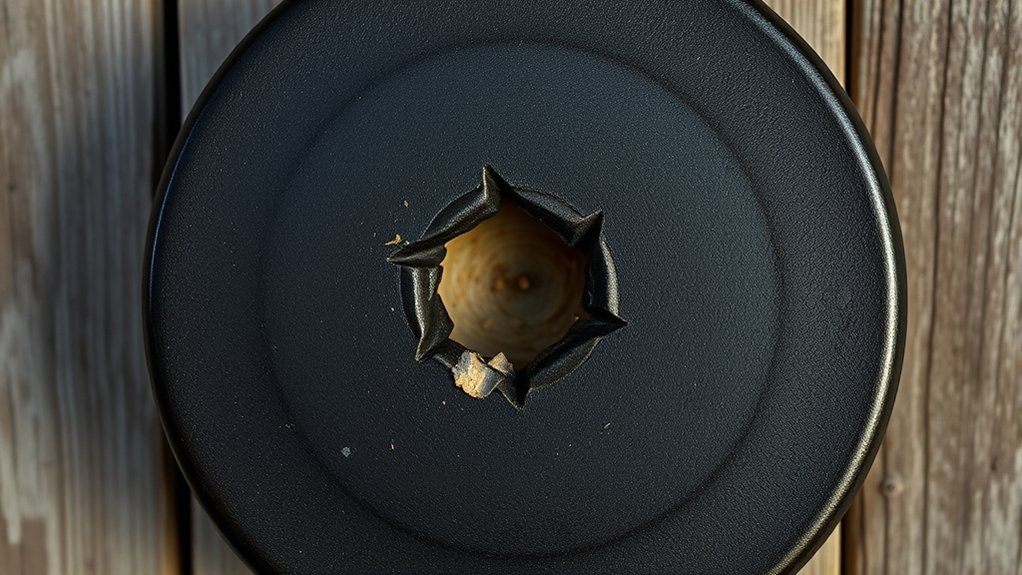
You can stop some low-velocity bullets with a cast iron skillet, but it depends on factors like bullet type, speed, and skillet thickness.
Cast iron’s density helps absorb energy, but its brittleness may cause cracking or shattering under higher-velocity rounds.
Thick skillets offer better resistance, especially against handgun calibers, but won’t reliably stop rifle bullets.
Using one for protection is improvised and limited.
Understanding these nuances will clarify its practical defensive potential.
Key Takeaways
- Cast iron skillets can sometimes stop lower-velocity bullets like .22 LR or 9mm but are not reliable bulletproof materials.
- High-velocity rifle rounds often penetrate or shatter the skillet due to cast iron’s brittleness and limited thickness.
- Thicker skillets absorb more energy, but brittleness may cause them to crack or fragment upon bullet impact.
- Cast iron’s dense material may slow or deflect some projectiles, offering limited protection in emergency defensive situations.
- Skillets provide minimal coverage and lack the engineered properties of certified ballistic gear, making them unsafe for consistent protection.
Can a Cast Iron Skillet Stop a Bullet?
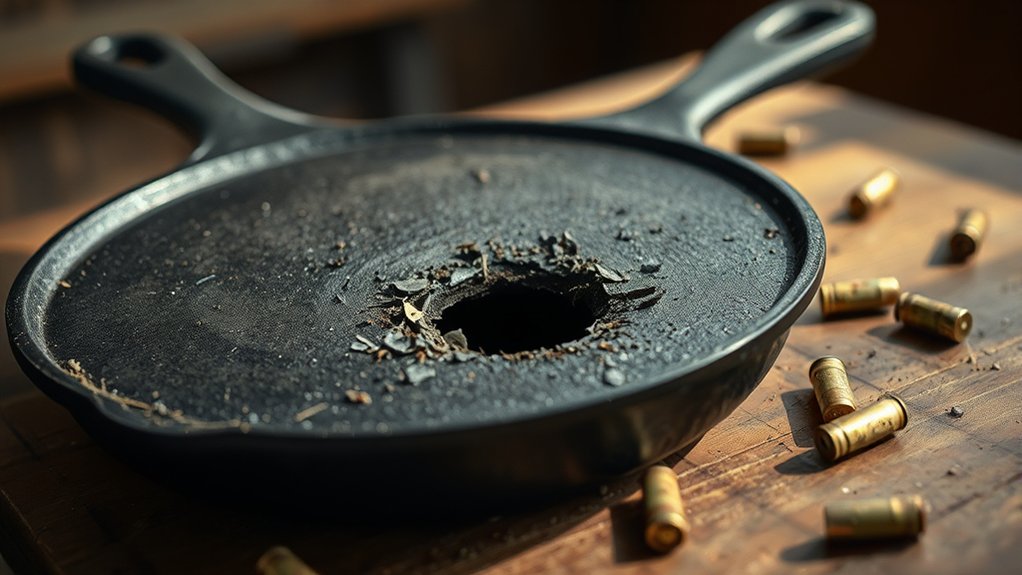
How effective is a cast iron skillet at stopping a bullet? Cast iron, known for its density and hardness, exhibits some resistance to projectile penetration. However, it’s not engineered as a bulletproof material.
The skillet’s thickness and brittleness influence its ability to absorb and dissipate kinetic energy from a bullet. While it may slow or deflect lower-velocity rounds, high-velocity bullets often cause the skillet to fracture or shatter.
From a kitchen safety standpoint, relying on a cast iron skillet as protective equipment is impractical and unsafe. Its structural integrity can fail unpredictably under ballistic impact, posing secondary hazards.
Using a cast iron skillet as protection is unsafe due to its unpredictable failure under ballistic impact.
Consequently, although cast iron offers some resistance, it doesn’t meet the standards of certified bulletproof materials designed to guarantee reliable protection.
Which Bullets Can a Cast Iron Skillet Stop?
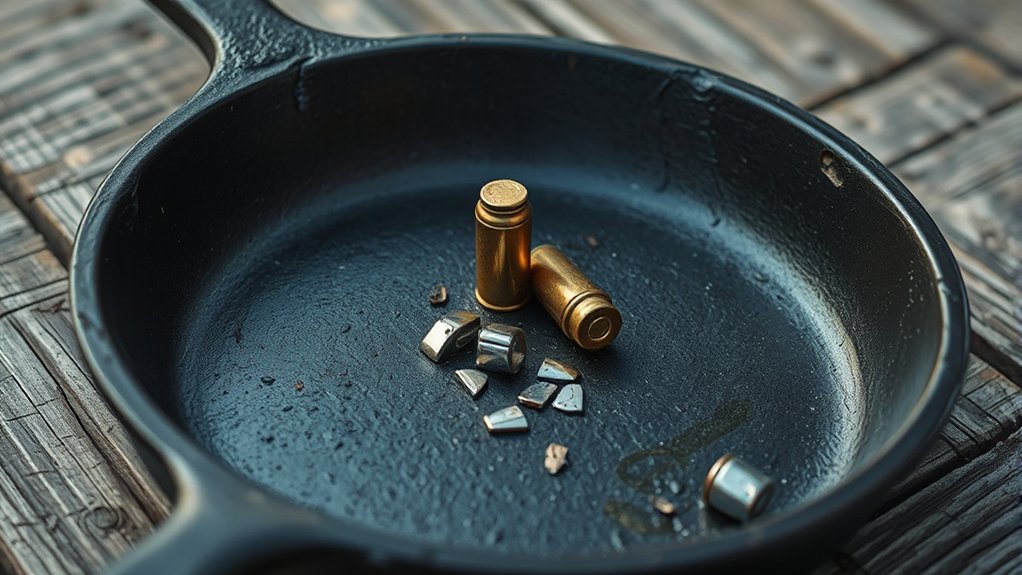
Which bullets can a cast iron skillet actually stop depends largely on the bullet’s velocity, caliber, and construction. Lower velocity rounds such as .22 LR or 9mm lead bullets often have limited penetration depth and may be halted by the skillet’s dense iron structure.
However, higher velocity bullet types like rifle rounds (.223 Remington, 5.56 NATO) with steel or hardened cores exhibit considerably deeper penetration, generally compromising the skillet’s integrity. Hollow-point and soft-point bullets typically expand upon impact, reducing penetration depth and increasing the likelihood of being stopped by cast iron.
In contrast, full metal jacket and armor-piercing rounds maintain velocity and structural integrity, making them less likely to be stopped. Consequently, the skillet’s bullet resistance varies with bullet types that differ in velocity, caliber, and design, directly affecting penetration depth.
Cast Iron Skillet Material and Thickness Impact on Bullet Resistance
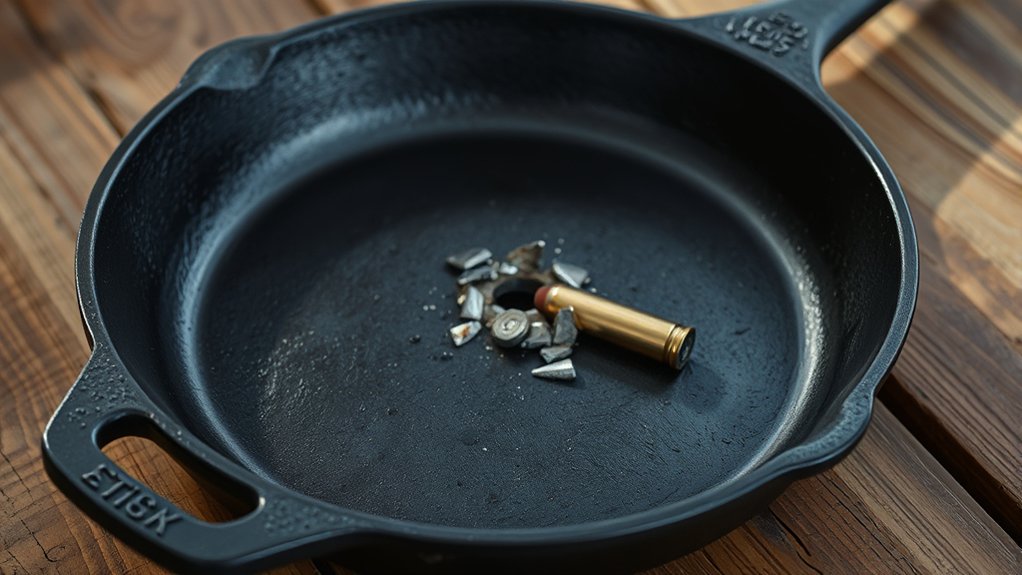
The composition and thickness of a cast iron skillet critically determine its ability to resist bullet penetration. You need to take into account cast iron properties such as hardness, brittleness, and density, which influence energy absorption and fracture resistance upon impact.
Cast iron skillet’s composition and thickness dictate its resistance to bullet penetration through hardness and brittleness.
Skillet thickness plays a pivotal role; thicker skillets offer greater material mass to dissipate bullet energy, reducing penetration likelihood. However, cast iron’s brittleness can cause shattering under high-velocity impacts despite thickness.
Key factors include:
- High density enhances kinetic energy absorption
- Increased skillet thickness improves stopping power
- Brittleness may result in material fracture upon impact
- Uniform cast iron composition guarantees consistent resistance
Understanding these variables helps you evaluate whether a specific cast iron skillet can effectively impede a bullet.
Real-Life Scenarios for Using a Cast Iron Skillet as Protection
Where might a cast iron skillet serve as an effective form of protection against a bullet? In confined spaces such as a kitchen, it could be an improvised tool within self defense tactics, especially when traditional protective gear isn’t available. Its dense, thick material can absorb and dissipate kinetic energy, potentially reducing penetration.
You might use it to shield crucial organs during an unexpected attack or to deflect a projectile at close range. From a kitchen safety perspective, having a heavy skillet readily accessible allows you to respond swiftly under duress.
However, its effectiveness depends on factors like bullet caliber, range, and angle of impact. While not designed for ballistic protection, the skillet’s availability and material properties position it as a viable last-resort defensive item in emergency scenarios.
Why a Cast Iron Skillet Isn’t a Reliable Bulletproof Shield
Although a cast iron skillet can absorb some kinetic energy, it doesn’t guarantee reliable protection against bullets. You should understand that cast iron lacks the engineered properties of certified protective gear designed for ballistic resistance. Its brittleness can cause it to crack or shatter upon impact, compromising kitchen safety rather than enhancing it.
Additionally, the skillet’s shape and size offer limited coverage, leaving crucial areas exposed.
Consider these critical limitations:
- Non-uniform thickness leads to unpredictable bullet resistance
- Brittleness increases risk of fragmentation on impact
- Weight and ergonomics hinder rapid defensive maneuvers
- Lack of tested ballistic certification means unreliable protection
For genuine protection, rely on gear specifically tested for bullet resistance instead of improvising with kitchenware.
Frequently Asked Questions
How Should I Maintain a Cast Iron Skillet?
You should maintain your cast iron skillet by regularly applying seasoning tips, like coating it with oil and baking it. Use gentle cleaning methods, avoiding soap, and dry thoroughly to prevent rust and guarantee durability.
Can Cast Iron Skillets Be Used on Induction Cooktops?
Your cast iron skillet dances perfectly with induction cooktops, thanks to its magnetic skillet materials. This induction compatibility guarantees efficient heat transfer, making your cooking precise, consistent, and energy-efficient every time you use it.
What Are the Best Recipes to Cook With a Cast Iron Skillet?
You’ll excel at frittata recipes and cornbread baking with your cast iron skillet, thanks to its even heat distribution and retention. This guarantees precise cooking and ideal browning, enhancing texture and flavor development consistently.
How Heavy Is a Typical Cast Iron Skillet?
A typical cast iron skillet weighs around 5 to 12 pounds, reflecting its substantial cast iron weight and skillet durability. This heft guarantees excellent heat retention, making it a reliable, long-lasting tool in your kitchen arsenal.
Are Cast Iron Skillets Safe for Oven Use?
You can safely use cast iron skillets in the oven due to their excellent heat resistance. Their oven safety rating typically exceeds 500°F, making them ideal for consistent, high-temperature cooking without damage or warping.
Conclusion
While a cast iron skillet might seem like a steadfast shield, its ability to stop a bullet is limited and situational. Like an old fortress with walls that can crack under pressure, its material and thickness matter, but it’s not designed for ballistic defense.
Relying on it symbolizes misplaced trust—strong in appearance but vulnerable in reality. You should recognize its true purpose: a tool for cooking, not protection.
A cast iron skillet is not a substitute for proper safety gear, and it should never be relied upon to stop a bullet.

Leave a Reply