
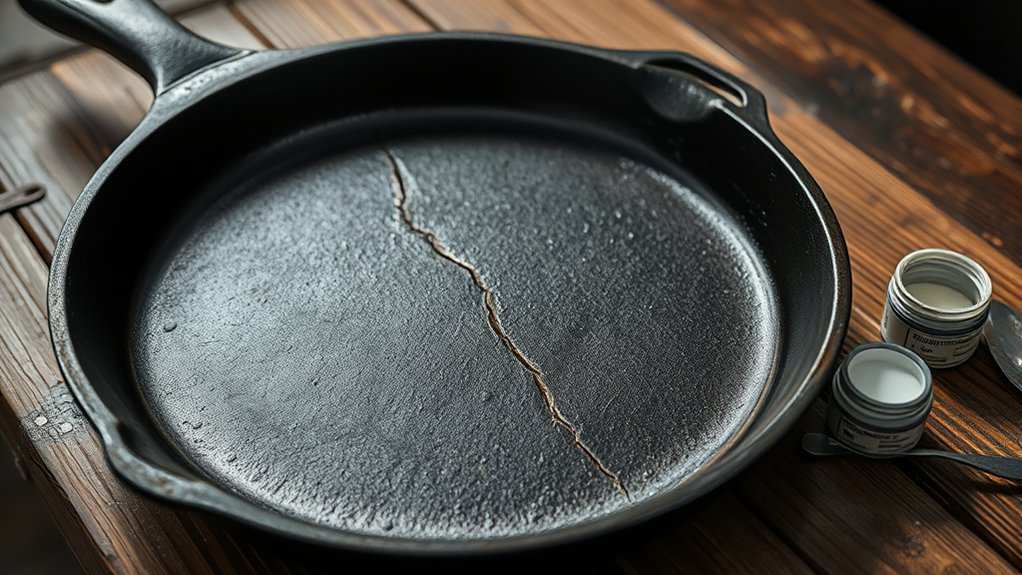
You can repair a cracked cast iron skillet, but it depends on the crack’s size and location.
Small hairline cracks might be fixed with food-safe, heat-resistant epoxy, though this is best for minor damage only.
Larger or deep cracks usually need professional welding to restore strength safely.
However, if the crack compromises the skillet’s integrity, replacement is often the safer, more durable choice.
Keep exploring to understand the best repair methods and when it’s wiser to replace your skillet.
Key Takeaways
- Small hairline cracks in cast iron skillets can sometimes be repaired using high-heat-resistant epoxy or professional welding.
- Larger or deeper cracks significantly weaken the skillet’s structure and are generally unsafe to repair.
- Professional welding or brazing offers the most durable and heat-safe repair for minor cracks.
- Epoxy repairs are only suitable for minor cracks and must be food-safe and thoroughly applied.
- When cracks compromise safety or cooking quality, replacing the skillet is the safest and wisest choice.
Can You Safely Repair a Cracked Cast Iron Skillet?
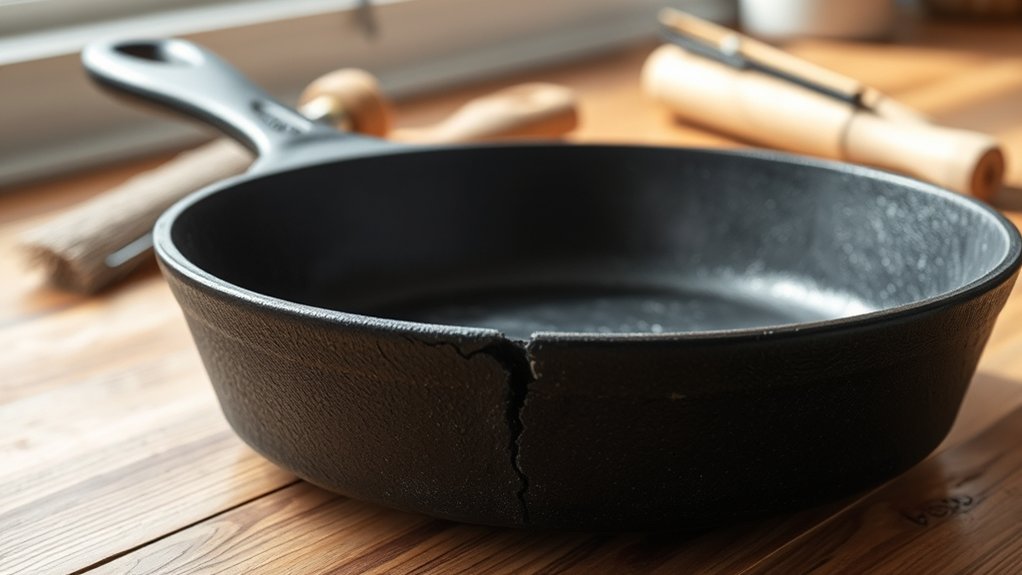
When dealing with a cracked cast iron skillet, you might wonder if it’s safe to repair and continue using it. The main safety concerns revolve around the skillet’s structural integrity and potential food contamination.
Repair techniques can sometimes restore functionality, but not all cracks are suitable for repair. Small, hairline cracks may be manageable, while larger or deeper ones compromise the skillet’s strength, risking breakage during use.
You should also consider if repair materials are food-safe and heat-resistant. Improper repairs might lead to toxic chemicals leaching into your food or the skillet failing unexpectedly.
Ultimately, evaluating the crack’s size and location is essential, and if safety concerns outweigh the benefits, it’s wiser to replace the skillet rather than attempt a risky repair.
What Are the Best Ways to Fix Cracks in Cast Iron Skillets?
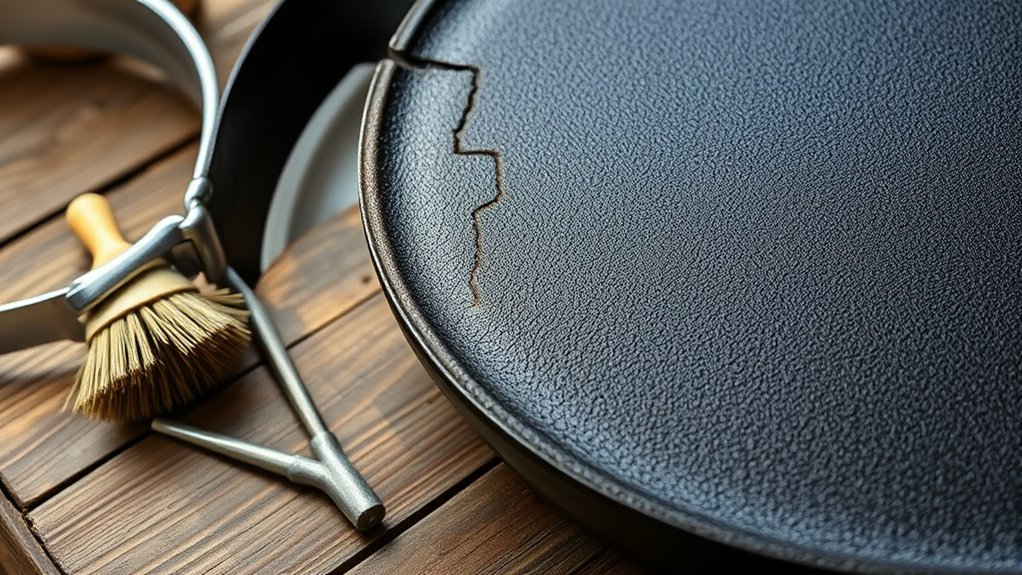
Although repairing a cracked cast iron skillet can be challenging, you have several effective methods at your disposal to restore its usability. One of the most reliable ways involves professional welding techniques, where a skilled welder fuses the crack by heating and adding compatible cast iron filler metal. This method guarantees a strong, durable bond, suitable for functional use.
Alternatively, if welding isn’t accessible, epoxy solutions designed for high heat resistance offer a practical fix. You’ll need to clean the cracked area thoroughly, apply the epoxy evenly, and allow it to cure fully before use. Keep in mind, epoxy repairs are best for minor cracks and may not withstand heavy cooking stress.
Choosing between these methods depends on the crack’s severity and your intended skillet use.
How Durable and Safe Are Cast Iron Skillet Repairs?
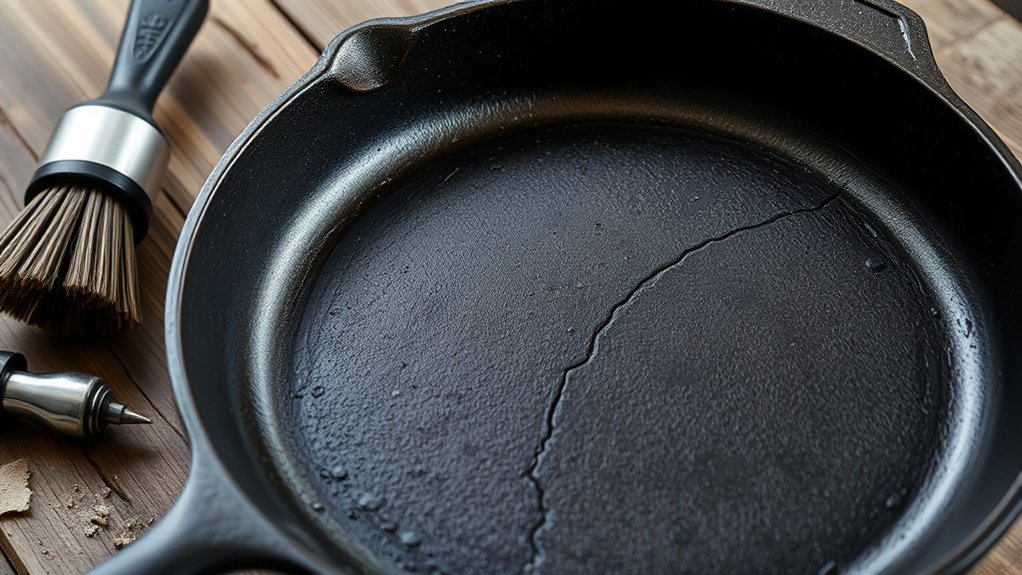
Since cast iron skillets endure high heat and frequent use, the durability and safety of repairs depend largely on the method and quality of the fix. Proper welding or brazing can restore strength and offer reasonable repair longevity, but inferior repairs may fail quickly under thermal stress.
You should also consider safety concerns; poorly done repairs might introduce toxins or weaken the skillet, risking injury or contamination. Epoxy-based fixes, for example, often aren’t food-safe at cooking temperatures.
To guarantee repair longevity and safety, use professional services or high-grade materials designed specifically for cast iron cookware. Always inspect the repair before use, and avoid subjecting the skillet to rapid temperature changes, which can compromise even well-executed fixes.
When Should You Replace Rather Than Repair Your Skillet?
How do you know if your cast iron skillet is beyond repair? Understanding skillet lifespan and recognizing replacement signs will help you decide. If cracks compromise the cooking surface or structural integrity, it’s safer to replace. Minor chips or surface rust can be fixed, but extensive damage often shortens skillet lifespan.
| Condition | Repairable? | Action |
|---|---|---|
| Small surface cracks | Yes | Clean, reseason |
| Deep cracks or breaks | No | Replace immediately |
| Warping or heavy rust | Usually no | Assess, often replace |
If your skillet shows deep cracks or warping, don’t risk repairing. It’s time for a replacement to guarantee safety and cooking quality.
Frequently Asked Questions
How Do I Prevent My Cast Iron Skillet From Cracking?
You prevent cracks by practicing preventive maintenance: avoid rapid temperature changes, dry your skillet thoroughly, and season it regularly.
Use gentle cooking techniques, like heating gradually and avoiding acidic foods that can damage the seasoning.
Can Seasoning a Skillet Cause It to Crack?
Seasoning techniques don’t crack your skillet; think of them as a protective armor. Proper skillet maintenance like gradual heating and avoiding thermal shock prevents damage, ensuring your cast iron stays strong and ready for countless meals.
What Causes Cracks in Cast Iron Skillets?
You cause cracks in cast iron skillets by exposing stress points to rapid temperature fluctuations. Heating or cooling too quickly makes the metal expand or contract unevenly, leading to fractures along those weak areas.
Are There Brands Less Prone to Cracking?
You’ll find Lodge quality and Le Creuset durability reduce cracking risks, with Le Creuset offering up to 50% longer lifespan. Choosing these brands guarantees better heat distribution and resilience, making your skillet less prone to damage.
How Do I Clean a Cracked Cast Iron Skillet?
You should avoid harsh cleaning methods on a cracked cast iron skillet; instead, use gentle scrubbing with a soft brush and mild soap.
Follow maintenance tips like drying thoroughly and seasoning to prevent rust and further damage.
Conclusion
While it’s tempting to fix a cracked cast iron skillet, you should know repairs rarely restore full strength or safety. Temporary fixes might work for light use, but they won’t hold up under regular cooking.
If you rely on your skillet daily, replacing it is often the smarter choice. Don’t risk food safety or injury—sometimes investing in a new pan is the best way to keep cooking confidently and safely in your kitchen.
In conclusion, a cracked cast iron skillet cannot be reliably repaired, so replacing it is usually the safest option.

Leave a Reply