
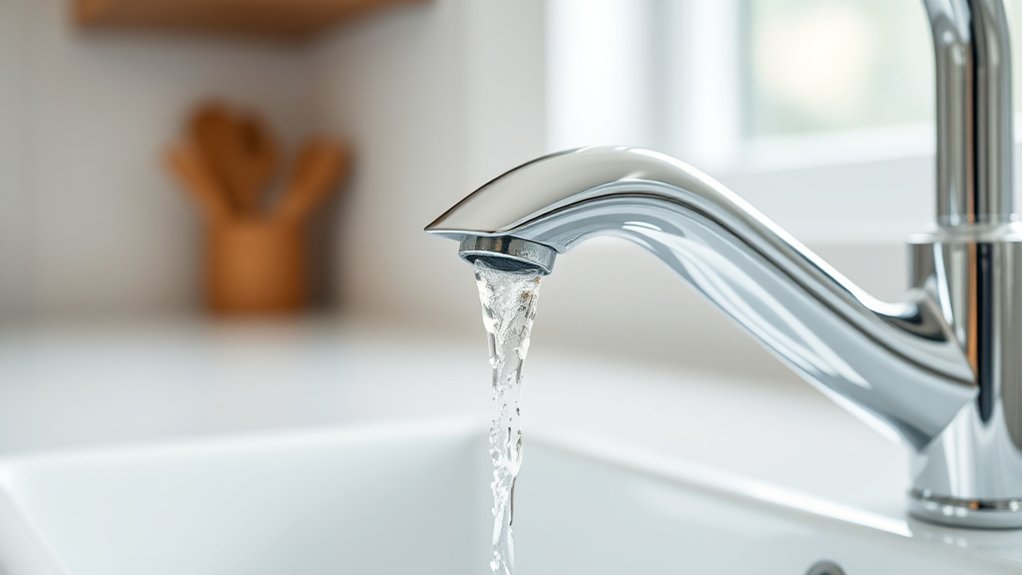
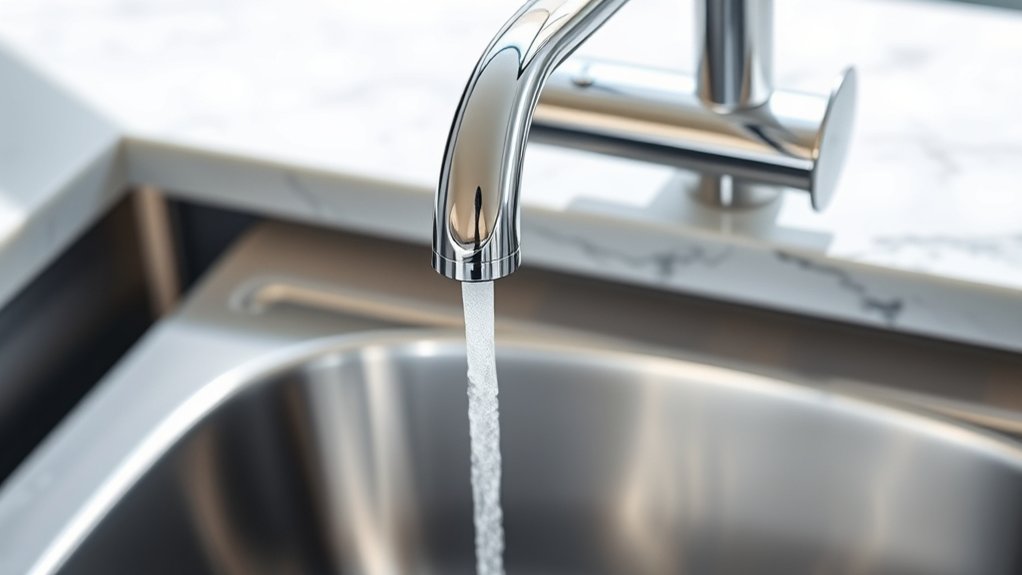
Yes, your faucet can definitely affect water pressure.
Components like aerators and flow restrictors control flow by mixing air or limiting water volume, which may reduce pressure if clogged or too restrictive.
Mineral deposits or faulty cartridges inside the faucet can also impede water flow.
By checking and maintaining these parts, you can restore or improve pressure.
Keep exploring to understand how design choices and simple fixes can help you maintain ideal water performance.
Key Takeaways
- Faucet aerators mix air with water and can reduce pressure if clogged or overly restrictive.
- Mineral deposits and debris in aerators commonly cause decreased water flow and pressure.
- Faulty or damaged faucet cartridges can restrict water flow and lower pressure.
- Flow restrictors inside faucets limit water volume, impacting perceived water pressure.
- Regular cleaning and maintenance of faucet components help sustain proper water pressure.
Why Your Faucet’s Design Might Be Holding Back Water Pressure
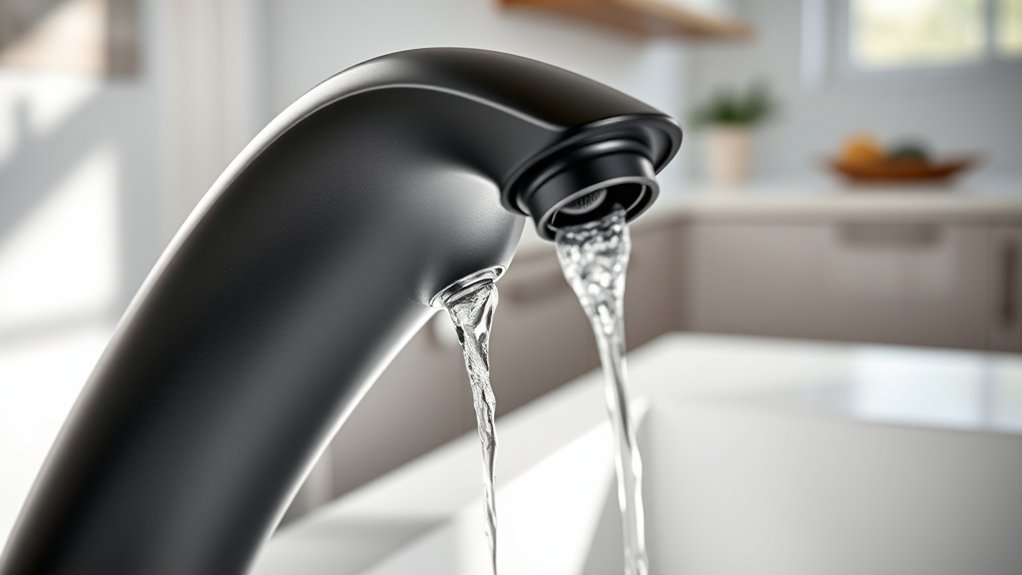
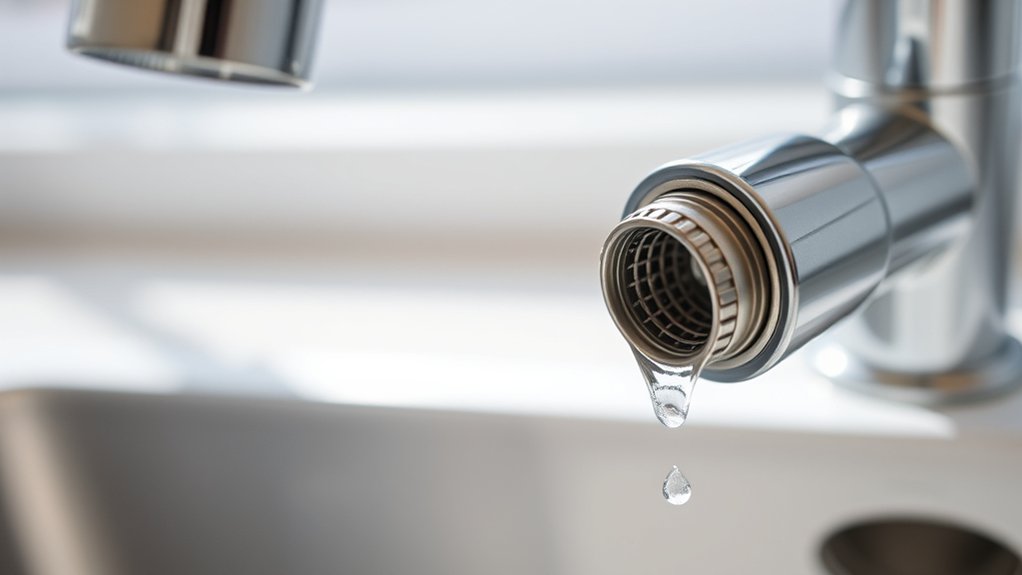
How exactly does your faucet’s design affect water pressure? The key components influencing pressure are the faucet aerator and flow restrictors. A faucet aerator mixes air with water, regulating flow to maintain steady pressure while conserving water.
However, if the aerator’s mesh screen is too fine or clogged, it can reduce water pressure noticeably. Flow restrictors serve to limit water volume for efficiency but can unintentionally lower pressure if they’re too restrictive for your plumbing system.
When selecting a faucet, consider models designed with optimized aerators and adjustable flow restrictors to balance water conservation and pressure. Understanding these elements helps you choose a faucet that maintains adequate pressure without sacrificing efficiency or performance.
Common Faucet Problems That Reduce Water Pressure
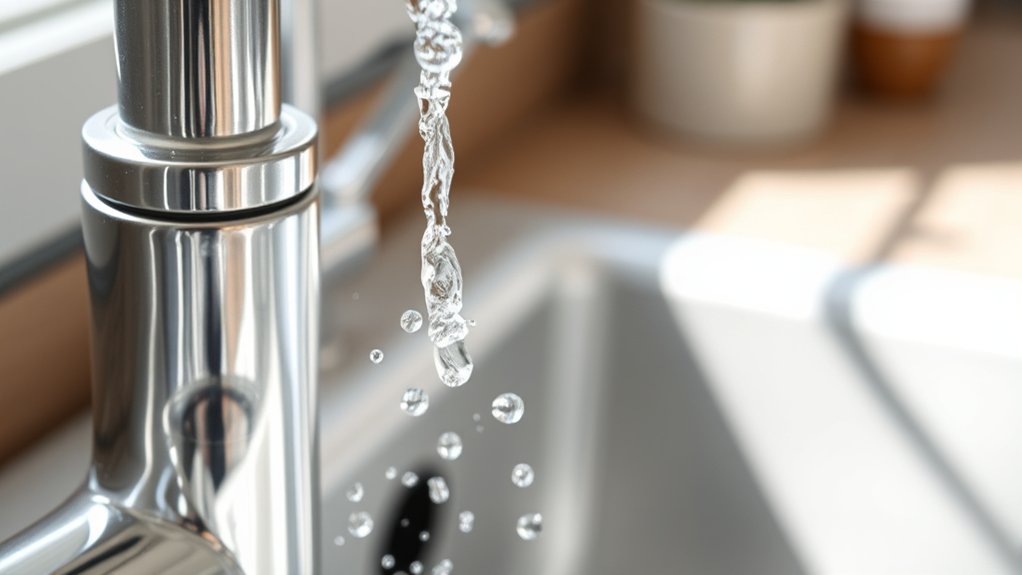
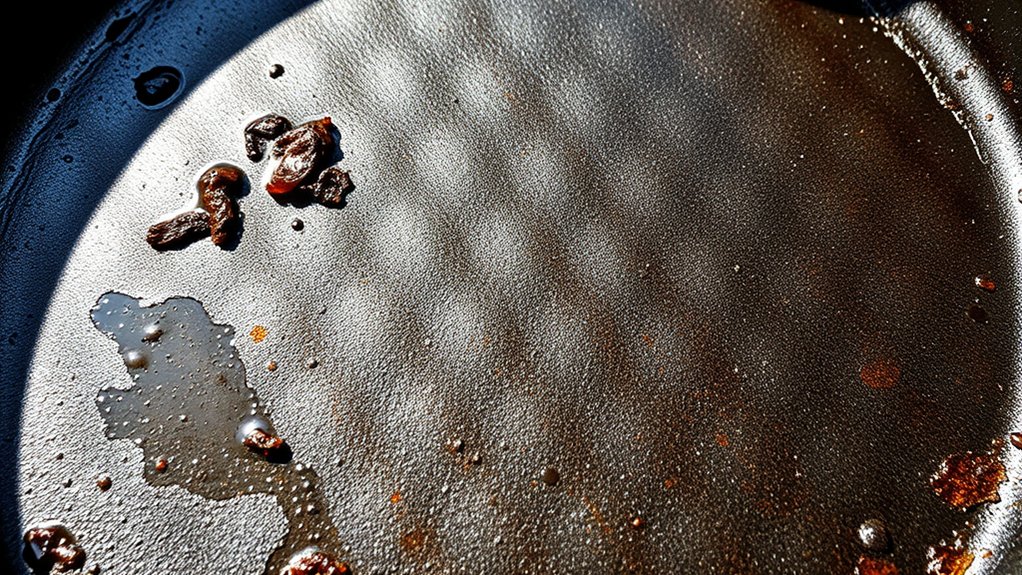
Although faucets may appear simple, several common issues can greatly reduce your water pressure. One frequent culprit is a clogged aerator. Mineral deposits and debris accumulate here, restricting water flow and lowering pressure.
You can often clean or replace the aerator to restore proper function. Another significant issue is a faulty cartridge inside the faucet valve. A damaged or worn cartridge can cause inconsistent water flow or leaks, directly impacting pressure.
If you notice uneven water output or difficulty controlling temperature, the cartridge may need inspection or replacement. Addressing these problems promptly guarantees your faucet operates efficiently and maintains ideal water pressure throughout your plumbing system, preventing further complications.
How to Diagnose Faucet-Related Water Pressure Issues
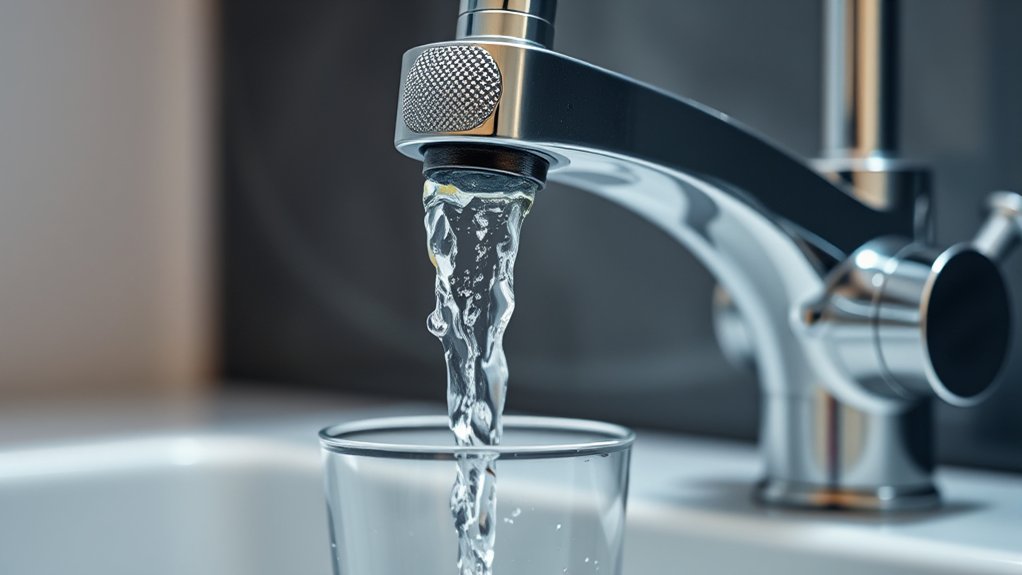
When you notice a drop in water pressure at your faucet, start by checking the aerator for blockages caused by mineral buildup or debris. To diagnose faucet-related water pressure issues effectively, follow these steps:
- Use pressure measurement techniques with a pressure gauge to compare pressure at the faucet and the main supply.
- Inspect the faucet cartridge or valve for wear or damage, which can restrict flow.
- Examine supply lines for kinks or obstructions that impede water delivery.
- Test other faucets in your home to determine if the issue is localized or systemic.
Incorporate regular faucet maintenance tips such as cleaning aerators and replacing worn parts to prevent future pressure drops and guarantee accurate diagnostics.
Easy Fixes and Upgrades to Boost Faucet Water Pressure
If you’ve identified the cause of low water pressure at your faucet, you can apply several straightforward fixes and upgrades to restore ideal flow. Start with aerator cleaning: remove the aerator, soak it in vinegar to dissolve mineral deposits, then scrub and rinse thoroughly. This often clears blockages that reduce pressure.
Next, check for flow restrictors inside the faucet; these devices limit water flow to conserve water but may be overly restrictive. Removing or replacing flow restrictors with higher-flow models can greatly boost pressure.
Additionally, consider upgrading to a faucet designed for higher flow rates if your current model is outdated. Regular maintenance, including periodic aerator cleaning and inspection of flow restrictors, guarantees sustained water pressure and peak performance.
Frequently Asked Questions
Can Water Pressure Affect a Faucet’s Lifespan?
Yes, water pressure affects your faucet’s lifespan; high pressure and pressure fluctuations cause wear and leaks.
You should perform regular faucet maintenance and install pressure regulators to guarantee consistent pressure, extending your faucet’s durability and performance.
Does Faucet Material Impact Water Flow Quality?
Imagine a brass faucet with excellent material durability; its design minimizes corrosion, ensuring consistent water flow quality.
You’ll find faucet design and material durability directly influence flow, reducing impurities and maintaining peak performance over time effectively.
How Does Water Pressure Differ Between Hot and Cold Taps?
You’ll notice temperature variations can cause differences in flow rate between hot and cold taps. Hot water often has lower pressure due to thermal expansion and pipe restrictions, affecting overall water delivery efficiency.
Can Outdoor Faucets Influence Indoor Water Pressure?
Yes, your outdoor plumbing can influence indoor water pressure. If outdoor faucets leak or malfunction, they disrupt pressure regulation, causing fluctuations inside.
Regularly inspect and maintain outdoor valves to guarantee consistent indoor pressure performance.
Are Water-Saving Faucets Less Effective in High-Pressure Systems?
Imagine driving a fuel-efficient car on a racetrack. You’ll still save gas despite the speed. Water-saving faucets maintain benefits by regulating pressure effectively, ensuring efficiency without sacrificing performance, even in high-pressure systems.
Conclusion
If your faucet feels like a trickling stream instead of a steady flow, it’s often more than just plumbing—it’s the faucet itself. Clogged aerators, worn-out cartridges, or outdated designs can silently choke your water pressure.
By inspecting and addressing these issues, you’ll transform that weak drip into a robust, reliable stream. Don’t let your faucet hold back what your pipes can deliver.
Take action and restore peak water pressure with simple, targeted fixes because yes, a faucet can affect water pressure significantly.

Leave a Reply