
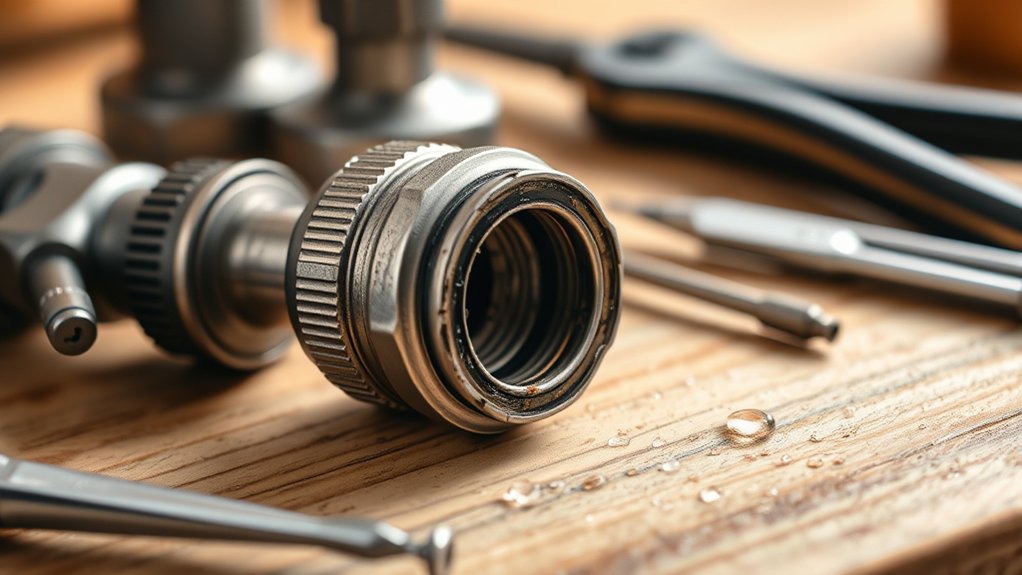
You can often repair a faucet cartridge by first turning off the water supply, then cleaning out mineral deposits and debris that cause stiffness or leaks.
Replacing worn O-rings or seals and lubricating moving parts with plumber’s grease also helps restore smooth operation.
However, visible cracks, persistent leaks, or severe wear mean you’ll need to replace the cartridge.
Understanding these signs and repair steps guarantees you handle faucet issues efficiently and avoid further damage.
Explore the detailed process for successful cartridge repair and replacement to keep your faucet functioning properly.
Key Takeaways
- Minor faucet cartridge issues like leaks or stiffness can often be fixed by cleaning and replacing O-rings or washers.
- Mineral deposits and debris inside the cartridge can be cleaned to restore smooth handle movement and water flow.
- Worn or damaged seals inside the cartridge usually require replacement parts to repair proper function.
- Severe cartridge damage such as cracks or persistent leaks generally necessitates full cartridge replacement.
- Repair is feasible if parts are available and damage is minor; otherwise, timely replacement is recommended for optimal faucet operation.
Can You Fix Your Faucet Cartridge or Do You Need a New One?
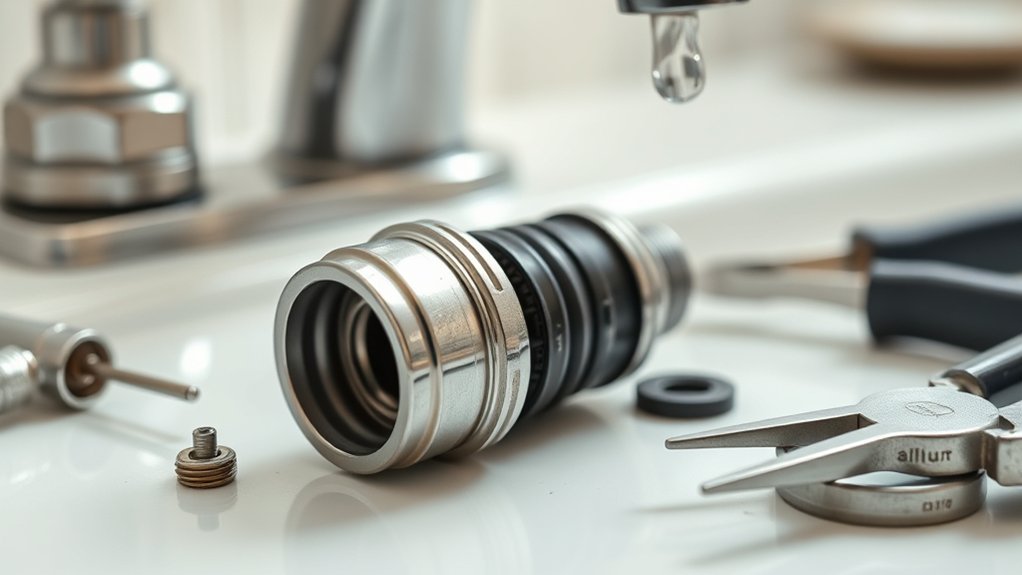
How do you determine if your faucet cartridge is worth repairing or requires replacement? Start by identifying the cartridge types, such as ceramic disc, ball, or compression cartridges, since each demands specific repair techniques.
Inspect the cartridge for visible damage like cracks or worn seals. Minor issues, such as debris buildup or seal wear, often respond well to cleaning and replacing O-rings or washers.
Check for cracks or worn seals; minor problems often fix with cleaning and new O-rings or washers.
If the cartridge malfunctions due to internal corrosion or severe wear, repair efforts become impractical. Also, consider the cartridge’s age and availability of replacement parts.
For common cartridge types, repair kits are accessible and cost-effective, but rare or obsolete models may necessitate full replacement. Ultimately, you save time and money by evaluating cartridge condition and applying appropriate repair techniques before deciding on replacement.
How to Spot Common Faucet Cartridge Problems
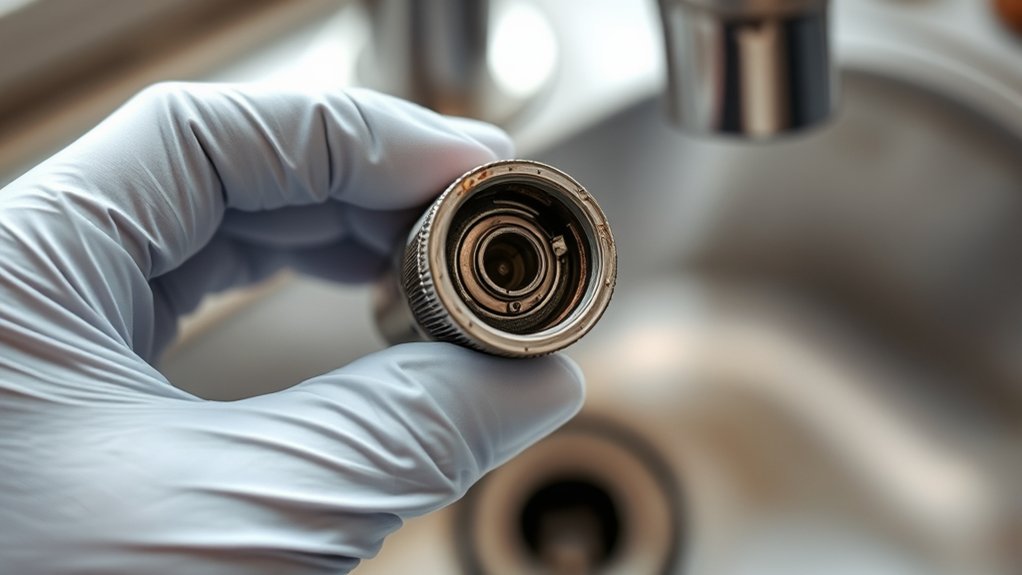
You’ll notice common cartridge issues when your faucet leaks or drips steadily, even after shutting off the handle.
If turning the handle feels stiff or uneven, that’s another clear sign of wear or damage. Inconsistent water temperature during use also points to cartridge problems that need your attention.
Leaking and Dripping Signs
Leaking and dripping faucets often signal worn or damaged cartridges that require attention. You can perform drip detection by observing persistent water droplets from the spout or pooling around the base.
These signs indicate cartridge seals or internal components have degraded. Addressing leaks promptly supports leak prevention, reducing water waste and potential damage.
Pay close attention to irregular flow patterns or inconsistent water pressure, which can also suggest cartridge issues. Use a flashlight to inspect inside the faucet for mineral buildup or corrosion that impairs cartridge function.
Early identification through these practical checks lets you repair or replace the cartridge before the problem worsens. Staying vigilant with drip detection guarantees efficient faucet operation and conserves water resources effectively.
Difficulty In Turning Handle
When the faucet handle becomes stiff or hard to turn, it often signals cartridge wear or internal buildup affecting its movement. Increased handle resistance usually means the cartridge needs attention.
You can troubleshoot this by checking for:
- Mineral deposits restricting cartridge rotation
- Lack of proper cartridge lubrication
- Worn or damaged O-rings inside the cartridge
- Debris caught in the cartridge mechanism
- Corrosion on metal components causing friction
To fix handle stiffness, first apply appropriate cartridge lubrication to ease movement. If that doesn’t help, consider removing the cartridge for a thorough cleaning or replacement.
Addressing handle resistance early prevents further damage and extends faucet life. Regular maintenance helps keep the cartridge operating smoothly without forceful turning.
Inconsistent Water Temperature
One common sign of a failing faucet cartridge is inconsistent water temperature, which can disrupt your control over hot and cold water mixing. If you notice sudden temperature fluctuation when adjusting the handle, the cartridge’s internal seals or valves might be worn or damaged.
This wear compromises the cartridge’s ability to regulate hot water flow accurately, leading to unpredictable shifts between cold and hot water. To confirm, check if the temperature changes even when the handle remains steady.
Replacing the cartridge typically resolves this issue, restoring stable temperature control. While some minor issues might be addressed by cleaning or lubricating the cartridge, inconsistent water temperature usually indicates the need for a full cartridge replacement to guarantee precise mixing and prevent further damage.
Simple Fixes to Try Before Replacing Your Faucet Cartridge
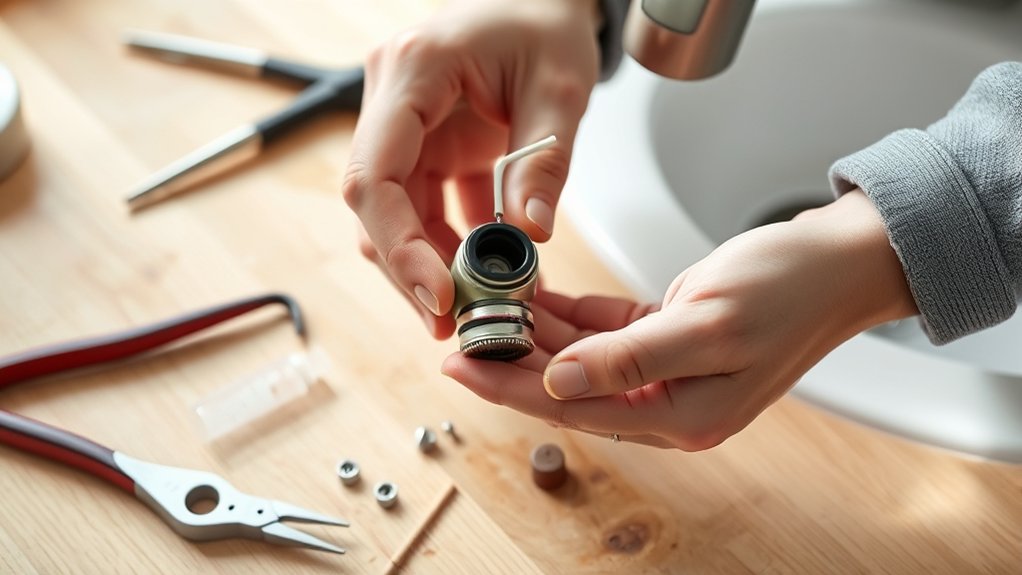
Before deciding to replace your faucet cartridge, try a few straightforward fixes that can save time and money. Applying basic faucet maintenance tips and DIY plumbing solutions can often resolve common issues like leaks or inconsistent flow.
Start by turning off the water supply to avoid spills. Clean mineral deposits from the cartridge using vinegar. Inspect and replace worn O-rings or seals. Flush out debris by running water through the cartridge housing. Lubricate moving parts with plumber’s grease to restore smooth operation.
These steps can restore function without costly replacements. Regular maintenance prevents buildup and extends cartridge life. If problems persist after these fixes, then consider cartridge replacement as a practical next step. This approach saves you effort and guarantees efficient faucet operation.
What Tools and Materials You’ll Need to Repair It
Although faucet cartridge repair is straightforward, having the right tools and materials on hand guarantees the job goes smoothly. Start with a tools checklist: adjustable wrench, flathead and Phillips screwdrivers, pliers, and a utility knife. These allow you to remove the handle, loosen fittings, and access the cartridge efficiently.
Essential materials include plumber’s grease for lubricating seals, replacement O-rings or cartridges if needed, and plumber’s tape to ascertain leak-free connections. Keep a clean cloth and a small container handy to catch any residual water and small parts.
Having these tools and materials organized before you begin minimizes interruptions and helps you complete the repair with precision. Preparing this tools checklist and essential materials will assure you’re ready to tackle the cartridge repair confidently and effectively.
Step-by-Step Guide: How to Repair Your Faucet Cartridge
With your tools and materials ready, you can start the cartridge repair by shutting off the water supply to the faucet. This prevents leaks and water damage during the process. Next, remove the handle and any decorative caps to access the cartridge.
Begin cartridge repair by turning off the water and removing the handle to access the cartridge safely.
Follow these repair techniques for effective faucet maintenance:
- Unscrew and extract the cartridge carefully.
- Inspect the cartridge for wear, cracks, or debris.
- Clean the cartridge and housing using vinegar or a mild cleaner.
- Replace worn seals or O-rings.
- Reassemble the faucet, ensuring all components fit securely.
Test the faucet to confirm the repair worked. These steps streamline faucet maintenance, extending the life of your fixture and preventing leaks.
When Is It Time to Replace Your Faucet Cartridge?
You should consider replacing your faucet cartridge if you notice signs of wear, such as cracks or mineral buildup. Persistent leaks that don’t stop after tightening or cleaning indicate the cartridge is failing.
Additionally, if water flow decreases despite cleaning aerators and supply lines, the cartridge likely needs replacement.
Signs of Cartridge Wear
When your faucet starts leaking, feels stiff to turn, or shows inconsistent water flow, these are clear signs that the cartridge is wearing out. Over time, the cartridge materials degrade, causing performance issues. You should watch for:
- Dripping water even after the faucet is off
- Difficulty in adjusting water temperature smoothly
- Unusual noises during operation
- Reduced water pressure or irregular flow
- Visible corrosion or mineral buildup on the cartridge
Identifying these signs early helps you explore replacement options before damage worsens. Since cartridges come in various materials like ceramic or plastic, knowing your faucet model guarantees you select the right replacement. Addressing wear promptly prevents further plumbing problems and maintains efficient water control.
Persistent Leaks Indication
Persistent leaks signal that the cartridge’s internal seals or components have deteriorated beyond repair. When you notice cartridge leaks persisting despite cleaning or seal replacement, it’s a clear indication that the cartridge is compromised.
Repair options become limited as worn parts inside the cartridge can’t be effectively restored. Continuing to use a faulty cartridge not only wastes water but may cause further damage to your faucet assembly.
At this stage, replacing the cartridge is the most practical and cost-effective solution. You should inspect the cartridge for cracks, worn seals, or mineral buildup that resists cleaning.
If leaks persist after you’ve exhausted repair options, don’t hesitate to install a new cartridge to restore proper function and prevent water damage.
Reduced Water Flow
A noticeable drop in water flow often signals issues within the faucet cartridge. Before replacing it, check if the problem stems from reduced water pressure or cartridge wear. Regular faucet maintenance can prevent premature failure.
Consider replacing the cartridge if you notice:
- Persistent low water flow despite adequate water pressure
- Irregular water output or sputtering
- Visible mineral buildup inside the cartridge
- Cartridge components that feel stiff or unresponsive
- Frequent need to adjust water temperature or flow rate
If cleaning or lubricating the cartridge doesn’t restore proper flow, replacement is the practical next step. Addressing reduced water flow promptly guarantees efficient faucet operation and prevents further plumbing issues.
Frequently Asked Questions
How Long Does a Typical Faucet Cartridge Last?
You can expect a typical faucet cartridge to last 5 to 10 years, depending on faucet maintenance and water quality. Regular cartridge replacement guarantees smooth operation and prevents leaks, saving you costly repairs down the line.
What Brands Make the Most Durable Faucet Cartridges?
You’ll find Moen cartridges and Delta cartridges among the most durable options due to their high-quality materials and precise engineering. They ensure reliable performance and extended lifespan in residential and commercial faucet applications.
Can Water Quality Affect Faucet Cartridge Lifespan?
Oh sure, if you love your faucet coughing up mineral buildup like a dusty old chimney, water hardness will definitely shorten your cartridge’s life. You’ll want to tackle that scale to keep it running smoothly.
Are There Eco-Friendly Faucet Cartridges Available?
Yes, you can find eco-friendly faucet cartridges made from sustainable materials that promote water conservation. These cartridges reduce water flow efficiently, helping you minimize waste while maintaining performance and durability in your plumbing system.
How Do I Prevent Future Faucet Cartridge Issues?
An ounce of prevention is worth a pound of cure. You should perform preventive maintenance by cleaning aerators and valve seats. Conduct regular inspections to catch wear early, ensuring your faucet cartridge stays reliable and leak-free.
Conclusion
Fixing your faucet cartridge can often save you time and money, especially if the issue is minor. By following simple troubleshooting steps and using the right tools, you can nip common problems in the bud before they worsen.
However, if repairs feel like chasing your tail or the cartridge is severely damaged, it’s best to replace it. Knowing when to fix and when to swap guarantees your faucet runs smoothly without unnecessary hassle.
In conclusion, while a faucet cartridge can be repaired in many cases, understanding the extent of the damage will help you decide whether to fix or replace the cartridge for optimal performance.

Leave a Reply