
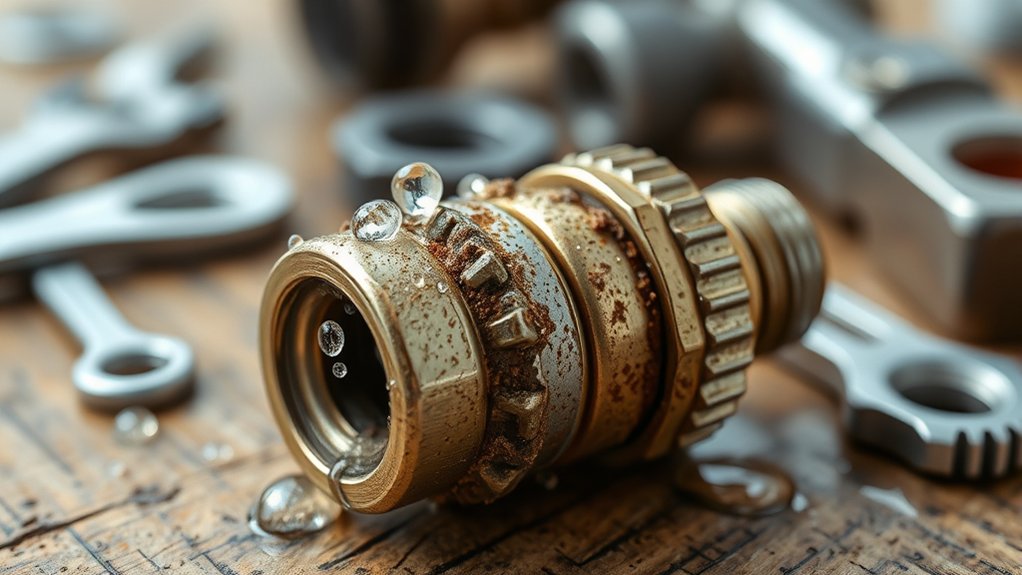
Yes, a faucet cartridge can get clogged over time due to mineral buildup from hard water or sediment in the supply line.
This clogging reduces water flow and may cause uneven spray, stiffness when turning the handle, or inconsistent temperature control.
To fix this issue, you’ll need to remove the cartridge and soak it in a vinegar solution to dissolve the deposits.
If the cartridge is damaged, replacement may be necessary.
Understanding how to identify, clean, and prevent clogs will help keep your faucet working smoothly and extend its lifespan.
Key Takeaways
- Faucet cartridges can get clogged due to mineral deposits and sediment buildup from hard water and debris.
- Clogs cause reduced water flow, uneven spray, and difficulty adjusting the faucet handle.
- Regular cleaning and soaking cartridges in vinegar dissolve mineral buildup and restore function.
- Prevent clogs by flushing faucets monthly and using water softeners to reduce mineral accumulation.
- Inspect and replace cartridges as needed to maintain smooth operation and consistent water temperature.
Common Causes of Faucet Cartridge Clogs
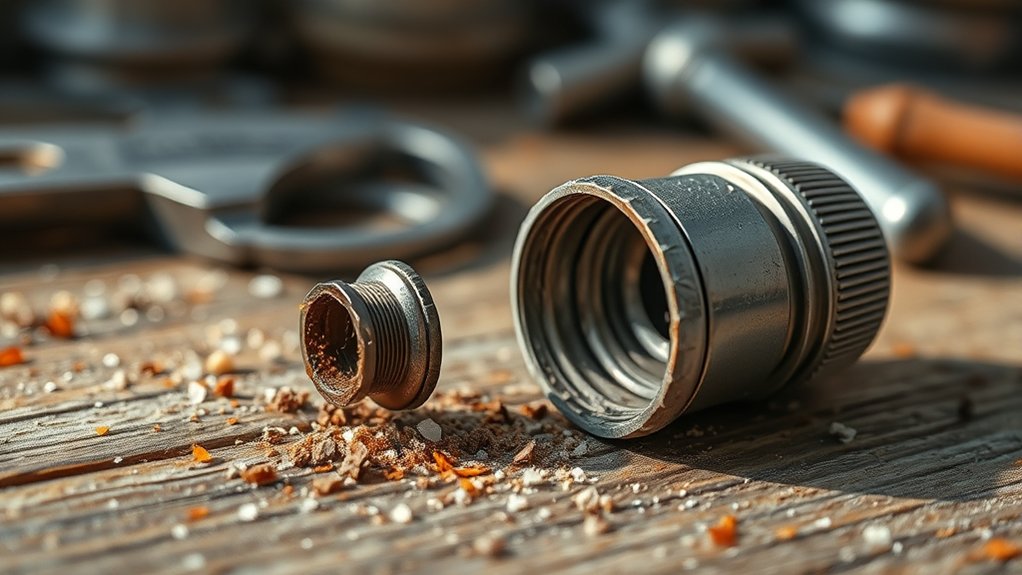
Although faucet cartridges are designed to allow smooth water flow, they can clog due to various factors. Mineral deposits, especially calcium and lime buildup from hard water, are the primary culprits. Over time, these minerals accumulate inside the cartridge, restricting water passage.
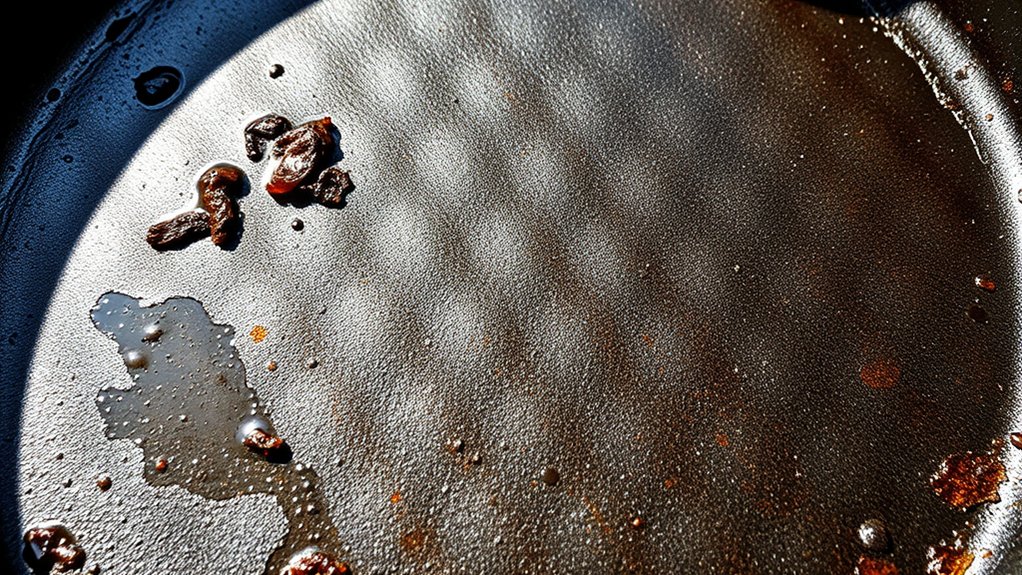
Faucet cartridges may clog as mineral deposits from hard water build up, restricting smooth water flow.
Sediment and debris carried by the water supply can also lodge within the cartridge, impairing function. Additionally, worn or damaged cartridge components may exacerbate clogging.
To prevent issues, regular faucet maintenance is crucial. Flush your faucet cartridges periodically and use water softening solutions if you have hard water. Following these plumbing tips helps maintain ideal water flow and prolongs cartridge lifespan.
Staying proactive with maintenance reduces the risk of clogs and guarantees your faucet operates efficiently.
How to Spot Signs of a Clogged Faucet Cartridge?
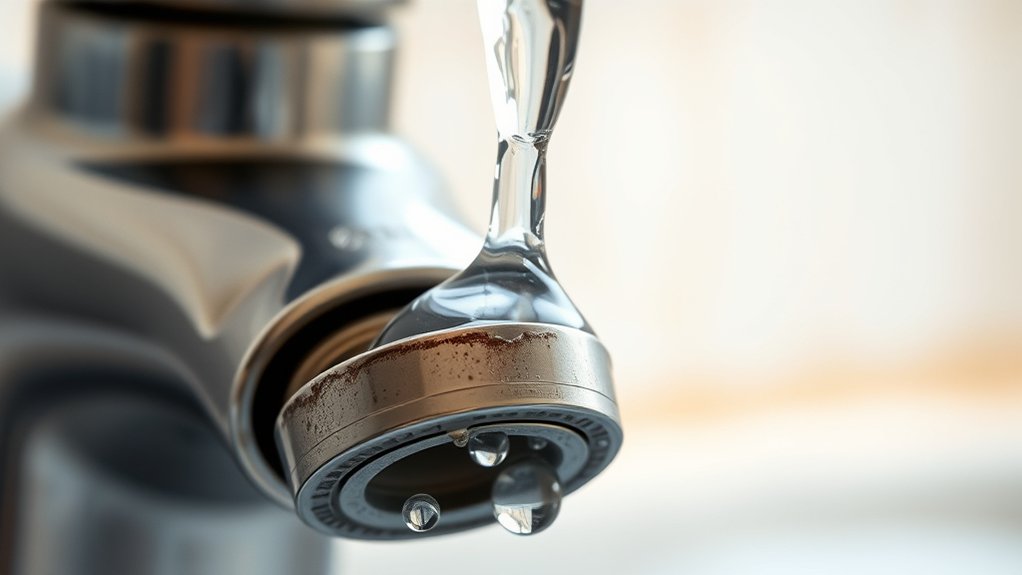
Regular maintenance helps prevent faucet cartridge clogs, but you still need to recognize when a clog develops. You’ll notice signs like reduced water flow or uneven spray patterns, which indicate restricted passage through the cartridge.
Another key symptom is difficulty adjusting the handle or unusual stiffness, pointing to internal buildup. Pay attention to inconsistent water temperature control, as sediment can impede cartridge function.
Changes in water quality, such as discoloration or particles in the stream, often correlate with clogging. To detect these issues early, conduct routine faucet maintenance that includes observing performance and checking for leaks or drips.
Being vigilant about these indicators lets you address cartridge clogs promptly, ensuring ideal faucet operation and water efficiency.
How to Clean or Replace a Clogged Faucet Cartridge
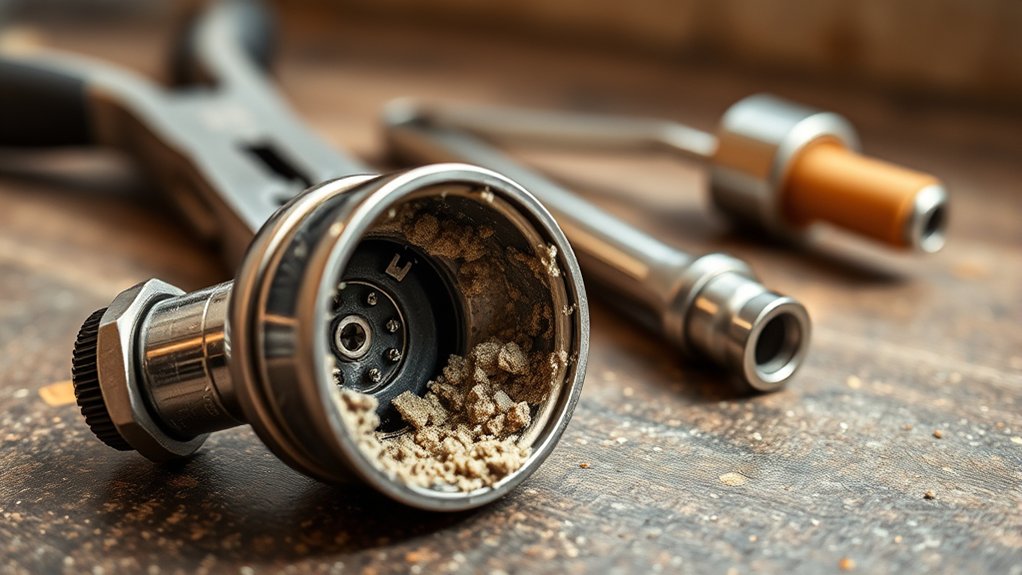
To effectively restore your faucet’s performance, start by removing the clogged cartridge for cleaning or replacement. First, shut off the water supply and open the faucet to relieve pressure.
Identify the cartridge type, whether ceramic disc, ball, or compression, to guarantee compatibility when replacing. Use an adjustable wrench to carefully unscrew the retaining nut and extract the cartridge.
For cleaning, soak it in a vinegar solution to dissolve mineral deposits, then scrub with a soft brush. If damage or persistent clogging exists, replace the cartridge with an exact match.
Reassemble the faucet, confirming all seals and washers are properly seated to prevent leaks. Regular faucet maintenance, including periodic cartridge inspection, will extend its lifespan and functionality.
This method addresses clogging effectively without unnecessary tool use or guesswork.
How to Prevent Faucet Cartridge Clogs
After cleaning or replacing a clogged faucet cartridge, you can reduce future blockages by implementing preventive measures. Regular faucet maintenance tips include flushing your system to remove debris, using water softeners if you have hard water, and inspecting cartridge types compatible with your faucet.
Choose cartridges made from corrosion-resistant materials for longer life. Here’s a quick guide for prevention:
| Action | Frequency | Notes |
|---|---|---|
| Flush faucet | Monthly | Removes sediment |
| Inspect cartridge type | Annually | Verify compatibility and condition |
| Use water softener | As needed | Prevents mineral buildup |
| Replace aerator | Every 6 months | Filters out particles |
| Clean cartridge | Every 6-12 months | Prevents clogging |
Follow these steps to maintain ideal water flow and extend cartridge lifespan.
Frequently Asked Questions
What Types of Faucets Use Cartridges?
You’ll find cartridge types in single-handle faucets, especially ball, ceramic disc, and compression models.
Knowing these helps you perform effective faucet maintenance, ensuring smooth operation and preventing leaks or clogging issues.
How Long Does a Faucet Cartridge Typically Last?
Think of your faucet cartridge as a ticking clock, with a lifetime expectancy of 5 to 10 years. You’ll extend its life by following maintenance tips like regular cleaning and avoiding harsh chemicals to keep it flowing smoothly.
Can Hard Water Damage a Faucet Cartridge?
Yes, hard water effects can damage your faucet cartridge by causing mineral buildup, leading to reduced flow and leaks. Regular cartridge maintenance, including descaling and cleaning, helps prevent damage and extends its lifespan effectively.
Are There Eco-Friendly Faucet Cartridges Available?
Yes, you can find eco-friendly faucet cartridges made from sustainable materials like ceramic or recycled plastics. These sustainability options reduce environmental impact while maintaining durability and performance in your plumbing system. Choose wisely for efficiency.
Is It Possible to Upgrade a Cartridge Without Replacing the Entire Faucet?
Upgrading your cartridge is like swapping a worn tire; you don’t need a whole new vehicle. Cartridge upgrades streamline faucet maintenance, letting you enhance performance efficiently without replacing the entire faucet, saving time and money.
Conclusion
If you’ve wondered whether a faucet cartridge can get clogged, the answer is yes—it often happens due to mineral buildup or debris. You can spot this by noticing reduced water flow or difficulty turning the handle.
Regular cleaning or timely replacement keeps your faucet working smoothly. Don’t rely solely on water softeners; they help but won’t prevent all clogs.
Staying proactive with maintenance is the most effective way to avoid cartridge issues. Ultimately, knowing that a faucet cartridge can get clogged helps you take the right steps to maintain your faucet’s performance.

Leave a Reply