
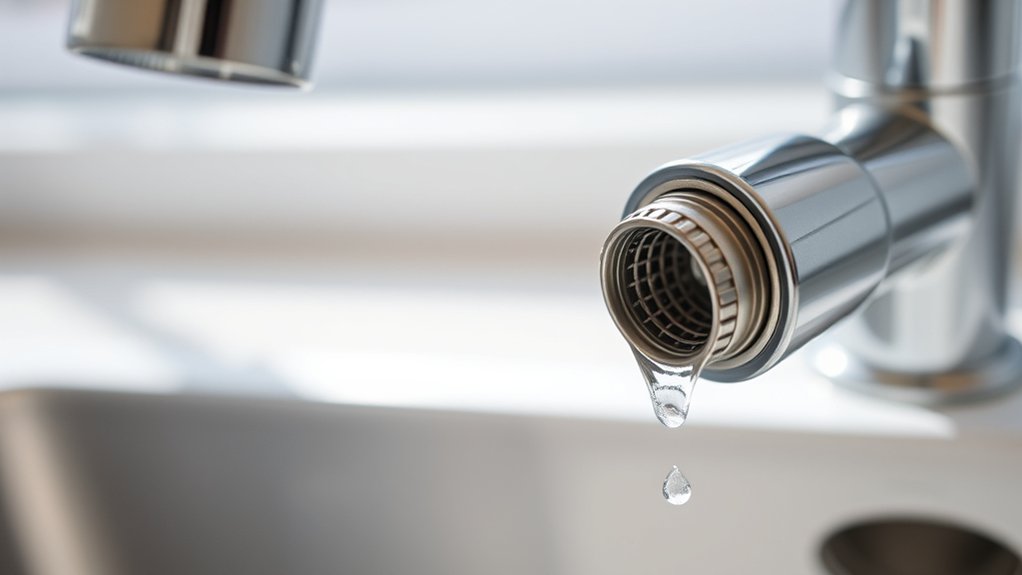
Yes, a faucet can turn on by itself due to several reasons.
In automatic models, sensor glitches are common, especially if dirt or reflections confuse the sensor. This can cause the faucet to activate unexpectedly.
Plumbing issues like worn washers, faulty valves, or debris buildup can also cause valves to malfunction, allowing water to flow unintentionally.
Additionally, fluctuating water pressure or temperature-sensitive faucets may trigger activation without manual control.
If your faucet seems to run without control, understanding these causes can help you identify and fix the issue effectively.
Addressing sensor problems or plumbing malfunctions promptly will prevent water waste and potential damage.
Key Takeaways
- Automatic faucets may turn on by themselves due to sensor malfunctions or environmental interference like sunlight or reflections.
- Worn or damaged valve components can cause unintended water flow in manual faucets.
- Fluctuations in water pressure or water hammer effects can trigger faucets to activate unexpectedly.
- Temperature-sensitive faucets may activate automatically when a preset heat threshold is reached.
- Debris, mineral buildup, or cross-connections in plumbing can cause faucets to turn on without user input.
Why Faucets Turn On By Themselves
Although it can be unsettling to see a faucet turn on by itself, several technical factors often cause this phenomenon. If you’re dealing with automatic faucets, sensor technology plays a critical role.
These faucets use infrared or motion sensors to detect your presence and activate water flow. However, sensor malfunctions or environmental factors, like reflective surfaces, bright sunlight, or electrical interference, can trigger false positives, causing the faucet to turn on unexpectedly.
Additionally, dirt or residue on the sensor can distort signals, leading to unintended activation. Understanding this technology helps you troubleshoot why your faucet runs without manual input. Regular cleaning and proper placement can reduce false activations, ensuring the sensor responds only when you intend to use it.
Common Plumbing Problems That Cause Faucets To Run On Their Own
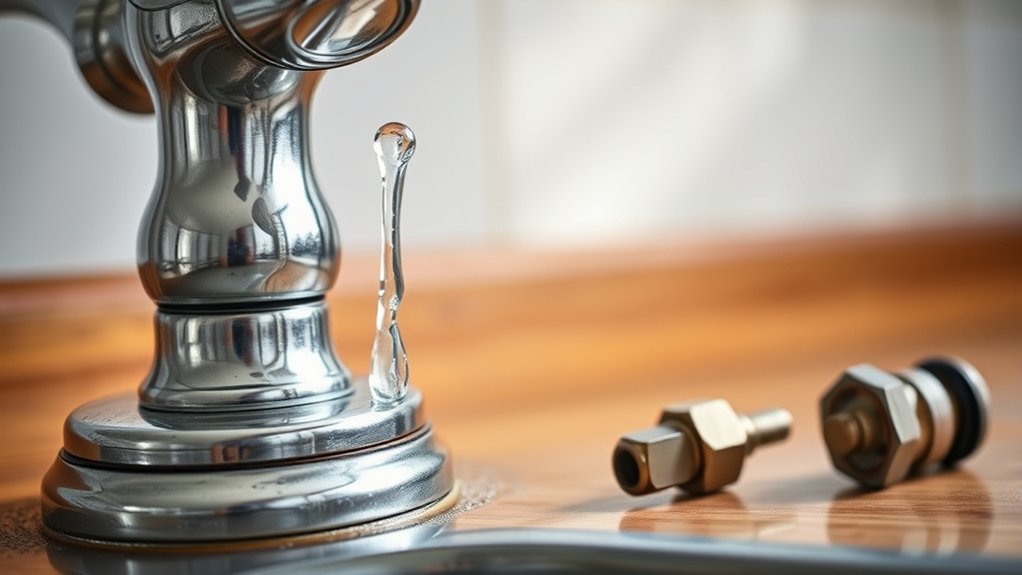
If your faucet runs on its own without sensor technology involved, plumbing issues often lie at the root. You should inspect for common problems that cause unintended water flow. Ignoring faucet leaks can worsen the issue and increase water bills. Regular plumbing maintenance helps identify and fix these faults early.
Watch for these culprits:
- Worn or damaged washers causing valve malfunctions
- Faulty cartridge assemblies failing to seal properly
- Loose or corroded valve seats
- Backflow due to cross-connections in plumbing
- Debris obstructing valve operation
Addressing these problems promptly prevents continuous water flow and potential damage. If you’re unsure, hire a professional plumber to perform thorough maintenance and repairs, ensuring your faucet functions correctly without running on its own.
Can Water Pressure Changes Cause Faucets To Turn On By Themselves?
You might notice your faucet turning on unexpectedly due to sudden water pressure fluctuations in your plumbing system. These pressure changes can cause stress on faucet valves, sometimes forcing them open without manual intervention.
Understanding how your system’s dynamics influence valve behavior helps identify if pressure is the root cause.
Water Pressure Fluctuations
Several factors can cause water pressure to fluctuate within your plumbing system, potentially triggering faucets to turn on by themselves. Inconsistent pressure may cause faulty or worn-out valves to open slightly, letting water flow without manual activation.
You need to monitor pressure regulation devices regularly and perform plumbing maintenance to prevent such issues. Common causes include:
Sudden changes in municipal water supply pressure
Malfunctioning pressure regulators
Water hammer effects from rapid valve closures
Partially closed or leaking valves
Blocked or corroded pipes affecting flow dynamics
Plumbing System Dynamics
Although water pressure fluctuations play a significant role, the overall plumbing system dynamics determine whether faucets can turn on by themselves. Changes in pressure can cause water to move unpredictably through pipes, but whether this activates a faucet depends on the plumbing layout and faucet design.
For instance, certain faucet mechanisms are more sensitive to pressure variations, potentially allowing water to flow if seals or valves aren’t tight. Poor plumbing maintenance can exacerbate this issue by allowing leaks or worn components that respond to pressure shifts.
Additionally, complex plumbing systems with interconnected lines may transmit pressure changes that inadvertently affect faucets. To prevent faucets from turning on unexpectedly, you should guarantee regular plumbing maintenance and choose faucets with robust valve designs that resist pressure-induced activation.
Effects On Faucet Valves
A faucet valve responds directly to changes in water pressure, and under certain conditions, these fluctuations can cause it to open partially or fully. You might notice what seems like automatic activation, but this often signals a valve malfunction or pressure imbalance. Sudden surges or drops in pressure can force the valve components to shift, triggering unintentional flow.
Consider these effects on faucet valves due to pressure changes:
Valve seals may weaken, increasing leak risk.
Loose or worn valve washers can cause partial openings.
Pressure spikes might dislodge valve stems.
Corrosion can impair valve responsiveness.
Faulty pressure regulators contribute to erratic valve behavior.
Understanding these factors helps you diagnose why faucets might turn on by themselves and address valve malfunctions promptly.
How Temperature-Sensitive Faucets Can Turn On Automatically
When temperature-sensitive faucets detect a specific heat threshold, they can activate automatically to regulate water flow. These faucets use temperature sensors to monitor water or ambient temperature. Once the sensor hits a preset limit, it triggers automatic activation of the valve, opening the faucet without manual input.
This system helps maintain consistent temperature and prevents scalding or freezing.
| Component | Function | Trigger Condition |
|---|---|---|
| Temperature sensor | Measures temperature | Exceeds preset threshold |
| Control unit | Processes sensor data | Signal from sensor |
| Valve actuator | Opens/closes faucet valve | Command from control unit |
| Water flow | Regulated output | Valve actuator position |
| Safety cutoff | Prevents malfunction | Abnormal readings |
Understanding these parts lets you see how temperature-sensitive faucets turn on automatically.
Faulty Valves And Washers That Cause Faucets To Turn On By Themselves
Temperature-sensitive faucets rely on sensors and control units to regulate water flow, but mechanical components like valves and washers also play a key role. Valve malfunctions or washer issues can cause a faucet to turn on by itself.
When valves fail to seal properly, they allow unintended water passage. Similarly, worn or damaged washers may not create a tight seal, leading to leaks or spontaneous water flow. Common causes include:
- Corroded valve seats restricting proper closure
- Hardened or cracked washers losing elasticity
- Debris obstructing valve movement
- Mineral buildup causing valve sticks
- Incorrect valve installation or alignment
These mechanical faults disrupt normal operation, potentially triggering automatic water flow without user input. Understanding valve and washer conditions helps diagnose why your faucet might turn on unexpectedly.
How To Fix A Faucet That Turns On By Itself
If your faucet turns on by itself, start by shutting off the main water supply to prevent further water waste or damage. Begin faucet troubleshooting by inspecting the valve and washer for wear or damage, as these often cause unintentional activation.
Next, check for debris or mineral buildup that could trigger automatic activation mechanisms. If your faucet has a sensor, verify it’s clean and free from obstructions that might cause false signals.
Replace faulty components with compatible parts to restore proper function. After repairs, turn the water back on and test the faucet multiple times to confirm the issue is resolved.
If the problem persists, consider consulting a professional plumber to diagnose complex valve or sensor issues. Following these steps guarantees efficient, precise resolution to a self-activating faucet.
Frequently Asked Questions
Can a Faucet Turning on by Itself Waste a Lot of Water?
Yes, a faucet turning on by itself can waste significant water, undermining water conservation efforts. You should inspect for plumbing issues promptly to prevent excessive water loss and avoid higher utility bills caused by unnoticed leaks or malfunctions.
Are There Smart Faucets That Turn on Automatically for Hygiene?
Yes, smart faucets use smart technology to activate automatically, enhancing hygiene benefits by minimizing touchpoints. You’ll find them practical in kitchens or bathrooms, reducing germ spread efficiently while conserving water through precise control.
Does Water Quality Affect Faucet Auto-Activation?
About 30% of sensor malfunctions stem from water mineralization buildup. You’ll find that faucet sensors can misinterpret mineral deposits as motion, causing auto-activation issues.
Maintaining water quality is essential for flawless sensor performance.
Can Pests Cause a Faucet to Turn on by Itself?
You shouldn’t expect pest behavior to cause faucet malfunction directly. While insects might interfere with handles or sensors, they rarely trigger water flow.
Most faucet activations stem from mechanical or electronic faults, not pests.
Is It Safe to Leave a Faucet That Turns on by Itself Unattended?
You shouldn’t leave a self-activating faucet unattended; it poses potential hazards like water damage and mold growth. Ignoring it can also affect insurance claims, so fixing the issue promptly protects your safety and finances.
Conclusion
So, yes, faucets can turn on by themselves—because who doesn’t want an unexpected indoor waterfall? It’s usually not ghosts but faulty valves, pressure changes, or temperature-sensitive parts causing the surprise splash.
Instead of blaming the plumbing gods, you can troubleshoot and fix these issues yourself. After all, a faucet that runs on its own might seem convenient—until your water bill runs away faster than you can say “leak.”
In conclusion, understanding why a faucet can turn on by itself will help you address the problem quickly and avoid unnecessary water waste.


Leave a Reply