
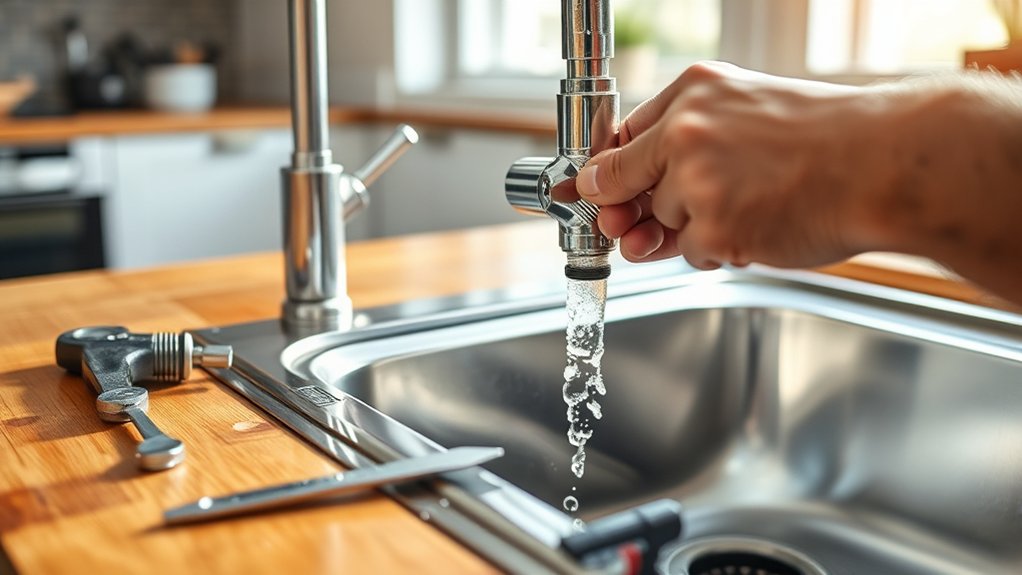
Yes, a handyman can replace a faucet efficiently if the job involves standard installation without complex plumbing work.
They have the necessary tools, like adjustable wrenches and plumber’s tape, and know how to shut off the water supply, remove old fixtures, and install new ones securely following manufacturer guidelines.
However, for complicated leaks or plumbing modifications, a licensed plumber is better suited.
Keep exploring to understand when to choose a handyman or call in a professional plumber.
Key Takeaways
- A handyman can replace most faucet types, including single-handle and double-handle models, following manufacturer instructions.
- They have the necessary tools and skills to shut off water, remove old faucets, and install new ones properly.
- Handymen offer competitive pricing and can handle minor repairs like cartridge replacements and leak fixes.
- Complex plumbing modifications, severe leaks, or code compliance require a licensed plumber’s expertise.
- For standard faucet replacements without plumbing alterations, hiring a handyman is generally safe and efficient.
Can a Handyman Replace a Faucet? What You Need to Know
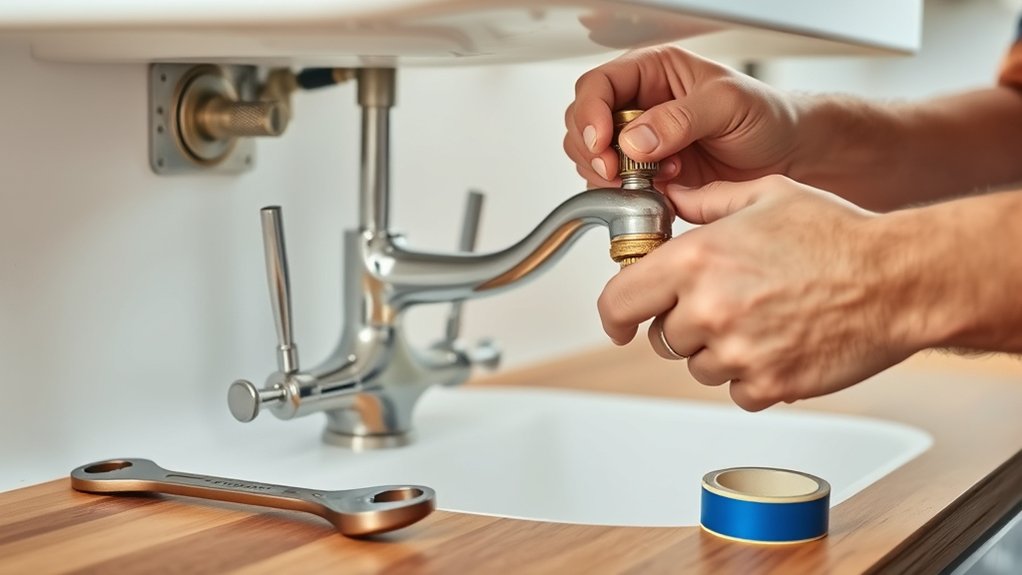
How skilled is a handyman when it comes to replacing a faucet? Typically, a handyman is proficient in handling various faucet types, including single-handle, double-handle, and pull-out models.
You can expect them to efficiently remove the old fixture, properly seal connections, and install the new faucet according to manufacturer specifications. Understanding the distinctions between faucet types is essential to ascertain compatibility with your existing plumbing.
Installation costs vary based on faucet complexity and your location, but handymen generally offer competitive pricing compared to specialized plumbers. By hiring a handyman, you can expect a precise, professional faucet replacement that addresses leaks, flow issues, and aesthetic upgrades.
Always confirm their experience with faucet installations to guarantee quality workmanship and adherence to local codes.
When to Hire a Plumber Instead of a Handyman
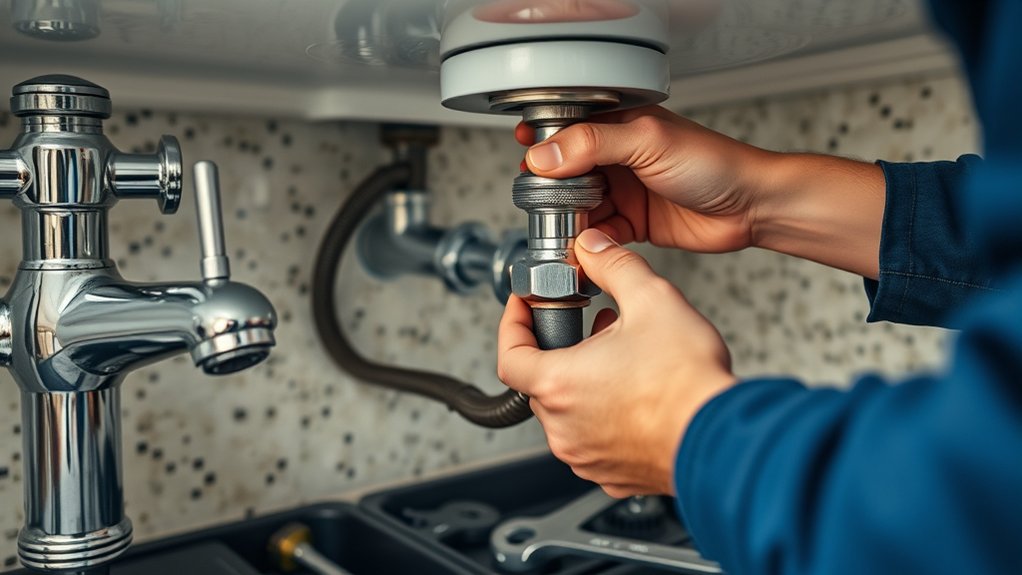
While a handyman can handle many faucet replacements effectively, certain situations demand the specialized skills of a licensed plumber. You should hire a plumber if you encounter plumbing emergencies, such as severe leaks or water damage, where immediate professional intervention is critical to prevent further harm.
Additionally, complex installations involving modifications to existing pipework, integration with advanced water filtration systems, or compatibility with specific water pressure requirements require a plumber’s expertise. If your faucet replacement involves maneuvering through local plumbing codes or permits, a plumber guarantees compliance and safe operation.
Choosing a plumber in these scenarios minimizes risks, secures technical accuracy, and maintains system integrity, providing peace of mind that your plumbing functions efficiently without causing future complications.
What Tools and Skills Does a Handyman Need?
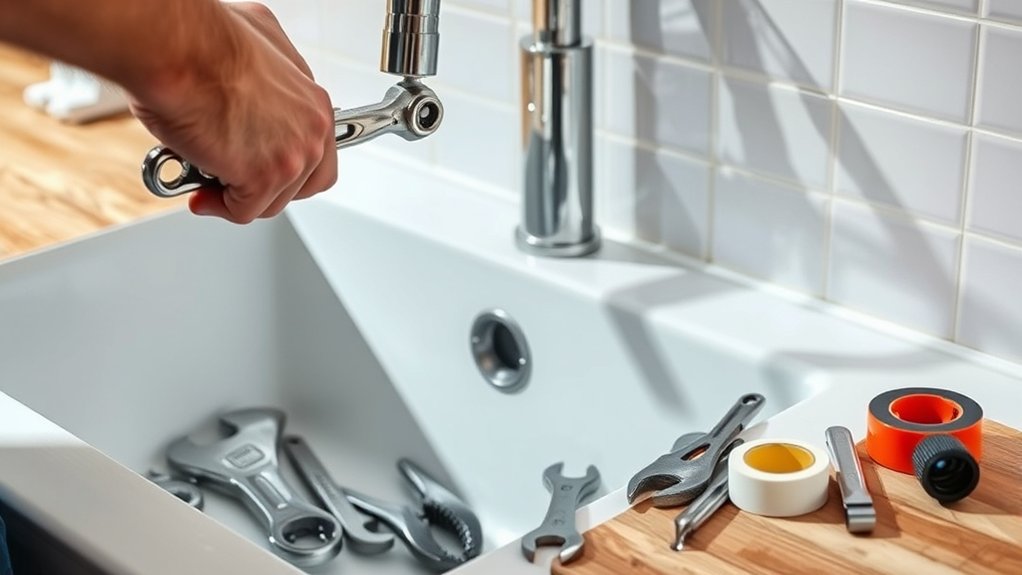
Although faucet replacement may seem straightforward, a handyman must possess specific tools and skills to complete the job efficiently and correctly. You’ll need essential tools such as adjustable wrenches, basin wrenches, plumber’s tape, and a screwdriver set.
Familiarity with various faucet types, including single-handle, double-handle, pull-out, or wall-mounted, is vital, as each demands distinct installation techniques. You must understand how to shut off water supply lines, remove old fixtures without damaging surrounding surfaces, and properly seal connections to prevent leaks.
Proficiency in reading manufacturer instructions and interpreting plumbing layouts guarantees accurate alignment and secure fitting. Mastery of these skills and tools allows you to handle faucet replacements with precision, avoiding common pitfalls that could compromise functionality or cause water damage.
How a Handyman Replaces a Faucet: Step-by-Step
With the right tools and skills in hand, you can systematically approach replacing a faucet to secure a safe and leak-free installation. Begin by identifying the faucet type to ascertain compatibility.
Shut off the water supply, disconnect the supply lines, and remove the old faucet. Clean the mounting surface before installing the new unit.
| Step | Action | Tip |
|---|---|---|
| 1 | Identify faucet type | Match mounting holes |
| 2 | Remove old faucet | Shut off water first |
| 3 | Install new faucet | Tighten connections firmly |
Follow the manufacturer’s installation process precisely, checking for leaks and proper water flow to complete the task professionally.
Faucet Problems a Handyman Can Fix: And When to Call a Plumber
Even if you can handle many faucet repairs yourself or with a handyman’s help, certain issues require a licensed plumber’s expertise. A handyman can efficiently address common faucet issues such as minor leaks, cartridge replacements, and handle tightening.
These tasks often align with basic faucet maintenance tips, including cleaning aerators and replacing washers. However, if you encounter persistent leaks, low water pressure caused by pipe blockages, or complex valve failures, it’s wise to call a plumber.
Additionally, plumbing system modifications or installation of new fixtures demand professional skills to guarantee compliance with building codes and avoid further damage. By distinguishing between handyman-appropriate repairs and scenarios requiring a plumber, you’ll maintain your faucet’s functionality while preventing costly mistakes.
Frequently Asked Questions
How Much Does It Typically Cost to Replace a Faucet?
You’ll typically pay between $150 and $350 for faucet installation costs. Plumbing service rates vary by location and complexity, so expect higher fees for specialized fixtures or extensive repairs during replacement.
Can a Handyman Install a Faucet in a Commercial Building?
Think of commercial plumbing like tuning a grand piano. Only a skilled handyman with proper qualifications can install a faucet in a commercial building, ensuring compliance with codes and reliable performance under heavy use.
Are There Warranties on Faucet Installations Done by Handymen?
You’ll want to check warranty details carefully, as installation guarantees vary by handyman. Some offer limited warranties covering workmanship, but these aren’t universal.
Always request clear terms before hiring to ascertain proper coverage on faucet installations.
How Long Does It Usually Take to Replace a Faucet?
Replacing a faucet usually takes about one to two hours, symbolizing a seamless river flow. Your faucet installation timeline depends on complexity, but the typical plumbing project duration remains brief.
This ensures efficient, professional results without unnecessary delays.
What Types of Faucets Are Easiest for Handymen to Replace?
You’ll find compression faucets and cartridge faucets easiest to replace due to their straightforward valve mechanisms and standard fittings. This simplifies disassembly and installation, making your task more efficient and less prone to complications.
Conclusion
Now that you know a handyman can often replace your faucet with the right tools and skills, you might wonder when to call in a plumber instead. Don’t rush—some problems demand expert expertise beyond basic repairs.
Before you decide, consider the complexity and potential risks carefully. The next step could save you time and money or lead to costly mistakes.
Will your faucet replacement be straightforward, or is professional help necessary? Ultimately, a handyman can replace a faucet in many cases, but knowing when to seek a plumber’s assistance is key to a successful repair.




Leave a Reply