
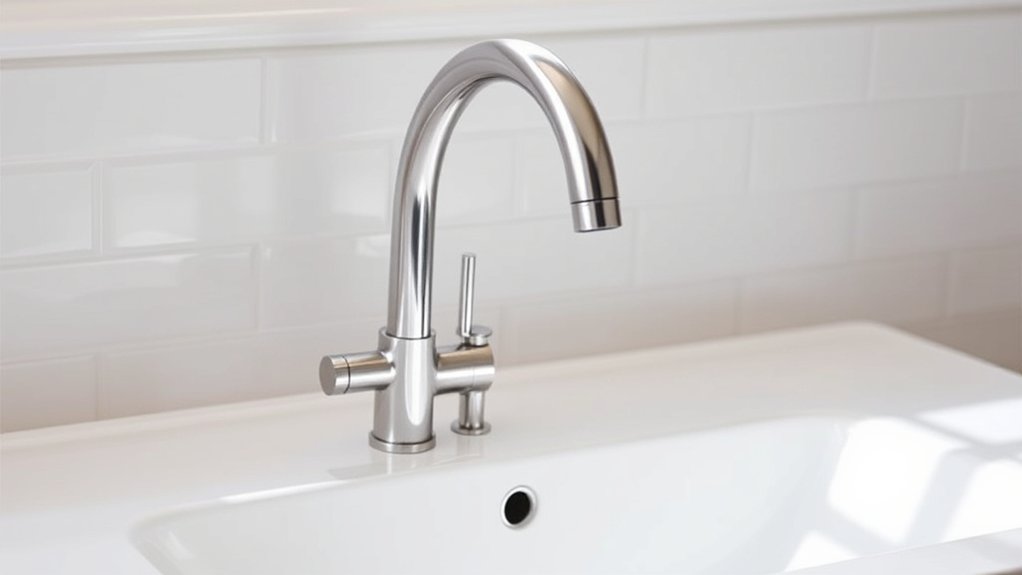
You can use a kitchen faucet in your bathroom if it fits the sink holes and matches your plumbing connections.
Kitchen faucets tend to have taller spouts, higher flow rates, and bulkier designs, so make sure your bathroom sink can accommodate these.
Also, verify valve types and water pressure compatibility.
While they add functionality, the size and style might clash with your bathroom decor.
Keep exploring to understand key differences, installation tips, and whether it’s the best choice for your space.
Key Takeaways
- Kitchen faucets can be used in bathrooms if plumbing connections and sink hole configurations are compatible.
- Taller spouts and larger sizes of kitchen faucets may overwhelm smaller bathroom sinks.
- Kitchen faucets offer higher flow rates and flexible spray options, which may exceed bathroom needs.
- Aesthetic differences may cause kitchen faucets to clash with bathroom decor and style.
- Installation requires checking water pressure, valve connections, and mounting requirements for proper fit.
Can You Use a Kitchen Faucet in a Bathroom?
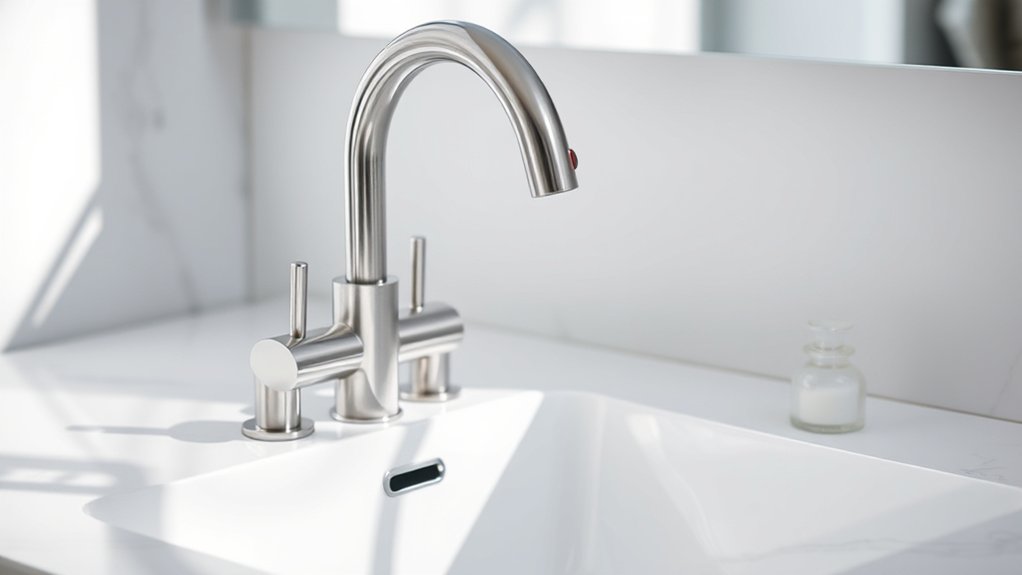
Why consider using a kitchen faucet in a bathroom? You might be drawn to its robust design or advanced features. Before proceeding, evaluate kitchen faucet compatibility with your bathroom plumbing.
Kitchen faucets often have different mounting requirements and water pressure standards compared to bathroom faucets. Ensuring the faucet fits your sink and aligns with existing water lines is essential.
Additionally, think about how the kitchen faucet will integrate with your bathroom decor. Its typically larger size and industrial look may clash with delicate bathroom aesthetics unless your design embraces a modern, utilitarian style.
Key Differences Between Kitchen and Bathroom Faucets
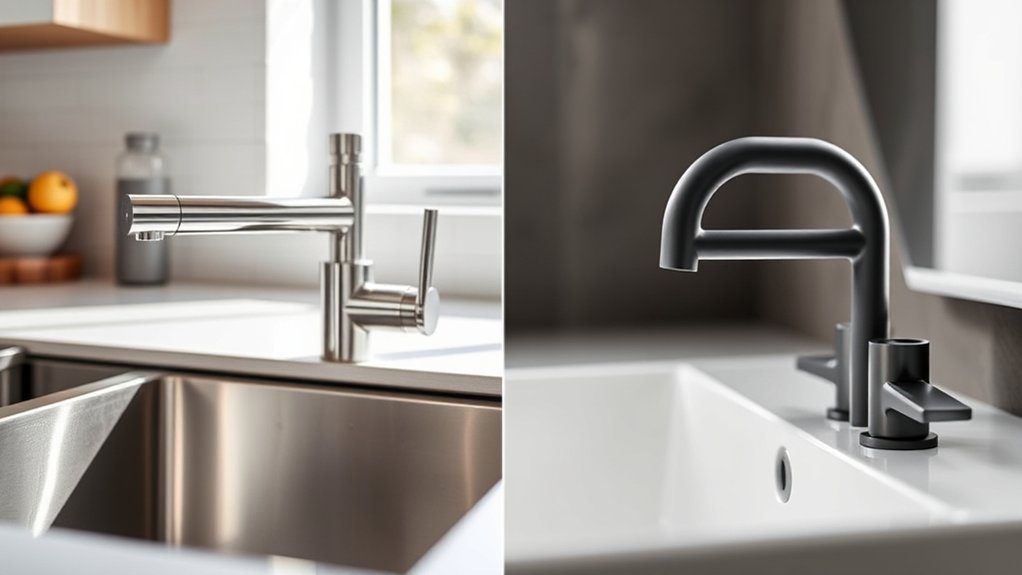
Although kitchen and bathroom faucets both serve the basic function of delivering water, they differ greatly in design, size, and functionality to meet the specific demands of their respective spaces. You’ll notice design aesthetics vary: kitchen faucets prioritize height and reach for washing large items, while bathroom faucets focus on compactness and style to complement vanities.
Functionality differences include spray options and water flow rates tailored to each environment.
| Feature | Kitchen Faucet | Bathroom Faucet |
|---|---|---|
| Design Aesthetics | Taller spout, flexible neck | Shorter spout, decorative style |
| Functionality | High flow, multiple spray modes | Moderate flow, single mode |
| Size | Larger to fit sinks & tasks | Smaller for limited space |
Will a Kitchen Faucet Fit Your Bathroom Sink and Plumbing?
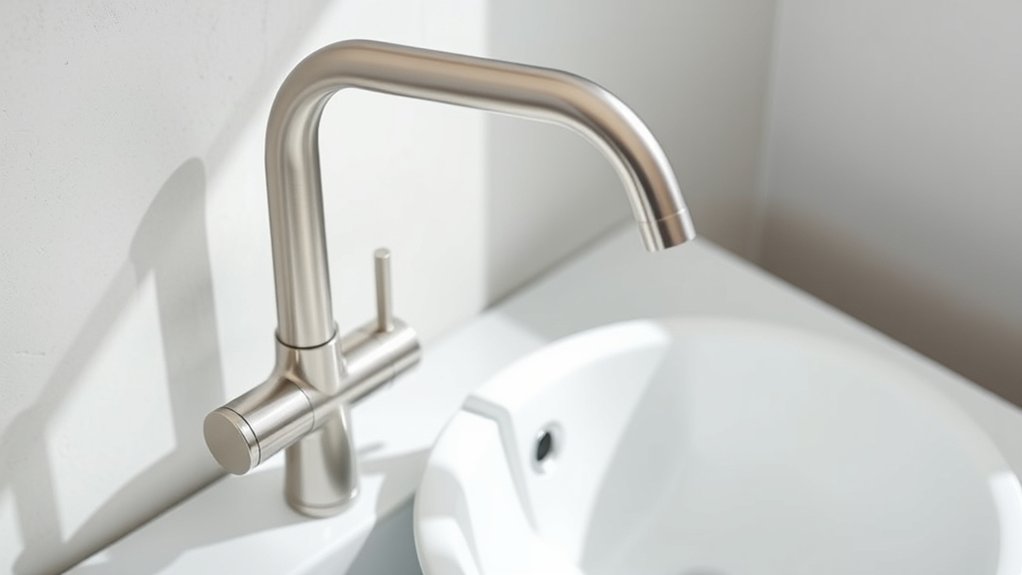
How well a kitchen faucet fits your bathroom sink and plumbing depends on several key factors. Faucet compatibility is essential, as kitchen faucets often differ in size and mounting style from bathroom models. You’ll need to take into account the plumbing requirements, including water supply line size and connection types.
Check if the faucet’s base matches your sink’s hole configuration to avoid installation issues. Also, assess the spout height and reach to guarantee it fits comfortably within your bathroom sink’s dimensions. Finally, verify that the faucet’s valve connections align with your existing plumbing to prevent costly modifications.
- Sink hole size and number
- Faucet base diameter
- Spout height and reach
- Water supply line compatibility
- Valve connection types
Evaluating these guarantees proper fit and function.
Pros and Cons of Using a Kitchen Faucet in the Bathroom
After confirming that a kitchen faucet fits your bathroom sink and plumbing, consider the advantages and drawbacks of using one in this setting. On the plus side, kitchen faucets often offer superior functionality considerations, such as higher water flow rates and extended spouts, which can enhance usability for tasks like washing hands or face.
They’re typically durable and feature pull-out sprayers, adding versatility. However, the aesthetic compatibility might be an issue; kitchen faucets usually have a bulkier design that may clash with bathroom decor, giving a less cohesive look.
Additionally, their size can overwhelm smaller bathroom sinks, affecting both appearance and practicality. Weigh these factors carefully to determine if the enhanced functionality justifies potential aesthetic compromises in your bathroom setup.
How to Choose the Right Bathroom Faucet for Your Space
Where should you start when selecting a bathroom faucet that fits both your space and needs? First, consider the overall design aesthetics to guarantee the faucet complements your bathroom style. Next, assess the flow rate to balance water efficiency with sufficient pressure.
Additionally, evaluate the faucet’s mounting type to match your sink configuration. Don’t overlook the finish and material for durability and maintenance ease. Finally, verify compatibility with your plumbing to avoid installation issues.
Match faucet height and spout reach to sink size
Choose a flow rate compliant with water-saving standards
Pick a finish resistant to corrosion and tarnish
Select single or double handle based on user preference
Confirm installation type: deck-mounted or wall-mounted
These factors guarantee functionality and style blend seamlessly in your bathroom.
Frequently Asked Questions
Can a Kitchen Faucet Handle Hard Water in a Bathroom?
You can use a kitchen faucet with hard water in your bathroom, but it may reduce faucet longevity due to mineral buildup.
Regular cleaning and installing a water softener will help maintain performance and extend its lifespan effectively.
Do Kitchen Faucets Require Different Water Pressure Than Bathroom Faucets?
Like adjusting a car’s gears, you’ll find water pressure differences between kitchen and bathroom faucets. Kitchen faucets often handle higher pressure, so you must consider faucet compatibility issues to guarantee peak performance and avoid damage.
Are Kitchen Faucets More Prone to Water Spots in Bathrooms?
Yes, kitchen faucets can show more water spots in bathrooms due to different water quality. You’ll want to wipe them regularly with a microfiber cloth and use vinegar-based cleaning tips to keep them spotless and shiny.
Can I Install a Kitchen Faucet Without Professional Plumbing Help?
You can tackle DIY installation, but unlike simple tasks, plumbing tools demand precision and care. With the right wrench, plumber’s tape, and patience, you’ll confidently install a kitchen faucet in your bathroom without professional plumbing help.
How Do Kitchen Faucet Finishes Hold up in Humid Bathroom Environments?
You’ll find kitchen faucet finish durability varies; high-quality finishes like brushed nickel or stainless steel resist humidity impact well. Lower-grade finishes may corrode or tarnish faster in a humid bathroom environment, so choose accordingly.
Conclusion
While a kitchen faucet can technically work in your bathroom, it might not be the most elegant solution. The size, style, and plumbing compatibility could make it a bit of a square peg in a round hole.
For a seamless fit and ideal function, choosing a faucet designed specifically for bathrooms is usually the smarter move. This way, you avoid potential hiccups and keep your space both stylish and practical.
In conclusion, while you can use a kitchen faucet in the bathroom, selecting a fixture made for bathroom use ensures better compatibility and aesthetics.

Leave a Reply