
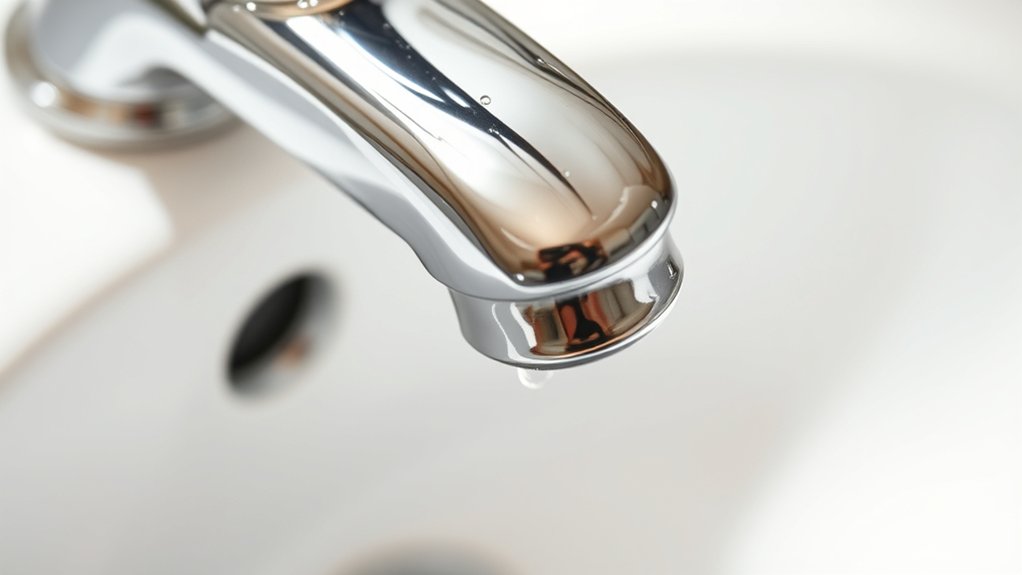
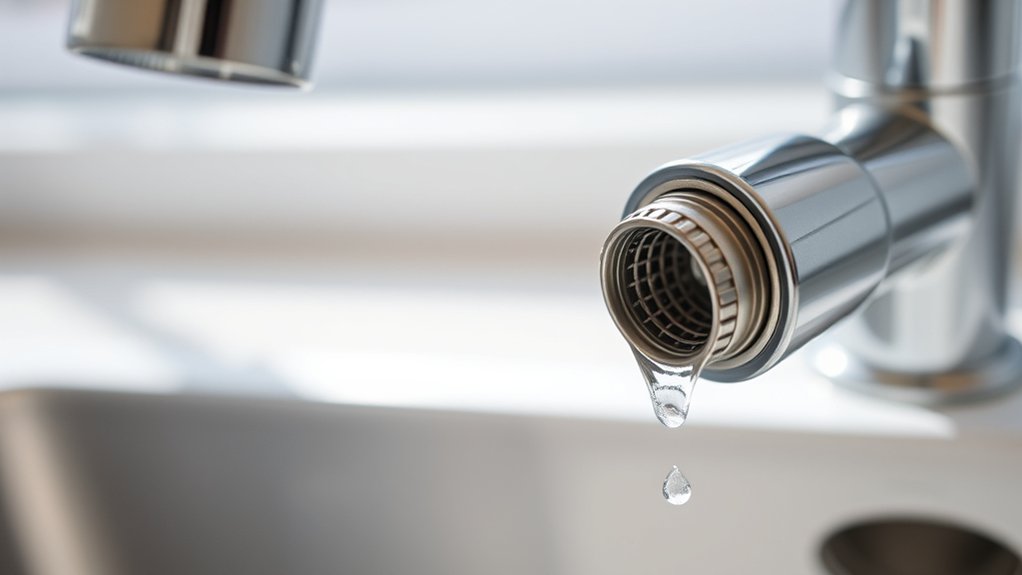
Yes, a loose faucet handle can cause a leak by disrupting the internal seal and allowing water to escape.
When the handle wobbles or feels unstable, it stresses washers and O-rings, accelerating wear and worsening leaks.
You’ll notice inconsistent water flow or dripping if left unchecked.
Tightening the handle with the right tools can stop leaks early. If problems persist, components may need replacing to avoid water waste and damage.
Learn how to properly fix and maintain your faucet to save on costs.
Addressing a loose handle promptly helps prevent more serious plumbing issues down the line.
Key Takeaways
- A loose faucet handle can cause misalignment, allowing water to escape and resulting in leaks.
- Excessive wobbling from a loose handle increases wear on washers and O-rings, worsening leaks over time.
- Unstable handles reduce control over water flow and temperature, signaling potential internal damage and leaks.
- Early tightening prevents leaks from becoming complex plumbing issues and reduces water waste.
- Ignoring a loose handle can lead to persistent leaks, higher water bills, and costly repairs.
Common Signs Your Faucet Handle Is Too Loose
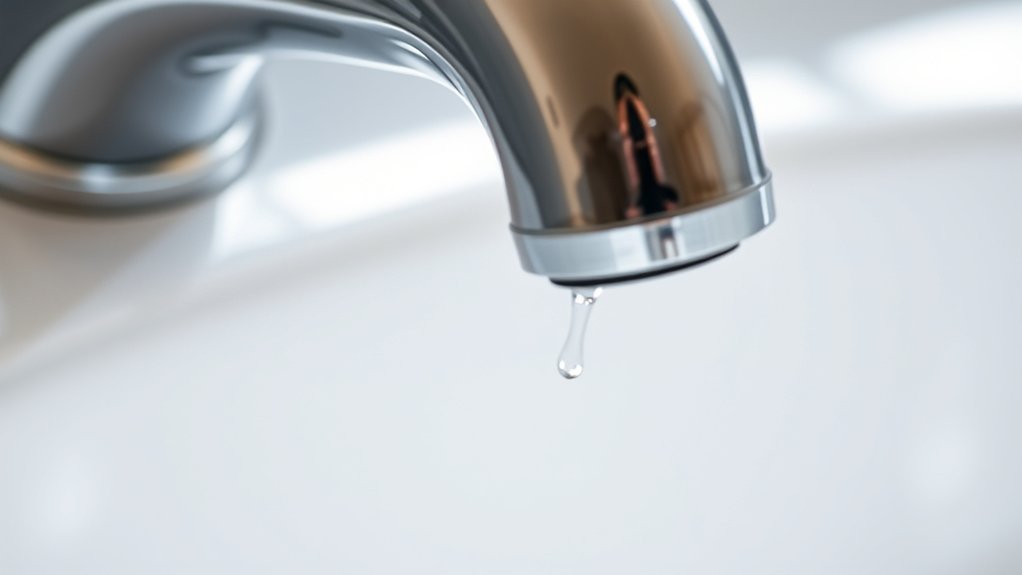
How can you tell if your faucet handle is too loose? You’ll notice excessive wobbling or movement when you turn it. If the handle feels unstable or detaches easily, it’s a clear sign.
Another common symptom is inconsistent water flow or difficulty in controlling temperature. These issues often indicate worn or stripped internal components.
To address this, apply basic faucet maintenance tips like tightening the handle screws with the correct tool. Always follow plumbing safety precautions by shutting off the water supply before performing any repairs to avoid water damage or injury.
Regular inspection and timely adjustments will help maintain proper handle function and extend your faucet’s lifespan. Identifying these signs early prevents more complex plumbing problems later.
Why a Loose Faucet Handle Causes Leaks
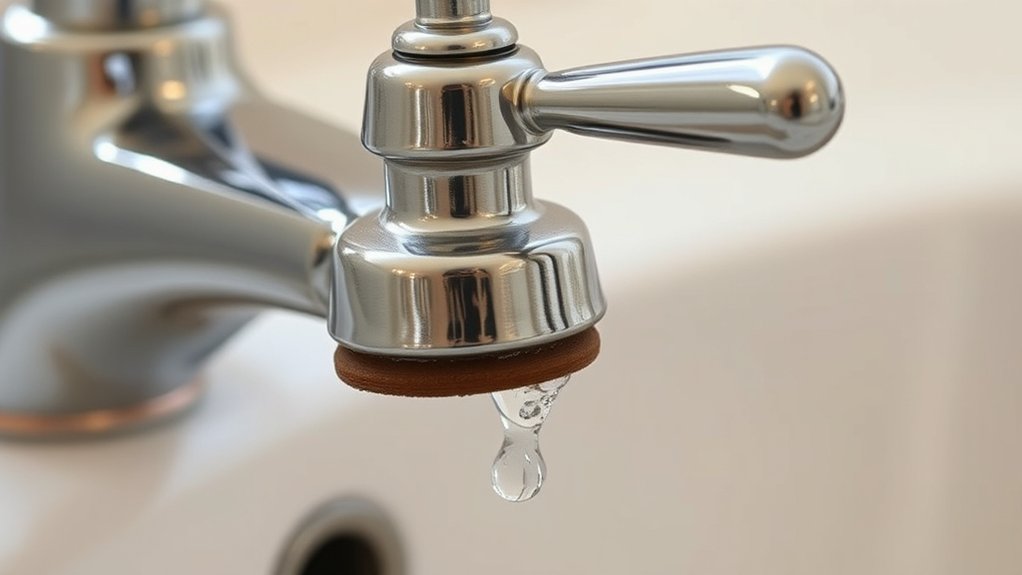
Noticing a loose faucet handle means you should also check for leaks, as the two issues often go hand in hand. When the handle isn’t secure, it can cause misalignment with internal components, such as the cartridge or valve stem.
This misalignment compromises the seal, allowing water to escape. Over time, repeated stress from a loose handle can wear down washers and O-rings, worsening the leak.
Understanding plumbing basics helps you realize that faucet maintenance isn’t limited to visible parts; internal integrity matters. By tightening or replacing the handle promptly, you restore proper alignment, preventing water from bypassing seals.
Proper faucet care goes beyond appearances; internal alignment is key to preventing leaks.
Regularly inspecting and addressing loose handles is a simple, effective step in preventing leaks and prolonging faucet lifespan.
Why a Loose Handle Makes Your Faucet Leak
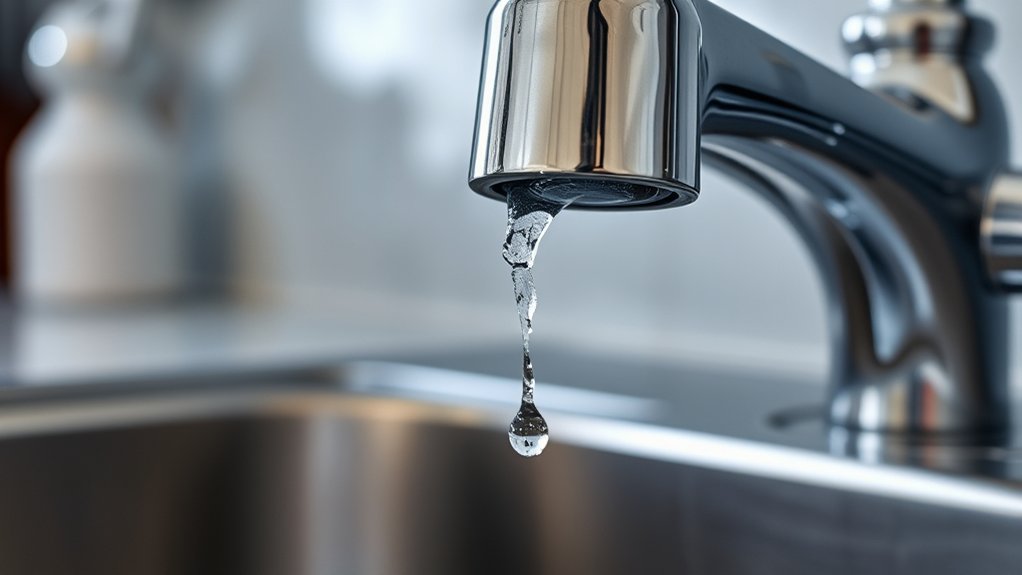
When you leave a faucet handle loose, it disrupts the alignment between the handle and the valve components, causing the faucet to leak. Proper faucet maintenance requires you to keep all parts securely fastened to maintain effective water flow control.
A loose handle compromises the seal integrity, which leads to drips or continuous leaks. Understanding plumbing basics helps you identify that the handle’s instability directly impacts the valve stem’s ability to close tightly.
Key reasons why a loose handle causes leaks include:
- Misalignment prevents full valve closure.
- Increased wear on internal washers and seals.
- Unstable handle movement aggravates valve seat damage.
- Interrupted mechanical force reduces pressure needed to stop water flow.
Addressing handle looseness promptly prevents costly water damage and preserves faucet longevity.
Tools Needed to Tighten a Loose Faucet Handle
You’ll need a few essential tools like a screwdriver and an adjustable wrench to tighten a loose faucet handle effectively. Make certain you choose the right screwdriver head to avoid stripping screws and apply steady pressure when tightening.
Using the correct tools and techniques will guarantee a secure fix without damaging the faucet components.
Essential Tools Overview
Although tightening a loose faucet handle is straightforward, having the right tools assures efficiency and prevents damage. Using proper plumbing essentials guarantees you follow faucet maintenance tips effectively, avoiding unnecessary repairs.
Equip yourself with these tools to tackle the task confidently:
- Adjustable wrench: For loosening and tightening nuts without damaging surfaces
- Screwdrivers (flathead and Phillips): To remove or tighten handle screws accurately
- Allen wrench set: Necessary for hex screws common in modern faucet handles
- Plumber’s grease: Helps lubricate moving parts, preventing future loosening
Having these tools on hand not only streamlines your repair process but also supports long-term faucet health. Each item plays a specific role in addressing common handle issues, making your faucet maintenance straightforward and reliable.
Tool Usage Tips
Since loose faucet handles often involve small screws and tight spaces, choosing the correct tool and handling it properly is crucial. Start with a precision screwdriver or an Allen wrench, depending on your faucet’s screw type.
Use a flashlight to improve visibility in confined areas. Apply steady, moderate pressure to avoid stripping screws or damaging components. Follow plumbing basics by turning off the water supply before working to prevent leaks.
Regular tool maintenance guarantees your equipment functions reliably. Keep screwdrivers’ tips sharp and Allen wrenches free of rust.
Avoid using worn or incorrect tools, as they can worsen the handle’s looseness or cause leaks. By selecting appropriate tools and maintaining them well, you’ll efficiently secure the handle and reduce leak risks.
Simple Steps to Tighten a Loose Faucet Handle
First, identify the type of faucet handle you have, whether it’s a knob, lever, or cross handle. Next, select the appropriate tool, such as an Allen wrench or screwdriver, based on the handle design. Using the correct tool guarantees you can tighten the handle securely without causing damage.
Identifying Handle Type
How can you tell which type of faucet handle you’re dealing with? Identifying the faucet handle type is essential before tightening it. Faucet handle types vary in design and mechanism, impacting the approach you take. Start by examining the handle materials and configuration.
Knob handles: Typically round, made from plastic or metal, with a visible screw on top or underneath.
Lever handles: Long, straight levers, often metal or chrome-plated, attached with a set screw.
Cross handles: Four-pronged design, usually metal, secured with a center screw.
Push-button or cartridge handles: Compact, sometimes plastic, requiring access by removing a decorative cap.
Recognizing these handle types and materials lets you prepare for the correct tightening method, ensuring an effective repair without damage.
Using Proper Tools
After identifying the type of faucet handle you’re working with, gather the appropriate tools to guarantee a secure tightening process. For most handles, a screwdriver or Allen wrench is essential. These plumbing tools allow you to access and tighten the set screw that holds the handle in place.
In some cases, you might need an adjustable wrench or pliers to secure nuts beneath the handle. Using the correct tools prevents damage to the faucet and guarantees effective faucet maintenance. Avoid makeshift tools that can strip screws or deform components.
Once equipped, carefully remove any decorative caps to expose the fastening mechanism. Tighten the screws or nuts firmly but avoid overtightening, which can cause breakage. Proper tool use guarantees your faucet handle is securely fastened, reducing leaks and prolonging faucet lifespan.
How to Tell When to Replace Faucet Parts
When should you replace faucet parts to prevent further damage? Recognizing wear signs early helps you avoid costly repairs. Follow these faucet maintenance tips to evaluate replacement considerations:
Persistent leaks despite tightening indicate worn washers or seals.
Corroded or cracked components compromise function and need immediate replacement.
Difficulty operating the handle or spout signals internal cartridge failure.
Mineral buildup causing reduced water flow suggests parts need cleaning or swapping.
How Fixing a Loose Faucet Handle Saves Water & Money
Addressing a loose faucet handle promptly prevents small issues from escalating into water waste and higher bills. By fixing the handle, you stop leaks that otherwise waste gallons of water daily, directly contributing to water conservation.
This simple repair reduces your water usage and lowers your utility costs, offering significant cost savings over time. Additionally, a secure handle guarantees smooth operation, preventing further wear on faucet components.
| Issue | Benefit |
|---|---|
| Leaky faucet handle | Reduces water waste |
| Continuous drip | Lowers monthly water bill |
| Worn internal parts | Extends faucet lifespan |
| Frequent repairs | Saves maintenance costs |
Taking swift action on loose handles is a practical step to conserve resources and cut expenses effectively.
Frequently Asked Questions
Can a Loose Faucet Handle Damage the Sink Countertop?
Yes, a loose faucet handle can damage countertop materials by causing stress or water seepage. Guarantee proper faucet installation to avoid movement, preventing damage to surfaces like granite, laminate, or wood around the sink area.
How Often Should Faucet Handles Be Checked for Looseness?
Frequently follow faucet maintenance tips by feeling for firmness. You should check and tighten handles monthly using handle tightening techniques to prevent wear, water waste, and damage.
Consistent care guarantees smooth, secure, and leak-free faucet function.
Are Certain Faucet Brands More Prone to Loose Handles?
Yes, certain faucet brands with lower faucet quality or flawed handle design are more prone to loose handles. You should choose brands known for durable materials and secure handle mechanisms to minimize looseness and leaks.
Can a Loose Faucet Handle Cause Water Pressure Issues?
Yes, a loose faucet handle can affect water pressure by preventing proper valve operation.
You should perform regular faucet maintenance to tighten handles and guarantee smooth water flow, avoiding pressure fluctuations and potential damage.
Is It Safe to Fix a Loose Faucet Handle Without Professional Help?
You won’t cause a flood fixing a loose handle yourself! With basic DIY repairs and proper faucet maintenance, you can safely tighten it.
Just turn off the water, use the right tools, and avoid overtightening.
Conclusion
Don’t let a loose faucet handle turn your kitchen or bathroom into Niagara Falls! Ignoring this simple fix can flood your home with wasted water and sky-high bills.
By tightening that handle now, you stop leaks instantly, save money, and avoid costly repairs down the line. Grab a screwdriver, follow the easy steps, and take control.
Because a small twist today prevents a flood of problems tomorrow. Fixing a loose faucet handle can save you from a major leak and keep your plumbing in top shape.


Leave a Reply