
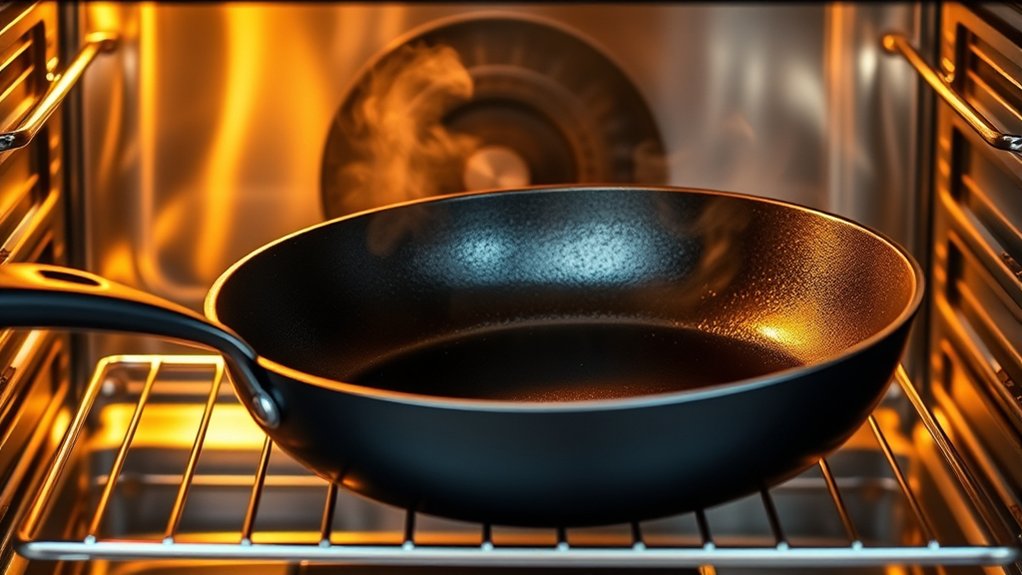
You can use a non stick skillet in the oven only if it’s labeled oven-safe and you follow its temperature limits—usually up to around 350°F to 500°F.
Check if the handle is metal or heat-resistant since plastic or rubber handles aren’t oven-friendly.
Overheating risks damaging the coating, warping the pan, and releasing fumes.
To protect your skillet and food, preheat carefully and avoid empty heating.
Want tips on preventing damage and alternatives? Keep exploring for more insights.
Key Takeaways
- Only use non-stick skillets labeled as oven-safe, checking manufacturer’s maximum temperature guidelines before oven use.
- Avoid skillets with plastic or wooden handles, as these materials typically cannot withstand oven heat.
- Excessive oven temperatures can damage the non-stick coating, causing peeling, flaking, and harmful fumes.
- Always use oven mitts when handling hot non-stick skillets and place them on heat-resistant surfaces to prevent warping.
- For high-temperature oven cooking, consider cast iron or stainless steel as safer alternatives to non-stick pans.
Which Non-Stick Skillets Are Safe for the Oven?
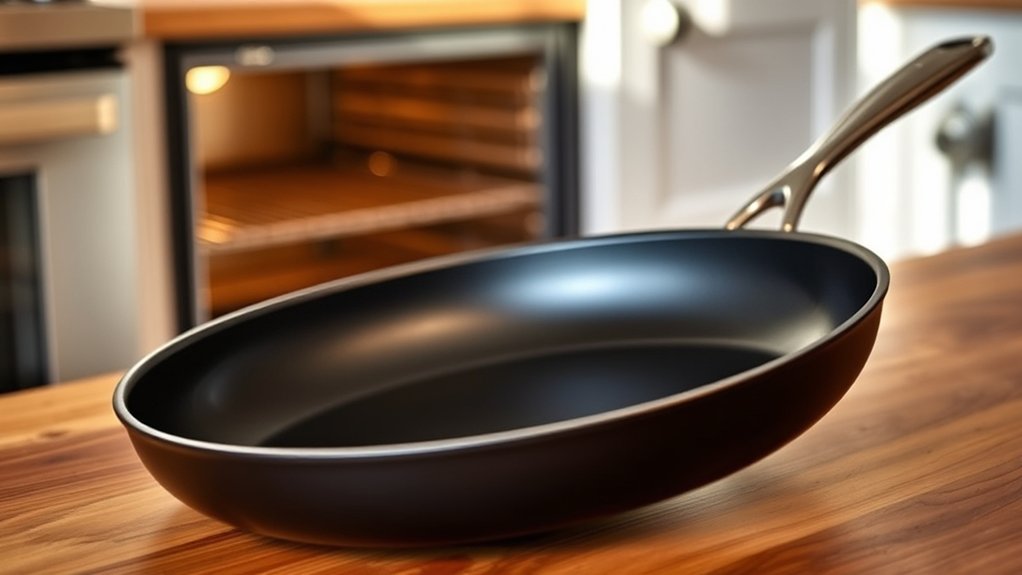
How do you know if your non-stick skillet can safely go in the oven? Start by checking the manufacturer’s guidelines, as not all non stick materials tolerate high heat.
Safe cookware for oven use typically features metal handles and coatings designed for temperature resistance, such as ceramic or hard-anodized aluminum with a non-stick surface. Avoid skillets with plastic or rubber handles; they often can’t withstand oven temperatures.
Look for metal handles and heat-resistant coatings like ceramic or hard-anodized aluminum for oven-safe non-stick skillets.
Additionally, look for labels indicating oven safety or maximum temperature limits. If your skillet lacks this information, it’s best to err on the side of caution and avoid the oven.
Understanding the specific non stick materials and their heat tolerances guarantees you use your cookware safely, preserving its lifespan and preventing damage or toxic fumes.
How to Find Your Skillet’s Oven-Safe Temperature
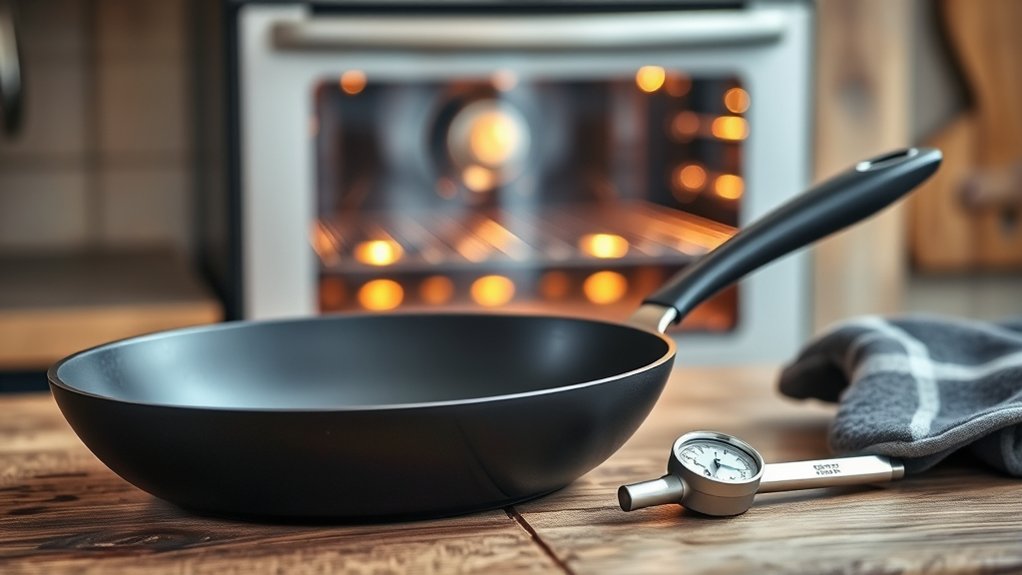
To find your skillet’s oven-safe temperature, start by reviewing the manufacturer’s guidelines carefully. Pay close attention to the handle material, as some can’t withstand high heat.
Finally, verify the maximum temperature limits to avoid damaging your skillet or compromising safety.
Check Manufacturer Guidelines
Although non-stick skillets vary widely in their oven tolerance, you should always check the manufacturer’s guidelines before placing yours in the oven. These guidelines provide essential manufacturer specifications, detailing the maximum temperature your skillet can safely withstand.
Ignoring these cooking guidelines risks damaging the non-stick coating or the skillet itself. To find this information, consult the user manual or visit the manufacturer’s website. Some brands include oven-safe temperature limits printed on the skillet’s base or handle.
Adhering strictly to these specifications guarantees your skillet maintains its integrity and performance over time. If you can’t locate clear instructions, err on the side of caution by keeping oven temperatures below 350°F (175°C) or avoid oven use altogether.
Always prioritize the manufacturer’s advice for safe, effective cooking.
Inspect Handle Material
Knowing the manufacturer’s guidelines is only part of the equation when determining your skillet’s oven-safe temperature. You also need to inspect the handle material carefully. Different handle types, such as stainless steel, silicone, plastic, or wood, vary widely in material durability and heat resistance.
Stainless steel handles usually tolerate high oven temperatures, often up to 500°F, while silicone-coated handles handle moderate heat but may degrade over time. Plastic or wooden handles generally aren’t oven-safe and can melt, warp, or even catch fire.
To protect your cookware and guarantee safety, identify the handle type and research its specific temperature limits. This step helps prevent damage and avoids hazardous situations when using your non-stick skillet in the oven.
Verify Temperature Limits
One of the most reliable ways to verify your non-stick skillet’s oven-safe temperature is by checking the manufacturer’s instructions or product packaging. These sources typically specify the exact temperature range your skillet can safely withstand without damaging the non-stick coating or other components.
If you don’t have the original materials, visit the manufacturer’s website or contact customer service for this information. Staying within the recommended temperature range guarantees safe usage and prolongs the skillet’s lifespan.
Avoid guessing or exceeding these limits because high heat can degrade the coating, release harmful fumes, or warp the pan. By confirming your skillet’s oven-safe temperature, you maintain both safety and performance during cooking.
This step is essential before placing your non-stick skillet in any oven setting.
What Happens If You Overheat Your Non-Stick Skillet?
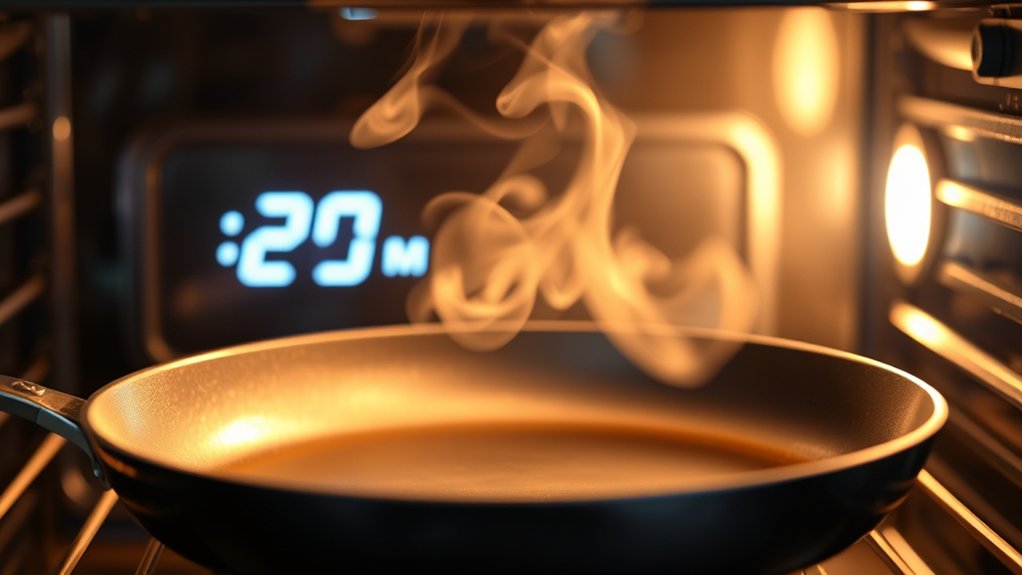
If you overheat your non-stick skillet, the coating can break down, reducing its effectiveness and lifespan. You might also release harmful fumes that can cause respiratory issues.
Additionally, excessive heat can warp the pan, making it unsafe and unusable in the future.
Coating Degradation Risks
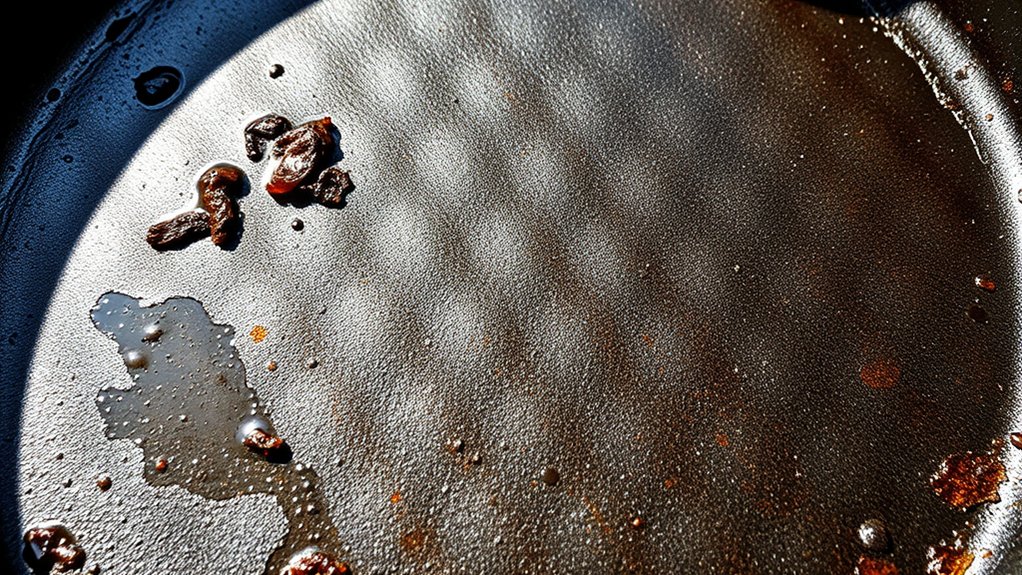
Although non-stick skillets offer convenience, overheating them can cause serious damage to their coating. Excessive heat exposure breaks down the non-stick surface, leading to peeling, flaking, and reduced effectiveness. This degradation shortens the coating longevity, making your skillet less reliable over time.
When the coating deteriorates, food tends to stick, and cleanup becomes more difficult. To protect your skillet, avoid exposing it to temperatures beyond the manufacturer’s recommendations, especially in the oven.
Using medium or low heat preserves the coating’s integrity, ensuring your skillet remains safe and functional for longer. Being mindful of heat exposure not only maintains coating longevity but also helps you get the most value and performance out of your non-stick cookware.
Toxic Fumes Emission
When you overheat a non-stick skillet, it can release toxic fumes that pose health risks. Non-stick coatings often contain toxic materials like polytetrafluoroethylene (PTFE), which break down at high temperatures.
If your skillet exceeds its heat resistance, usually around 500°F (260°C), these coatings degrade and emit fumes that can cause flu-like symptoms, known as polymer fume fever. To avoid this, always check your skillet’s maximum heat rating and avoid preheating it empty or using excessively high oven temperatures.
Proper use guarantees safety and prolongs the skillet’s lifespan. Remember, overheating isn’t just about damaging the pan; it directly affects your health by releasing harmful emissions. Manage your cooking temperature carefully to prevent toxic fume emission.
Warping And Damage
Exceeding your non-stick skillet’s temperature limits causes warping and permanent damage that compromises its performance. Overheating degrades non-stick materials, shortening skillet longevity and causing uneven cooking.
The base may deform, creating hot spots that ruin your dishes. To maintain your skillet’s integrity, always adhere to manufacturer temperature guidelines.
| Overheating Effects | Impact on Skillet |
|---|---|
| Warping | Uneven heat distribution |
| Coating degradation | Loss of non-stick properties |
| Handle damage | Unsafe to touch or use |
| Reduced skillet longevity | Frequent replacement needed |
How to Avoid Damaging Your Non-Stick Skillet in the Oven
To protect your non-stick skillet in the oven, you need to carefully monitor the temperature and avoid sudden heat changes. Always check the manufacturer’s maximum oven-safe temperature before use. Avoid preheating an empty skillet, as this can cause warping.
When transferring the skillet in and out of the oven, use oven mitts and place it on heat-resistant surfaces to prevent thermal shock. Avoid using metal utensils that can scratch the coating during oven cooking.
After use, clean the skillet gently with non-abrasive sponges and mild detergents to preserve the non-stick surface. Following these oven cooking tips not only guarantees skillet maintenance but also extends its lifespan, keeping your cookware safe and effective for future meals.
Oven-Safe Alternatives to Non-Stick Skillets for Finishing Dishes
Several oven-safe alternatives to non-stick skillets can help you finish dishes without worrying about damaging your cookware. Cast iron skillets are an excellent choice; they tolerate high oven temperatures and provide even heat distribution, perfect for searing and finishing meats or vegetables.
Stainless steel pans also handle oven use well and resist warping, making them suitable for dishes requiring a quick shift from stovetop to oven. Both options develop better seasoning or flavor over time, enhancing your cooking experience.
When choosing between the two, consider cast iron for heat retention and stainless steel for ease of cleaning and responsiveness. By selecting either cast iron or stainless steel, you can confidently finish your dishes in the oven without compromising your cookware’s integrity or your meal’s quality.
How to Care for Your Non-Stick Skillet After Oven Use
While cast iron and stainless steel offer durability in the oven, non-stick skillets require more careful handling after oven use to maintain their coating and performance. First, let your skillet cool completely before cleaning to prevent warping.
Non-stick skillets need gentle care after oven use; always cool before cleaning to protect their coating.
Use gentle cleaning techniques: wash with warm, soapy water and a soft sponge, avoiding abrasive pads that can damage the non-stick surface. Never soak your skillet for extended periods, as this may weaken the coating.
For maintenance, regularly inspect the skillet for scratches or peeling and avoid using metal utensils that can cause damage. Store your skillet properly, preferably hanging or with a soft layer between pans to prevent scratches.
Following these maintenance tips will extend your skillet’s life and keep it performing well after oven use.
Frequently Asked Questions
Can I Use Aluminum Foil With a Non-Stick Skillet in the Oven?
You can use foil with your non-stick skillet in the oven, but avoid direct contact with the coating to guarantee skillet safety. Proper foil usage prevents damage and maintains your skillet’s non-stick surface effectively.
Does the Handle Material Affect Oven Safety for Non-Stick Skillets?
Think of handle materials as your skillet’s armor against heat. If they lack proper heat resistance, your pan won’t survive oven temps. Always check manufacturer guidelines to guarantee your skillet’s handle can handle the heat safely.
Can Non-Stick Skillets Be Used Under the Broiler?
You shouldn’t use non-stick skillets under the broiler because their heat tolerance is usually too low.
For broiler safety, opt for cookware designed to withstand intense, direct heat without damaging the coating or handle.
Are There Specific Brands Known for Oven-Safe Non-Stick Skillets?
Back in the Renaissance, you’d never guess! Brands like GreenPan and Caraway offer oven-safe non-stick skillets using Teflon alternatives and ceramic options.
These let you cook confidently without worrying about toxic fumes or damage.
How Does Oven Cooking Affect the Non-Stick Coating Lifespan?
Oven cooking reduces your non stick durability because prolonged heat exposure breaks down the coating. To extend its life, avoid high temperatures and limit oven use, ensuring you follow your skillet’s specific heat guidelines.
Conclusion
Now that you know which non-stick skillets can handle the oven and how to avoid overheating, you’re ready to get cooking without breaking a sweat. Just remember, not all non-stick pans are created equal—always check the manufacturer’s guidelines before you toss your skillet in the oven.
Play it safe, and you’ll keep your cookware in tip-top shape, making every meal a piece of cake. When it comes to using a non stick skillet in the oven, following these tips ensures your pan stays durable and your dishes turn out perfect every time.

Leave a Reply