
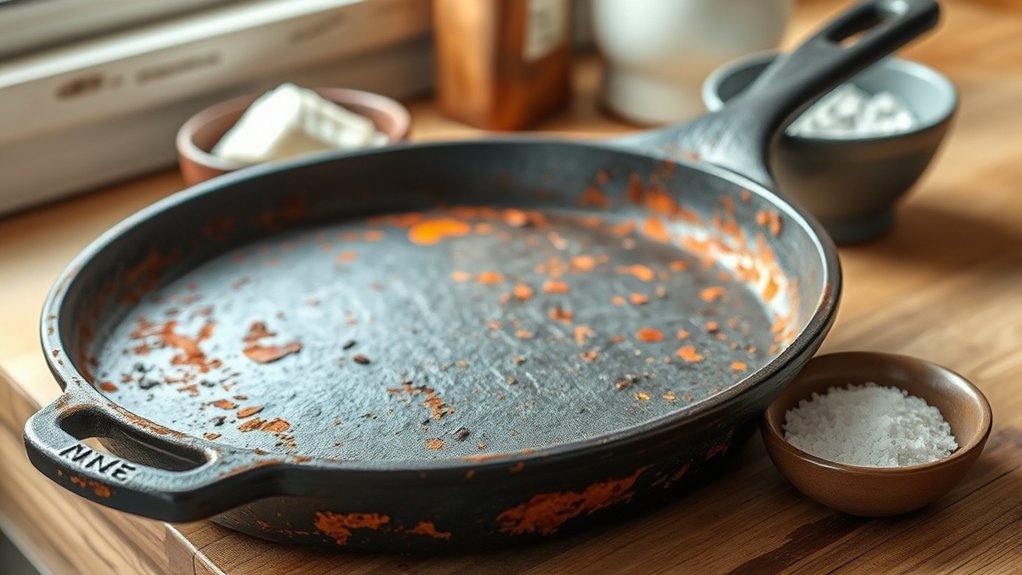
You can definitely save a rusty cast iron skillet if the rust is mostly surface-level and hasn’t caused deep pitting, cracks, or warping.
Start by scrubbing the rust off with steel wool or a salt paste, then dry it thoroughly.
After cleaning, re-season your skillet by baking a thin layer of oil to restore its protective coating.
If you want to know how to restore and maintain your skillet properly, keep exploring these steps.
Key Takeaways
- Surface rust on cast iron skillets can typically be removed through scrubbing with steel wool or vinegar baths.
- Deep pitting, cracks, or warping indicate structural damage that may require replacement rather than restoration.
- After cleaning rust, re-season the skillet by applying oil and baking it at 450°F for one hour to restore its protective coating.
- Thoroughly dry and oil the skillet immediately after cleaning to prevent new rust from forming.
- Regular maintenance, including drying, oiling, and proper storage, helps preserve the skillet and avoid future rust issues.
3 Signs Your Rusty Cast Iron Skillet Can Be Restored
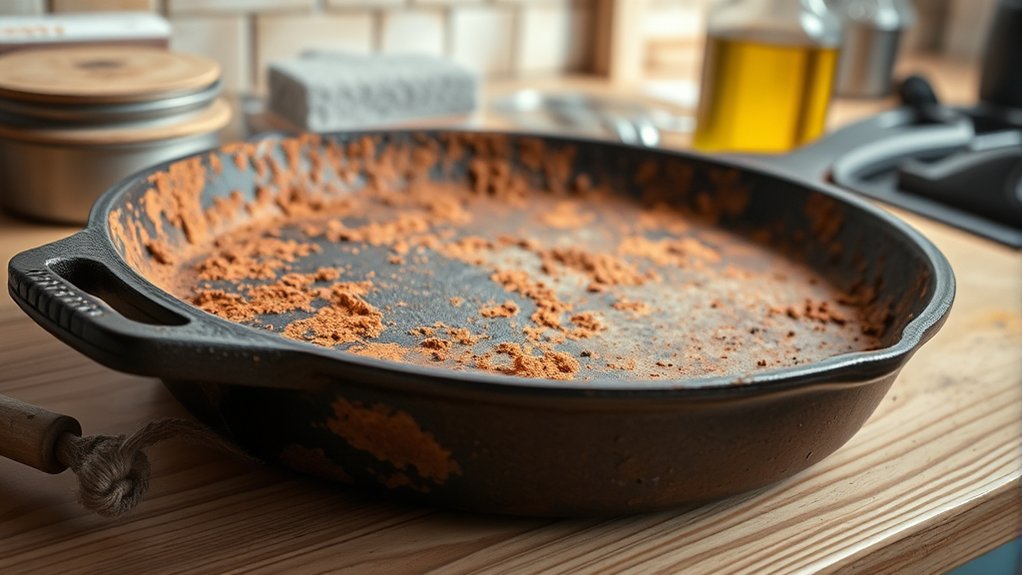
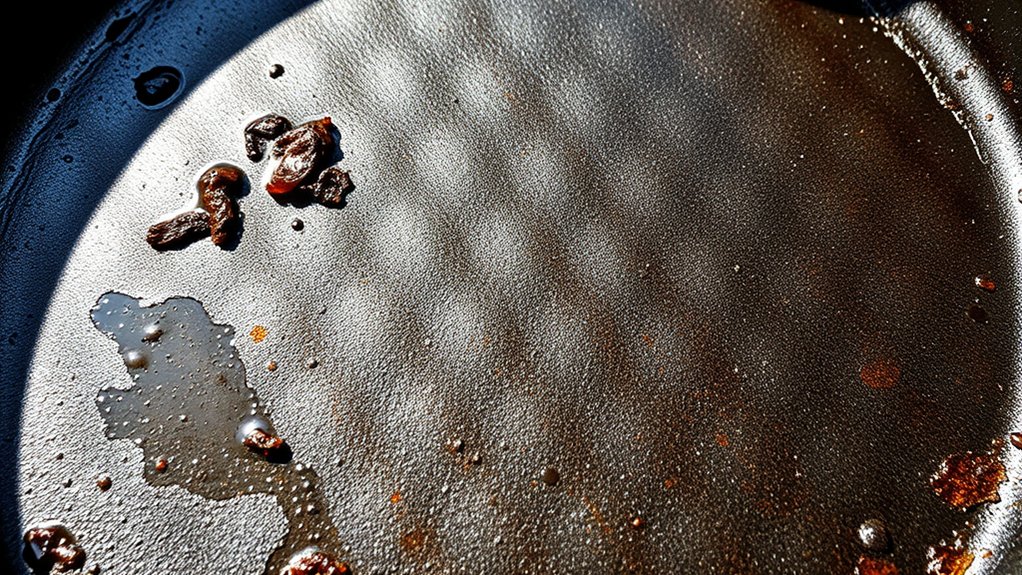
How can you tell if your rusty cast iron skillet is worth the effort to restore? First, assess the severity and depth of the rust. Surface rust caused by moisture exposure or improper storage is usually manageable with common restoration techniques like scrubbing with steel wool or using vinegar baths.
However, if the rust has caused pitting or deep corrosion, the skillet’s structural integrity may be compromised. Next, examine the skillet’s overall condition. Check for cracks, warping, or missing parts. These issues often stem from rust causes combined with physical damage and can make restoration impractical.
If your skillet shows only superficial rust without major damage, you can confidently proceed with restoration techniques to bring it back to functional condition.
When to Replace Your Rusty Cast Iron Skillet
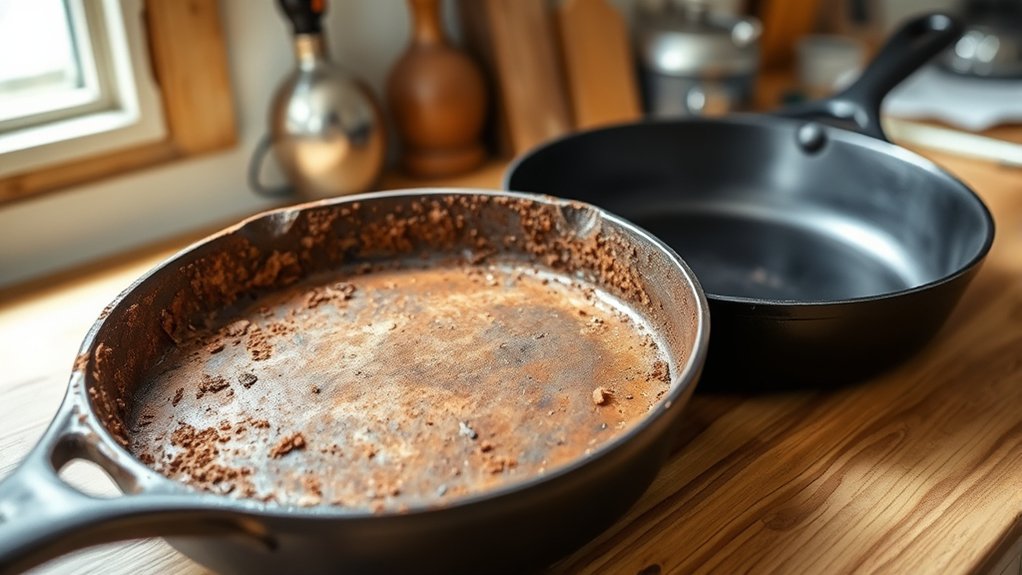
While many rusty cast iron skillets can be restored successfully, some conditions signal that replacement is a better option. Knowing the skillet lifespan and recognizing clear replacement indicators can save you time and effort.
Consider replacing your skillet if you notice:
Consider replacing your skillet if you notice deep cracks, warping, or severe corrosion beyond repair.
- Deep cracks or fractures compromising structural integrity.
- Extensive pitting that weakens the cooking surface.
- Warping that prevents even heating or stable placement.
- Severe corrosion that persists despite thorough cleaning.
If your skillet exhibits these signs, restoration may not be safe or effective. Since cast iron is durable, a well-maintained skillet lasts decades, but ignoring these indicators reduces performance and safety.
Prioritize replacement when damage surpasses practical repair limits, ensuring your cooking remains safe and enjoyable.
How to Clean Rust Off Your Cast Iron Skillet
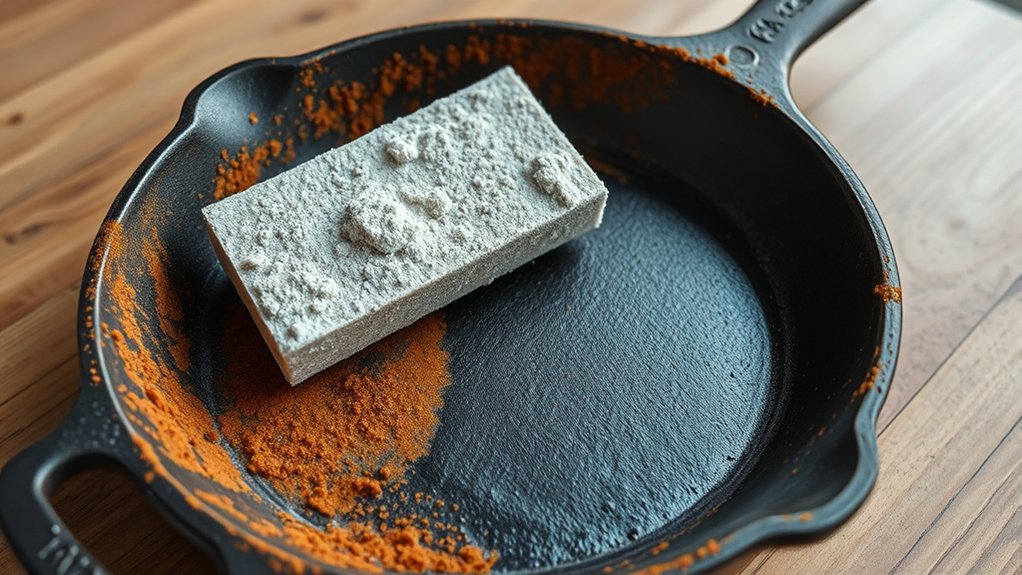
Removing rust from your cast iron skillet requires a combination of the right tools and techniques to restore its surface effectively. Start by scrubbing the rusted areas with steel wool or a stiff brush under warm water to loosen corrosion.
For stubborn rust, apply a paste of coarse salt and water, then scrub. Avoid harsh chemicals that can damage the metal.
After rust removal, thoroughly dry your skillet to prevent new rust from forming. Use rust removal techniques consistently with maintenance tips like regular oiling and drying immediately after washing to keep your skillet in top shape.
How to Re-Season Your Cast Iron Skillet
Once you’ve removed the rust and thoroughly dried your cast iron skillet, it’s crucial to re-season it to restore its non-stick surface and protect it from future corrosion. Follow these seasoning techniques for best results:
After removing rust and drying, re-season your cast iron to restore its non-stick surface and prevent corrosion.
- Preheat your oven to 450°F (232°C).
- Apply a thin, even layer of a high-smoke point oil such as flaxseed, grapeseed, or vegetable oil to the entire skillet.
- Place the skillet upside down in the oven with a foil-lined tray below to catch drips.
- Bake for one hour, then turn off the oven and let the skillet cool inside.
This process polymerizes the oil, forming a durable, protective coating. Proper oil types and application guarantee your skillet develops a resilient, smooth finish.
How to Prevent Rust on Cast Iron Skillets
After re-seasoning your cast iron skillet, keeping it rust-free becomes a priority to maintain its performance and longevity. Preventive maintenance starts with thorough drying after each use; never let moisture linger, as it accelerates rust formation.
Apply a thin layer of oil to the skillet’s surface immediately after drying to create a protective barrier. Proper storage is equally important. Store your skillet in a dry environment, avoiding damp areas.
If stacking with other cookware, place a paper towel between pieces to absorb moisture and prevent scratches. Regularly inspect your skillet for signs of wear or rust, addressing issues promptly.
Frequently Asked Questions
Can Rust Affect the Taste of Food Cooked in Cast Iron?
Yes, rust flavor can affect your food’s taste and isn’t safe for cooking. You’ll want to remove rust thoroughly to guarantee cooking safety and preserve your cast iron skillet’s performance without compromising flavor.
Is It Safe to Use Vinegar to Remove Rust From Cast Iron?
You can safely use vinegar for rust removal on cast iron, but don’t soak it too long to avoid damage.
Vinegar’s effectiveness depends on timing. Short exposure dissolves rust without harming the skillet’s seasoning.
How Long Does It Take to Fully Restore a Rusty Skillet?
It usually takes 2 to 4 hours to fully restore a rusty skillet using restoration techniques like scrubbing, soaking, and seasoning.
Follow maintenance tips: dry thoroughly and oil regularly to keep your cast iron in great shape long-term.
Can Rusted Cast Iron Cookware Be Used for Baking?
You can use rusted cast iron for baking only after thorough cleaning and re-seasoning. Proper baking techniques and rust prevention, like drying immediately and applying oil, guarantee your cookware stays safe and effective for long-term use.
Are Electric Stoves Better for Cast Iron Skillets Than Gas?
Of course, you want your cast iron to cool off slowly, right? Electric stove benefits include even heat distribution and less flare-ups, while gas stove drawbacks like hot spots can ruin your skillet’s seasoning and cooking consistency.
Conclusion
Restoring your rusty cast iron skillet is often worth the effort—did you know over 90% of rust issues can be fixed with proper cleaning and re-seasoning? If you spot surface rust, feel confident in saving it.
However, deep pitting or cracks usually mean replacement is safer. With the right care, you’ll extend your skillet’s life and enjoy its superior cooking for years.
Keep it dry and oiled to prevent rust from returning. A rusty cast iron skillet can be saved with patience and the proper steps to bring it back to life.

Leave a Reply