
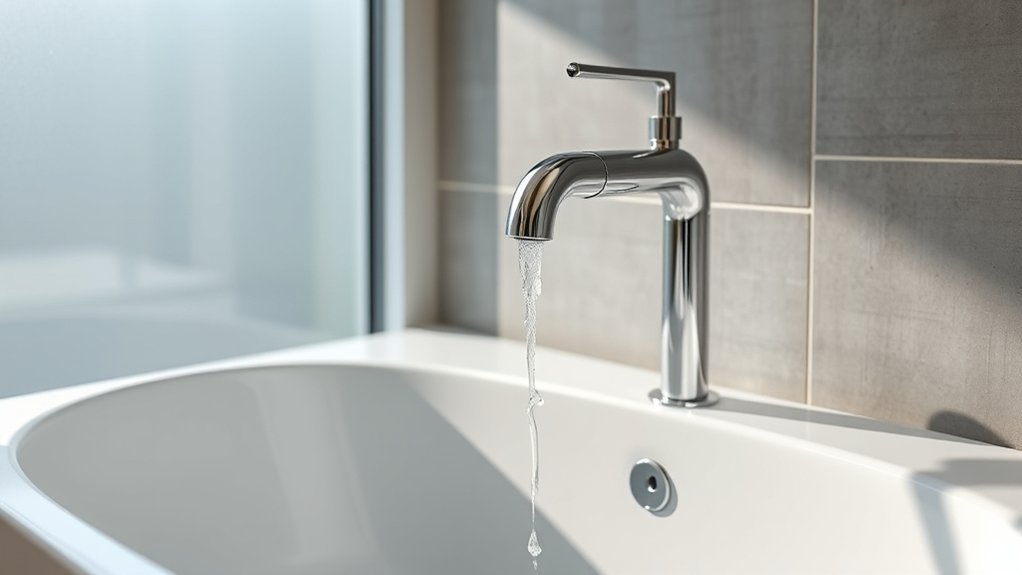
Can a sink faucet be used for a tub?
Generally, it is not effective to use a sink faucet for a tub because sink faucets deliver much lower flow rates (1.5–2.2 GPM) compared to tub faucets (4–7 GPM).
This results in very slow fill times, making it impractical for tub use.
Sink faucets also lack the durability, mounting styles, and temperature controls designed specifically for tubs.
Using one for a tub risks leaks, insufficient water flow, and potential safety issues.
However, certain temporary situations might allow it.
Keep exploring this topic to uncover the specific pros, cons, and installation factors involved.
Key Takeaways
- Sink faucets have lower flow rates (1.5-2.2 GPM) than tub faucets (4-7 GPM), causing slower tub filling times.
- Sink faucets aren’t designed for high water volume, risking leaks and inefficient tub filling.
- Mounting style and size differences make sink faucets incompatible with typical tub installations.
- Using a sink faucet on a tub can compromise temperature control and increase scalding risks.
- Sink faucets can be temporary solutions for small tubs if compatibility is confirmed, but tub-specific faucets are recommended.
Differences Between Sink Faucets and Tub Faucets
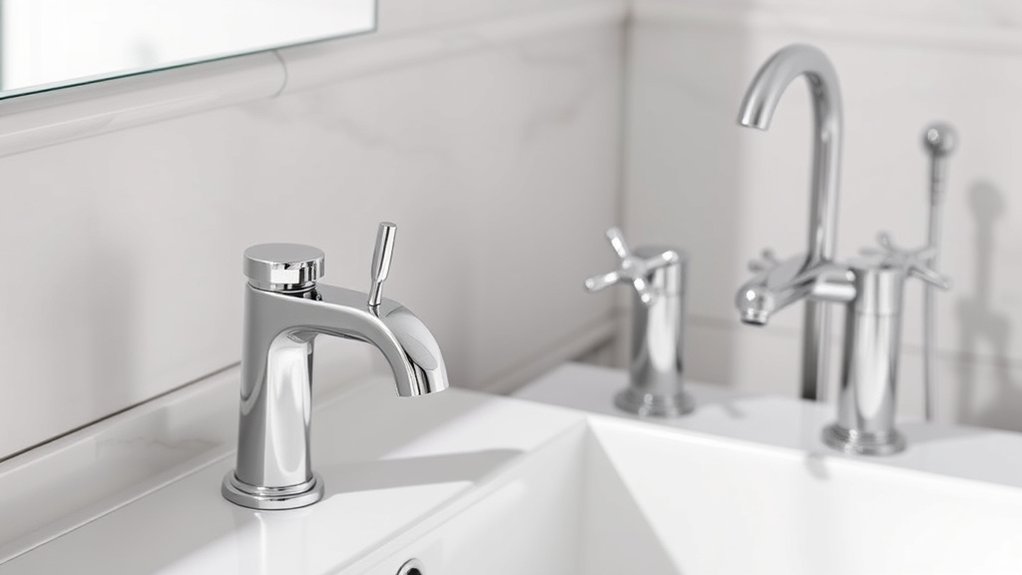
While both sink and tub faucets serve the primary purpose of controlling water flow, they differ markedly in design, size, and functionality. Sink faucet types generally include single-handle, double-handle, and touchless models, optimized for quick, moderate water delivery in a compact space.
In contrast, tub faucet designs are larger, built to deliver higher water volumes efficiently, and often feature diverters to switch between spout and showerhead. Tub faucets also accommodate broader mounting options, wall-mounted or deck-mounted, unlike sink faucets, which typically mount on the sink or countertop.
These distinctions reflect their intended uses: sink faucets prioritize precision and convenience, whereas tub faucets focus on volume and versatility. Understanding these fundamental differences helps you select the appropriate fixture for each application.
Can a Sink Faucet Provide Enough Water Flow for a Tub?
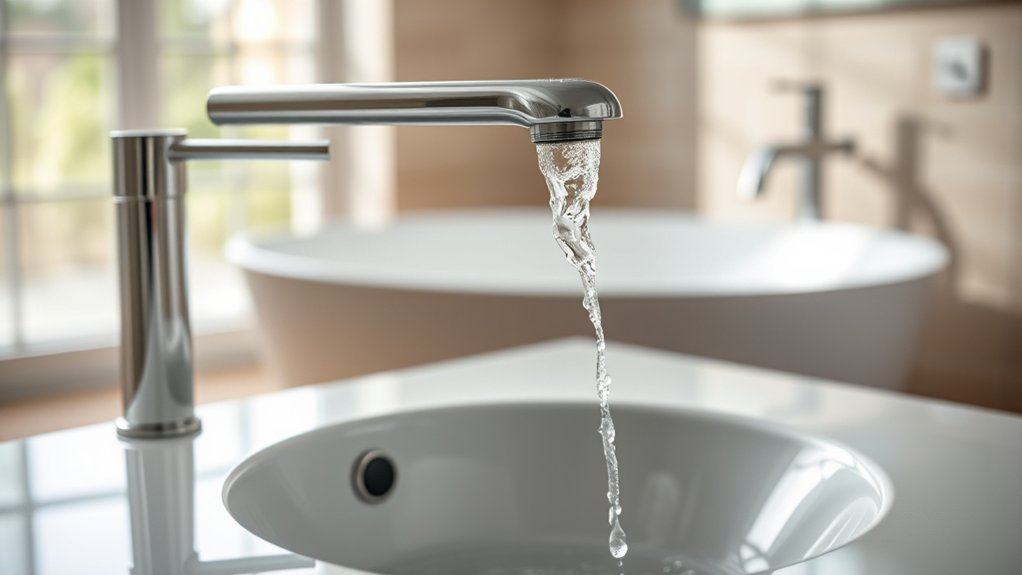
You’ll find that sink faucets typically deliver a lower flow rate than tub faucets, which means filling a tub will take considerably longer. The design of sink faucets often limits their water volume and pressure, making them less efficient for large volumes.
Understanding these flow and design differences is key before considering a sink faucet for your tub.
Water Flow Rate Comparison
Because tubs require a considerably higher volume of water to fill efficiently, a sink faucet often cannot provide the necessary flow rate. Sink faucets typically operate at flow rates between 1.5 to 2.2 gallons per minute (GPM), optimized for water efficiency and flow regulation to prevent waste.
In contrast, tub faucets deliver 4 to 7 GPM to accommodate larger volumes. Using a sink faucet for a tub compromises your ability to fill the tub in a reasonable time. Additionally, the built-in flow regulation in sink faucets limits maximum output, maintaining efficiency but reducing capacity.
If you prioritize practical use over strict water conservation, relying on a sink faucet will likely result in slower fills, undermining the tub’s design intent and your overall experience.
Tub Filling Time
Although a sink faucet can technically fill a tub, its lower flow rate means it will take considerably longer than a standard tub faucet. When evaluating tub filling time, you need to assess tub filling efficiency and faucet compatibility. Using a sink faucet reduces efficiency due to limited water volume delivered per minute.
To optimize tub filling time with a sink faucet, keep these factors in mind:
- Flow rate differences directly extend fill duration.
- Faucet compatibility affects water pressure delivery.
- Tub size determines total volume requiring fill.
- Water heater capacity influences temperature consistency during filling.
In practical terms, expect a sink faucet to take roughly two to three times longer than a dedicated tub spout. This delay impacts your overall bathing experience and should guide your decision when assessing faucet options.
Faucet Design Limitations
Understanding how faucet design impacts water flow is key when considering a sink faucet for tub filling. Sink faucets typically have smaller spouts and lower flow rates, which can lead to extended filling times for a tub.
You’ll also face faucet compatibility issues, as sink faucets aren’t engineered to handle the higher volume demands of a tub. From a technical standpoint, the internal valve size and aerator restrict water output, limiting efficiency.
Additionally, aesthetic considerations come into play; a sink faucet may look out of place on a bathtub, disrupting the overall bathroom design. While you might physically connect a sink faucet to a tub, the practical limitations, including reduced flow, longer fill times, and potential styling conflicts, make it an impractical choice for tub filling.
What’s Different About Installing Sink vs. Tub Faucets?
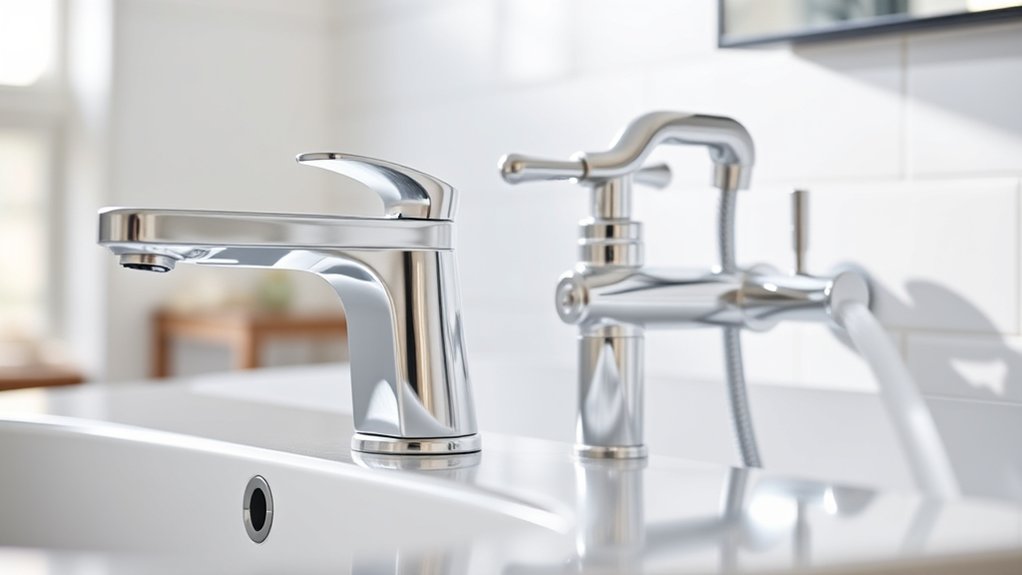
When installing faucets, you’ll notice sink and tub models differ in mounting style and size, affecting compatibility. You’ll also need to take into account water flow and pressure requirements, as tubs demand higher capacity than sinks.
Finally, durability and material choices matter since tub faucets face more wear and moisture exposure.
Mounting and Size Differences
Since sink and tub faucets serve different purposes, their mounting requirements and sizes vary considerably. You need to evaluate mounting height and size compatibility carefully to guarantee proper installation. Tub faucets generally require a lower mounting height to fill the larger basin efficiently, whereas sink faucets are mounted higher to accommodate handwashing and smaller bowls. When adapting a sink faucet for a tub, mismatched dimensions often cause installation challenges.
- Tub faucets have larger spouts and wider bases for stability and flow.
- Sink faucets use smaller, more compact designs to fit limited space.
- Mounting holes on tubs differ in diameter and spacing from sinks.
- The height from the mounting surface to spout outlet varies to suit function.
Understanding these differences helps avoid leaks and assures secure fitting.
Water Flow and Pressure
Although sink and tub faucets may appear similar, their water flow rates and pressure requirements differ greatly to meet their distinct functions. When installing a faucet for a tub, you need higher water pressure to fill the larger volume efficiently, whereas sink faucets operate effectively with lower pressure due to smaller basin capacity.
Sink faucets prioritize flow efficiency to minimize splashing and conserve water, delivering a steady, controlled stream. Tub faucets, however, demand a robust flow rate to reduce filling time. Using a sink faucet on a tub often results in inadequate water pressure and slow fill times, compromising functionality.
Consequently, you must consider these hydraulic differences carefully; selecting a faucet designed for the intended fixture guarantees peak water pressure and flow efficiency tailored to your specific installation.
Durability and Material Considerations
Water flow and pressure demands directly influence the durability requirements and material choices for faucets. When considering a sink faucet for tub installation, you must prioritize material durability to guarantee faucet longevity. Tub faucets endure higher water volume and frequent use, so they require sturdier construction.
Key factors include:
- Corrosion-resistant materials like brass or stainless steel
- Robust internal components to handle increased pressure
- Seal quality to prevent leaks under sustained flow
- Finish durability to withstand cleaning and moisture exposure
Sink faucets often use lighter materials or less durable seals, which may fail prematurely in tub applications. To maintain faucet longevity, choose fixtures designed or rated for tub use, emphasizing materials and build quality that meet these elevated demands.
Risks of Using a Sink Faucet on Your Tub
When you install a sink faucet on your tub, you expose yourself to several functional and safety risks. Sink faucets often lack proper faucet compatibility with tub plumbing, leading to leaks or inadequate water flow.
Their design doesn’t account for the higher water volume required by tubs, which can result in insufficient filling speed. Additionally, sink faucets usually offer limited water temperature control, increasing the risk of scalding or discomfort during use.
The materials and seals in sink faucets may not withstand prolonged exposure to hot water typical in tubs, accelerating wear and potential failure. These factors combine to reduce both the efficiency and safety of your tub setup, making a sink faucet a less suitable and potentially hazardous choice for tub installation.
When Is It Okay to Use a Sink Faucet for Your Tub?
Under what circumstances can you safely use a sink faucet for your tub? You can consider alternative uses of a sink faucet when certain criteria guarantee faucet compatibility and functionality.
First, confirm the water pressure requirements match the tub’s capacity. Second, verify the faucet’s spout length reaches adequately over the tub rim. Third, guarantee the faucet’s mounting and connection type align with the tub’s plumbing fixtures.
Ensure water pressure, spout length, and mounting type are compatible with your tub’s plumbing setup.
Fourth, confirm the faucet’s durability suits prolonged water exposure typical for tubs. If these conditions are met, using a sink faucet as an alternative can work temporarily or in specific setups, like small utility tubs or retrofit projects.
Always prioritize compatibility to avoid leaks, insufficient flow, or premature faucet failure.
Better Faucet Options for Your Tub
While a sink faucet can serve as a temporary solution for certain tubs, selecting a faucet designed specifically for tub use will provide better performance and durability. Tub faucet alternatives such as wall-mounted or deck-mounted faucets accommodate higher water flow rates and often include diverters for showerheads, features absent in most sink faucet styles.
These specialized fixtures are engineered to withstand prolonged exposure to water and frequent temperature adjustments, guaranteeing longevity. When choosing a tub faucet, consider materials like brass or stainless steel for corrosion resistance and models with ceramic disc valves for leak prevention.
Although some sink faucet styles might mimic the aesthetic you want, they lack the functional specifications required for tubs. Prioritizing purpose-built tub faucets guarantees safety, efficiency, and a more reliable plumbing system.
Frequently Asked Questions
How Do You Maintain a Sink Faucet Compared to a Tub Faucet?
You maintain a sink faucet by regularly cleaning aerators and checking seals, while tub faucet maintenance involves cleaning spouts and inspecting diverters. Both require faucet maintenance using precise cleaning techniques to prevent buildup and guarantee smooth operation.
Can a Sink Faucet Be Converted to a Tub Faucet?
You can’t directly convert a sink faucet to a tub faucet due to faucet compatibility and installation challenges.
Tub faucets require specific flow rates and mounting, so you’d need to replace it with a tub-specific model for proper function.
What Materials Are Best for Tub Faucets?
Wondering which faucet materials guarantee durability for tub faucet types? You’ll want brass or stainless steel. They resist corrosion and handle water pressure well.
Avoid plastic; it’s less sturdy and wears out faster over time.
How Does Water Pressure Affect Faucet Performance?
You’ll notice water flow weakens if water pressure’s low, causing inconsistent pressure balance. Maintaining proper pressure guarantees steady flow and ideal faucet performance, preventing issues like sputtering or temperature fluctuations during use.
Are There Eco-Friendly Faucet Options for Tubs?
Imagine your tub faucet as a green guardian. Yes, you can find eco-friendly options crafted from sustainable materials, equipped with water-saving technologies that precisely reduce flow without sacrificing comfort.
These faucets help you conserve water efficiently.
Conclusion
While a sink faucet might physically fit on your tub, it won’t deliver the flow or durability you need for a proper fill. Using a sink faucet on a tub risks leaks, inadequate water pressure, and installation challenges.
Yet, in a pinch, it can work temporarily—but only with caution.
Ultimately, choosing a faucet designed specifically for tubs guarantees reliable performance and longevity. This makes the extra effort and cost a practical investment in your bathroom’s function. For these reasons, a sink faucet is not ideal for a tub.


Leave a Reply