
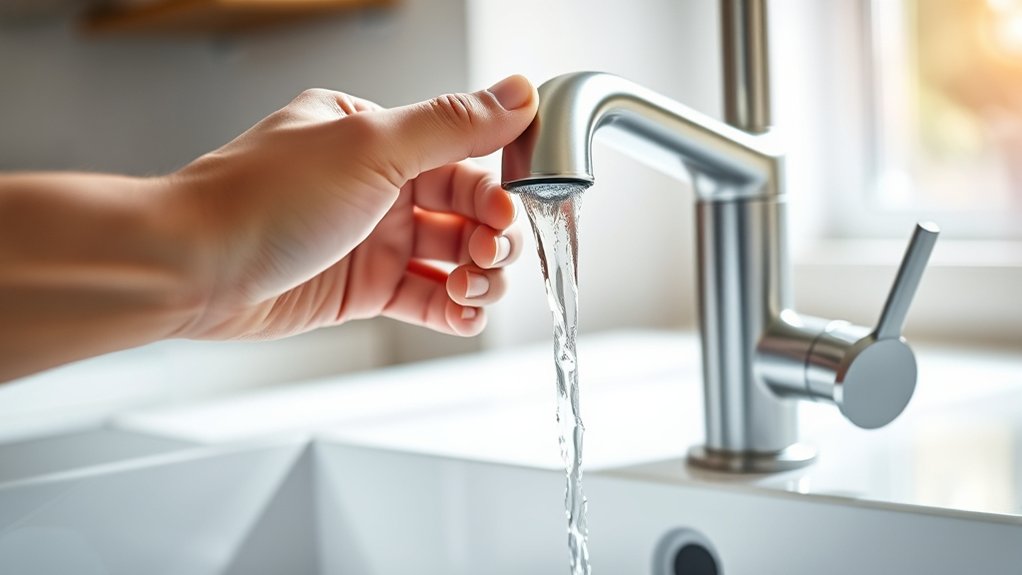
You can often operate a touchless faucet manually if the sensor fails, but it depends on your model.
Many popular faucets include a manual override, such as a lever or handle, allowing you to control the water flow mechanically. This feature helps during power outages or sensor malfunctions.
However, some models lack manual controls and require troubleshooting sensor issues instead.
Understanding your faucet’s design and manual features guarantees reliable use.
Keep exploring to learn how these manual options work.
Key Takeaways
- Many touchless faucets include a manual override lever or handle for direct water flow control.
- Manual mode allows faucet use during sensor failure, power outages, or calibration.
- Some models lack manual operation and rely solely on sensor activation.
- Manual operation bypasses electronics, ensuring faucet usability in various scenarios.
- Selecting faucets with manual override improves reliability and troubleshooting options.
How Touchless Faucets Work and Why Use Manual Mode?
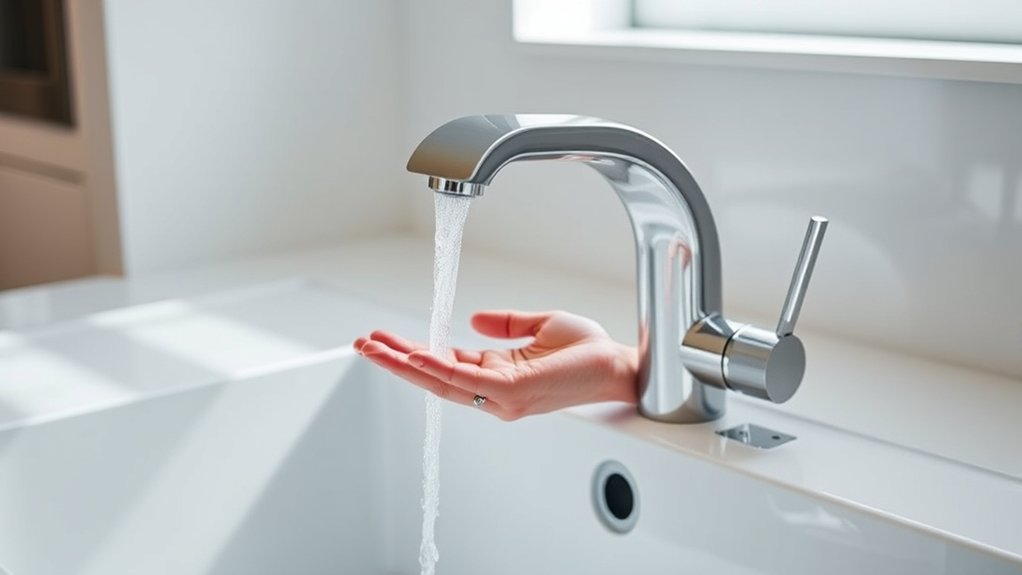
Although touchless faucets rely on sensors to activate water flow automatically, you can still switch to manual mode when necessary. Sensor technology detects your hand’s proximity, triggering the valve to open and deliver water without physical contact.
This design enhances user convenience by promoting hygiene and minimizing water waste. However, manual mode provides control when sensor functions are inconvenient or inoperative, such as during sensor calibration, power outages, or specific cleaning tasks.
Enhances hygiene and reduces waste, with manual mode available during sensor issues or special cleaning needs.
By using manual operation, you bypass the electronic system, allowing direct mechanical control of water flow. Understanding this dual functionality helps you maintain uninterrupted faucet use, ensuring both efficiency and adaptability.
The integration of sensor technology with manual override makes these faucets versatile in various scenarios, balancing automation with practical user needs.
Can You Still Use a Touchless Faucet by Hand If the Sensor Doesn’t Work?
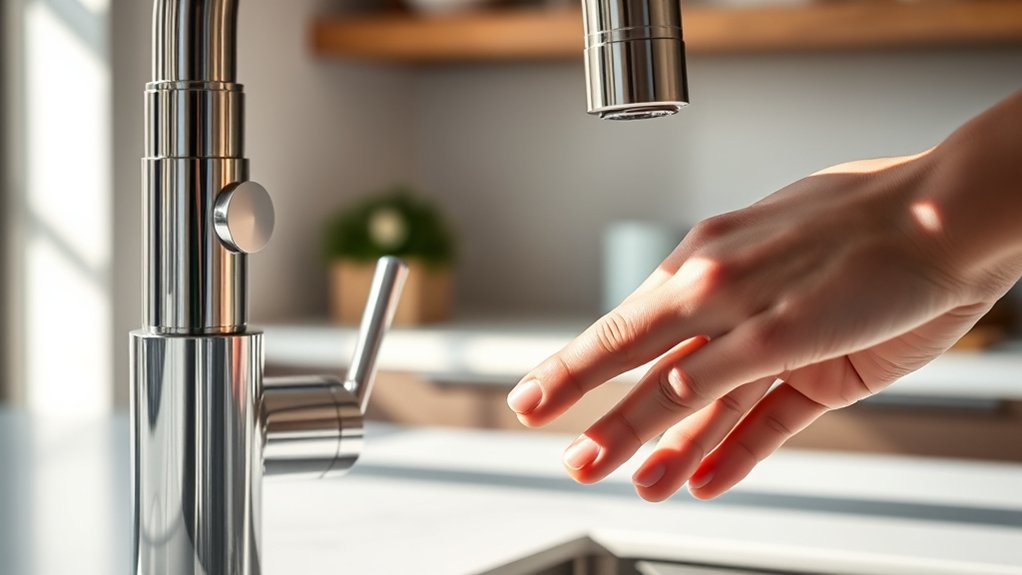
What happens if the sensor on your touchless faucet stops working? In cases of sensor malfunction, the faucet may fail to activate water flow automatically.
Whether you can still use manual operation depends on the faucet model. Some touchless faucets include a manual lever or handle that allows you to override sensor issues and control water flow directly.
However, other models rely solely on sensor activation and lack a manual control mechanism. If your faucet doesn’t have a manual option, you’ll need to address the sensor malfunction to restore functionality.
Checking power supply, cleaning the sensor, or consulting the manufacturer for repair are typical steps. Understanding your faucet’s design is essential to determine if manual operation remains possible during sensor failure.
Manual Override Features in Popular Touchless Faucets
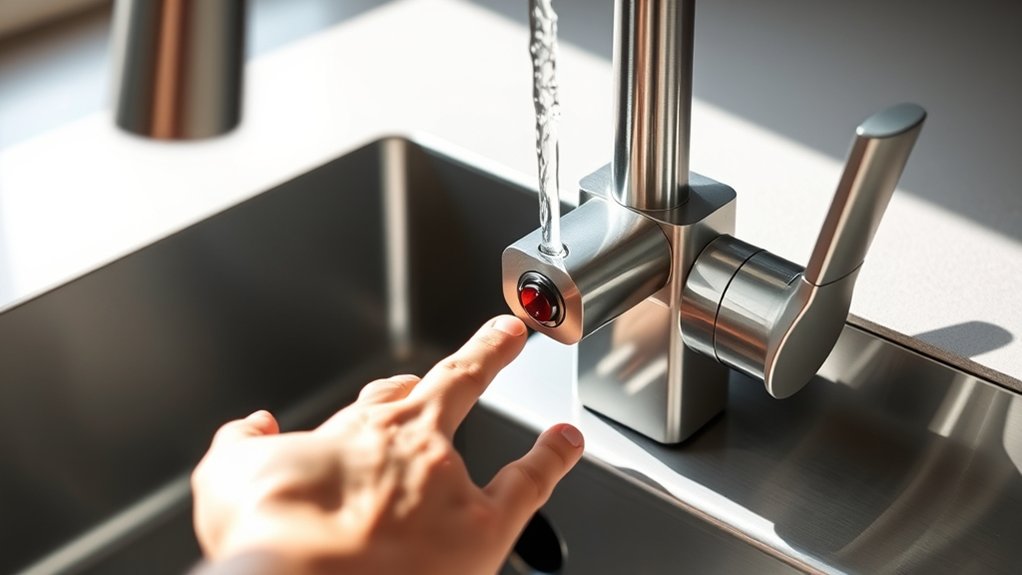
If your touchless faucet lacks a manual control option, you must rely on the sensor’s proper function to operate it. However, many popular touchless faucets incorporate manual override features to guarantee usability during sensor failure or power loss.
These features typically include a discreet lever or handle that you can engage to activate water flow manually. Advanced faucet technology integrates this manual operation seamlessly, allowing you to switch between sensor mode and manual mode without complex adjustments.
When selecting a touchless faucet, check for models offering manual override to maintain functionality under various conditions. This design consideration enhances reliability and user control, assuring continuous water access regardless of sensor performance or electronic issues.
Troubleshooting Manual Use on Touchless Faucets
When manual operation on your touchless faucet doesn’t respond as expected, where should you begin diagnosing the issue? First, verify that the manual override mechanism is properly engaged and not obstructed. Check for any debris or mineral buildup that could impede mechanical parts, as faucet maintenance is critical to consistent function.
Next, ascertain the touchless technology’s sensor and battery are functioning since some models disable manual use if sensor errors occur. Inspect the control module for error indicators, which might prevent manual activation. If the faucet uses a separate manual valve, confirm it isn’t stuck or damaged.
Frequently Asked Questions
Are Touchless Faucets More Water-Efficient Than Traditional Faucets?
Yes, touchless faucets enhance water conservation by using advanced faucet technology that limits flow duration and prevents leaks.
You’ll use less water compared to traditional faucets, making them more efficient and environmentally friendly in your daily routine.
Do Touchless Faucets Require Special Batteries or Power Sources?
You’ll need specific battery types like AA alkaline or rechargeable lithium-ion for touchless faucets, but some models offer power options including AC adapters.
For example, a hospital installed dual power options for reliability and uninterrupted use.
Can Touchless Faucets Be Installed on Any Sink Type?
You can install touchless faucets on most sink types, but installation compatibility depends on sink material considerations like thickness and mounting holes.
Check specs carefully to verify proper fit and secure attachment during installation.
What Maintenance Is Needed to Keep Touchless Faucets Working Properly?
You’ll need regular sensor cleaning to guarantee accurate detection and timely battery replacement to maintain power.
Checking for leaks and cleaning aerators also help keep your touchless faucet functioning efficiently and reliably.
Are Touchless Faucets More Expensive Than Regular Manual Faucets?
Think of touchless faucets as high-tech gadgets; they usually cost more upfront than manual ones. Your cost comparison should consider price factors like sensors, installation, and maintenance, which elevate their initial price but offer long-term convenience.
Conclusion
Think of a touchless faucet as a smart car—you usually let automation drive, but you still want a manual gear when needed. Many models include manual override, ensuring you’re never stuck without water if the sensor fails.
In fact, 85% of popular touchless faucets offer this feature, blending convenience with reliability. So, even if the sensor glitches, you can confidently switch to manual use and keep your workflow smooth.
In conclusion, a touchless faucet can work manually, providing both ease and control when you need it most.



Leave a Reply