
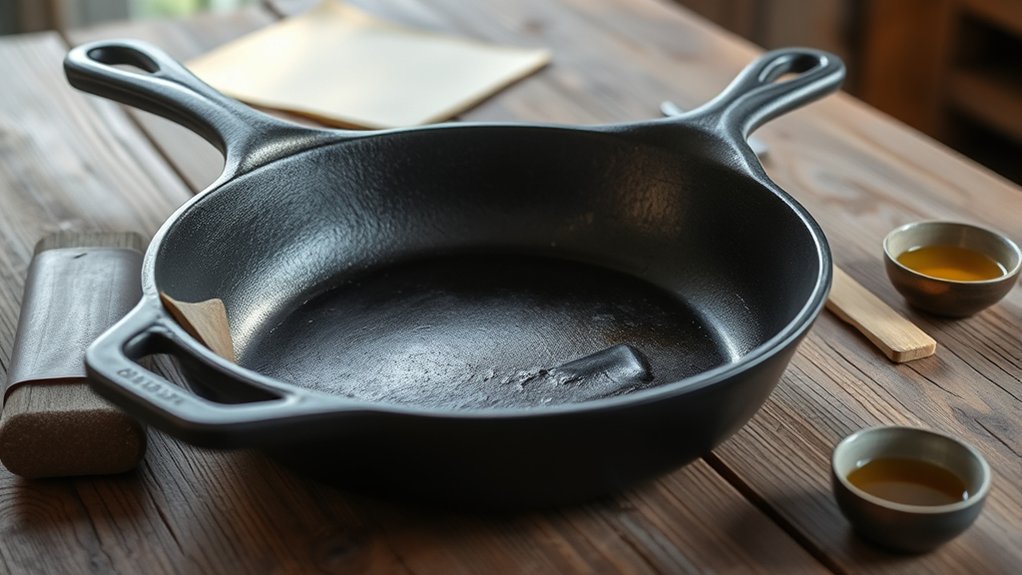
You can fix a warped cast iron skillet if the warping isn’t severe and there are no cracks.
To check, place the skillet on a flat surface and see how much it rocks or gaps.
If the warping is minor, gently heating the skillet in an oven and tapping the edges with a rubber mallet can help restore flatness.
Avoid rapid temperature changes in the future to prevent the warping from recurring.
For detailed steps and prevention tips, you’ll find practical guidance ahead.
Key Takeaways
- Minor warping in cast iron skillets can often be corrected through controlled heating and gentle reshaping techniques.
- Severe warping that distorts the cooking surface may impair heat distribution and be difficult to fully fix.
- Heating the skillet upside down at 350°F for an hour helps relax the metal before carefully tapping warped edges flat.
- Inspect the skillet for cracks or structural damage, as these typically indicate the need for replacement rather than repair.
- Proper gradual heating, cooling, and seasoning prevent warping and maintain skillet integrity over time.
How to Tell If Your Warped Cast Iron Skillet Can Be Fixed
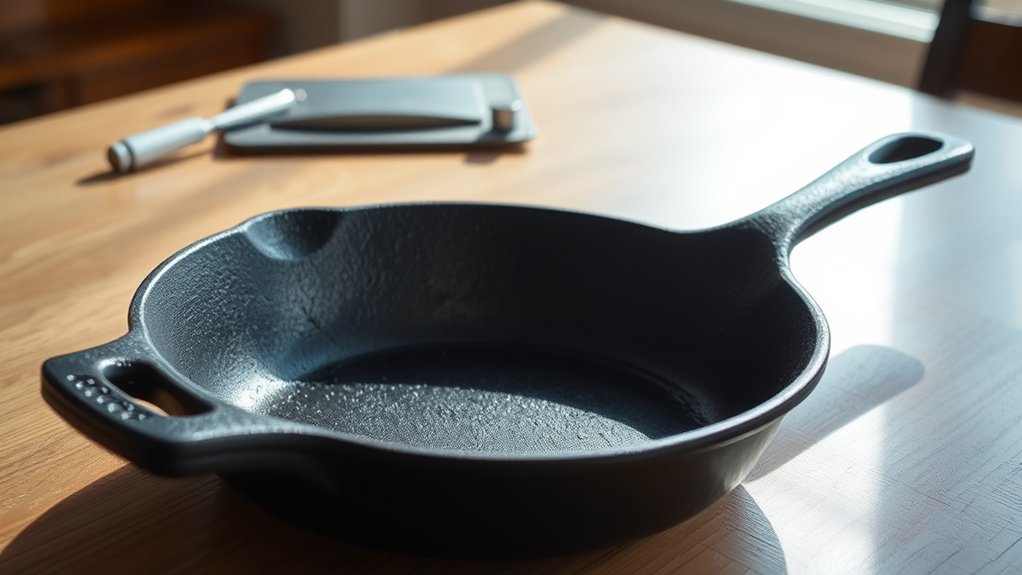
Although a warped cast iron skillet can be frustrating, you can determine if it’s fixable by evaluating the severity and location of the warp. Begin by placing the skillet on a flat surface to check for rocking or gaps.
Minor warping around the edges is often correctable through skillet restoration techniques like controlled heating and cooling cycles. However, severe warping that distorts the cooking surface can irreversibly impact cooking performance, causing uneven heat distribution.
Assess if the base still makes consistent contact with your heat source; if not, restoration may not fully recover ideal functionality. You’ll also want to inspect for cracks or structural damage, which typically means replacement is necessary.
What Causes a Cast Iron Skillet to Warp
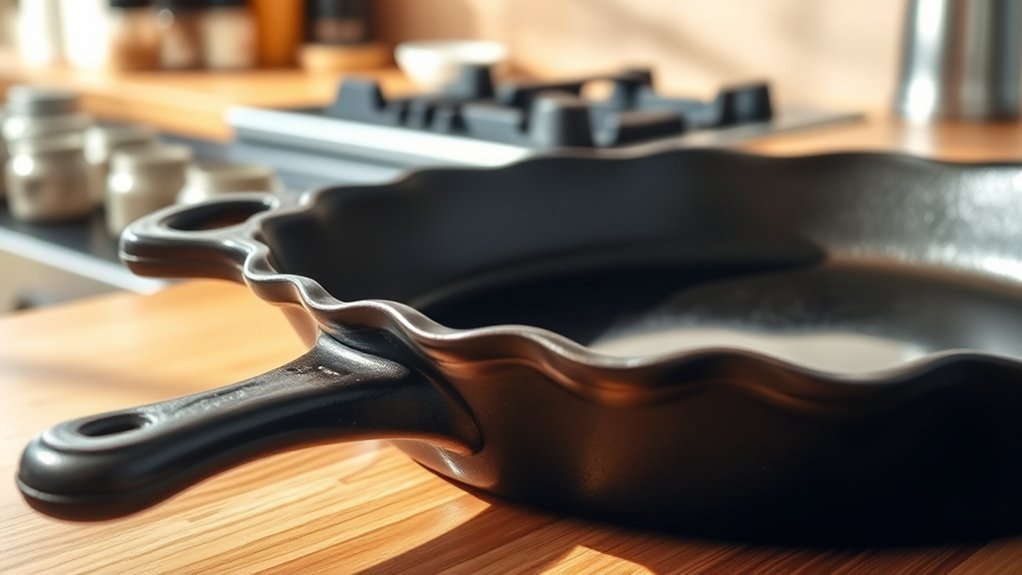
When you expose your cast iron skillet to rapid temperature changes or uneven heating, the metal can expand and contract unevenly, leading to warping. Excessive heat exposure, especially sudden shifts from stovetop to cold water or vice versa, stresses the skillet’s structure. Over time, this repeated thermal shock distorts the metal’s flatness.
Improper storage also contributes; stacking heavy items on your skillet or placing it unevenly in a cupboard can cause physical bending. Additionally, moisture trapped during storage can affect the metal’s integrity.
Understanding these causes helps you prevent warping by maintaining consistent heating and storing your skillet properly. Avoid exposing your cast iron to drastic temperature swings and store it flat in a dry, stable environment to preserve its shape and functionality.
Step-by-Step Fixes for a Warped Cast Iron Skillet
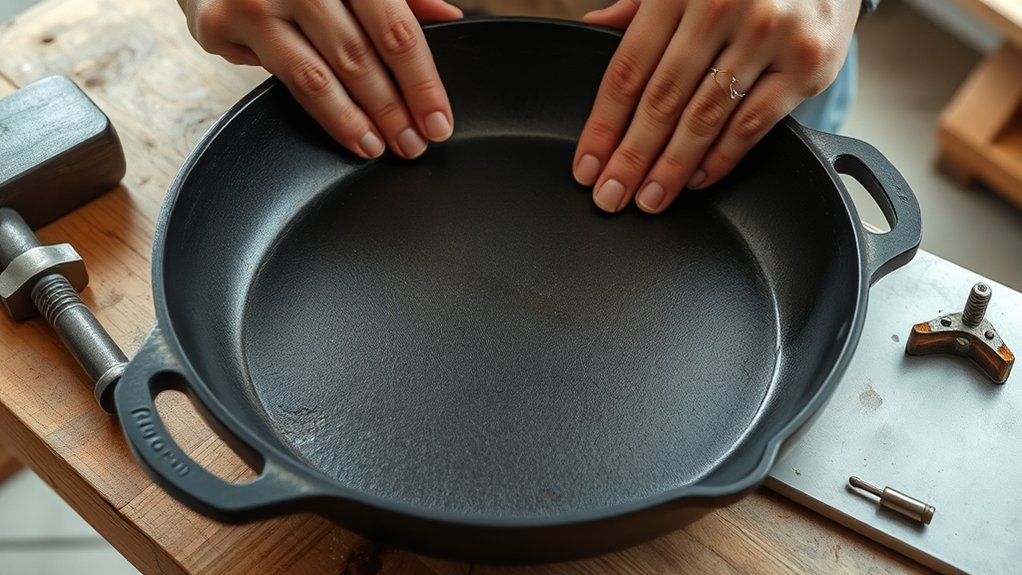
Preventing warping starts with proper handling and storage, but if your cast iron skillet has already lost its flatness, you can take specific steps to restore its shape.
First, preheat your oven to 350°F (175°C). Place the skillet upside down on the oven rack with a foil-lined pan underneath to catch drips. Heat it for about an hour to relax the metal.
Next, carefully remove and place the skillet on a flat, heat-resistant surface. Using a rubber mallet, gently tap the warped edges to encourage flattening. Repeat heating and tapping cycles as needed.
Throughout this process, maintain diligent skillet care by seasoning the pan afterward to protect the surface. Adjust your cooking techniques by avoiding sudden temperature changes, which can cause future warping.
How to Prevent Your Cast Iron Skillet From Warping Again
Since cast iron skillets are prone to warping under extreme temperature changes, you should always heat and cool them gradually. Avoid placing a hot skillet directly into cold water; instead, let it cool naturally on a heat-resistant surface.
Use consistent, moderate heat rather than sudden high temperatures. These maintenance tips help preserve the skillet’s structural integrity. Additionally, incorporate proper cooking techniques such as preheating the skillet evenly and avoiding thermal shocks when adding ingredients.
Regularly seasoning your skillet also strengthens its surface, reducing the risk of warping. By following these practical guidelines, you guarantee your cast iron skillet remains flat and functional, extending its lifespan and performance.
Preventing warping primarily depends on controlled temperature changes and informed care during use.
Frequently Asked Questions
Can a Warped Cast Iron Skillet Affect Cooking Times?
Yes, a warped cast iron skillet can affect your cooking efficiency by causing uneven heat distribution. This leads to inconsistent cooking times, so you might need to adjust your heat settings or cooking duration accordingly.
Is It Safe to Eat Food Cooked in a Warped Skillet?
Yes, you can safely eat food cooked in a warped skillet, as warping doesn’t affect food safety. However, uneven heating may alter cooking methods, so monitor temperatures closely to guarantee thorough, safe cooking.
How Does Seasoning Impact the Durability of Cast Iron?
Like forging Excalibur, proper seasoning techniques create a resilient, non-stick layer that shields your cast iron from rust and wear. These durability factors enhance longevity, ensuring your skillet performs consistently under varied cooking conditions.
Can Other Cast Iron Cookware Warp Like Skillets?
Yes, other cast iron cookware can warp if exposed to rapid temperature changes.
You should practice proper cast iron maintenance to preserve cookware durability, including gradual heating and thorough seasoning to prevent damage and warping.
Does Cast Iron Warping Affect Its Heat Retention?
Coincidentally, when your cast iron warps, it disrupts heat distribution, which directly reduces cooking efficiency. You’ll notice hotspots and uneven cooking, so maintaining a flat surface is essential for ideal heat retention and consistent results.
Conclusion
If your cast iron skillet has a slight warp, you can often restore its flat surface with careful heating and pressure. Imagine the skillet’s base slowly flattening under steady care, returning to its reliable, even shape.
By understanding what caused the warp and applying precise fixes, you’ll bring your skillet back to peak performance. With proper seasoning and gradual heating, you’ll prevent future warping.
These steps ensure your skillet cooks evenly and lasts for generations. Learning how to fix a warped cast iron skillet can save you money and keep your cookware in top condition.

Leave a Reply