
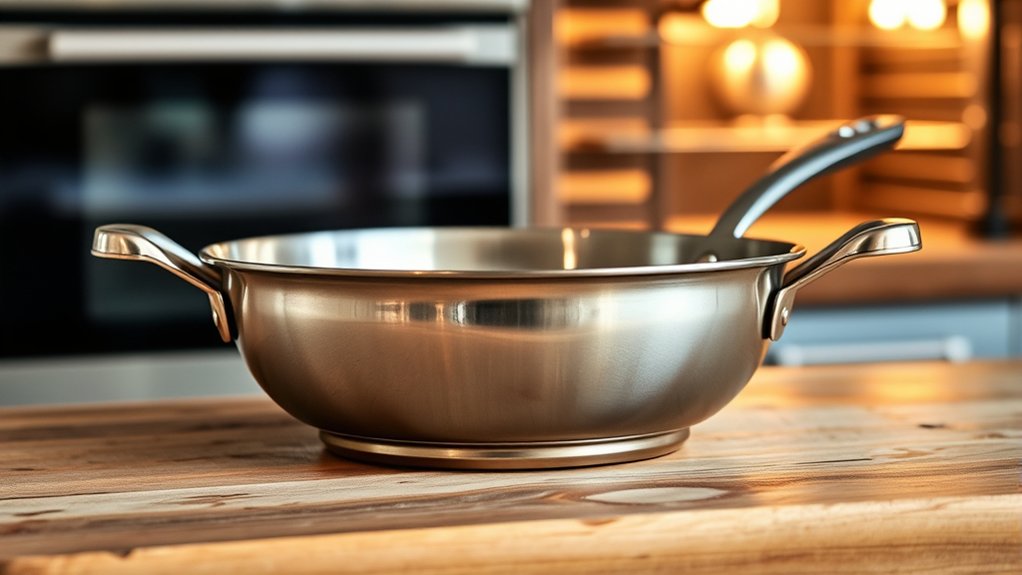
Yes, you can safely use your All-Clad skillet in the oven. Most models feature durable stainless steel construction that withstands temperatures up to 600°F.
Just confirm your skillet’s handle and lid materials—stainless steel handles are oven-safe, but plastic or silicone may have lower heat limits.
Always follow temperature guidelines and use oven mitts for handling.
To get the best results and guarantee long-lasting performance, you’ll want to understand proper use, maintenance, and safety tips in detail.
Key Takeaways
- All-Clad skillets are generally oven-safe due to their stainless steel and aluminum construction.
- Verify the handle material; stainless steel handles are oven-safe, while non-metal handles may not be.
- Most All-Clad stainless steel skillets can withstand oven temperatures up to 600°F.
- Avoid sudden temperature changes and do not exceed manufacturer-recommended heat limits.
- Always use oven mitts when handling hot skillets and place them on the middle oven rack for even heating.
Can You Safely Use All-Clad Skillets in the Oven?
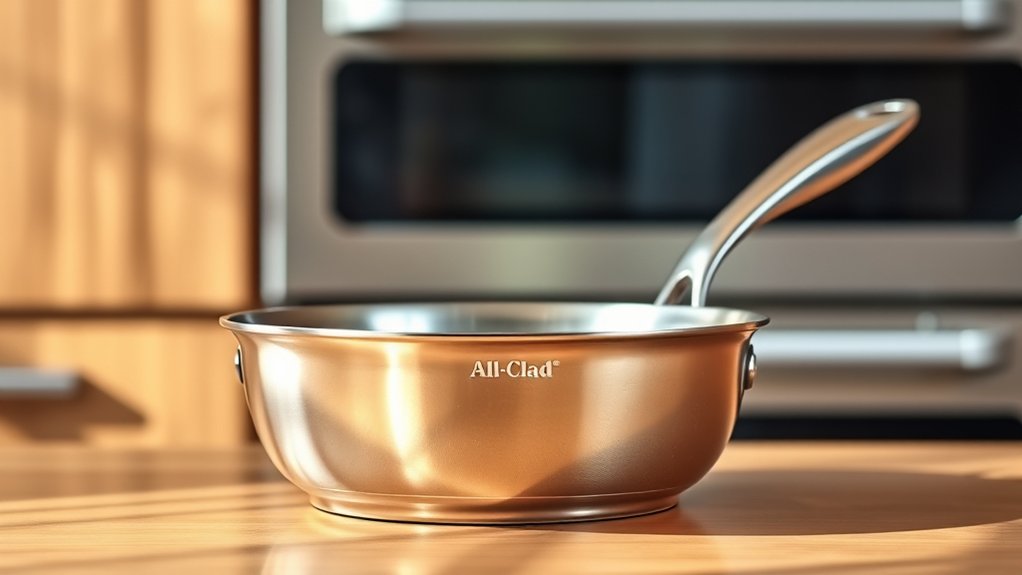
Wondering if you can safely use All-Clad skillets in the oven? Yes, you can, but it’s essential to follow specific safety precautions to protect your cookware and guarantee the best results.
All-Clad skillets are designed with durable stainless steel and aluminum cores, making them oven-safe for many cooking techniques, including searing, braising, and finishing dishes. However, before placing your skillet in the oven, check that the handle and any attached components are also oven-safe.
Avoid exposing non-metal handles or parts to high heat. Using All-Clad skillets in the oven lets you seamlessly shift from stovetop to oven, enhancing your cooking versatility.
Oven Temperature Limits for All-Clad Skillets
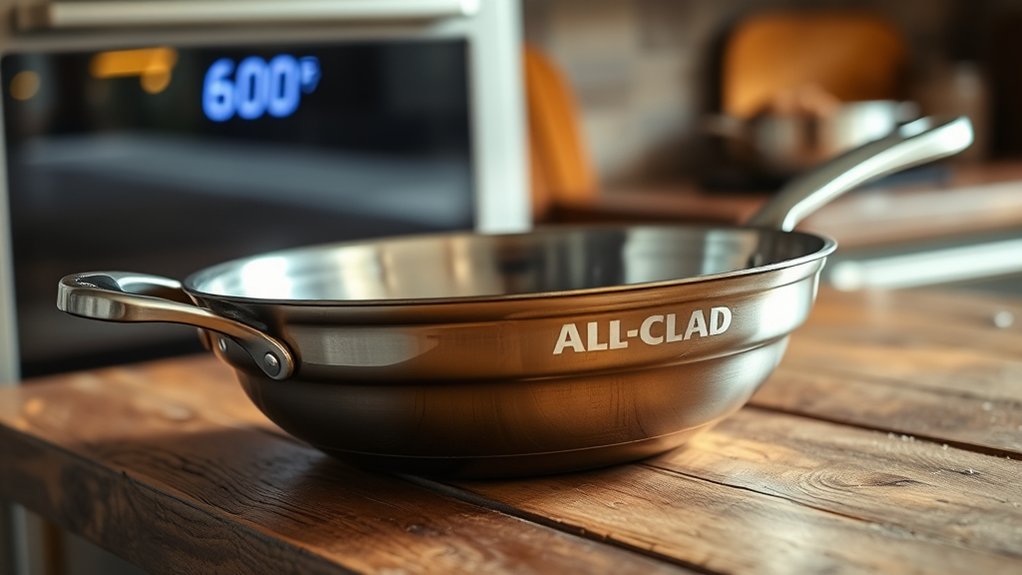
Using your All-Clad skillet in the oven adds flexibility to your cooking, but you need to be mindful of the temperature limits to avoid damaging your cookware. All-Clad stainless steel skillets generally withstand oven temperatures up to 600°F, following standard oven temperature guidelines.
However, if your skillet has non-metal handles or silicone grips, those parts may have lower heat tolerances, so check specific product details first. To keep your skillet in top shape, avoid sudden temperature changes and monitor the oven temperature carefully.
These skillet usage tips help prevent warping or discoloration. Always refer to the manufacturer’s instructions for your exact model to guarantee safe oven use. Staying within recommended oven temperature guidelines will extend the life and performance of your All-Clad skillet.
Which Handles and Lids Are Oven-Safe?
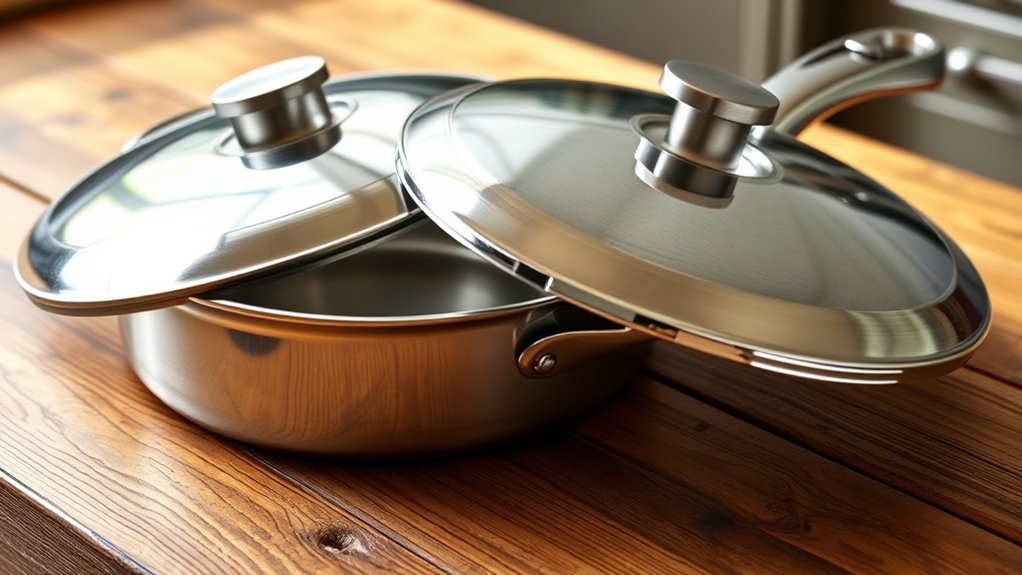
You’ll want to check the handle material before placing your All-Clad skillet in the oven, as stainless steel handles generally withstand higher temperatures than those with silicone or plastic.
Also, not all lids are oven-safe. Glass lids usually have lower heat limits compared to metal ones. Knowing these details helps you avoid damage and cook safely at the right temperature.
Oven-Safe Handle Materials
Although All-Clad skillets are known for their durability, the oven safety of their handles and lids depends on the materials used. When it comes to handle materials, stainless steel is the most common and reliable choice for oven use, as it withstands high temperatures without damage.
Some All-Clad skillets feature handles with silicone or plastic components, which limit oven compatibility due to heat sensitivity. The handle design also plays a role; long, solid stainless steel handles without additional coatings typically guarantee safe oven use up to 600°F.
If your skillet has riveted or welded handles made entirely of metal, you can confidently transfer it from stovetop to oven. Always check your specific model’s instructions to confirm handle material and oven-safe limits before using it in the oven.
Lid Compatibility With Ovens
When considering oven use, it’s essential to know whether your All-Clad skillet’s lid and its handles can withstand high temperatures. Lid materials and lid design play a vital role in oven compatibility. Here’s what to check:
- Material: Stainless steel lids typically handle oven heat well, while glass lids may have lower temperature thresholds.
- Handle Attachment: Screwed or riveted metal handles on lids usually tolerate oven heat better than plastic or silicone.
- Design Features: Venting holes or seals can affect oven safety; lids without heat-sensitive seals are preferable.
Before placing your skillet with its lid in the oven, verify the manufacturer’s guidelines. This guarantees you avoid damage or safety hazards due to incompatible lid materials or design.
Temperature Limits For Handles
Since handle materials vary widely, understanding their temperature limits is crucial to safely using your All-Clad skillet in the oven. Different handle materials have specific temperature ratings that determine whether they’re oven-safe or not.
Metal handles generally withstand higher temperatures, while plastic or silicone handles have lower limits.
| Handle Material | Max Oven Temperature |
|---|---|
| Stainless Steel | 600°F (315°C) |
| Aluminum | 400°F (205°C) |
| Silicone | 450°F (232°C) |
| Plastic | 350°F (175°C) |
Knowing these temperature ratings helps you avoid damaging handles or risking safety. Always check your skillet’s specifications before placing it in the oven to verify the handle materials can handle the heat you’re using.
How to Use Your All-Clad Skillet Safely in the Oven
Before placing your All-Clad skillet in the oven, you need to make sure it’s oven-safe and preheated to a temperature within the skillet’s limits. This guarantees skillet versatility without compromising oven safety.
Ensure your All-Clad skillet is oven-safe and preheated within temperature limits for safe, versatile cooking.
To use your skillet safely in the oven, follow these steps:
- Verify your skillet’s handle material and maximum heat tolerance, avoiding temperatures above recommended limits.
- Preheat your oven fully before placing the skillet inside to maintain consistent cooking results.
- Use oven mitts or heat-resistant gloves when handling the skillet, as it will become extremely hot.
Common Mistakes to Avoid When Using All-Clad Skillets in the Oven
Knowing how to use your All-Clad skillet safely in the oven is only part of the equation; avoiding common mistakes can help protect your cookware and guarantee your dishes turn out perfectly. First, don’t exceed the skillet’s maximum oven temperature. Check manufacturer guidelines to prevent damage.
Avoid sudden temperature changes, like transferring a hot skillet to a cold surface, which can warp the metal. When applying skillet usage tips, always use oven-safe utensils to avoid scratches.
Also, be cautious with non-stick coatings. High heat can degrade them. Proper oven cooking techniques include preheating the oven and placing the skillet on the middle rack for even heat distribution.
Steering clear of these errors guarantees your All-Clad skillet stays reliable and your meals come out just right.
Cleaning and Caring for All-Clad Skillets After Oven Use
After using your All-Clad skillet in the oven, proper cleaning and care are essential to maintain its performance and appearance. Follow these cleaning techniques and skillet maintenance tips to keep it in top shape:
- Allow the skillet to cool before washing to prevent warping. Use warm water, mild dish soap, and a soft sponge to gently remove food residue.
- Avoid abrasive scrubbers or harsh chemicals, which can damage the skillet’s polished surface.
- Dry the skillet thoroughly with a soft cloth to prevent water spots and maintain its shine.
Frequently Asked Questions
Are All-Clad Skillets Dishwasher Safe?
All-Clad skillets are dishwasher safe, but you’ll want to hand wash them to maintain their finish. For best cleaning results, use warm water, mild detergent, and avoid harsh scrubbers to keep your skillet looking great.
Can All-Clad Skillets Be Used on Induction Cooktops?
Just like a knight wielding his trusty blade, you’ll find All-Clad skillets boast excellent induction compatibility. They provide even heat distribution, ensuring your cooking’s precise and reliable on induction cooktops every time.
What Types of Cooking Oils Are Best for All-Clad Skillets?
You’ll want cooking oil types with high oil smoke points, like avocado, grapeseed, or refined olive oil, to protect your All-Clad skillet’s surface and guarantee even cooking without burning or leaving residue behind.
Do All-Clad Skillets Require Seasoning Before First Use?
You don’t need seasoning techniques for All-Clad skillets, but you should clean, dry, and oil them after use. Proper skillet maintenance guarantees longevity, keeps your cookware shiny, and prevents food from sticking during cooking.
How Long Is the Warranty on All-Clad Skillets?
You get a limited lifetime warranty coverage on All-Clad skillets, ensuring product longevity. This protects you against defects in materials and workmanship, so you can confidently enjoy your cookware for many years without worry.
Conclusion
You can confidently slide your All-Clad skillet into the oven, knowing it’s built to handle the heat—just keep the temperature below 600°F to avoid any damage. Remember, oven-safe handles and lids are your skillet’s trusty armor.
Treat your skillet with care after oven use, like giving a warrior a well-deserved rest. Follow these tips, and your All-Clad will continue to shine brightly, making every meal a masterpiece.
In conclusion, understanding that your All Clad skillet can go in the oven safely ensures you get the best performance out of your cookware.

Leave a Reply