
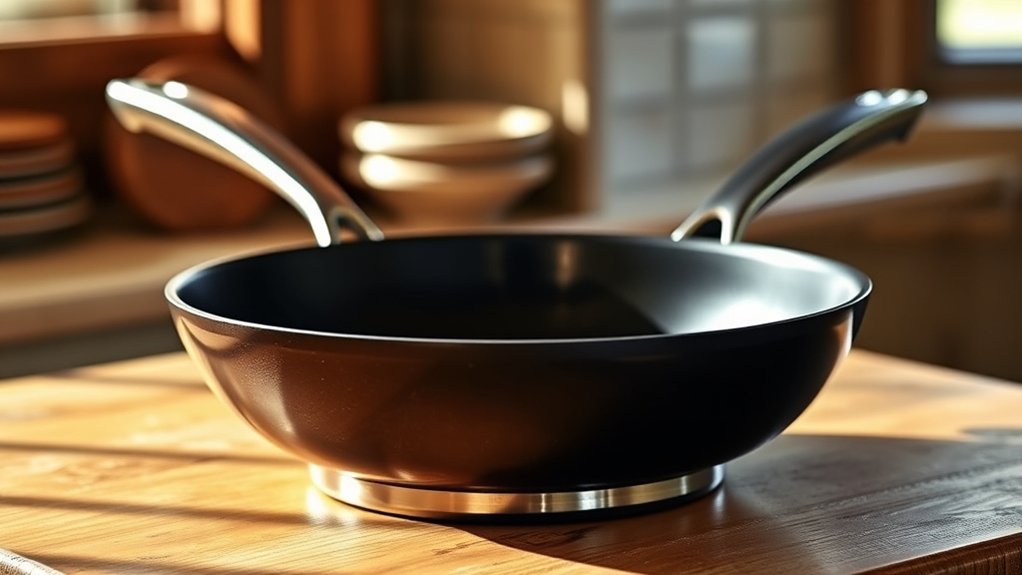
Yes, your Anolon skillet can go in the oven, provided you follow its specific temperature limits.
Typically, hard-anodized or nonstick models are safe up to 400°F (204°C), while some stainless steel versions can handle temperatures around 450°F (232°C).
Ensure your skillet has metal handles, as these withstand oven heat more safely than plastic or silicone ones.
Avoid sudden temperature changes to protect the skillet’s nonstick coating and prevent warping.
Using your Anolon skillet properly in the oven helps extend its lifespan and maintain optimal cooking performance.
Keep exploring to discover the best practices and maintenance tips for oven use.
Key Takeaways
- Most Anolon skillets are oven-safe up to 400°F, with some stainless steel models tolerating up to 450°F.
- Metal handles on Anolon skillets withstand oven heat better than plastic or silicone handles.
- Avoid exceeding recommended temperatures to prevent coating damage or warping of the skillet.
- Use oven mitts when handling the skillet as handles become hot during oven use.
- Consult the manufacturer’s guidelines for specific temperature limits and safe oven practices.
Is Your Anolon Skillet Oven-Safe?
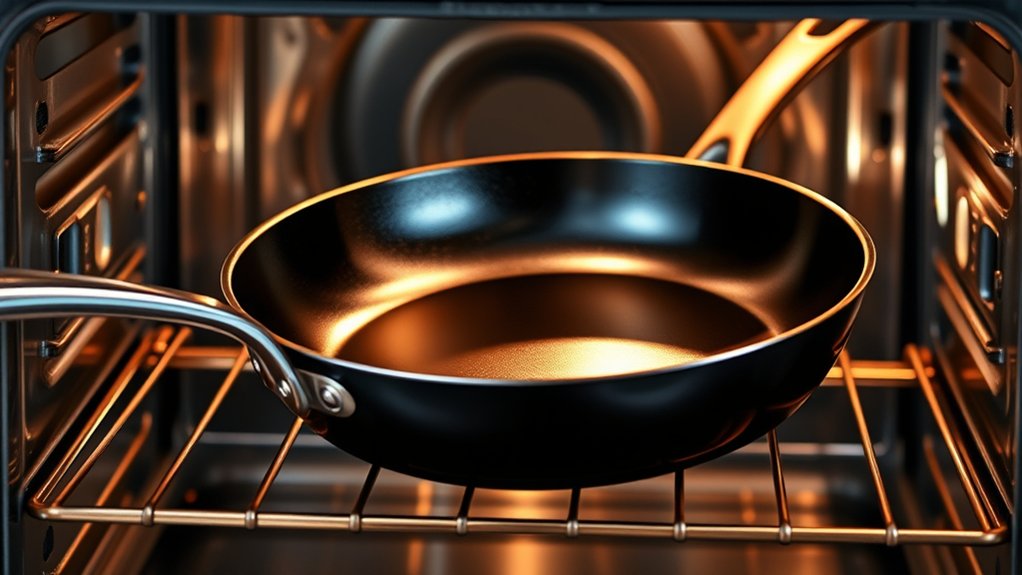
How can you determine if your Anolon skillet is oven-safe? First, check the manufacturer’s guidelines included with your skillet or visit Anolon’s official website. Most Anolon skillets specify maximum oven temperatures, critical for proper skillet care and avoiding damage.
Look for skillet models with metal handles and no plastic or rubber components, as these typically withstand oven heat. Additionally, inspect the skillet’s base and coating; some finishes can degrade under high temperatures.
Understanding these details helps you apply appropriate cooking techniques, switching between stovetop and oven safely. Avoid guessing. Incorrect oven use can warp or ruin your skillet.
Which Anolon Skillet Materials Handle Oven Heat?
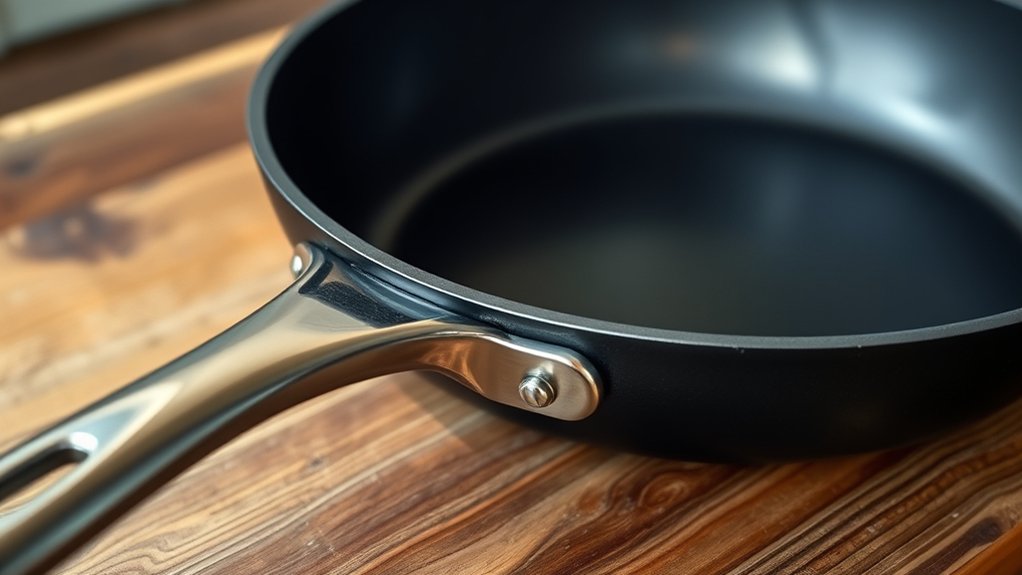
You need to understand the materials used in your Anolon skillet to know how they handle oven heat. Different skillet bodies and handles have specific oven-safe temperature limits you must follow.
Paying attention to these details guarantees safe and effective oven use.
Anolon Skillet Material Types
Understanding the materials used in Anolon skillets is essential for determining their suitability for oven use. Anolon skillet types primarily include hard-anodized aluminum and stainless steel, each offering distinct thermal properties.
Hard-anodized aluminum provides excellent heat conduction and durability, making it ideal for even cooking at moderate oven temperatures. Stainless steel, often used in combination with aluminum cores, offers superior resistance to warping and higher oven compatibility.
Both materials contribute to Anolon cookware benefits such as durability, corrosion resistance, and consistent heat distribution. When selecting an Anolon skillet for oven use, focus on those with metal handles and without plastic components, as these materials withstand oven temperatures better.
Understanding these material characteristics helps you maximize your Anolon skillet’s performance and longevity in oven applications.
Oven-Safe Temperature Limits
Building on the material properties of Anolon skillets, it’s important to recognize the specific oven-safe temperature limits each type can withstand. Most Anolon skillets feature hard-anodized aluminum construction, which typically endures oven temperatures up to 400°F (204°C) under standard oven safe guidelines.
Some models, especially those with stainless steel components, can tolerate higher temperature ratings, often reaching 450°F (232°C). However, temperature limits vary based on the skillet’s finish and design, so you should always consult the manufacturer’s specifications.
Exceeding these temperature ratings risks damaging the skillet’s coating or warping the metal, compromising performance and safety. By adhering strictly to the recommended oven safe guidelines, you guarantee your Anolon skillet maintains its durability and cooking efficiency during oven use.
Handle Material Oven Safety
Although Anolon skillets vary widely in construction, the handle material plays a critical role in determining oven safety and maximum temperature tolerance. When selecting an Anolon skillet for oven use, you should assess the handle’s material heat resistance carefully.
Metal handles, often stainless steel or aluminum, offer superior heat resistance and handle durability, typically withstanding temperatures up to 400°F or higher. Conversely, handles made from plastic or silicone composites have lower heat tolerance and may degrade or melt at elevated temperatures, limiting oven use.
Some Anolon models feature silicone grips designed to resist heat but are usually safe only up to around 350°F. To guarantee safety and longevity, always verify the manufacturer’s specified maximum oven temperature for the handle material before placing your skillet in the oven.
How to Check if Your Anolon Skillet Is Oven-Safe
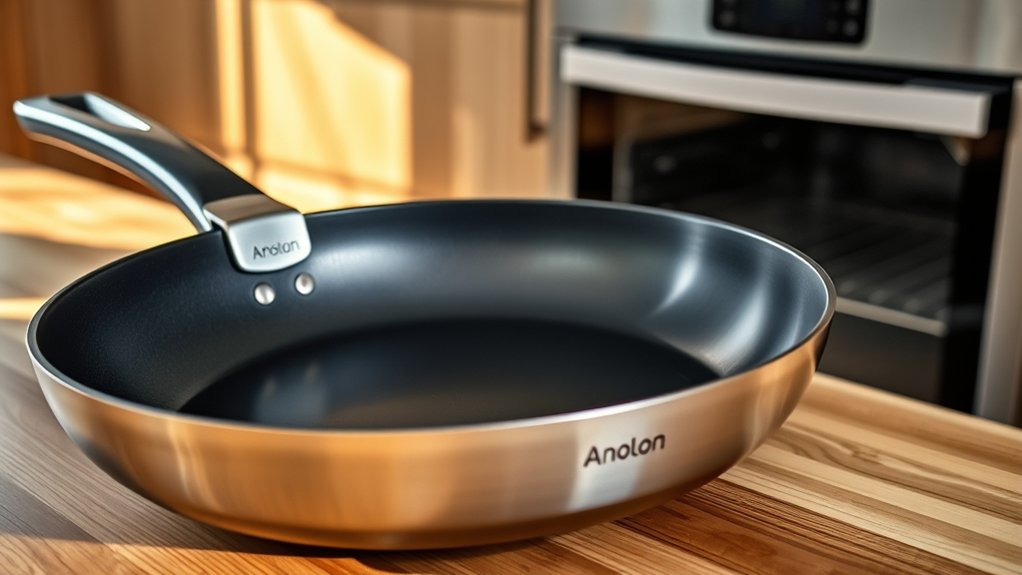
To determine if your Anolon skillet is oven-safe, first examine its material composition. Cast iron and hard-anodized aluminum typically tolerate oven heat well.
Next, consult the manufacturer’s temperature guidelines, which specify the maximum safe oven temperature for your specific model. Following these steps guarantees you use your skillet within its designed thermal limits.
Material Composition Check
When determining if your Anolon skillet is oven-safe, start by examining its material composition. Anolon skillets typically use hard-anodized aluminum, which offers excellent material durability and superior heat resistance, making it suitable for oven use.
Check if the skillet features metal handles or silicone grips; metal handles generally tolerate higher oven temperatures, while silicone grips may limit heat resistance. Avoid pans with plastic components, as they compromise durability and aren’t oven-safe.
Also, inspect the skillet’s nonstick coating. High-quality coatings withstand oven heat better but still have limits. By understanding the skillet’s construction materials and their heat tolerance, you can accurately assess if your Anolon skillet withstands oven temperatures without damage, ensuring safe and effective cooking results.
Manufacturer’s Temperature Guidelines
Understanding the materials your Anolon skillet is made of gives you an initial idea of its heat tolerance, but verifying the manufacturer’s temperature guidelines provides definitive information on oven safety.
To check if your skillet is oven-safe, consult the manufacturer specifications included in the product manual or on the official website. These specifications detail the maximum temperature limits your skillet can withstand without damage.
Typically, Anolon skillets have temperature limits ranging from 350°F to 500°F, depending on handle material and nonstick coatings. If you cannot find this information, contact customer service for confirmation.
Adhering strictly to these manufacturer specifications guarantees you avoid warping, coating degradation, or handle damage, maintaining your skillet’s performance and longevity during oven use.
Safe Oven Temperatures for Anolon Skillets
Anolon skillets can safely withstand oven temperatures up to 400°F (204°C), allowing you to use them for a variety of cooking techniques that require heat beyond stovetop limits. When engaging in oven cooking, it’s vital to avoid exceeding this temperature to prevent damage to the skillet’s nonstick coating and handle components.
Consistently exposing your skillet to temperatures above 400°F may degrade the surface, reducing its lifespan and effectiveness. For skillet maintenance, always preheat the oven gradually and avoid sudden temperature changes that can warp the pan.
Additionally, make sure your skillet is clean and dry before placing it in the oven to maintain its integrity. Following these temperature guidelines will help you optimize performance and extend the longevity of your Anolon skillet during oven use.
Tips for Using Your Anolon Skillet in the Oven
Anyone looking to maximize the performance of their Anolon skillet in the oven should follow specific handling and preparation tips. First, always preheat your oven to the recommended temperature to guarantee even heat distribution, which is essential for consistent cooking results.
Use oven mitts when handling the skillet, as the handle becomes hot. To maintain skillet care, avoid sudden temperature changes that can warp the pan or damage its nonstick surface.
When employing cooking techniques like searing followed by roasting, start on the stovetop, then transfer the skillet directly to the oven. Clean the skillet promptly after use with nonabrasive tools to preserve its coating.
Common Oven-Cooking Mistakes With Anolon Skillets
Although Anolon skillets are designed for oven use, many users make avoidable mistakes that reduce cooking efficiency and damage the cookware. To maintain peak performance and longevity, avoid these common errors:
- Overheating the skillet beyond recommended temperatures, which compromises nonstick surfaces.
- Using metal utensils that scratch coating, affecting skillet cleaning and longevity.
- Neglecting proper skillet cleaning after oven use, allowing residue buildup that impairs heat distribution.
- Applying improper cooking techniques, such as sudden temperature changes that warp the pan.
- Placing the skillet directly on oven racks without using a baking sheet to prevent warping or damage.
How Oven Heat Affects Anolon’s Nonstick Coating
Understanding how oven heat interacts with the nonstick coating helps prevent damage and extends your skillet’s lifespan. Anolon skillets feature advanced nonstick coatings designed with high heat resistance, but excessive or prolonged exposure to temperatures above manufacturer recommendations can degrade nonstick durability.
When you use your skillet in the oven, keep temperatures within the specified limits, typically up to 400°F (204°C), to preserve the coating’s integrity. Exceeding these limits accelerates polymer breakdown, leading to reduced nonstick performance and potential coating flaking.
Additionally, rapid temperature changes can stress the coating, so avoid placing a hot skillet directly into a cold environment. By respecting the skillet’s heat resistance and usage guidelines, you maintain peak nonstick durability and guarantee safe, efficient oven cooking.
Frequently Asked Questions
How Do I Clean My Anolon Skillet After Oven Use?
You should let the Anolon skillet cool, then use gentle cleaning techniques like warm water, mild detergent, and a non-abrasive sponge to remove oven residue.
Avoid harsh scrubbing to maintain the skillet’s coating and longevity.
Can I Use Metal Utensils With an Anolon Skillet?
Think of your Anolon skillet like a delicate dance partner. Using metal utensils can scratch its nonstick surface, compromising skillet durability.
Is It Safe to Put an Anolon Skillet in the Dishwasher?
An Anolon skillet isn’t dishwasher safe; the harsh detergents and high heat can damage its nonstick coating. You should clean it using gentle hand washing and non-abrasive sponges to maintain its durability and performance.
How Long Does an Anolon Skillet Typically Last?
You won’t find your Anolon skillet outliving a cockroach in a nuclear apocalypse, but it typically lasts years. Durability factors like heat exposure and cleaning impact longevity.
Use proper care and avoid dishwasher overuse to maximize lifespan.
Can Anolon Skillets Be Used on Induction Cooktops?
Yes, your Anolon skillet offers induction compatibility due to its magnetic stainless steel base, ensuring efficient heat transfer and ideal skillet performance on induction cooktops. This design supports consistent cooking results and durability.
Conclusion
You can confidently use your Anolon skillet in the oven, provided you respect its material limits and temperature guidelines. Just remember, pushing it beyond recommended heat levels might gently remind you of its boundaries by affecting the nonstick surface.
By checking compatibility and avoiding common pitfalls, you’ll extend your skillet’s performance and lifespan. Treat your Anolon skillet with care, and it’ll reward you with consistent, reliable cooking results every time you turn up the oven heat.
In conclusion, knowing whether your Anolon skillet can go in the oven is key to maintaining its quality and getting the best use out of it.

Leave a Reply