
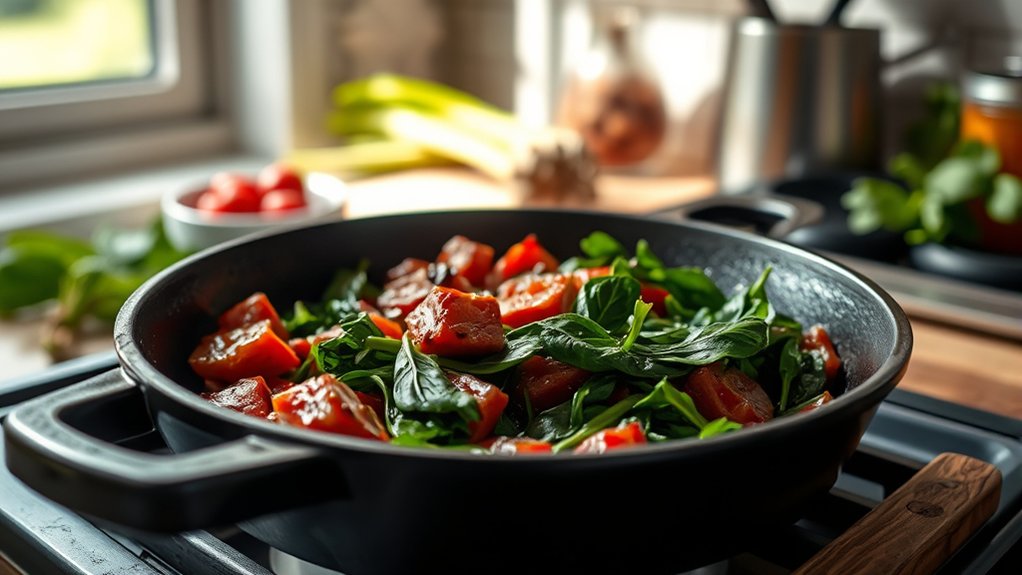
Yes, cooking with a cast iron skillet can help anemia by increasing the iron content in your food.
When you use a cast iron pan, small amounts of iron leach into your meals, which can boost your iron intake naturally.
Acidic ingredients like tomato sauce or lemon juice enhance this iron transfer from the skillet into your food.
Additionally, longer cooking times and moist cooking methods further increase the amount of iron absorbed.
To maximize the benefits, pair cast iron cooking with iron-rich foods and vitamin C, which helps improve iron absorption.
If you want to understand how to get the most benefit from your cookware and diet, there’s more to explore.
Key Takeaways
- Cooking in cast iron skillets increases the iron content of meals, aiding in anemia management.
- Acidic and moist foods cooked longer in cast iron release more iron, enhancing dietary absorption.
- Cast iron cookware complements medical anemia treatments by boosting non-heme iron intake naturally.
- Pairing cast iron-cooked meals with vitamin C-rich foods improves iron absorption and effectiveness.
- Using cast iron skillets is a practical, dietary strategy to support hemoglobin and red blood cell production.
Can Cooking With Cast Iron Skillets Improve Anemia?
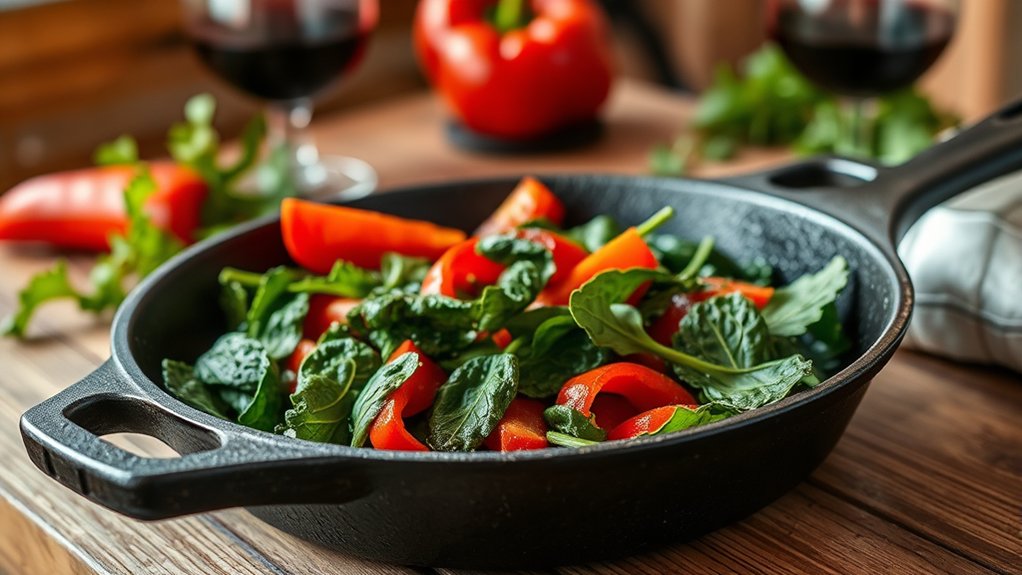
Although dietary iron absorption depends on various factors, cooking with cast iron skillets can increase the iron content in your meals. This practice offers notable cast iron benefits, particularly for individuals concerned about iron deficiency or anemia.
By enhancing your dietary iron intake, you support the body’s ability to produce hemoglobin and red blood cells, vital for oxygen transport. However, while cooking with cast iron can contribute to better iron status, it should complement, not replace, medical treatment or dietary strategies addressing anemia.
Understanding this nuance is essential for anemia awareness. You should consider that factors like meal acidity and cooking duration influence iron leaching from the skillet. As a result, integrating cast iron cookware is a practical, evidence-based approach to support iron intake alongside broader anemia management efforts.
How Cast Iron Cookware Adds Iron to Your Food
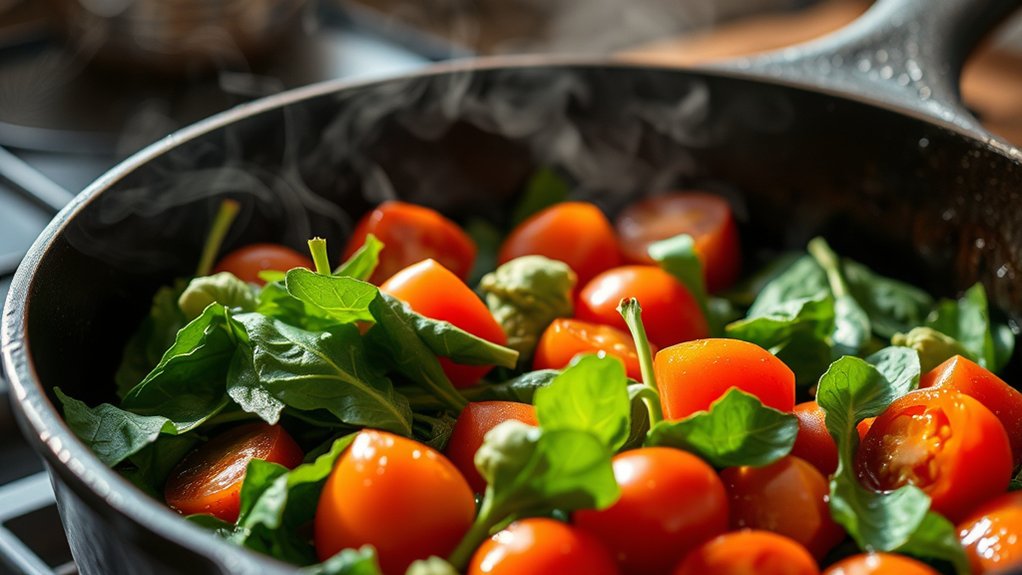
Three key factors determine how much iron transfers from cast iron cookware to your food: the acidity of the ingredients, cooking time, and moisture content. Iron leaching occurs when acidic and moist foods interact longer with the cookware surface, increasing iron transfer.
This process highlights the cookware benefits beyond durability, providing a dietary iron source.
| Factor | Impact on Iron Leaching |
|---|---|
| Acidity | Higher acidity boosts iron leaching |
| Cooking Time | Longer cooking increases iron transfer |
| Moisture Content | More moisture enhances iron release |
| Food Contact | Direct contact with cookware surface promotes iron absorption |
Which Foods Absorb the Most Iron From Cast Iron?
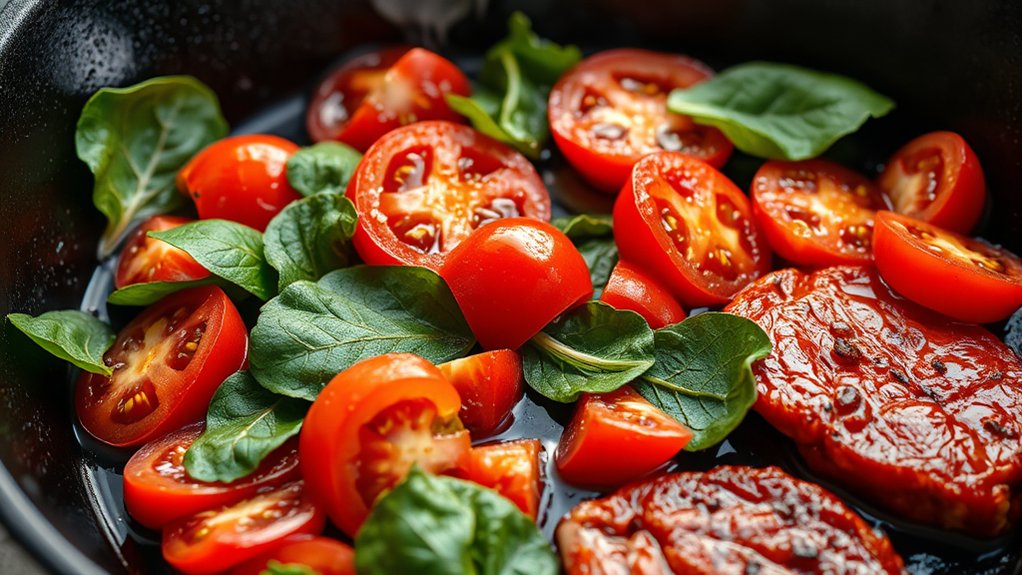
Which foods absorb the most iron from cast iron cookware depends largely on their composition and cooking conditions. Foods with higher acidity, moisture, and longer cooking times facilitate more iron transfer. You’ll notice that iron rich vegetables and acidic ingredients enhance this effect.
For example, citrus fruits increase iron leaching due to their low pH, which promotes iron solubility.
Here are five types of foods that absorb the most iron from cast iron pans:
- Tomato-based sauces (high acidity)
- Iron rich vegetables (spinach, kale)
- Citrus fruit marinades or dressings
- Acidic fruit compotes (such as lemon or orange)
- Stews or braises with prolonged cooking times
Tips to Maximize Iron Absorption When Using Cast Iron
When you cook with cast iron, optimizing factors like acidity, cooking time, and moisture can greatly increase the amount of iron your food absorbs. Incorporate iron enhancing foods such as tomatoes or citrus to boost iron release.
Use cooking techniques that preserve moisture and allow longer contact with the skillet surface to maximize iron leaching. Avoid overcooking to prevent nutrient loss.
| Factor | Recommendation | Effect on Iron Absorption |
|---|---|---|
| Acidity | Add vinegar or lemon juice | Increases iron solubility |
| Cooking Time | Moderate (15–30 min) | Balances iron release and taste |
| Moisture | Cook with some liquid | Enhances iron transfer |
Diet Strategies Beyond Cast Iron for Managing Anemia
Numerous dietary strategies complement using cast iron cookware to effectively manage anemia. While cooking with cast iron can increase iron intake, you should also focus on consuming iron rich foods and enhancing absorption through vitamin C.
Incorporate these approaches to optimize your iron status:
- Include heme iron sources like lean red meat, poultry, and fish for higher bioavailability.
- Add non-heme iron from plant-based foods such as lentils, spinach, and fortified cereals.
- Pair iron rich foods with vitamin C-rich options like citrus fruits, bell peppers, or broccoli to improve absorption.
- Avoid inhibitors like calcium, tannins in tea, and phytates during iron-rich meals.
- Maintain balanced nutrition to support overall hematologic health.
Frequently Asked Questions
Can Cast Iron Skillets Cause Iron Overdose?
You generally won’t experience iron toxicity from cast iron skillets, as cooking methods release small iron amounts. However, excessive consumption of iron-rich foods alongside cast iron use might increase iron levels, so monitor intake carefully.
How Do I Season a Cast Iron Skillet Properly?
Sure, just rub your skillet with oil and bake it. Seasoning techniques build a natural, non-stick layer. Proper cast iron maintenance requires repeating this, ensuring durability and ideal cooking performance without rust or food sticking.
Are Cast Iron Skillets Safe for Acidic Foods?
Yes, cast iron skillets are safe for acidic foods if well-seasoned. However, prolonged cooking of highly acidic foods may degrade seasoning and leach iron, altering flavor and potentially increasing iron intake slightly.
Can Children Benefit From Iron in Cast Iron Cookware?
Yes, children can benefit from iron absorption when you cook with cast iron cookware. It enhances child nutrition by increasing dietary iron intake, especially important for growing kids who need sufficient iron to support healthy development.
How Does Cooking Time Affect Iron Transfer to Food?
You know what they say, “Patience is a virtue.” Longer cooking duration in a cast iron skillet increases iron absorption by your food, enhancing iron transfer.
However, excessive time may reduce nutrient quality, so balance is key for ideal benefits.
Conclusion
You might not expect it, but cooking with a cast iron skillet can genuinely boost your iron intake, especially when preparing acidic or moisture-rich foods. This happens because small amounts of iron from the skillet leach into the food, increasing its iron content. While it’s not a cure-all for anemia, it can be a helpful addition to your diet.
Combining this simple kitchen habit with iron-rich meals and vitamin C can greatly improve iron absorption and support your body’s needs. So next time you’re cooking, remember—your skillet isn’t just a tool; it’s a silent partner in supporting your iron levels and overall health.
Incorporating cooking cast iron skillet into your routine can be a practical way to help manage anemia alongside other dietary and medical strategies.

Leave a Reply