
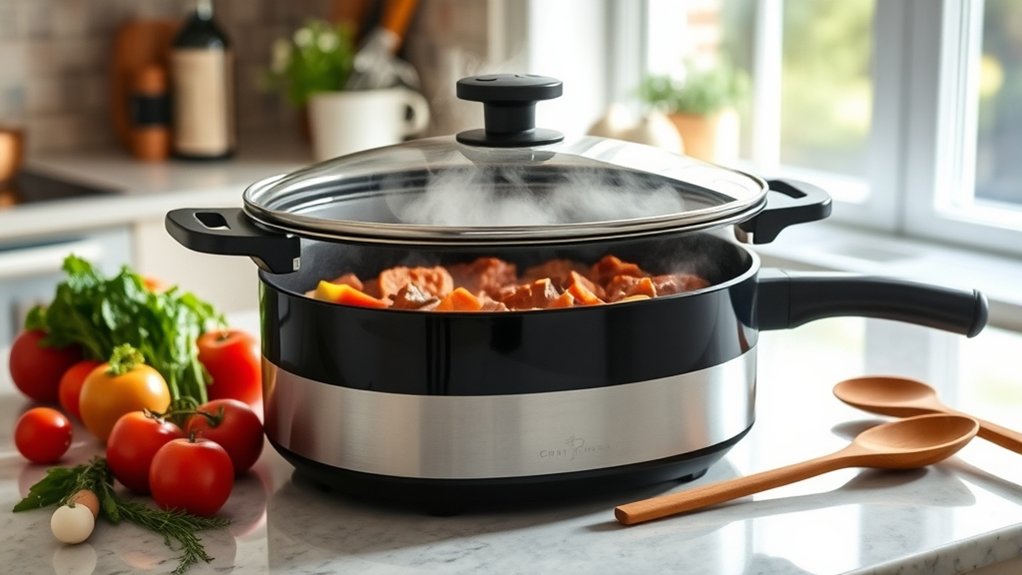
You can use an electric skillet as a slow cooker by setting it to the lowest temperature and covering it with a lid to trap moisture. This allows your food to cook gently and become tender over time.
Start by searing meat for flavor, then maintain steady, low heat to mimic slow cooking.
While electric skillets may not distribute heat as evenly as slow cookers, mastering temperature control lets you achieve similar results.
Using a lid is essential to keep moisture in and help the cooking process.
Keep exploring to uncover tips and recipes for this approach.
Key Takeaways
- Electric skillets can mimic slow cooker results by using low, steady heat and covering with a lid to trap moisture.
- They allow precise temperature control but require careful monitoring to maintain consistent low heat for slow cooking.
- Searing meat first in an electric skillet enhances flavor before slow simmering at low temperature.
- Skillets have limitations like uneven heat and smaller capacity compared to slow cookers for long, low-temperature cooking.
- While versatile, electric skillets cannot fully replicate slow cookers’ gentle, gradual heat and sealed cooking environment.
Can You Use an Electric Skillet to Cook Low and Slow?
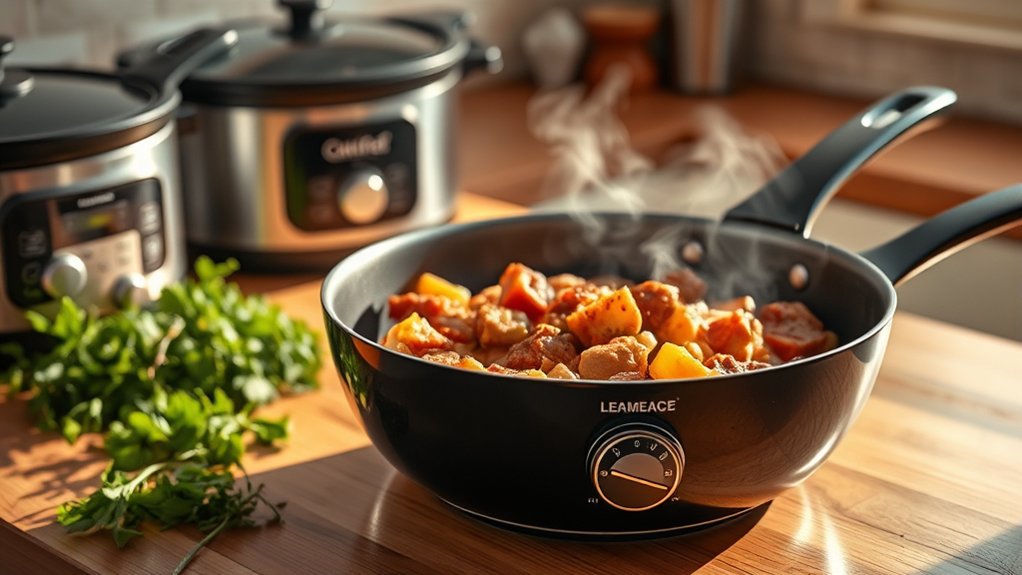
Although electric skillets are primarily designed for frying and sautéing, you can use them to cook low and slow with some adjustments. To do this effectively, start by mastering sautéing techniques to brown your ingredients evenly, enhancing flavor before lowering the heat.
The key is controlling the skillet’s temperature precisely; most electric skillets allow you to set a low heat that maintains a steady, gentle warmth. Because electric skillets provide consistent heat distribution across the surface, you won’t encounter hot spots that could burn your food during slow cooking.
Use the skillet’s lid to trap moisture, ensuring a tender, slow-cooked result. While it’s not a traditional method, by managing heat and leveraging even heat distribution, you can successfully slow cook tougher cuts or stews in an electric skillet.
How Electric Skillets and Slow Cookers Work Differently
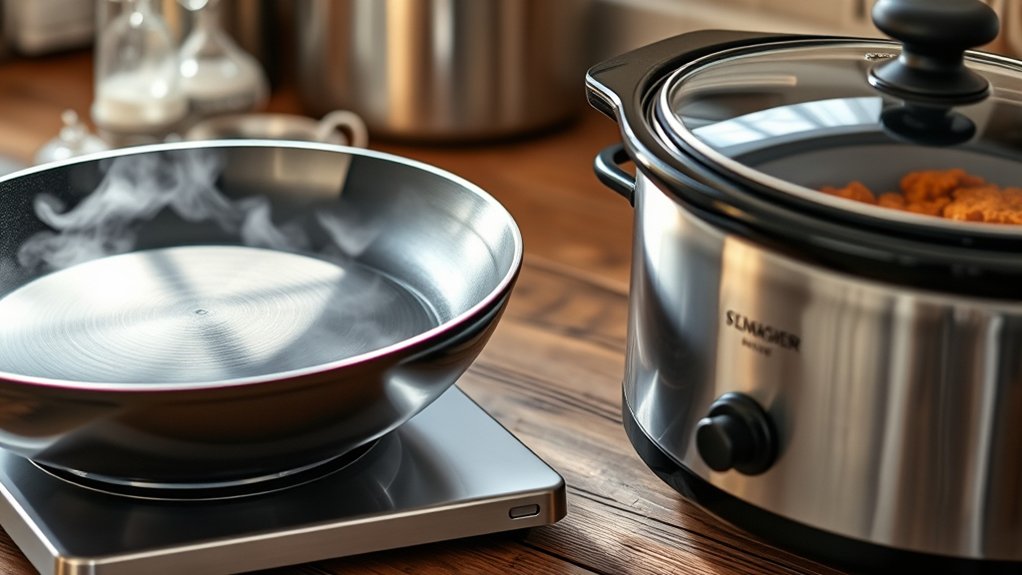
Since electric skillets and slow cookers serve different cooking purposes, understanding how each appliance operates can help you decide which one suits your needs best. Electric skillet features include a flat, heated surface that cooks food quickly by direct contact, allowing you to fry, sauté, or sear with precision.
In contrast, slow cookers use a ceramic pot surrounded by a heating element that gently warms food over hours, relying on moist heat and low temperatures. This method preserves flavors and tenderizes tough cuts, highlighting slow cooker benefits like convenience and energy efficiency.
While both appliances heat food electrically, their distinct designs and heating methods mean they excel at different cooking styles, so knowing these differences helps you choose the right tool for your recipes.
How Temperature Control Differs in Skillets and Slow Cookers
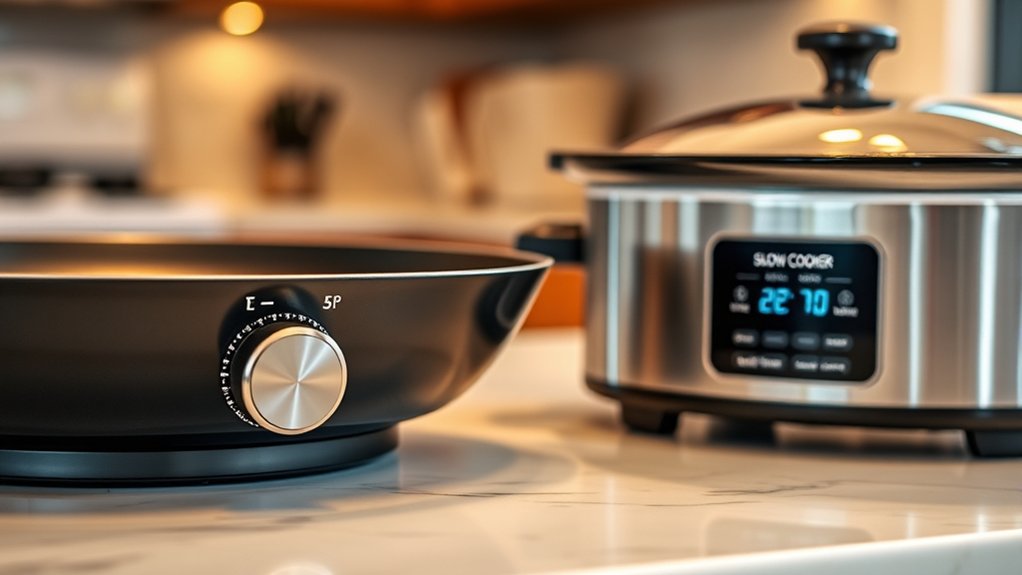
When you use an electric skillet, you directly control the cooking temperature with a dial or digital setting, allowing for quick adjustments and precise heat levels that suit various cooking techniques like frying or simmering. In contrast, slow cookers operate at fixed temperature settings, typically low, medium, or high, designed for gradual, consistent heat over extended periods.
This fundamental difference impacts cooking efficiency: electric skillets respond rapidly to changes, giving you more control over short-term cooking. Slow cookers prioritize steady, low heat to tenderize ingredients without constant monitoring. Understanding these distinctions helps you manage your recipes effectively.
While electric skillets offer variable temperature settings for versatility, slow cookers maintain uniform heat to optimize long-duration cooking, emphasizing the importance of temperature control in achieving desired results.
Tips for Mimicking Slow Cooker Results in an Electric Skillet
To replicate slow cooker results in an electric skillet, you’ll need to focus on maintaining low, consistent heat and extending your cooking time. Start by adjusting the skillet settings to the lowest temperature possible to avoid burning or uneven cooking.
Use a lid to trap moisture, replicating the slow cooker’s sealed environment. Employ cooking techniques like searing meat first to develop flavor, then reduce heat and let ingredients simmer gently.
Stir occasionally, but avoid frequent lid removal to preserve heat and moisture. Monitoring the skillet’s temperature with an external thermometer can help you maintain steady warmth.
Best Recipes for Slow Cooking in a Skillet
Although an electric skillet doesn’t function exactly like a traditional slow cooker, you can still create many slow-cooked dishes with excellent results by selecting recipes that suit its temperature range and cooking style. Focus on skillet recipes that benefit from steady, low heat and require occasional stirring. Braises, stews, and one-pot meals work particularly well with these cooking techniques.
| Dish Type | Ideal Skillet Recipe |
|---|---|
| Braised Meat | Beef short ribs simmered in red wine |
| Stews | Chicken and vegetable stew |
| Casseroles | Cheesy potato and ham casserole |
| Sauces & Chilis | Slow-cooked chili with beans and beef |
Limitations of Using a Skillet as a Slow Cooker
Because electric skillets heat differently than slow cookers, you’ll encounter specific limitations when using one as a slow cooker. Skillet limitations include uneven heat distribution, which can cause hot spots and inconsistent cooking results.
Unlike slow cookers, electric skillets lack precise temperature controls designed for long, low-temperature cooking essential to slow cooker efficiency. This can make it challenging to maintain the steady, gentle heat needed for tenderizing tougher cuts of meat or developing complex flavors over several hours.
Additionally, skillets typically have shallower sides, limiting the volume of food you can prepare compared to a slow cooker’s deeper pot. While skillets offer versatility in cooking methods, their design and heating mechanism restrict their ability to fully replicate the slow, even cooking process that slow cookers provide.
When It’s Better to Choose a Slow Cooker Over an Electric Skillet
You’ll want to choose a slow cooker when precise temperature control is essential for your recipe, as it maintains consistent low heat better than an electric skillet. Slow cookers are designed to handle extended cooking durations without constant monitoring, making them ideal for dishes that require hours to develop flavor.
If your meal demands steady, long-term heat, a slow cooker will deliver more reliable results than an electric skillet.
Temperature Control Precision
When preparing meals that require consistent, low heat over extended periods, a slow cooker offers superior temperature control precision compared to an electric skillet. Slow cookers provide specific temperature settings designed to maintain a steady, low heat, which is essential for achieving uniform cooking consistency.
In contrast, electric skillets typically have broader temperature ranges and less precise controls, making it harder to sustain the gentle, even warmth needed for slow cooking. If your recipe demands exact temperature regulation to avoid overcooking or uneven heating, a slow cooker’s calibrated settings guarantee that your food cooks thoroughly without constant monitoring.
As a result, when precise temperature control directly impacts your dish’s texture and flavor, choosing a slow cooker over an electric skillet is the smarter option.
Cooking Duration Needs
Understanding how long your meal needs to cook plays a significant role in deciding between an electric skillet and a slow cooker. Slow cookers excel in handling extended cooking times, often ranging from 4 to 10 hours, which slowly tenderizes tough cuts and melds flavors deeply.
If your recipe requires long, unattended cooking, a slow cooker is typically safer and more convenient. On the other hand, electric skillets cook faster and need more frequent monitoring, making them less ideal for lengthy recipes without constant attention.
When using an electric skillet in place of a slow cooker, you must make precise recipe adjustments, especially to cooking times and liquid amounts, to avoid overcooking or drying out your dish. So, for meals demanding prolonged, low-heat cooking, slow cookers remain the better choice.
Frequently Asked Questions
Can an Electric Skillet Replace a Slow Cooker for Meal Prepping?
You can use an electric skillet for meal prep efficiency, but it won’t fully replace a slow cooker’s low, consistent heat. However, it offers cooking versatility for sautéing and frying, making it a handy multitasker in your kitchen.
Are Electric Skillets Energy-Efficient Compared to Slow Cookers?
You won’t see significant energy savings using an electric skillet compared to a slow cooker because skillets cook faster, increasing energy use during shorter cooking times. Slow cookers maintain low heat longer, optimizing energy efficiency.
Can You Use an Electric Skillet to Keep Food Warm Like a Slow Cooker?
Yes, you can use an electric skillet for keeping food warm. Its precise temperature control and even heating make it great for maintaining warmth.
It offers electric skillet benefits like flexibility and quick heat-up compared to traditional slow cookers.
Is Cleaning an Electric Skillet Easier Than Cleaning a Slow Cooker?
Yes, cleaning an electric skillet is easier since it has fewer parts. Follow cleaning tips like unplugging, wiping the surface, and avoiding submerging the base.
Slow cookers need more maintenance due to removable inserts and lids.
Do Electric Skillets Have Safety Features Similar to Slow Cookers?
Yes, electric skillets have safety mechanisms like automatic shut-off and adjustable temperature controls, allowing you to cook safely and precisely. These features are similar to those in slow cookers, helping you avoid overheating and accidents during cooking sessions.
Conclusion
Picture a slow cooker’s gentle hum, tenderly transforming ingredients over hours, while your electric skillet sizzles with quick heat and sharp control. Though you can mimic slow cooking in a skillet by adjusting the temperature and stirring often, it won’t quite cradle your meal in the same steady warmth.
Use your skillet for quicker, attentive cooking, but when you want that melt-in-your-mouth magic, the slow cooker’s steady embrace is hard to beat. While an electric skillet offers versatility and speed, it cannot fully replace the consistent low heat of a slow cooker for recipes that require long, slow simmering.
In conclusion, if you’re wondering, “Can an electric skillet be used as a slow cooker?” the answer is that it can be used for some slow cooking techniques, but it won’t replicate the exact results of a dedicated slow cooker.

Leave a Reply