
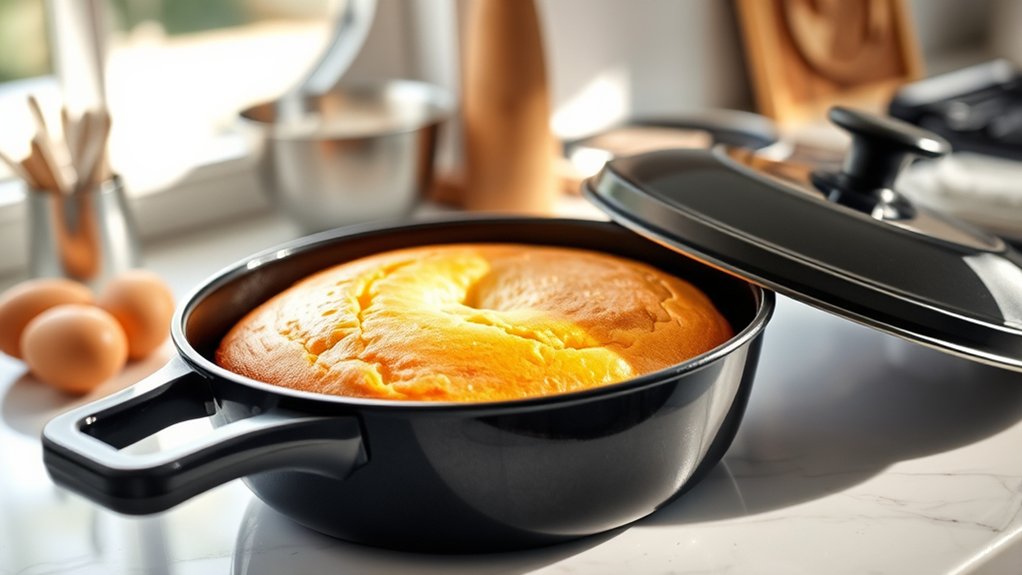
Yes, you can bake a cake in an electric skillet with great results. Using an electric skillet for baking offers even heat distribution, which helps prevent burning or uneven cooking.
Start by preheating your skillet to a moderate temperature, around 325°F to 350°F. Use a suitable baking pan that fits comfortably inside the skillet.
Make sure to grease the pan well to avoid sticking. Monitor the temperature closely throughout the baking process. Test for doneness by inserting a toothpick into the cake; it should come out clean.
Mastering these steps guarantees a moist, consistently baked cake. Keep exploring for detailed tips and troubleshooting advice to perfect your electric skillet baking skills.
Key Takeaways
- Yes, an electric skillet can bake a cake by providing consistent, controllable, and even heat distribution.
- Preheat the skillet to 325°F-350°F and use a suitable greased or lined baking pan for best results.
- Dense cakes like chocolate cake work well, while lighter cakes need careful temperature control to avoid drying.
- Rotate the cake halfway through baking and use a toothpick test to check doneness.
- Clean the skillet thoroughly, verify temperature accuracy, and avoid overcrowding for evenly baked cakes.
Can You Bake a Cake in an Electric Skillet?
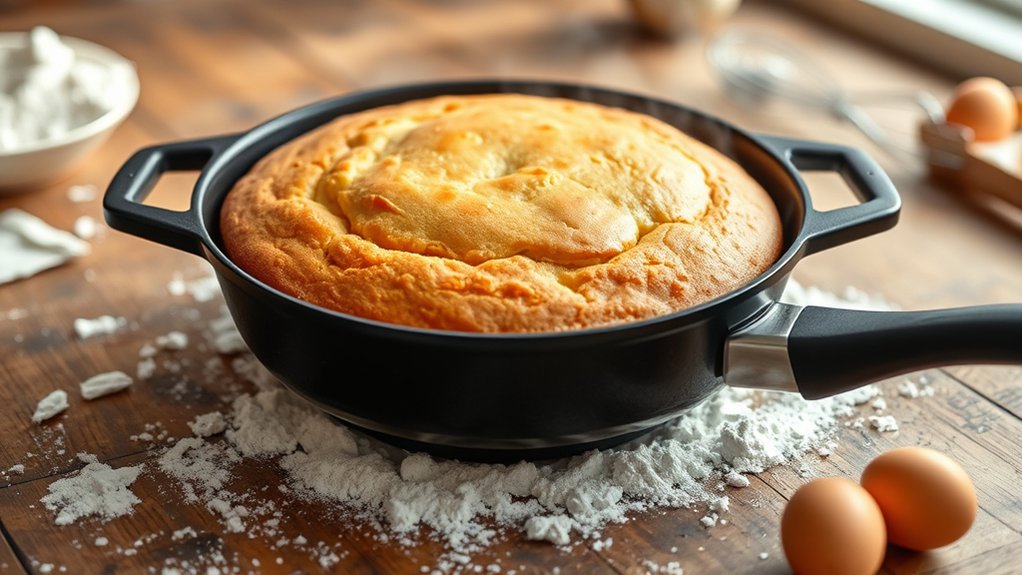
Wondering if you can bake a cake in an electric skillet? Yes, you can, as electric appliances like skillets provide consistent, controllable heat ideal for cake baking. Unlike traditional ovens, electric skillets offer even heat distribution, reducing hot spots that can cause uneven baking.
To bake a cake, you’ll need to adjust your method slightly: preheat the skillet, use a suitable baking pan that fits inside, and cover the skillet with a tight-fitting lid to trap heat and moisture. Keep the temperature moderate, typically between 325°F and 350°F, to prevent burning.
Also, monitor the cake’s doneness with a toothpick test, as baking times can vary. Using an electric skillet for cake baking is practical when you lack oven access or want a quick alternative.
What Makes Electric Skillets Good for Baking Cakes
Because electric skillets provide consistent and adjustable heat, they create an ideal environment for baking cakes evenly. You benefit from precise temperature control, which helps you master baking techniques that require steady heat. The skillet’s design guarantees even heat distribution, preventing hot spots that could burn or undercook your cake.
| Feature | Benefit | Impact on Baking Technique |
|---|---|---|
| Adjustable thermostat | Precise temperature control | Prevents over- or under-baking |
| Non-stick surface | Easy release and cleanup | Maintains cake shape intact |
| Even heat distribution | Uniform cooking | Produces consistent texture |
| Portable design | Flexible baking locations | Enables versatile baking options |
These electric skillet benefits make them reliable tools for consistent and efficient cake baking.
Which Cakes Bake Best in an Electric Skillet
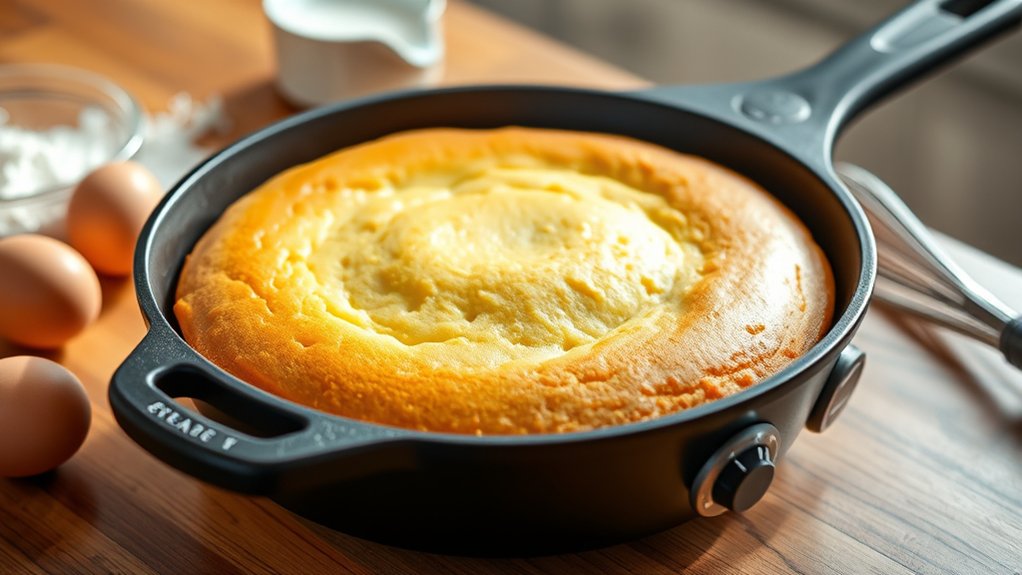
Choosing the right cake batter is essential when baking in an electric skillet, as certain types respond better to its consistent heat and compact size. You’ll find that dense cakes like chocolate cake work exceptionally well because they maintain moisture and don’t require extensive rise time.
The skillet’s even heat distribution allows chocolate cake batters to cook uniformly without drying out. On the other hand, lighter cakes like vanilla sponge demand careful temperature control to avoid collapse or uneven baking.
If you choose vanilla sponge, make certain you use a recipe with stable structure and moderate leavening. Ultimately, chocolate cake and carefully prepared vanilla sponge batters offer the best results in an electric skillet, maximizing the appliance’s strengths while minimizing baking risks.
How to Prepare Your Electric Skillet for Baking
Before you start baking, set your electric skillet to a consistent medium-low temperature to guarantee even cooking. Make sure to grease or line the skillet surface properly to prevent sticking and promote easy cleanup.
These steps create the ideal environment for your cake to bake evenly and come out perfectly.
Skillet Temperature Settings
When you set your electric skillet to the right temperature, you guarantee even baking and prevent burning. Proper skillet heat and temperature calibration are essential. Most electric skillets have adjustable dials; start by preheating to the recommended baking temperature, usually between 325°F and 350°F.
Use a thermometer to verify the skillet’s actual temperature, as calibration can vary. Adjust settings accordingly before pouring your batter.
| Temperature Setting | Approximate Skillet Heat (°F) | Baking Use |
|---|---|---|
| Low | 250-275 | Slow cooking, warming |
| Medium-Low | 300-325 | Delicate baking |
| Medium | 325-350 | Standard cake baking |
| Medium-High | 350-375 | Browning, faster bake |
| High | 375+ | Not recommended for cake |
This methodical calibration guarantees perfect results every time.
Preparing Skillet Surface
Two essential steps guarantee your electric skillet is perfectly prepared for baking: cleaning and greasing the surface. Begin with thorough skillet cleaning to remove any residue or oils from previous uses. Use warm soapy water and a non-abrasive sponge to avoid damaging the non-stick coating. Rinse and dry completely before proceeding.
Next, focus on surface greasing to prevent your cake from sticking. Lightly coat the skillet’s interior with a thin layer of vegetable oil or butter using a paper towel for even coverage. Avoid excess grease, which can cause uneven baking or sogginess.
Proper skillet cleaning followed by precise surface greasing guarantees your cake bakes evenly and releases effortlessly, making your electric skillet a reliable tool for baking success.
Baking a Cake Step-by-Step in an Electric Skillet
Start by preparing your electric skillet for even heat distribution, ensuring it’s clean and properly preheated to around 325°F (160°C). Next, select your cake batter based on the desired cake flavor and pour it evenly into a greased, heat-safe pan that fits inside the skillet.
Prepare your electric skillet by preheating it to 325°F and using a greased, heat-safe pan for your batter.
Place the pan carefully inside the skillet, covering it with a lid to trap heat and moisture. Use low to medium heat to mimic oven baking, avoiding direct high heat to prevent burning.
Bake for approximately 30 to 40 minutes, checking doneness by inserting a toothpick into the center; it should come out clean. Once done, remove the pan and let the cake cool before serving.
This method applies essential baking techniques adapted for your electric skillet’s unique environment.
Tips for Perfect Electric Skillet Cake Texture and Flavor
Achieving the perfect texture and flavor in your electric skillet cake depends on more than just bake time and temperature. To enhance cake flavor, use fresh ingredients and consider adding extracts like vanilla or almond for depth. For moistness, replace some liquid with sour cream or yogurt.
When it comes to texture tips, avoid overmixing the batter to prevent toughness. Use a lower heat setting to guarantee even cooking and minimize crust burning. Also, preheat your skillet to stabilize the cooking environment.
Use a lid to trap steam, which helps maintain moisture and creates a tender crumb. Finally, let the cake cool slightly in the skillet before removing it to preserve its structure and flavor profile. Consistent attention to these details elevates your electric skillet cakes reliably.
Common Electric Skillet Cake Problems and Fixes
You might notice your cake cooks unevenly in the electric skillet, often due to inconsistent heat distribution. To fix this, adjust the temperature carefully and use a heat diffuser if available.
Controlling the skillet’s heat precisely helps guarantee your cake bakes evenly every time.
Uneven Cooking Issues
Although electric skillets offer a convenient way to bake cakes, uneven cooking often poses a challenge that can affect texture and appearance. You might notice some parts of the cake cooking faster due to uneven heat distribution.
To minimize this, position the cake pan centrally and avoid overcrowding the skillet. Adjusting baking times is essential; longer times at lower heat can promote even cooking without burning edges.
Rotate the cake halfway through baking to counteract hot spots. Additionally, using a heat diffuser or placing a layer of foil under the pan can help distribute heat uniformly.
Temperature Control Tips
How can you maintain the ideal temperature when baking a cake in an electric skillet? Start by ensuring accurate temperature calibration; use an external thermometer to verify your skillet’s settings because built-in dials can be imprecise. Adjust accordingly to keep the temperature steady around 325°F to 350°F.
Next, focus on even heat distribution. Preheat the skillet thoroughly before adding your batter, and avoid opening the lid frequently, as this causes temperature fluctuations. If your model allows, use a heat diffuser plate to spread heat uniformly across the cooking surface, preventing hotspots that lead to uneven baking.
Regularly check and recalibrate your skillet’s thermostat to maintain consistent heat. By controlling temperature precisely and managing heat distribution effectively, you’ll avoid common baking problems and achieve a perfectly cooked cake every time.
Frequently Asked Questions
Can I Use Electric Skillet Cake Recipes for Other Electric Cooking Devices?
You can adapt electric skillet cake recipes for other devices, but remember electric skillet versatility differs. Adjust temperature and cooking time carefully to suit your alternative appliance, ensuring consistent cake baking alternatives and ideal results every time.
How Do I Clean My Electric Skillet After Baking a Cake?
Oh, sure, just dunk your electric skillet in water! Instead, unplug it and let it cool.
Wipe with a damp cloth, use mild soap if needed, and dry thoroughly.
Follow these cleaning tips for a solid maintenance routine.
Are Electric Skillets Energy-Efficient Compared to Ovens?
You’ll find electric skillets generally use less energy consumption than ovens due to quicker heating and smaller size. Their cooking efficiency reduces wasted heat, making them a more energy-efficient choice for smaller meals or baking tasks.
Can I Bake Gluten-Free Cakes in an Electric Skillet?
Yes, you can bake gluten-free cakes in an electric skillet. Use gluten-free substitutions carefully and adjust baking time slightly to guarantee even cooking.
Keep the temperature consistent for best results and monitor the cake’s doneness closely.
What Are the Safety Precautions When Baking With an Electric Skillet?
Don’t worry about uneven cooking; you’ll guarantee safety by monitoring heat distribution and maintaining precise temperature control. Always use a heatproof surface, avoid overcrowding, and unplug the skillet promptly to prevent overheating or electrical hazards.
Conclusion
Baking a cake in your electric skillet is like uncovering a secret garden—unexpected but full of potential. With the right prep and careful temperature control, you can achieve a moist, golden cake without an oven.
Think of your skillet as a trusty sidekick, ready to transform simple ingredients into a delicious masterpiece. Follow the steps methodically, troubleshoot as needed, and you’ll turn this humble appliance into your new baking ally.
In conclusion, yes, you can bake a cake in an electric skillet. With patience and proper technique, this versatile kitchen tool can produce delightful baked treats anytime.

Leave a Reply