
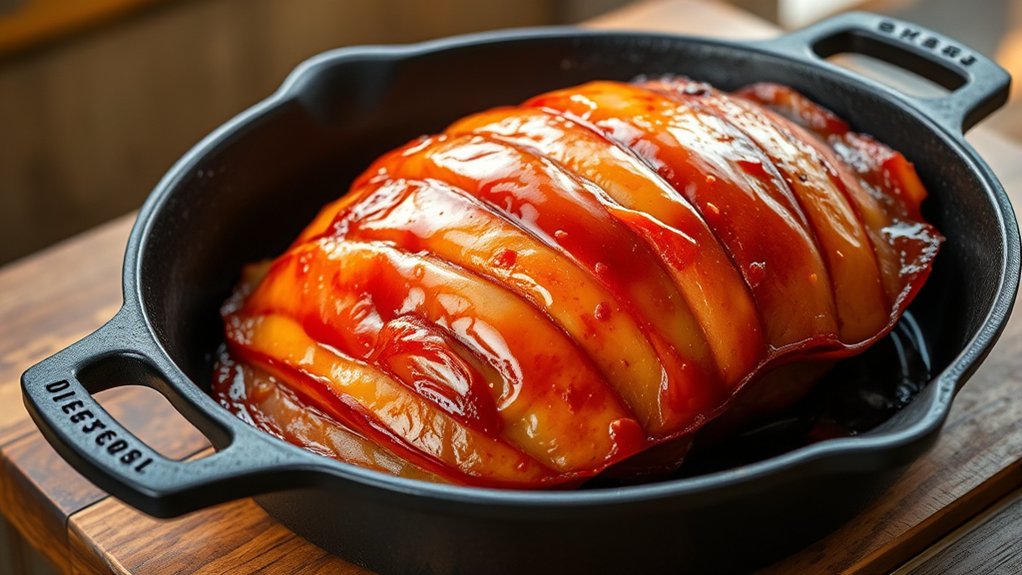
You can definitely bake a ham in a cast iron skillet, which offers even heat distribution and excellent heat retention for a caramelized crust.
This method is great for achieving a delicious, evenly cooked ham with a beautifully browned exterior.
Just choose a skillet size that fits your ham comfortably, season it well, and bake at a slightly lower temperature around 325°F to 350°F while monitoring the internal temperature closely.
Basting occasionally helps enhance flavor and moisture.
Keep these basics in mind, and you’ll master the technique with ease as you explore the process more.
Using a cast iron skillet can elevate your ham to a new level of taste and presentation.
Key Takeaways
- Yes, cast iron skillets can be used to bake ham, offering even heat distribution and excellent heat retention.
- Select a ham size that fits comfortably in the skillet, and score the surface for better seasoning absorption.
- Bake at 325°F to 350°F, positioning ham cut side down, and baste occasionally with rendered juices for caramelization.
- Lower oven temperature by 25°F and reduce cooking time by 10-15% if the skillet is preheated.
- Clean the skillet by wiping grease, rinsing with hot water, drying thoroughly, and applying a thin oil layer for maintenance.
Can You Bake Ham in a Cast Iron Skillet?
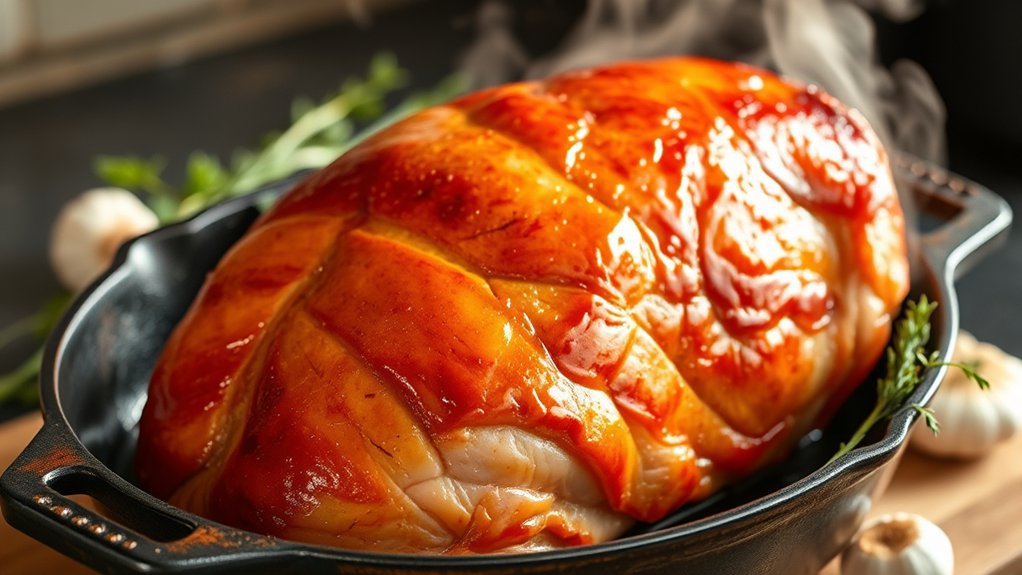
While cast iron skillets are traditionally known for stovetop cooking, you can absolutely bake ham in one. Various ham varieties, from spiral-cut to whole bone-in, respond well to the even heat distribution a cast iron skillet provides.
The skillet benefits include superior heat retention and the ability to create a caramelized crust on your ham, enhancing flavor and texture. Its sturdy construction allows for oven use without warping, making it ideal for baking.
You can also use its high sides to contain glazes and juices, preventing mess and preserving moisture. Whether you’re cooking a small portion or a larger roast, a cast iron skillet offers versatility and efficiency, making it a practical choice for baking ham successfully.
How to Prepare Your Ham for Cast Iron Baking
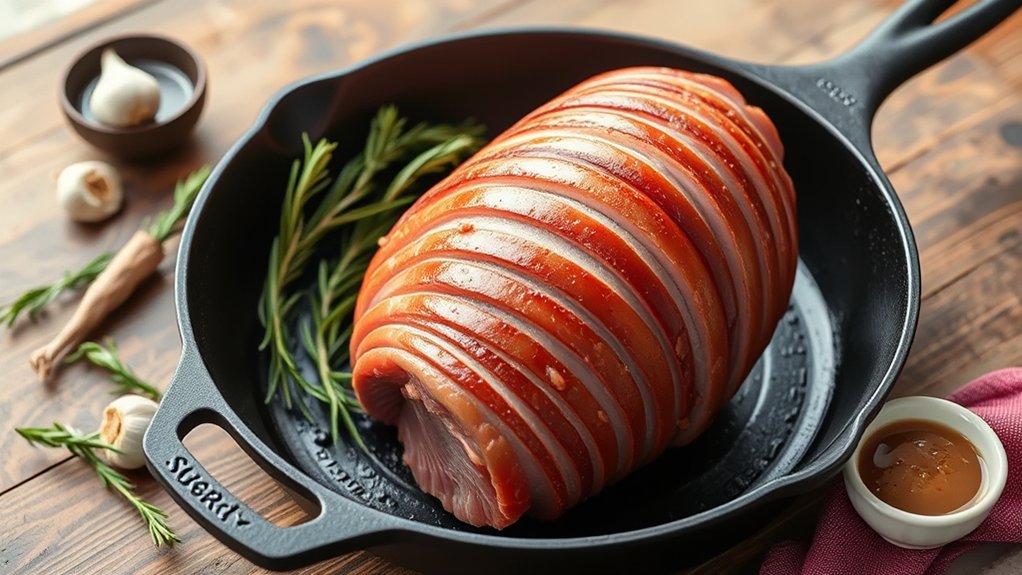
Before placing your ham in a cast iron skillet, you need to properly prepare it to guarantee even cooking and enhanced flavor. Start with ham selection; choose a cut that fits your skillet and suits your recipe, whether bone-in or boneless.
Next, explore seasoning options to complement the ham’s natural taste without overpowering it. Score the surface to allow seasonings to penetrate and release flavors during baking.
| Step | Recommendation |
|---|---|
| Ham Selection | Bone-in or boneless, fits skillet |
| Preparation | Score surface for seasoning |
| Seasoning Options | Brown sugar, cloves, mustard |
| Resting | Allow ham to come to room temp |
This preparation guarantees ideal texture and taste before baking.
How to Bake Ham in a Cast Iron Skillet
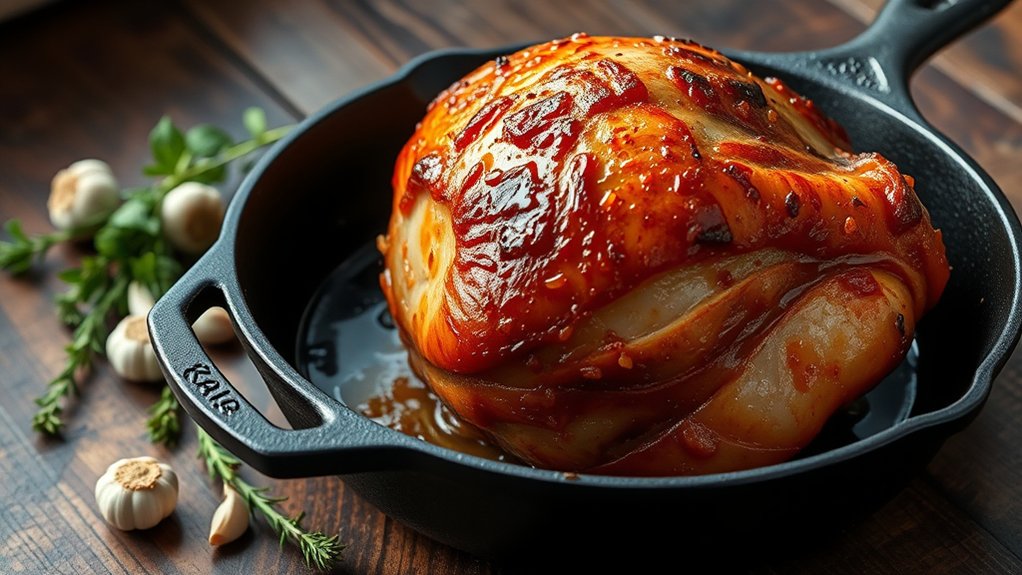
Once your ham is properly prepared and seasoned, you can place it in the cast iron skillet to begin baking. Select a skillet size that comfortably fits your ham, guaranteeing even heat distribution. Typically, a 10 to 12-inch skillet suits most ham types.
Position the ham with the cut side down to promote caramelization and retain juices. Preheat your oven according to your recipe, then transfer the skillet directly inside.
For bone-in hams, verify the skillet can accommodate the bone without crowding. Throughout baking, baste the ham occasionally using its rendered juices to maintain moisture.
Avoid overcrowding the skillet, as it hinders proper cooking. Using the right skillet size tailored to your specific ham type assures uniform heat and ideal flavor development during baking.
How to Adjust Cooking Time and Temperature for Skillet Baking
When baking ham in a cast iron skillet, you’ll need to lower the oven temperature slightly compared to traditional roasting to prevent uneven cooking. Adjust the cooking time by checking the internal temperature regularly, aiming for 140°F to 145°F for fully heated ham. These tweaks guarantee your ham cooks evenly without drying out or burning.
Temperature Settings Guidelines
Although cast iron skillets retain heat exceptionally well, you’ll need to adjust your oven temperature and cooking time to guarantee the ham cooks evenly without drying out. Start by reducing the oven temperature by 25°F compared to conventional baking, as the skillet’s heat retention causes temperature variations that can lead to overcooking.
Maintain a steady temperature around 325°F to 350°F for ideal results. Monitor the internal ham temperature closely with a meat thermometer, aiming for 140°F to 145°F to ensure cooking safety while preserving juiciness. Avoid high heat settings that risk scorching the skillet and drying your ham.
Timing Adjustments Tips
Since cast iron skillets retain and distribute heat differently than traditional baking pans, you’ll need to adjust your cooking time accordingly to prevent overcooking. Start by lowering the cooking temperature by 25°F compared to conventional oven baking, as cast iron’s heat retention intensifies internal heat.
Monitor the ham closely and reduce the total cooking time by about 10-15%, especially if your skillet is preheated. Use a meat thermometer to check for an internal temperature of 140°F for pre-cooked ham or 160°F for fresh ham to ascertain doneness without drying out.
Tips to Get a Perfect Glaze When Baking Ham in Cast Iron
To get a perfect glaze on your ham, start by choosing a glaze that balances sweetness and acidity to complement the meat. Apply the glaze evenly with a brush to guarantee consistent caramelization during baking.
This careful approach enhances both flavor and appearance when using your cast iron skillet.
Choosing The Right Glaze
When you choose the right glaze for your ham, you enhance both flavor and appearance during baking in a cast iron skillet. Understanding glaze types and ideal flavor combinations lets you select one that complements your ham’s natural taste.
Sweet, tangy, or spicy glazes work well, but balance is key.
| Glaze Type | Key Ingredients | Flavor Combination |
|---|---|---|
| Sweet | Brown sugar, honey | Maple & Dijon |
| Tangy | Mustard, citrus juice | Orange & Ginger |
| Spicy | Chili, cloves | Pineapple & Cayenne |
| Savory | Soy sauce, garlic | Rosemary & Balsamic |
Pick a glaze that matches your palate and ham style to achieve a perfect, flavorful crust.
Applying Glaze Evenly
A smooth, even glaze guarantees your ham bakes with a perfectly caramelized crust and balanced flavor. To master the glaze technique, start by brushing the glaze onto your ham using a silicone basting brush. This tool assures an even application without clumping or streaking.
Apply the glaze in thin, consistent layers, covering all exposed surfaces. Avoid pouring glaze directly onto the ham, which can cause uneven cooking. Reapply the glaze at regular intervals during baking to build a rich, glossy finish.
Rotate the ham in your cast iron skillet to reach all sides, assuring thorough coverage. By following this precise glaze technique, you’ll achieve a beautifully caramelized ham with the ideal balance of sweetness and savory notes.
Cleaning and Caring for Your Cast Iron Skillet After Baking Ham
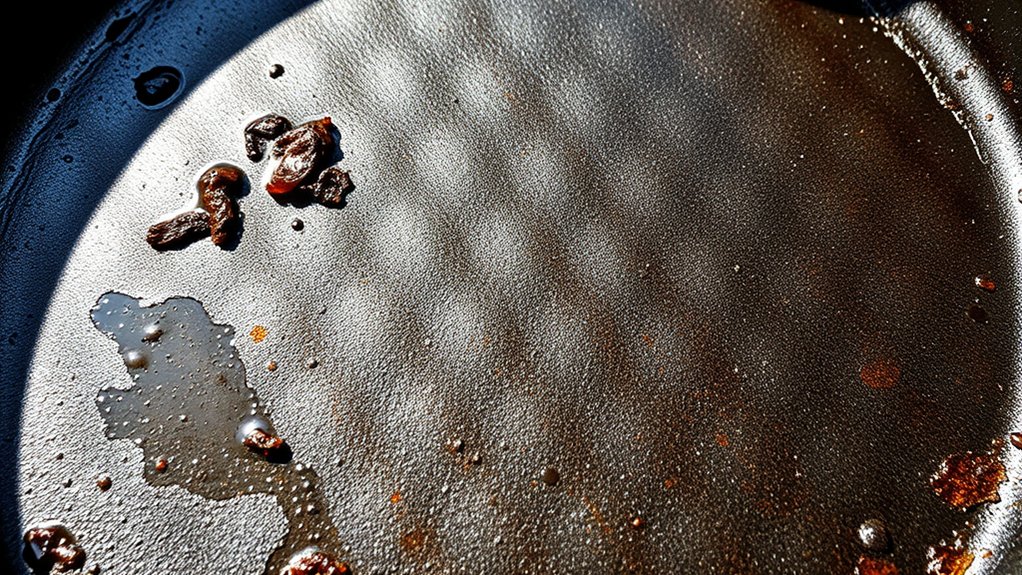
Three essential steps guarantee your cast iron skillet remains in top condition after baking ham. First, implement proper cleaning techniques: avoid soap and harsh scrubbing. Instead, wipe out excess grease, rinse with hot water, and use a non-abrasive brush or scraper to remove stuck-on bits.
Second, dry your skillet immediately and thoroughly to prevent rusting. Third, apply a thin layer of cooking oil to re-season the surface, preserving its natural non-stick qualities. Regular skillet maintenance, including these practices, guarantees durability and performance.
Avoid soaking or placing it in the dishwasher, as moisture and detergents degrade the seasoning. By following these precise steps, you’ll protect your investment and keep your cast iron skillet ready for the next ham baking session.
Frequently Asked Questions
Can I Use a Cast Iron Skillet for Other Types of Meat?
You can definitely use a cast iron skillet for other meats. It’s perfect for grilling chicken and searing steak, providing even heat and excellent browning.
Just preheat well and manage your cooking times carefully.
What Is the Best Type of Ham to Bake in Cast Iron?
Imagine a ham lounging like royalty in your cast iron throne. You’ll want a bone-in, spiral-cut ham. It crisps beautifully with even heat. Among types of ham, this one reigns supreme for baking techniques in cast iron.
Can I Add Vegetables to the Skillet While Baking Ham?
Yes, you can add vegetables to the skillet while baking ham. Choose vegetable combinations with similar cooking times to the ham, like carrots and potatoes, ensuring even cooking without overcooking or undercooking any ingredients in your cast iron skillet.
Is It Safe to Put a Cast Iron Skillet in the Oven?
Yes, you can safely put a cast iron skillet in the oven. Just remember to handle it carefully to maintain oven safety and preserve cast iron care by avoiding sudden temperature changes and seasoning damage.
How Do I Prevent My Ham From Drying Out in Cast Iron?
Think of your ham as a thirsty traveler. Keep it juicy by mastering moisture retention. Use basting techniques regularly, spooning pan juices over the ham during baking to lock in flavors and prevent dryness in your cast iron skillet.
Conclusion
Baking ham in your cast iron skillet isn’t just possible—it’s a smart way to lock in flavor and achieve a beautiful glaze. With a little prep and careful temperature control, your skillet will serve as the perfect stage for a tender, juicy ham.
Just remember to give your cast iron some gentle TLC afterward. Embrace the process, and you’ll turn your kitchen into a cozy haven where simple tools create delicious moments.
In the end, baking ham in a cast iron skillet is a great choice for both flavor and presentation.

Leave a Reply