
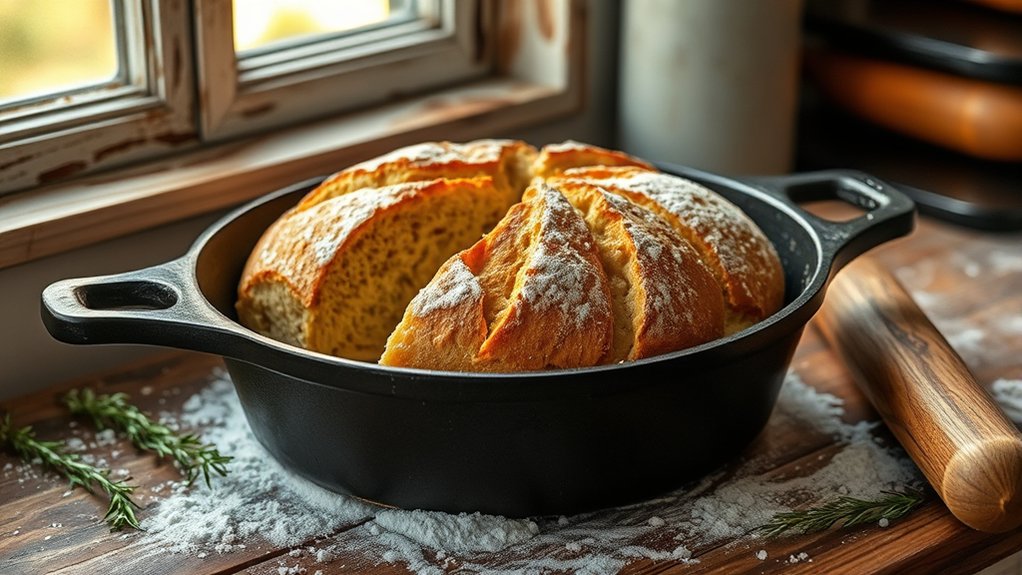
Yes, you can bake bread in a cast iron skillet, and it’s a fantastic choice for achieving evenly baked loaves with a crispy crust.
Using a cast iron skillet helps retain and distribute heat consistently, which is essential for great bread.
Be sure to preheat the skillet before placing your dough inside. Shape your dough to fit the skillet well, and use a lid or foil to trap steam during baking, which helps develop a nice crust.
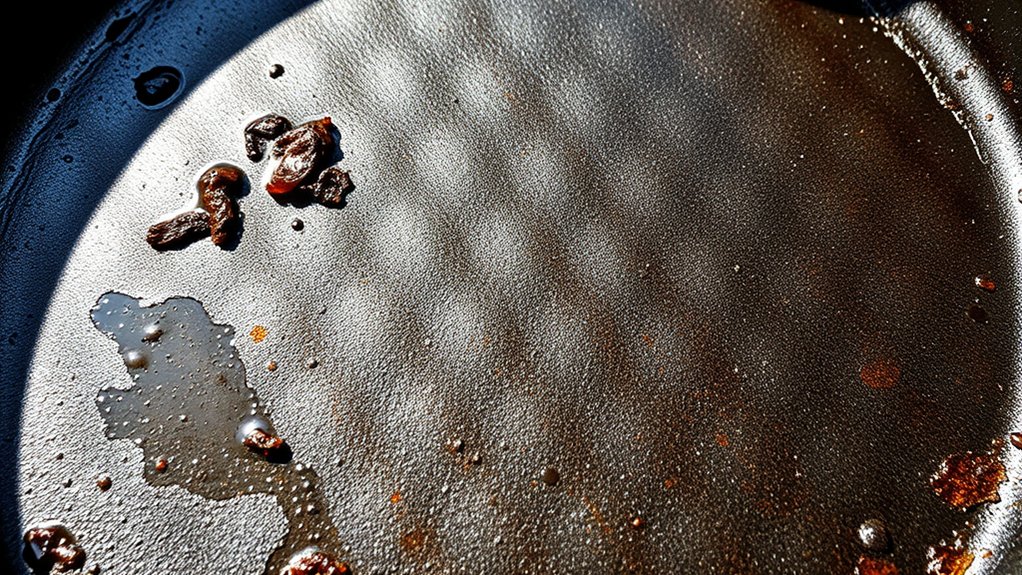
Proper preseasoning and thorough drying of the skillet are key to preventing sticking and rust.
With the right techniques, your bread will have an ideal texture and a beautiful golden finish.
Keep experimenting to master skillet bread baking tips and avoid common mistakes.
Key Takeaways
- Yes, cast iron skillets retain and distribute heat evenly, making them excellent for baking bread with a crispy crust.
- Preheat the skillet thoroughly in the oven to ensure even baking and a golden-brown crust.
- Shape dough to fit the skillet size and cover with a lid or foil to trap steam during baking.
- Properly season and clean the skillet before use to prevent sticking and maintain flavor.
- Allow baked bread to cool completely on a wire rack to achieve optimal crust texture.
Why Cast Iron Skillets Make Great Bread Bakers
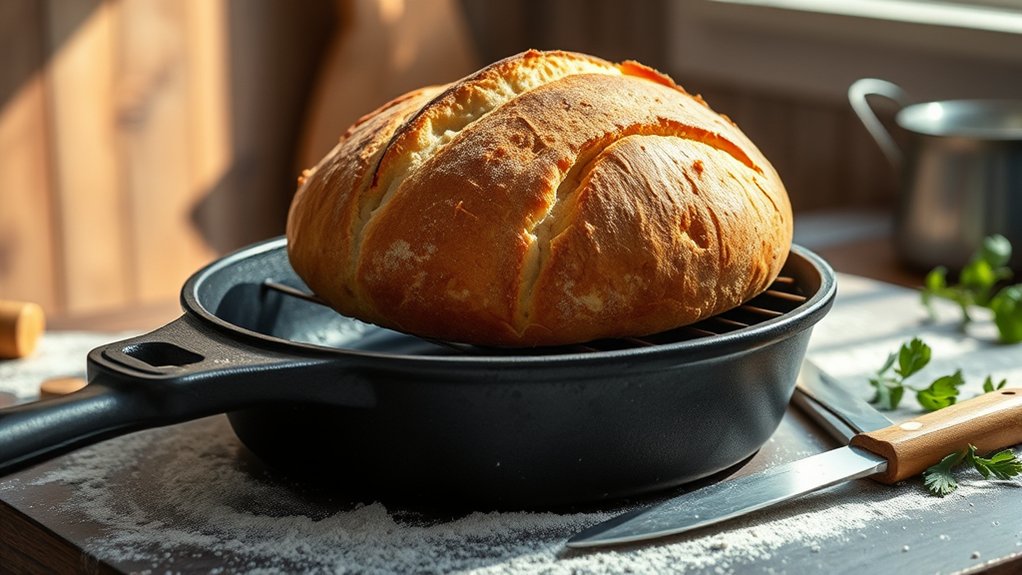
A cast iron skillet excels at baking bread because it retains and distributes heat evenly, creating the perfect environment for a crispy crust and well-cooked interior. When you use cast iron, its superior heat retention guarantees the skillet stays hot throughout the baking process, preventing temperature fluctuations that can cause uneven baking.
This consistent heat helps your bread rise properly while developing a golden-brown crust. The skillet’s thick walls and heavy base absorb and radiate heat uniformly, eliminating hot spots that might burn parts of your loaf.
Preparing Your Cast Iron Skillet for Bread Baking
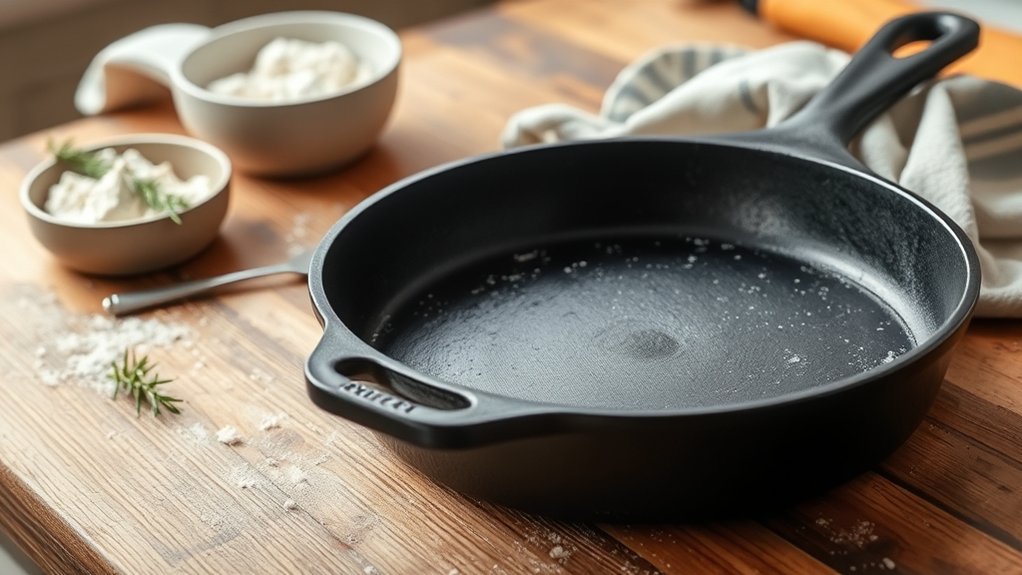
Before baking bread, you’ll want to thoroughly prepare your cast iron skillet to secure ideal results. Start by cleaning the skillet with warm water and a stiff brush to remove any residue; avoid soap as it can strip the seasoning skillet layer. If stuck-on food remains, use coarse salt as a gentle abrasive.
Once clean, dry the skillet completely to prevent rust. Next, apply a thin, even layer of oil—flaxseed or vegetable oil work well—to the interior surface. Place the skillet upside down in a preheated oven at 450°F for an hour to reinforce the seasoning skillet. This process creates a non-stick surface essential for bread release and even baking.
Proper cleaning techniques and seasoning upkeep secure your skillet performs flawlessly every time you bake bread.
Baking Bread Step-by-Step in a Cast Iron Skillet
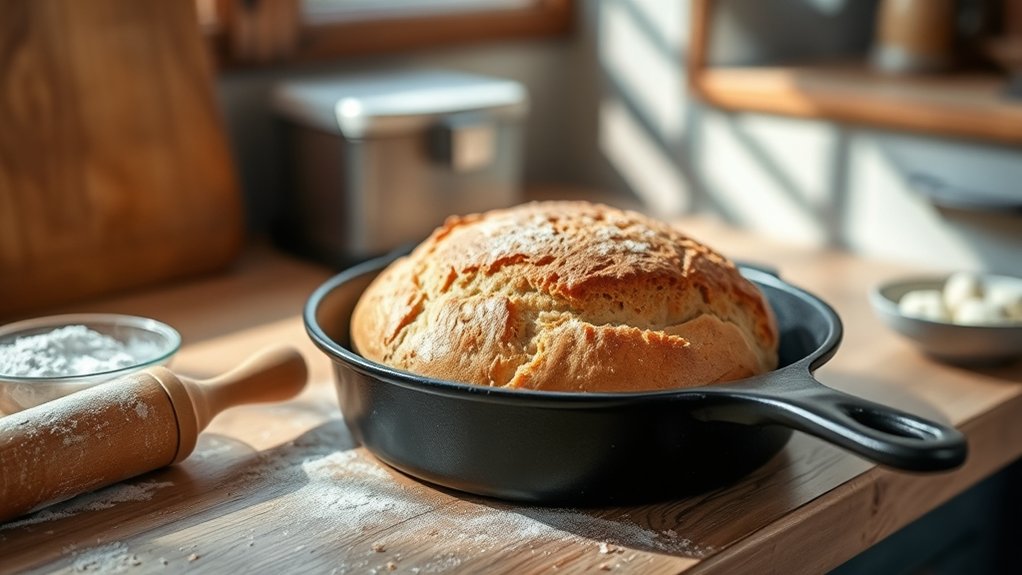
With your cast iron skillet properly seasoned and ready, you can move on to baking the bread itself. Choosing the right bread types and skillet sizes is essential; smaller skillets suit individual loaves, while larger ones handle family-sized bread. Follow these steps:
Properly seasoned cast iron skillets are perfect for baking breads of all sizes, from individual loaves to family-sized batches.
- Preheat your oven with the skillet inside to guarantee even heat distribution.
- Shape your dough to fit your skillet size, allowing room for rise.
- Carefully place the dough into the hot skillet, covering it with a lid or foil.
- Bake according to your bread recipe, adjusting time slightly based on skillet thickness.
This method works well for artisan loaves, sourdough, and quick breads. Monitoring dough fit and heat guarantees ideal rising and baking in your cast iron skillet.
Tips for Perfect Crust and Texture
Several factors influence the crust and texture of your bread when baking in a cast iron skillet. To enhance crust formation, preheat the skillet thoroughly; its even heat distribution promotes a consistent, golden crust. Use a lid or cover during the initial baking phase to trap steam, which helps develop a crisp exterior without drying the crumb.
For texture improvement, ascertain your dough is well-hydrated and properly proofed. This encourages an open crumb and tender interior. Avoid over-flouring the dough to maintain moisture. Additionally, scoring the dough before baking controls expansion, contributing to an attractive crust and uniform texture.
Finally, allow your bread to cool completely on a wire rack. This step finalizes crust crispness and prevents sogginess, guaranteeing the perfect balance between crusty exterior and soft, airy crumb.
Cast Iron Bread Baking Mistakes to Avoid
Although cast iron skillets offer excellent heat retention, you can easily undermine your bread’s quality by making avoidable mistakes. Avoid these common mistakes to guarantee a perfect bake and maintain your skillet care.
Master your cast iron skillet to perfect every loaf and keep your pan in top shape.
- Skipping preseasoning: Without a well-seasoned skillet, bread sticks and flavor suffers.
- Not preheating properly: Cast iron needs time to reach baking temperature; a cold skillet leads to uneven baking.
- Ignoring moisture control: Excess water can cause a soggy crust. Use steam wisely or none at all.
- Using harsh cleaning methods: Avoid soap and abrasive scrubbers. Clean with hot water and dry immediately to protect skillet seasoning.
Frequently Asked Questions
Can I Use My Cast Iron Skillet on an Induction Stove?
Yes, your cast iron skillet has perfect induction compatibility. It heats evenly and retains heat well, giving you skillet advantages like consistent cooking.
Just place it on your induction stove and enjoy efficient, precise heating every time.
How Do I Clean My Skillet After Baking Bread?
Think of your skillet as a loyal steed; after baking, use gentle cleaning techniques. Use warm water and a brush, no soap. Dry thoroughly, then oil it lightly for maintenance tips that keep it battle-ready and rust-free.
Is It Safe to Bake Gluten-Free Bread in Cast Iron?
Yes, you can safely bake gluten-free bread in cast iron. Just guarantee you use the right skillet temperature to avoid sticking or burning.
Properly prepare gluten-free ingredients to achieve the best texture and flavor.
Can I Store Bread in the Cast Iron Skillet?
Storing bread in your cast iron skillet traps moisture, making the crust soggy and inviting mold. Instead, use airtight containers for bread storage.
Preserve skillet maintenance by keeping it dry and seasoned. Don’t let lingering bread moisture ruin your skillet.
Will Baking Bread in Cast Iron Affect Its Seasoning?
Baking bread in cast iron won’t harm your seasoning maintenance if you preheat and oil the skillet properly. It actually enhances bread texture by providing even heat, but avoid acidic ingredients to protect the seasoning layer.
Conclusion
Baking bread in your cast iron skillet is a game-changer. Did you know cast iron retains heat so well that it can maintain an even temperature up to 500°F, giving your bread that perfect golden crust?
By prepping your skillet properly and following the steps, you’ll achieve bakery-quality results at home. Avoid common mistakes, and you’ll enjoy a rustic, crispy loaf every time.
Ready to impress? Your cast iron skillet is your new best baking tool for making delicious homemade bread.

Leave a Reply