
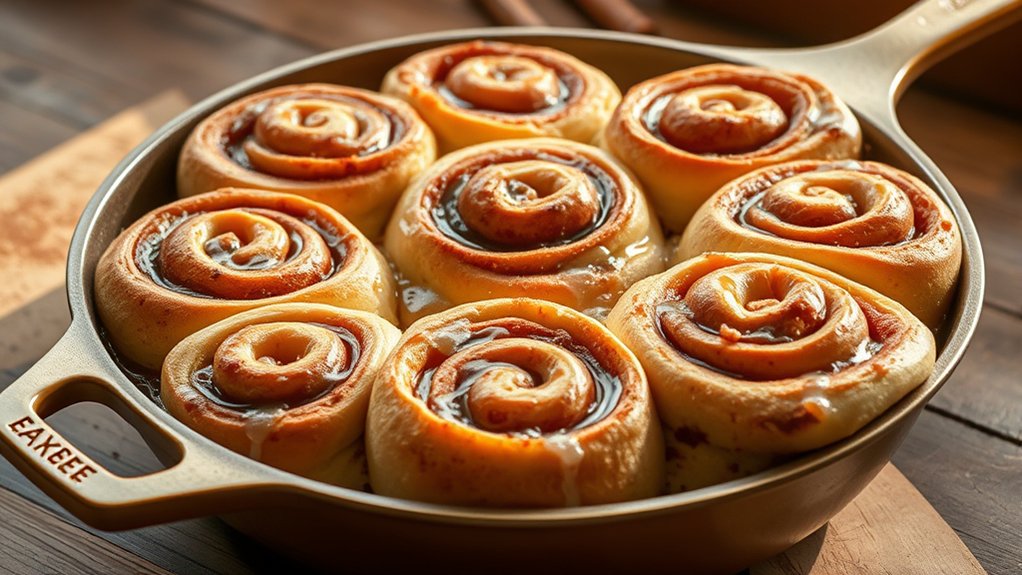
Yes, you can bake cinnamon rolls in a cast iron skillet, and it’s a fantastic choice for achieving even heat and crispy edges.
The cast iron skillet helps create a perfect balance between a soft, gooey center and a delightfully crispy crust.
Just make sure your skillet is well-seasoned and lightly greased to prevent the rolls from sticking.
Arrange the cinnamon rolls with enough space for them to rise properly.
Bake at around 350°F until they turn golden brown and deliciously gooey inside.
Using a cast iron skillet offers a baking experience that’s a little different—and often better—than traditional pans.
Keep reading for helpful tips and tricks to perfect your skillet-baked cinnamon rolls!
Key Takeaways
- Yes, cast iron skillets provide even heat for uniform baking of cinnamon rolls.
- Lightly grease and preheat the well-seasoned skillet to prevent sticking and ensure crisp edges.
- Arrange rolls with space to rise, cover loosely, then bake at 350°F for 20-25 minutes.
- Cast iron enhances flavor and creates a crispy bottom crust compared to traditional pans.
- Covering rolls halfway with foil traps steam, keeping them soft and gooey inside.
Can You Successfully Bake Cinnamon Rolls in a Cast Iron Skillet?
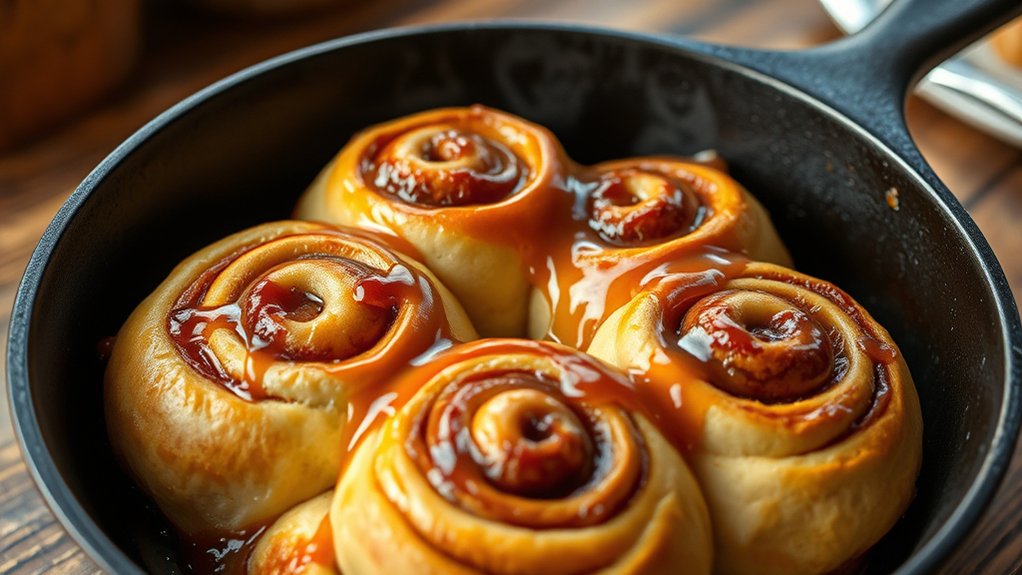
Although it might seem unconventional, you can absolutely bake cinnamon rolls in a cast iron skillet, and doing so offers some unique benefits. When you try skillet baking, you’ll notice even heat distribution, which helps your cinnamon rolls cook uniformly, avoiding soggy or undercooked centers.
Plus, the skillet’s heat retention gives the rolls a delightful crispy edge, adding texture to traditional cinnamon roll variations. This method also allows you to experiment with different sizes and fillings since the skillet accommodates various dough shapes and quantities.
Skillet baking advantages don’t stop at taste and texture; it’s also a one-pan approach, minimizing cleanup. So, if you want to try a fun twist on cinnamon roll variations and enjoy a perfectly baked treat, a cast iron skillet is a reliable tool to use.
Preparing Your Cast Iron Skillet for Cinnamon Rolls
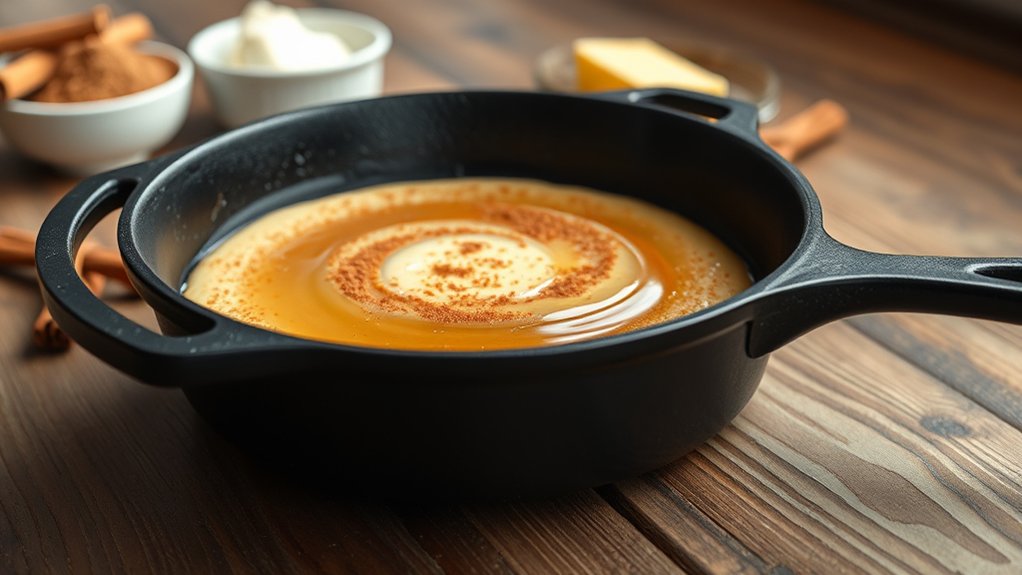
Before you start placing your cinnamon rolls in the skillet, you need to properly prepare it to guarantee even cooking and easy cleanup. First, verify your cast iron is well-seasoned; a good seasoning cast iron surface prevents sticking and enhances flavor.
Next, preheat the skillet gently to distribute heat evenly. This avoids hot spots that can burn your rolls. Finally, lightly grease the skillet with butter or oil to add an extra non-stick layer and promote browning.
Regular skillet maintenance is key: after baking, clean it with minimal soap, dry thoroughly, and apply a thin oil layer to maintain seasoning. Following these steps helps your cast iron skillet perform perfectly every time you bake cinnamon rolls, making the process smoother and your treats tastier.
How to Bake Cinnamon Rolls in a Cast Iron Skillet
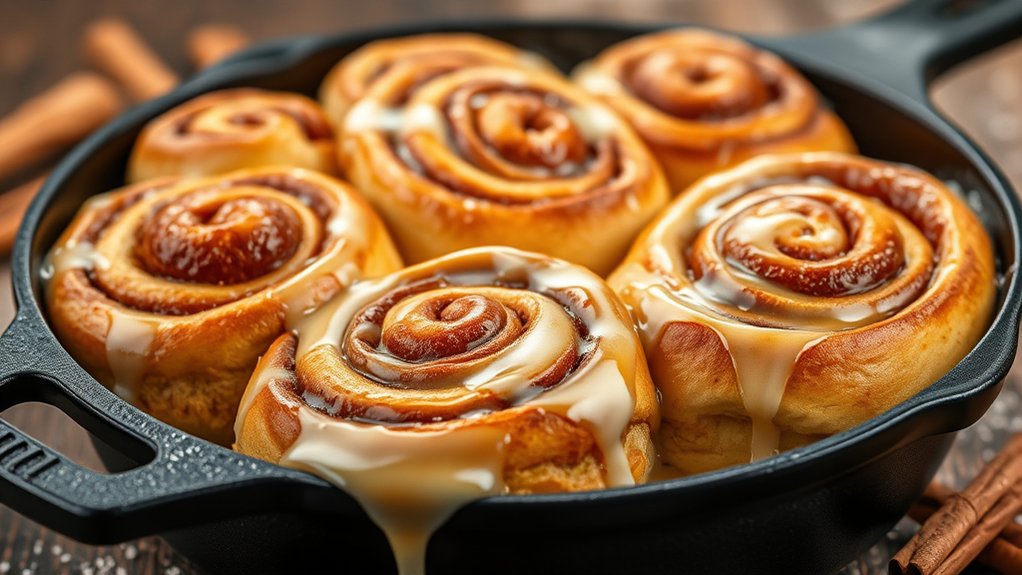
Start by arranging your cinnamon rolls evenly in the prepared cast iron skillet, ensuring each one has enough space to expand without touching too tightly. After placing them, cover the skillet loosely with a clean kitchen towel and let the dough rising process begin.
Arrange cinnamon rolls evenly in the skillet, cover loosely, and let the dough rise until puffy and soft.
This step is essential; it allows the rolls to puff up, ensuring a soft, fluffy texture. Preheat your oven to the recommended temperature while the dough rises.
Once risen, place the skillet in the oven and bake according to the recipe’s baking time, usually around 20 to 25 minutes, until the rolls are golden brown and cooked through. Keep an eye on them near the end to prevent overbaking.
Once done, remove from the oven, let cool slightly, and enjoy your perfectly baked cinnamon rolls straight from the skillet.
How Is Cast Iron Different From Traditional Pans for Cinnamon Rolls?
Once you’ve mastered baking cinnamon rolls in a cast iron skillet, you might wonder what sets this method apart from using traditional pans. Cast iron offers unique benefits that transform your baking experience:
- Superior Heat Retention: Cast iron holds and distributes heat evenly, ensuring your cinnamon rolls bake uniformly without hot spots or burning edges.
- Flavor Enhancement: Over time, a well-seasoned cast iron skillet develops a natural non-stick surface that can subtly enhance flavors, giving your rolls a richer, more complex taste.
- Crispier Crusts: The skillet’s ability to maintain consistent heat creates a delightfully crispy bottom crust, contrasting beautifully with soft, gooey centers.
Using cast iron means you get more consistent baking results with added depth in flavor compared to traditional metal or glass pans.
Tips for Soft and Gooey Cinnamon Rolls in Cast Iron
Although cast iron skillets excel at creating crispy crusts, you can still achieve soft and gooey cinnamon rolls by paying close attention to dough moisture and baking times. Make sure your dough is slightly wetter than usual; this extra moisture helps maintain a soft texture inside without drying out.
When adding your cinnamon sugar filling, use plenty of butter to keep it rich and gooey. Bake the rolls at a moderate temperature, around 350°F, and watch closely; overbaking can dry them out and toughen the crust.
Covering the skillet loosely with foil halfway through baking traps steam, preserving that soft texture and gooey filling you want. Finally, icing your rolls while they’re warm melts perfectly into the gooey center, enhancing softness and flavor.
Frequently Asked Questions
Can I Use Pre-Made Cinnamon Roll Dough in a Cast Iron Skillet?
Yes, you can use pre-made dough in a cast iron skillet. The skillet benefits include even heat distribution and a crispy crust, making your cinnamon rolls bake perfectly golden and delicious with minimal effort.
How Do I Clean My Cast Iron Skillet After Baking Cinnamon Rolls?
Think of your cast iron as a loyal knight. After battle, you gently scrub with warm water and a soft brush. Avoid soap, dry thoroughly, then oil it well. These cleaning methods guarantee lasting maintenance and performance.
Will Cast Iron Affect the Cinnamon Roll’s Flavor?
You won’t notice flavor absorption affecting your cinnamon rolls much, since cast iron’s seasoning is stable. Plus, its even heat distribution helps bake them perfectly, enhancing that warm, gooey texture you’re aiming for every time.
Can I Bake Other Pastries in a Cast Iron Skillet?
You can bake various pastry types in a cast iron skillet, like croissants or turnovers. Just adjust baking techniques by preheating the skillet and monitoring heat carefully to guarantee even cooking and a perfectly crispy, golden crust every time.
Is It Safe to Put a Cast Iron Skillet in the Oven?
You can safely put your cast iron skillet in the oven. It withstands temperatures over 500°F thanks to its incredible durability.
Just remember to use oven mitts, as the skillet heats evenly and retains heat impressively well.
Conclusion
Baking cinnamon rolls in your cast iron skillet is like wrapping comfort in a warm, rustic hug. With a well-seasoned pan and a little love, you’ll get golden edges and gooey centers that sing with cinnamon sweetness. The skillet’s even heat cradles each roll, turning simple dough into a cozy masterpiece.
The cast iron’s ability to retain and distribute heat evenly ensures your cinnamon rolls bake perfectly every time. Plus, the slight crispiness on the edges adds a delightful texture contrast to the soft, fluffy centers. It’s a charming way to elevate this classic treat.
So, grab your cast iron, follow the steps, and let your kitchen fill with that irresistible aroma. Baking cinnamon rolls in a cast iron skillet is a simple yet rewarding way to enjoy this beloved pastry.

Leave a Reply