
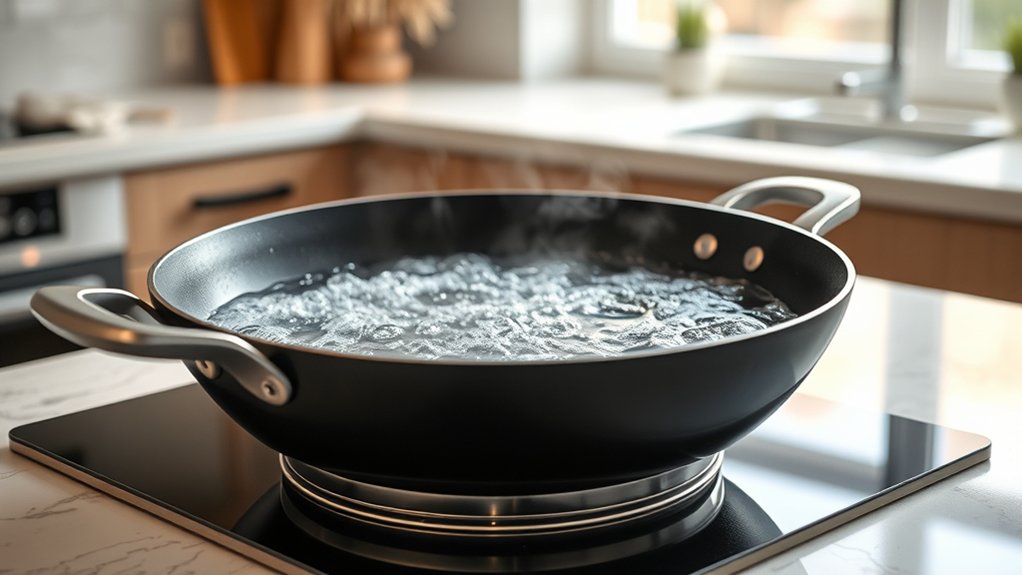
You can safely boil water in an electric skillet if you follow the right steps.
Electric skillets are versatile appliances that can handle this task effectively when used properly. Start by filling the skillet no more than 75% full and placing it on a stable surface.
Set the temperature to high and cover the skillet with a lid to speed up the boiling process. Keep in mind that electric skillets may take longer to boil water compared to kettles or stovetop pots.
Use caution and ensure proper maintenance to protect your appliance.
By following these guidelines, you can enjoy the benefits of boiling water in your electric skillet.
Keep exploring to understand the full process, benefits, and care tips.
Key Takeaways
- Yes, you can boil water in an electric skillet, but ensure it has a flat heating surface and is designed to handle high temperatures safely.
- Fill the skillet with water up to 75% capacity and set the temperature to high for effective boiling.
- Covering the skillet with a lid helps retain heat and speeds up the boiling process.
- Electric skillets boil water slower and less efficiently compared to electric kettles or stovetop pots.
- Always follow manufacturer guidelines and never leave the skillet unattended while boiling water for safety.
Can You Safely Boil Water in an Electric Skillet?
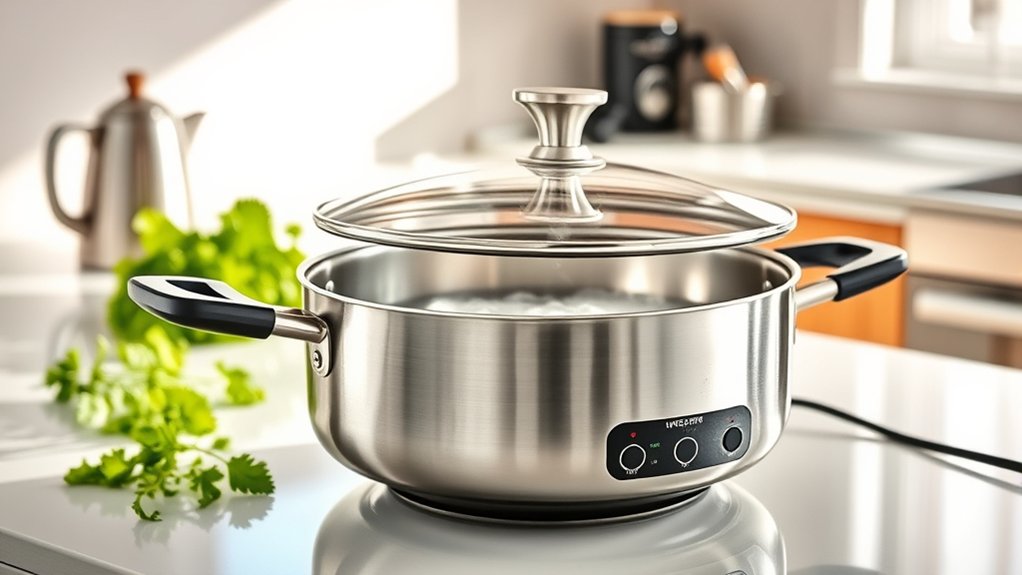
How safely you can boil water in an electric skillet depends on the skillet’s design and your adherence to manufacturer guidelines. Many electric skillets are engineered for liquid heating, but you must follow safety precautions to avoid damage or hazards.
Verify the skillet has a flat, stable heating surface and sufficient water capacity to prevent dry heating, which compromises heating efficiency and risks overheating. Avoid exceeding the maximum fill line, and never leave the skillet unattended while boiling water.
Confirm that the skillet’s electrical components and temperature controls are rated for prolonged exposure to boiling temperatures. Using the appliance within these parameters maintains ideal heating efficiency and prevents electrical or mechanical failures, guaranteeing safe operation when boiling water in your electric skillet.
How to Boil Water in Your Electric Skillet Step-by-Step
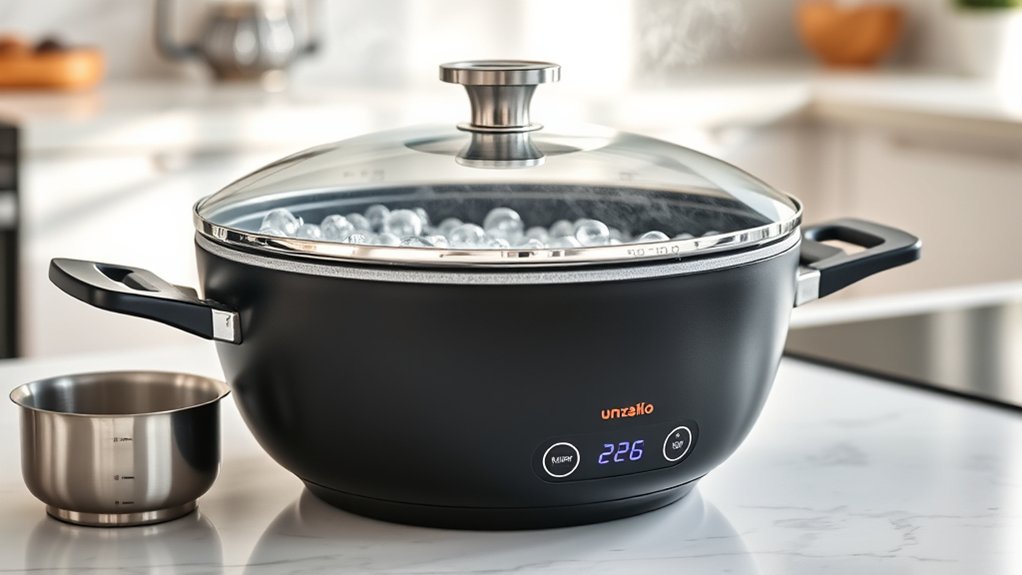
To boil water effectively in your electric skillet, start by ensuring the appliance is clean and placed on a stable, heat-resistant surface. Next, consider the skillet capacity to avoid overfilling, which can cause spills when the water boils.
Ensure your electric skillet is clean and stable to prevent spills when boiling water.
Follow these steps for ideal results:
Pour water into the skillet, filling it no more than 75% of its capacity. Set the temperature control to high to rapidly increase water temperature.
Cover the skillet with a lid to retain heat and speed up boiling. Monitor the water temperature; once it reaches 212°F (100°C), the water is boiling.
Pros and Cons of Boiling Water in an Electric Skillet
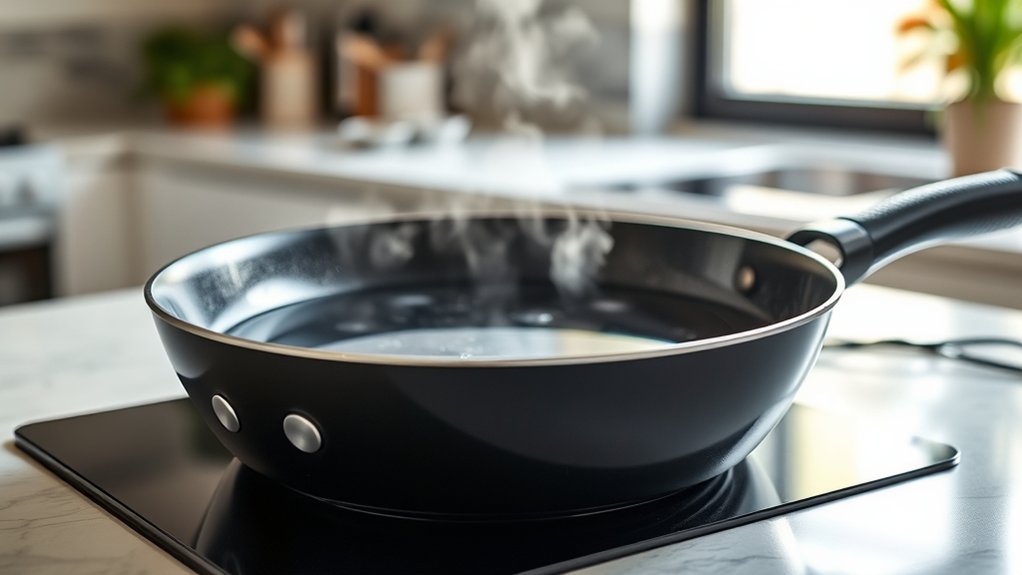
Although electric skillets aren’t primarily designed for boiling water, they offer certain advantages and drawbacks that you should consider before relying on them for this purpose.
On the plus side, electric skillets provide notable cooking versatility, allowing you to switch between boiling, frying, and sautéing without changing appliances. However, their boiling efficiency is generally lower compared to dedicated appliances like electric kettles or stovetop pots, resulting in longer heating times and increased energy consumption.
Additionally, electric skillets may not maintain a consistent boil due to temperature control limitations, which can affect cooking outcomes. If you prioritize multi-functionality over speed, an electric skillet can suffice for boiling water. Yet, if rapid, efficient boiling is essential, you might find specialized equipment more suitable for your needs.
How to Care for Your Electric Skillet After Boiling Water
Proper maintenance after boiling water in your electric skillet guarantees its longevity and ideal performance. To keep your skillet in top condition, follow a consistent maintenance routine and apply effective cleaning tips.
First, unplug the skillet and allow it to cool completely before cleaning. Avoid submerging the electrical components in water. Use a soft cloth or sponge with mild detergent to clean the cooking surface. For stubborn residues, soak a damp cloth over the area to loosen debris without abrasive scrubbing. Dry thoroughly to prevent moisture damage.
Incorporate these steps into your routine:
- Unplug and cool before cleaning
- Wipe cooking surface with mild detergent
- Soak and gently remove residues if needed
- Dry completely before storage
These steps guarantee your electric skillet remains safe, efficient, and durable after boiling water.
Frequently Asked Questions
Can I Use an Electric Skillet to Boil Water for Tea?
Yes, you can use an electric skillet for tea preparation by boiling water. Make certain the temperature is set high enough to reach boiling, and monitor carefully to avoid overheating or water evaporation during the process.
Does Boiling Water in an Electric Skillet Use More Electricity?
Boiling water in an electric skillet generally uses more electricity due to lower energy efficiency compared to specialized appliances like electric kettles.
For better efficiency, you should consider cooking alternatives designed specifically for rapid boiling.
Can I Boil Water in an Electric Skillet Without a Lid?
Yes, you can boil water in an electric skillet without a lid, but it extends boiling time due to heat loss.
For efficient boiling techniques, use a lid to retain heat and optimize electric skillet usage.
How Long Does It Usually Take to Boil Water in an Electric Skillet?
You’ll usually see water boiling in an electric skillet within 7 to 10 minutes, depending on boiling techniques and electric skillet efficiency.
Mastering these factors can optimize your time and energy use precisely every time.
Is Boiling Water in an Electric Skillet Safe for Drinking Purposes?
Yes, boiling water in an electric skillet is generally safe for drinking water, but you should guarantee the skillet is clean and free of contaminants. This helps avoid safety concerns related to residue or non-food-grade materials affecting water quality.
Conclusion
You can safely boil water in your electric skillet by following proper steps and precautions. Make sure to fill the skillet with enough water, but avoid overfilling to prevent spills. Keep an eye on the temperature settings to reach a boil without damaging the skillet.
Remember, “a stitch in time saves nine”—maintaining your skillet after boiling prevents damage and prolongs its lifespan. Clean the skillet thoroughly and dry it properly to avoid rust or residue buildup. Proper care ensures your skillet remains in good condition for future use.
While it’s convenient, be mindful of energy use and potential wear. Boiling water frequently in an electric skillet might cause faster wear compared to occasional use. By understanding the pros, cons, and care involved, you’ll use your electric skillet efficiently and effectively for boiling water whenever needed.

Leave a Reply