
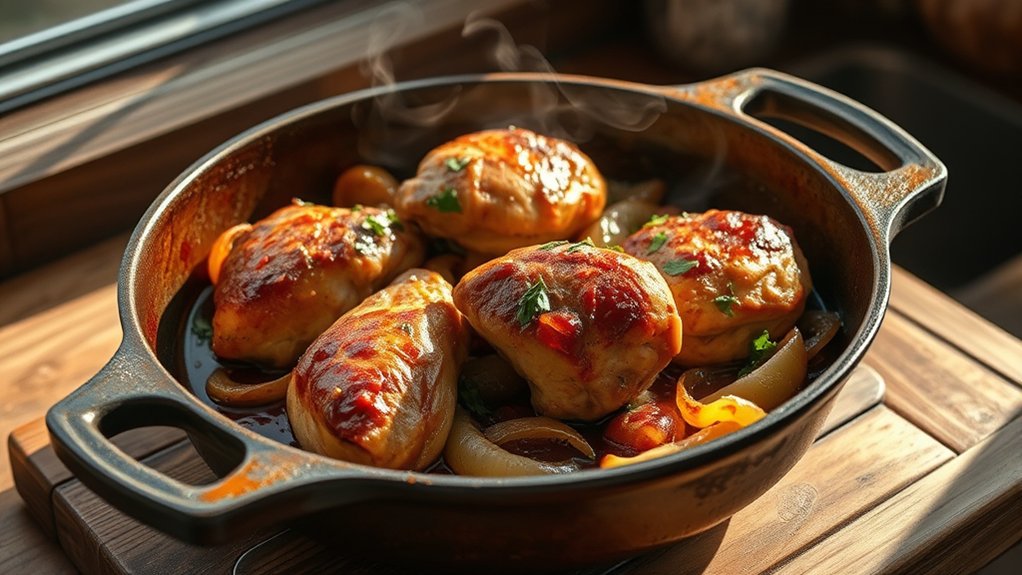
Yes, you can braise in a cast iron skillet with great results. Cast iron’s excellent heat retention and even distribution help you sear meat perfectly while maintaining a steady simmer. This makes it an ideal choice for braising.
Its heavy lid traps moisture, preventing dryness and promoting tenderness. Just make sure you keep the temperature low and maintain enough liquid in the pan.
With proper technique, you’ll create richly flavored, melt-in-your-mouth dishes. If you want to master the process fully, there’s more to uncover.
Experiment with different liquids and cooking times to achieve the best results. Your cast iron skillet can become a versatile tool for delicious braised meals.
Key Takeaways
- Yes, cast iron skillets are ideal for braising due to excellent heat retention and even heat distribution.
- Sear meat at high heat in the skillet, then add liquid and aromatics to deglaze and enhance flavor.
- Use a heavy lid to trap moisture during low-temperature simmering for tender, flavorful results.
- Avoid frequent lid lifting to maintain consistent temperature and moisture for proper braising.
- Ensure enough liquid covers the meat and maintain a steady low heat to prevent drying or burning.
Can You Braise in a Cast Iron Skillet?
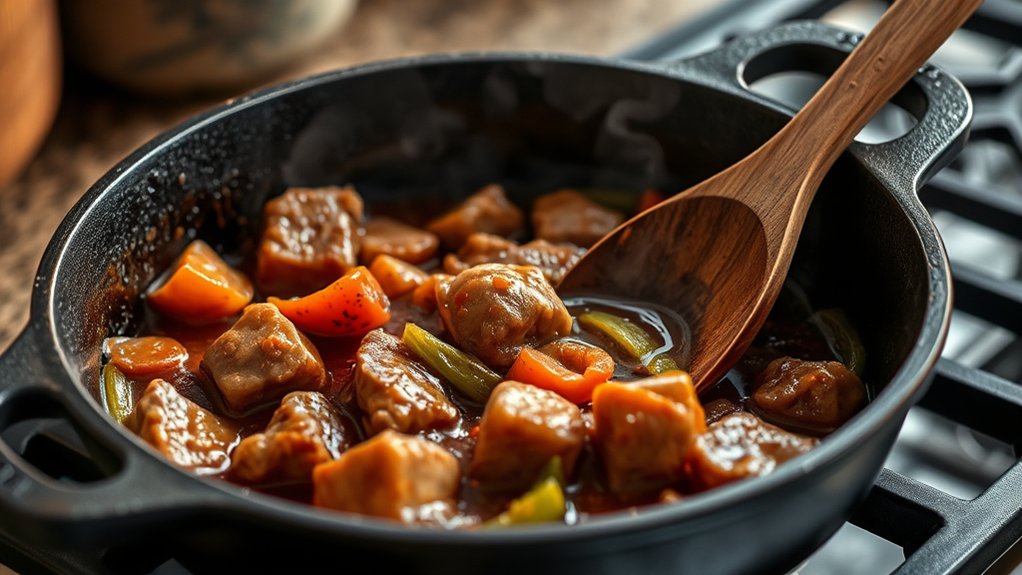
Wondering if you can braise in a cast iron skillet? Absolutely, you can. Braising techniques rely on combining dry and moist heat to tenderize tougher cuts, and a cast iron skillet supports this method well.
Its skillet advantages include excellent heat retention and even distribution, which help maintain a consistent simmer, crucial for effective braising. You’ll start by searing the meat directly in the skillet to develop flavor, then add liquid to partially submerge the ingredients, cover it, and let it cook slowly.
The heavy skillet lid or a tight-fitting cover traps steam, ensuring moisture circulates properly. Using a cast iron skillet for braising simplifies your process, eliminating the need for multiple pots while delivering rich, deeply developed flavors through precise temperature control.
How Braising Works and Why Cast Iron Is Ideal
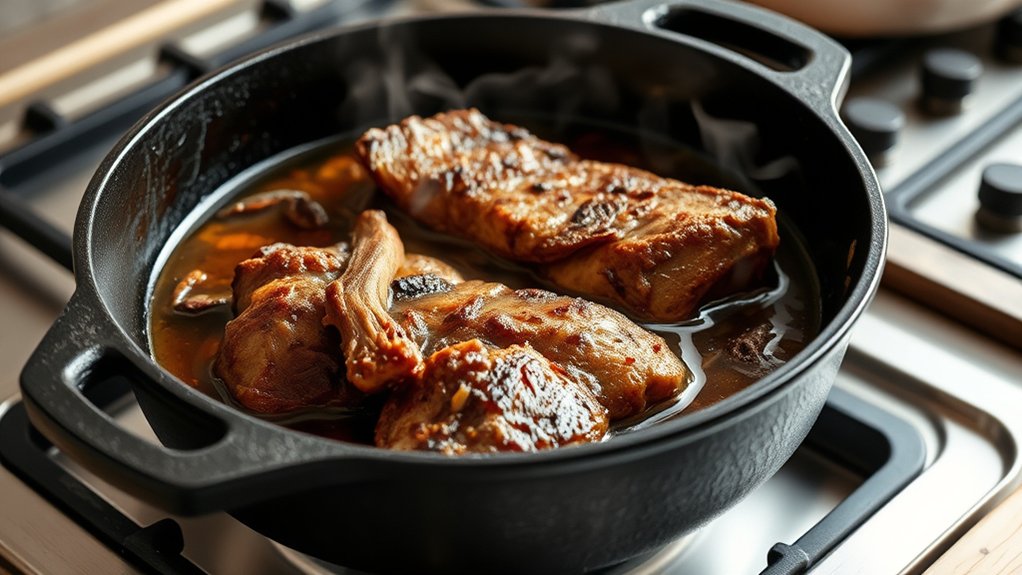
Although braising might seem simple, it involves a careful balance of cooking techniques that transform tough cuts into tender, flavorful dishes. Braising techniques combine searing at high heat and slow cooking in liquid, breaking down connective tissues while infusing rich flavors.
Cast iron benefits make it an ideal vessel for this process. Its excellent heat retention guarantees even searing, creating a flavorful crust without hot spots. Once you add liquid, the heavy lid traps moisture, maintaining a consistent low temperature for slow cooking.
This steady heat prevents scorching and promotes thorough tenderness. Additionally, cast iron’s durability withstands oven and stovetop use, giving you versatility. Understanding these braising techniques and cast iron benefits equips you to master this method efficiently.
How to Braise in a Cast Iron Skillet: Step-by-Step
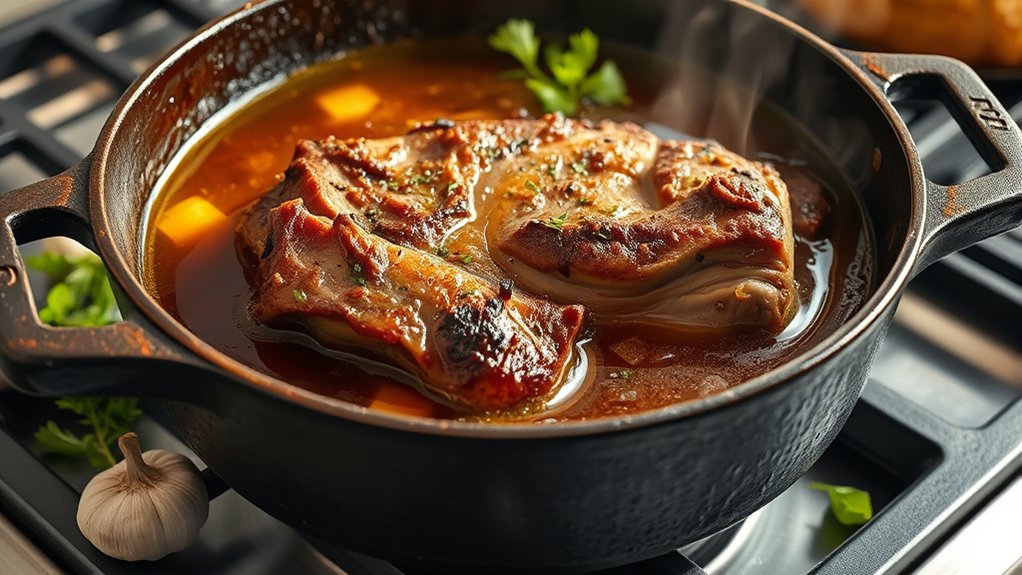
Braising in a cast iron skillet involves three essential steps: searing, deglazing, and slow cooking. First, sear your meat over high heat to lock in juices and create a caramelized crust. Next, deglaze by adding liquid to lift flavorful browned bits, key for flavor absorption. Finally, cover and cook slowly at low heat until tender.
| Step | Action | Purpose |
|---|---|---|
| 1 | Sear | Seal juices, build crust |
| 2 | Deglaze | Extract fond, add flavor |
| 3 | Add aromatics & liquid | Enhance braising base |
| 4 | Cover and simmer | Tenderize meat gently |
| 5 | Rest and serve | Set flavors and texture |
Master these braising techniques, and your cast iron skillet will deliver rich, deeply flavored dishes every time.
Common Braising Problems and How to Avoid Them
Perfecting the steps of searing, deglazing, and slow cooking sets a solid foundation, but challenges can still arise during braising. One common issue is uneven cooking, often caused by poor temperature control. Keep your oven or stovetop at a consistent low temperature. Too high, and your meat dries out; too low, and it won’t tenderize properly.
Another problem is sticking or burning, which you can prevent by properly seasoning your cast iron skillet before use and ensuring enough liquid covers the meat. Seasoning tips include regularly oiling your skillet and avoiding soap that strips its protective layer.
Finally, avoid lifting the lid too often. Maintaining a steady cooking environment is key to successful braising in your cast iron skillet.
Frequently Asked Questions
Can I Braise Vegetables in a Cast Iron Skillet?
Yes, you can braise vegetables in a cast iron skillet. Use proper braising techniques by searing veggies first, then adding liquid and covering.
This guarantees even cooking and enhances vegetable preparation with deep, rich flavors.
Is It Safe to Braise Acidic Foods in Cast Iron?
Like a sponge soaking up flavors, acidic ingredients can react with cast iron during braising. You shouldn’t braise highly acidic foods often, as it can damage the seasoning and alter taste; choose proper cooking techniques instead.
How Do I Clean My Cast Iron Skillet After Braising?
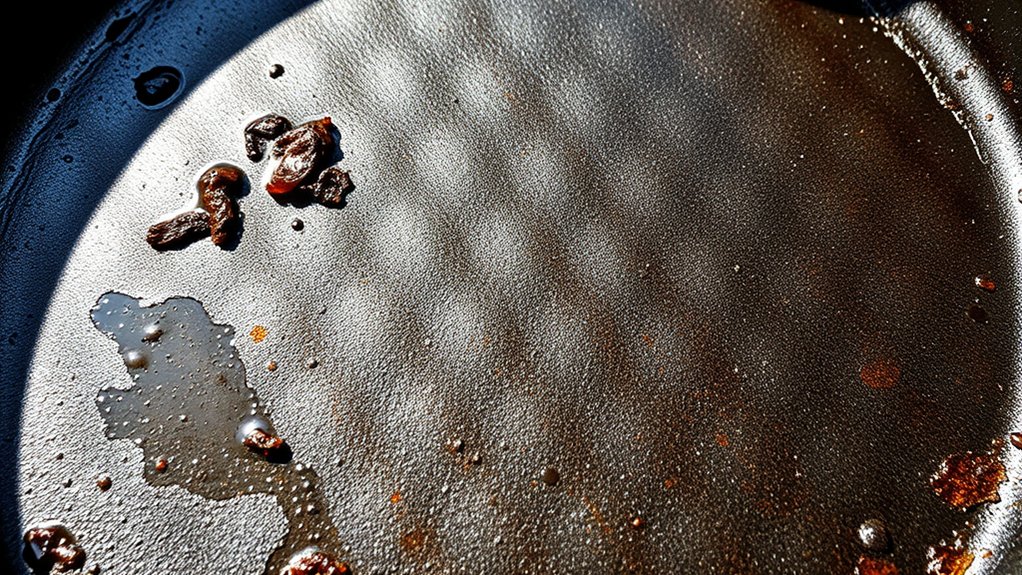
After braising, let your skillet cool slightly, then use warm water and a non-abrasive brush to clean. Avoid soap; dry thoroughly and apply a thin oil layer. These cleaning techniques guarantee proper maintenance and prevent rust.
Can I Braise on an Induction Cooktop With Cast Iron?
Yes, you can braise on an induction cooktop with cast iron. Cast iron offers excellent induction compatibility and even heat distribution, ensuring your food cooks slowly and evenly.
Just monitor the temperature to avoid overheating.
Does Braising in Cast Iron Affect the Flavor of Food?
Yes, braising in cast iron enhances flavor absorption due to the skillet’s seasoning impact. You’ll notice richer, deeper tastes as the seasoned surface imparts subtle nuances, elevating your dish’s overall flavor profile effectively.
Conclusion
Think of your cast iron skillet as a trusted ship, steady and strong, ready to navigate the rich, slow waters of braising. With its even heat and sturdy build, it transforms tough ingredients into tender treasures.
By following the steps carefully and avoiding common pitfalls, you’ll steer your meal to delicious success every time. Embrace this cookware, and you’ll master braising like a seasoned captain commanding the perfect culinary voyage.
When it comes to cooking techniques, yes, you can braise in a cast iron skillet. Its ability to retain and distribute heat evenly makes it an excellent choice for braising dishes to perfection.


Leave a Reply