
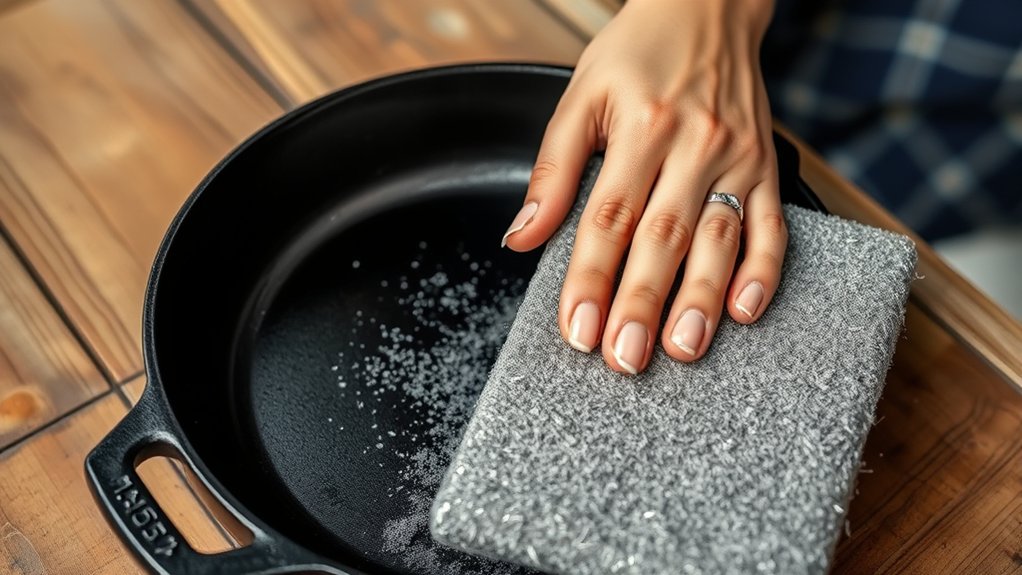
You can clean a cast iron skillet with steel wool, but only for tough, baked-on residue.
Steel wool is abrasive and can strip away your skillet’s seasoning if used too often, making it prone to rust.
Instead, start with gentler cleaning methods like warm water, a stiff brush, or coarse salt.
These options are usually enough to remove most food particles without damaging the surface.
If you do decide to use steel wool, be sure to re-season your skillet afterward.
This will help restore the protective layer and keep your cast iron in great condition.
Keep reading to discover the best cleaning and restoration tips for your cast iron skillet.
Key Takeaways
- Steel wool can strip seasoning and damage cast iron if used frequently, so use it sparingly for tough, stuck-on residue only.
- Before using steel wool, rinse the skillet with warm water to loosen debris and prevent scratching the surface.
- Use fine-grade steel wool gently, then rinse thoroughly and dry immediately to avoid rust on the cast iron.
- After cleaning with steel wool, re-season the skillet by applying oil and baking it at 450°F for an hour.
- For regular cleaning, prefer gentler methods like warm water, stiff brushes, or coarse kosher salt to preserve seasoning.
Is It Safe to Clean Cast Iron With Steel Wool?
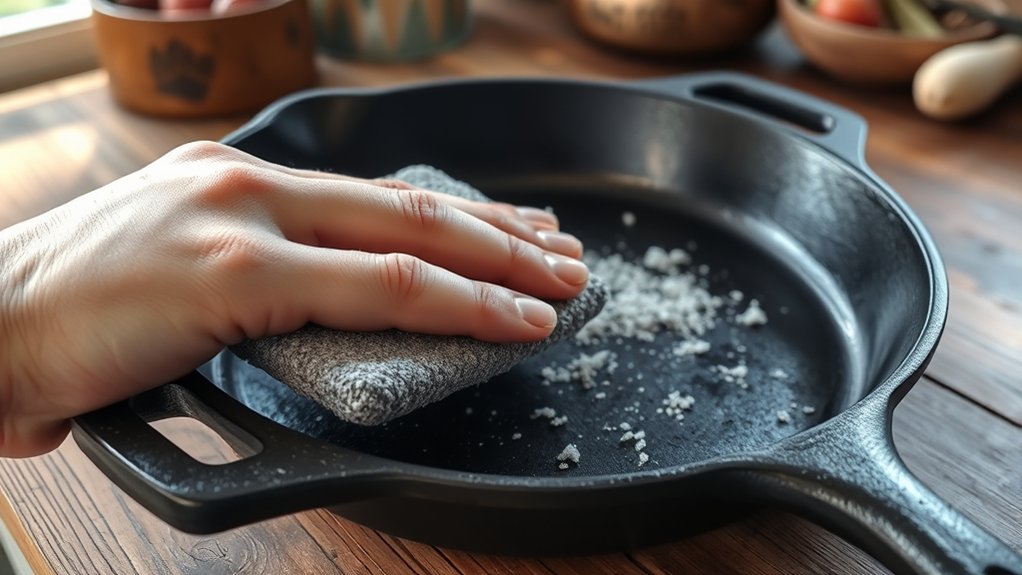
How safe is it to clean cast iron with steel wool? Steel wool is abrasive and can strip the seasoning, the essential protective layer on your skillet. Using it frequently can damage the cast iron surface, leading to rust and more maintenance.
For effective cast iron maintenance, you should opt for gentler cleaning alternatives. Warm water and a stiff brush usually do the trick, preserving the seasoning. If you encounter stubborn residue, coarse kosher salt acts as an excellent scrub without harming the pan.
Avoid harsh detergents or soaking your skillet for long periods, as these can also degrade the seasoning. In sum, reserve steel wool for rare, intensive restoration jobs, and rely on safer cleaning alternatives for regular upkeep to keep your cast iron skillet in prime condition.
When Should You Use Steel Wool on Cast Iron Skillets?
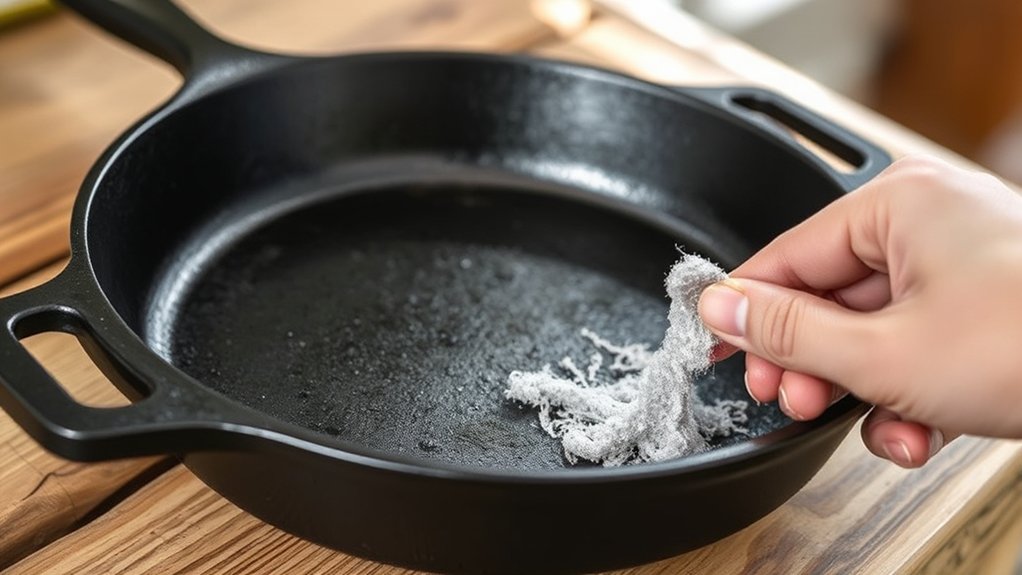
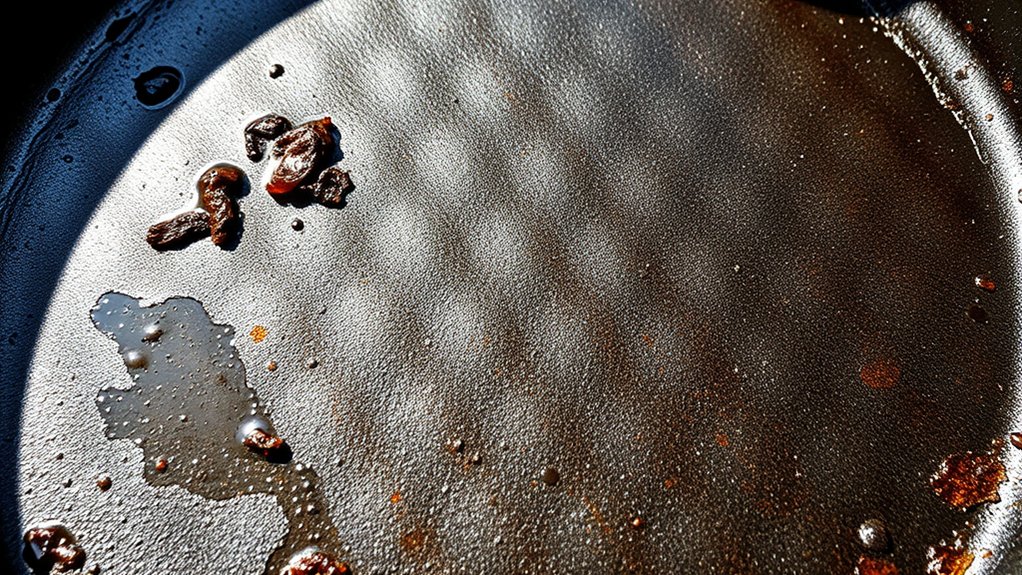
While steel wool isn’t recommended for everyday cleaning, there are specific situations where using it makes sense. You should consider steel wool when your cast iron skillet has stubborn, baked-on residue that regular scrubbing or steel wool alternatives can’t remove.
For example, after cooking sticky sauces or burnt food that won’t budge with a brush or sponge, steel wool can restore the surface efficiently. However, use it sparingly to avoid stripping your skillet’s seasoning.
Before reaching for steel wool, try milder steel wool alternatives like a chainmail scrubber or coarse salt with a sponge. These options often clean effectively without risking damage. Knowing when to use steel wool helps maintain your skillet’s longevity and performance without unnecessary wear.
How to Clean a Cast Iron Skillet With Steel Wool
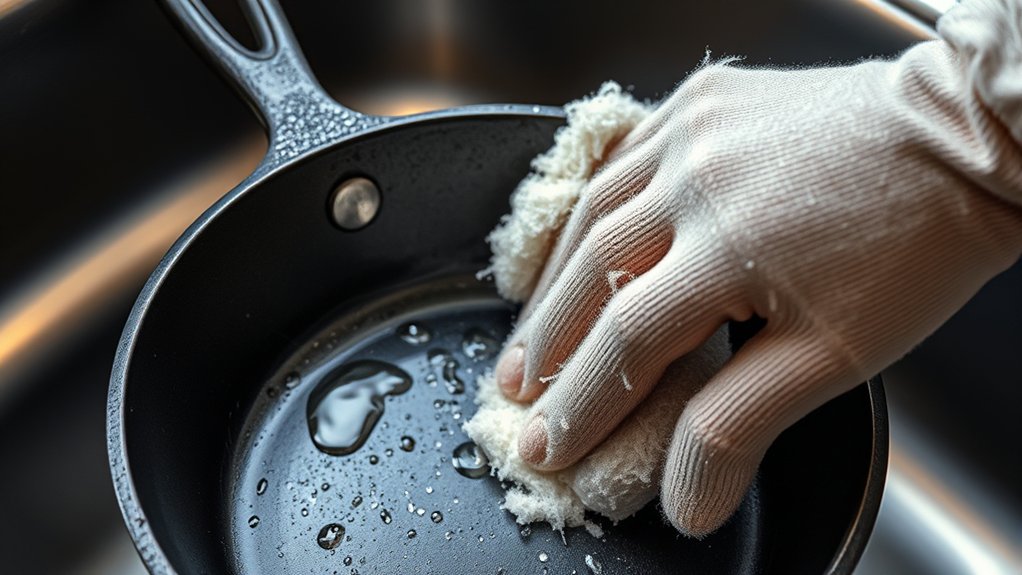
One effective method to tackle tough, baked-on residue on your cast iron skillet involves using steel wool carefully and deliberately. Start by rinsing the skillet with warm water to loosen debris. Then, take fine-grade steel wool and gently scrub the affected areas, focusing on stubborn spots without applying excessive pressure.
Avoid soaking the skillet for too long to prevent rust. Once the residue is removed, rinse thoroughly and dry the skillet immediately with a clean cloth. Finally, apply a thin layer of oil to restore the seasoning and protect the surface.
This cleaning method, while abrasive, can be part of proper cast iron care when used sparingly and with caution to maintain your skillet’s durability and non-stick properties.
Better Ways to Clean Cast Iron Without Steel Wool
Wondering how to clean your cast iron skillet without resorting to steel wool? You have effective alternative cleaning methods that protect your skillet’s seasoning and structure.
Start by rinsing the pan with hot water immediately after use to prevent stuck-on food. Use a stiff nylon brush or non-abrasive scrubber to remove residue gently.
For tougher spots, sprinkle coarse kosher salt into the pan and scrub with a damp cloth; the salt acts as a natural abrasive without harming the seasoning. Avoid soap or harsh detergents, as they can strip the protective layer.
After cleaning, always dry your skillet thoroughly and apply a light coat of oil to maintain its non-stick surface. These steps guarantee ideal cast iron maintenance, extending the life and performance of your skillet.
How to Restore Cast Iron Seasoning After Using Steel Wool
If you’ve used steel wool to clean your cast iron skillet, you’ve likely stripped away some of its seasoning, leaving the surface vulnerable to rust and sticking. To restore your skillet, start by thoroughly drying it to prevent oxidation.
Next, apply a thin layer of high-smoke-point oil, such as flaxseed or grapeseed oil, covering all surfaces. Preheat your oven to 450°F (232°C), place the skillet upside down on the middle rack, and bake for one hour.
Coat skillet with high-smoke-point oil, bake upside down at 450°F for one hour to season.
This seasoning method polymerizes the oil, creating a durable non-stick coating. Let the skillet cool inside the oven before storing. For best results, repeat this seasoning process two to three times.
These restoration tips will help rebuild the protective layer, ensuring your cast iron skillet performs effectively after steel wool use.
Frequently Asked Questions
Can Steel Wool Remove Rust From Cast Iron Effectively?
Yes, steel wool effectively removes rust from your cast iron, making rust removal straightforward. You’ll want to scrub gently to protect seasoning, then re-season the skillet to maintain cast iron maintenance and guarantee durability.
Does Steel Wool Damage the Non-Stick Surface of Cast Iron?
Imagine scrubbing a treasured painting with sandpaper. Steel wool can similarly harm your cast iron’s seasoning, risking non-stick longevity. For cast iron maintenance, gentler methods preserve that prized, smooth surface without stripping its protective layer.
How Often Can I Use Steel Wool on My Skillet?
You should use steel wool sparingly, only during deep cleaning to avoid damaging seasoning. For regular cast iron maintenance, stick to gentle methods. Adjust cleaning frequency based on use to preserve your skillet’s non-stick surface.
What Type of Steel Wool Is Best for Cast Iron?
You’ll want to choose a fine grade steel wool for your cast iron’s gentle scrubbing tips. This guarantees effective cleaning without harsh abrasion, keeping your skillet’s seasoning intact while tackling stubborn residue with precision and care.
Can Steel Wool Be Used on Other Cookware Materials?
You can use steel wool on copper cookware and aluminum pots, but be cautious; it may scratch softer metals. For delicate surfaces, opt for gentler scrubbers to maintain their finish and prevent damage during cleaning.
Conclusion
While steel wool can be a helpful ally for tougher cast iron cleaning challenges, it’s best reserved for occasional, careful use to avoid compromising your skillet’s cherished seasoning. When you do employ this method, be sure to lovingly restore the protective layer afterward.
For everyday maintenance, gentler techniques will keep your cast iron performing beautifully without the need for abrasive intervention. Treat your skillet with mindful care, and it’ll reward you with lasting culinary excellence.
In conclusion, while you can clean a cast iron skillet with steel wool, it should be done sparingly and with caution to preserve the seasoning that makes your skillet special.



Leave a Reply