
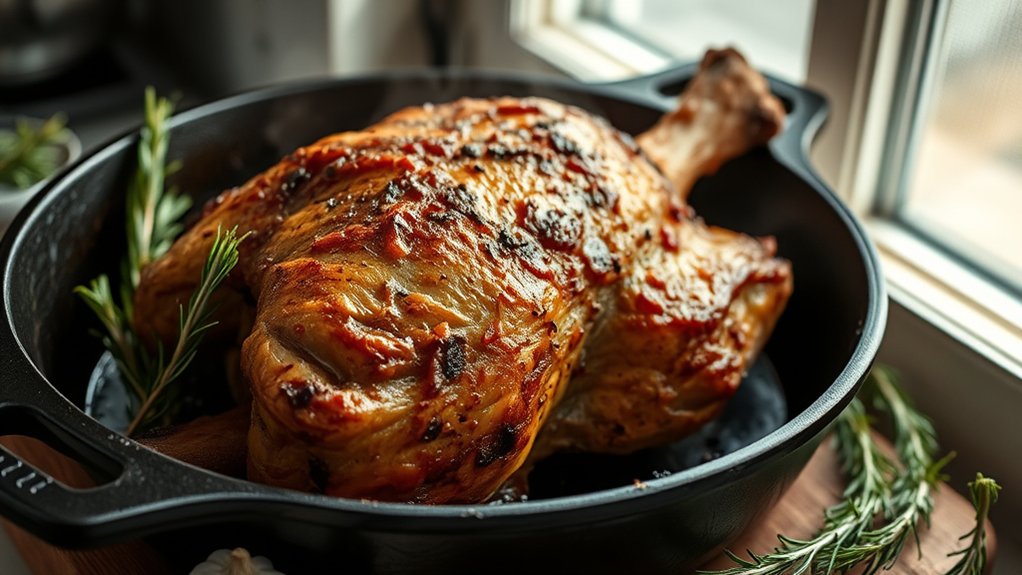
Yes, you can cook a roast in a cast iron skillet, and it’s a fantastic method for juicy, evenly cooked meat.
Using a cast iron skillet for roasting allows excellent heat retention, which helps you sear the roast perfectly on the stovetop before finishing it in the oven. This technique locks in flavor and moisture for a delicious result.
Just pick a well-marbled cut of meat and season it well to enhance the taste.
After cooking, be sure to let the meat rest so the juices redistribute evenly.
Keep reading to uncover how to get the best crust and avoid common pitfalls for a perfect roast every time.
Key Takeaways
- Yes, a cast iron skillet is ideal for roasting due to its even heat distribution and excellent heat retention properties.
- You can sear the roast on the stovetop in the skillet before transferring it to the oven for roasting.
- Choose a well-marbled roast, season it well, and bring it to room temperature before cooking in the skillet.
- Use a meat thermometer to monitor internal temperature and rest the roast for 10-15 minutes after cooking.
- Avoid overcrowding the skillet and let the roast develop a crust by not moving it during searing.
Can You Cook a Roast in a Cast Iron Skillet?
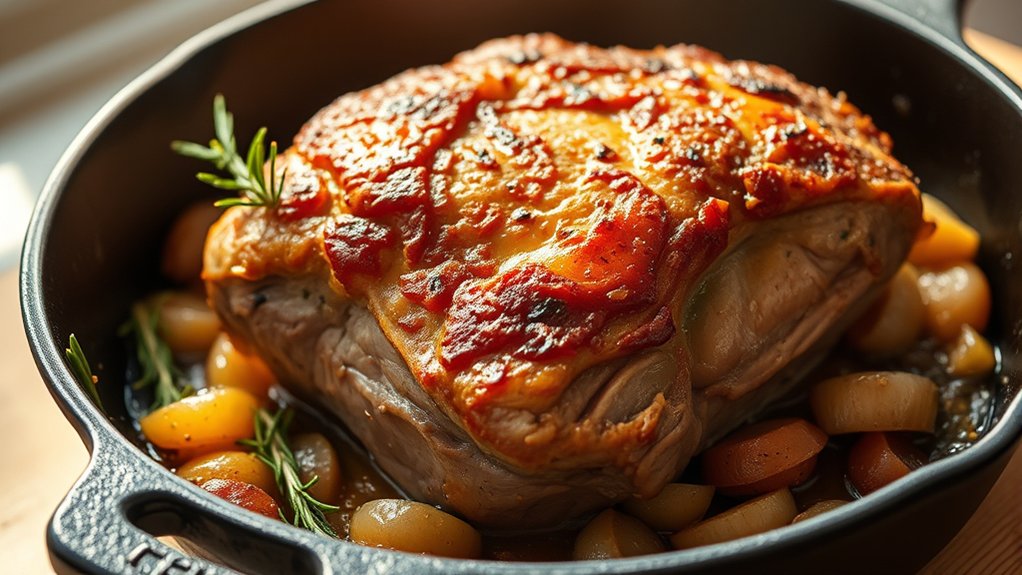
Wondering if you can cook a roast in a cast iron skillet? Absolutely, you can. Cast iron skillets are perfect for mastering roasting techniques because they distribute heat evenly and retain it well.
This allows you to sear your roast on the stovetop before transferring it to the oven, achieving a beautifully caramelized crust. The skillet’s ability to maintain consistent heat helps cook the roast uniformly, preventing hot spots that might dry out your meat.
Plus, the skillet can go from stovetop to oven seamlessly, making the cooking process simpler and more efficient. Using a cast iron skillet for roasting not only enhances flavor but also simplifies your workflow, letting you focus on timing and seasoning for the perfect roast every time.
Why Use a Cast Iron Skillet for Roasting
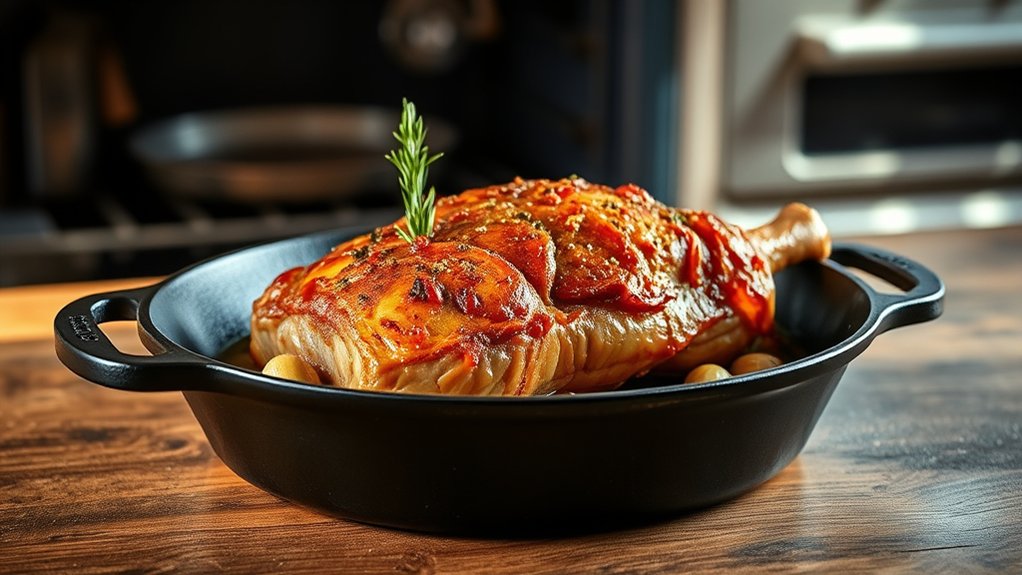
Since cast iron skillets excel at evenly distributing and retaining heat, they make an excellent tool for roasting. You’ll enjoy the cast iron benefits like superior heat retention, which guarantees your roast cooks evenly without hot spots.
Plus, their ability to develop a natural non-stick surface enhances the roasting advantages by locking in juices and flavor. Using a cast iron skillet means you can sear your roast on the stovetop before finishing it in the oven, all in one pan.
| Feature | Cast Iron Skillet | Other Cookware |
|---|---|---|
| Heat Distribution | Even | Uneven |
| Heat Retention | Excellent | Moderate |
| Versatility | Stovetop to Oven | Usually limited |
| Flavor | Enhances via seasoning | Neutral |
| Durability | Long-lasting | Variable |
How to Prepare Your Roast and Skillet
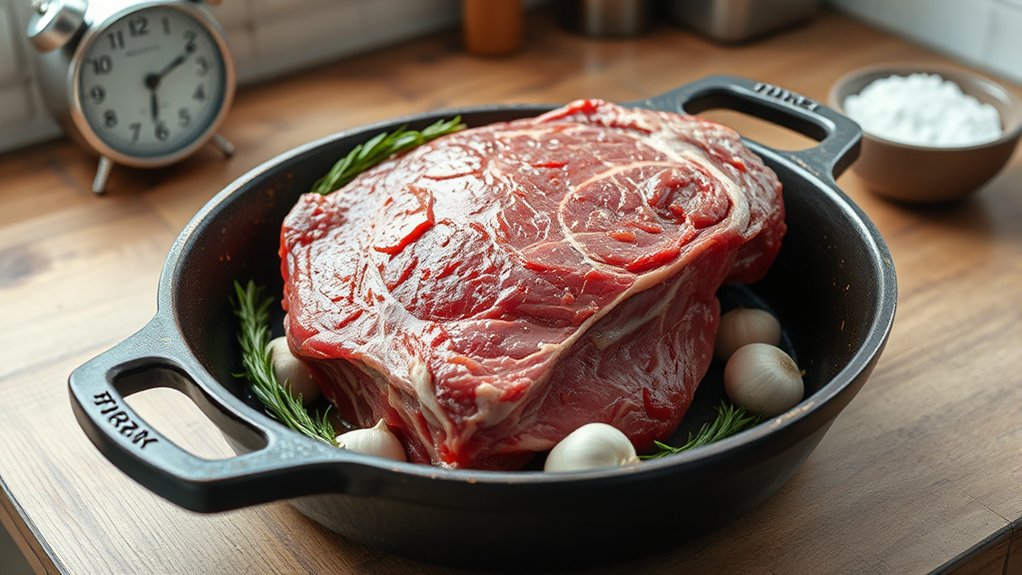
To get the best results, start by choosing the right cut of meat that suits roasting in a cast iron skillet. Next, make sure your skillet is properly seasoned to prevent sticking and enhance flavor.
Finally, prepare your roast by trimming excess fat and seasoning it well before cooking.
Choosing The Right Cut
Although many cuts of meat can work well in a cast iron skillet, choosing the right one guarantees your roast will cook evenly and develop a rich, flavorful crust. When it comes to cut selection, prioritize those with good marbling like ribeye or sirloin roasts, as the fat helps keep the meat tender and juicy.
Tougher roast types like chuck or brisket benefit from slow cooking, which cast iron can handle beautifully, but they require lower heat and longer times. Avoid very lean cuts, as they may dry out quickly.
Consider the size too; a roast that fits comfortably in your skillet assures even heat distribution. By selecting the ideal cut, you set yourself up for a perfectly cooked roast with that sought-after cast iron sear.
Seasoning The Skillet
Two key steps assure your cast iron skillet is ready for roasting: proper seasoning and prepping your meat. Before cooking, confirm your skillet has a well-maintained, non-stick surface through effective skillet care.
Seasoning methods typically involve coating the skillet with a thin layer of oil and heating it to bond the oil to the iron. This process creates a durable, natural non-stick layer that enhances flavor and prevents sticking.
If your skillet’s surface looks dull or sticky, it’s time to re-season it. Clean it thoroughly without soap, dry completely, then apply a high-smoke-point oil like flaxseed or vegetable oil.
Heat the skillet in the oven at 450°F for an hour, then cool. With this preparation, your cast iron skillet will be perfectly primed for roasting.
Preparing The Meat
Start by bringing your roast to room temperature to guarantee even cooking throughout. While waiting, consider your marinade options to enhance flavor and improve meat tenderness.
A good marinade not only adds taste but helps break down muscle fibers, making your roast juicier. Next, pat the roast dry to guarantee a perfect sear in your cast iron skillet. Preheat the skillet until it’s hot, then add a bit of oil to prevent sticking.
| Step | Purpose |
|---|---|
| Bring to room temp | Guarantees even cooking |
| Choose marinade | Enhances flavor, tenderness |
| Pat dry & preheat | Promotes a good sear |
Proper preparation sets the foundation for a delicious, tender roast.
How to Cook a Roast in a Cast Iron Skillet
You’ll want to start by properly heating your cast iron skillet to guarantee even cooking and a perfect sear. As you cook, use techniques like searing on high heat before roasting and basting to lock in juices and enhance flavor.
With a few simple tips, you’ll master the art of roasting in your skillet every time.
Preparing the Skillet
To prepare your cast iron skillet for roasting, begin by heating it over medium-high heat until it’s hot but not smoking. This step guarantees the skillet reaches the ideal cooking temperature to sear the roast evenly.
Before heating, verify your skillet is clean and dry. This is essential for proper skillet maintenance and preventing sticking. Lightly coat the skillet with a thin layer of high-smoke-point oil to enhance seasoning and promote a nonstick surface.
Avoid overheating, as excessive heat can damage the skillet’s seasoning. By carefully controlling the cooking temperature and maintaining your skillet properly, you’ll create the perfect environment for a flavorful, well-seared roast.
Your preparation sets the foundation for successful roasting without compromising your cast iron’s longevity.
Cooking Techniques and Tips
When cooking a roast in your cast iron skillet, maintaining consistent heat is essential to achieve a perfectly seared crust and tender interior. Start by preheating the skillet over medium-high heat, then apply your searing techniques by placing the roast in the pan without moving it, allowing a caramelized crust to form.
Sear each side for about 3-4 minutes. After searing, reduce the heat or transfer the skillet to the oven to finish cooking evenly. Use a meat thermometer to monitor internal temperature for desired doneness.
Once cooked, don’t skip resting periods. Let your roast rest for at least 10-15 minutes. This step lets juices redistribute, ensuring a moist, flavorful result every time you cook in your cast iron skillet.
Tips for a Perfect Crust and Juicy Roast
Although achieving a perfect crust and juicy roast might seem challenging, mastering a few key techniques can make all the difference. Start by patting your meat dry to promote even crust formation. Season generously with salt and pepper to enhance flavor and encourage browning.
Preheat your cast iron skillet until it’s smoking hot before adding the roast; this sears the surface, locking in juices and creating a rich crust. Avoid moving the roast too soon. Let it develop that golden-brown exterior.
Throughout cooking, monitor internal temperature to maintain ideal meat tenderness. Rest the roast after cooking to allow juices to redistribute, ensuring every slice stays juicy. Following these steps guarantees a delicious roast with a beautifully crisp crust and tender interior.
Common Mistakes to Avoid When Roasting in Cast Iron
Even seasoned cooks can make mistakes that compromise the quality of a roast in a cast iron skillet. Avoid these common pitfalls to guarantee a perfect roast every time. First, don’t overcrowd the skillet; too many pieces lower the pan’s heat, causing uneven cooking and a lackluster crust.
Second, beware of improper temperature. Too high, and the roast burns outside while remaining raw inside; too low, and you miss that desirable sear. Finally, don’t skip resting the roast after cooking; this lets juices redistribute for a moist, tender bite.
- Overcrowding skillet reduces heat and steam, preventing browning
- Using improper temperature leads to uneven cooking
- Neglecting to rest the roast results in dry meat
Avoid these mistakes, and your cast iron roast will impress every time.
Frequently Asked Questions
Can I Use a Cast Iron Skillet for Slow Roasting?
Yes, you can use a cast iron skillet for slow roasting. It holds heat evenly, ensuring your roast cooks gently and thoroughly.
Just monitor the temperature and add moisture if needed to keep the meat tender.
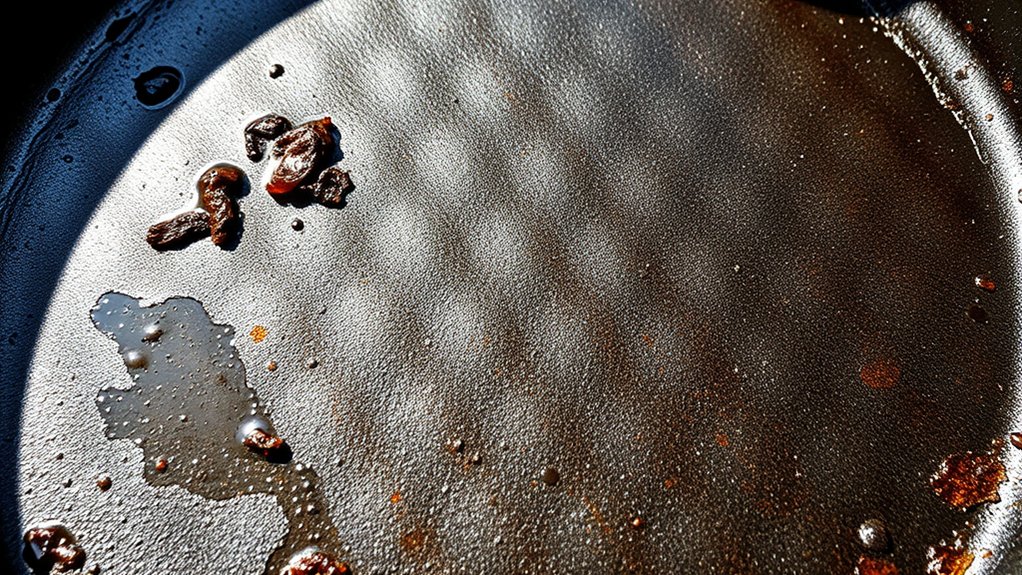
How Do I Clean My Cast Iron Skillet After Roasting?
Think of your skillet as a treasure chest. After roasting, scrub it gently with hot water and a stiff brush. Avoid soap, dry thoroughly, then oil it lightly to keep seasoning strong.
Proper skillet maintenance preserves its magic.
Is a Cast Iron Skillet Suitable for Cooking All Roast Sizes?
You can cook various roast sizes in a cast iron skillet, but larger roasts may need different cooking techniques or multiple batches. Adjust heat and time for even cooking, ensuring your skillet fits the roast comfortably.
Can I Sear Vegetables in the Same Skillet After Roasting Meat?
Absolutely, you can sear vegetables in the same skillet after roasting meat. Using proper searing techniques, you’ll reveal vibrant vegetable flavors, as the skillet’s residual heat and meat fond create a rich, mouthwatering flavor base.
How Do I Store a Cast Iron Skillet to Prevent Rust?
You’ll want to dry your cast iron skillet thoroughly, then apply a thin layer of oil using seasoning techniques to create a protective barrier. Store it in a dry place to guarantee rust prevention and keep it ready for use.
Conclusion
You can absolutely cook a roast in a cast iron skillet and come out on top every time. With its even heat distribution and ability to sear beautifully, your roast will develop a mouthwatering crust while staying juicy inside. Just remember to prep your skillet and roast right to avoid common pitfalls.
When it comes to roasting, this trusty pan is your ace in the hole for a delicious, perfectly cooked meal. Using a cast iron skillet ensures your roast gets the ideal combination of sear and slow cooking.
In conclusion, cooking a roast in a cast iron skillet is a fantastic way to achieve great flavor and texture every time.


Leave a Reply