
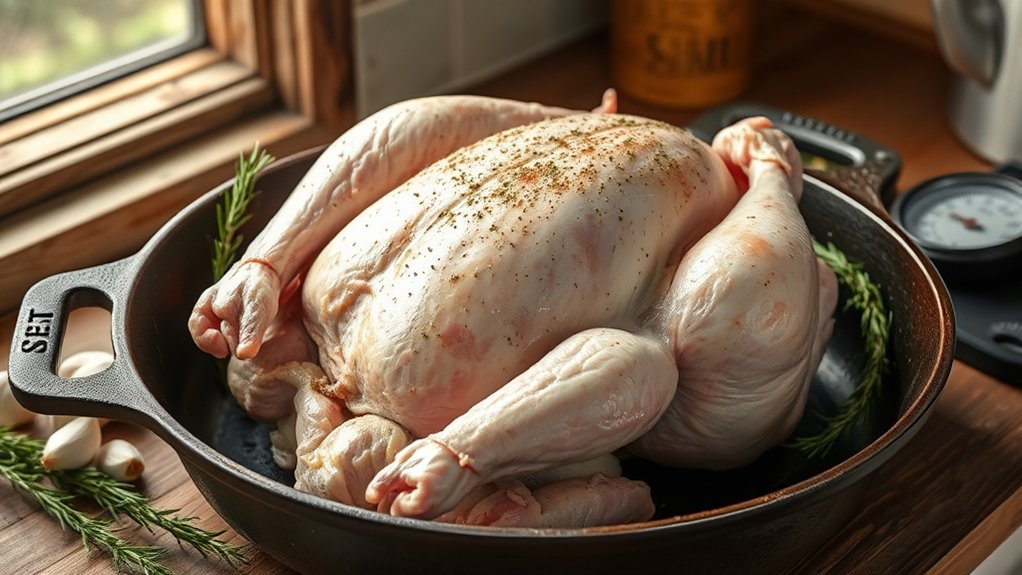
You can definitely cook a turkey in a cast iron skillet, especially if it’s a smaller bird that fits comfortably.
Using the right skillet size guarantees even heat and perfect crispiness without crowding the pan.
Start by brining the turkey for juicy meat, then sear skin-side down in a preheated skillet before finishing it in the oven.
With the right techniques, you’ll get tender, flavorful results.
Keep exploring for tips on seasoning, cooking times, and skillet sizes.
Key Takeaways
- Yes, cooking a whole turkey in a cast iron skillet is possible, especially for smaller birds or turkey parts.
- Choose a skillet size that matches the turkey weight for even cooking and proper handling.
- Brining and seasoning with herbs enhance moisture retention and flavor before cooking.
- Sear the turkey skin-side down in a preheated skillet for a crispy crust before oven roasting.
- Baste the turkey regularly and monitor cooking times to ensure juicy, well-cooked meat.
Cooking a Whole Turkey in a Cast Iron Skillet: Is It Possible?
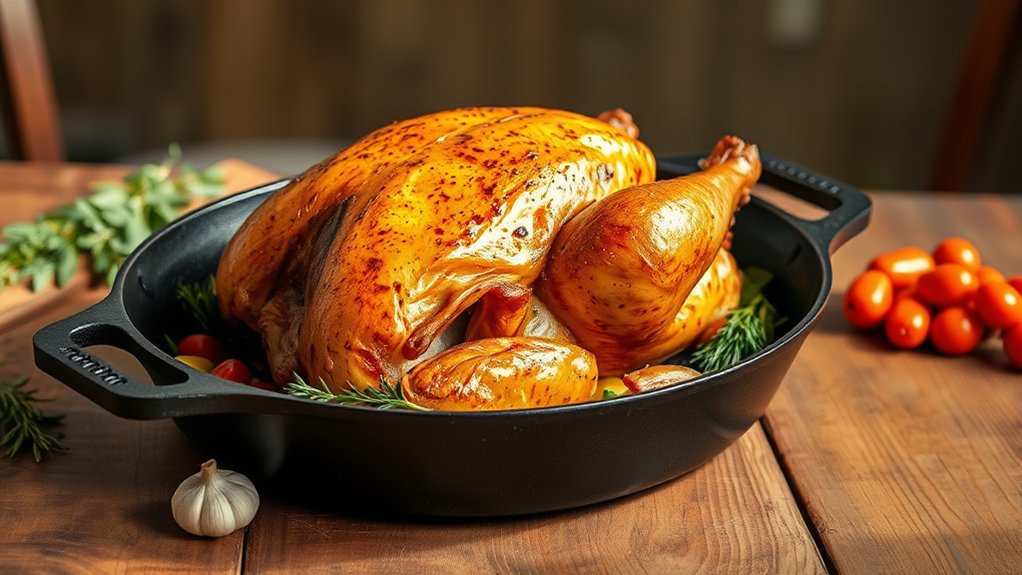
Wondering if you can cook a whole turkey in a cast iron skillet? The answer depends on your bird’s size and your skillet’s capacity. While cast iron skillets excel in heat retention and even cooking, they’re typically better suited for smaller turkeys or turkey parts.
Using this cooking technique, you can achieve a beautifully seared, crispy skin and juicy meat, especially when following specific turkey recipes designed for skillet cooking. However, a whole large turkey may not fit or cook evenly in a standard skillet.
If you have a smaller bird, this method offers a unique, hands-on way to roast your turkey with rich flavors and excellent texture. So, yes, it’s possible, but size and proper technique are key to success.
Choosing the Right Skillet Size for Turkey
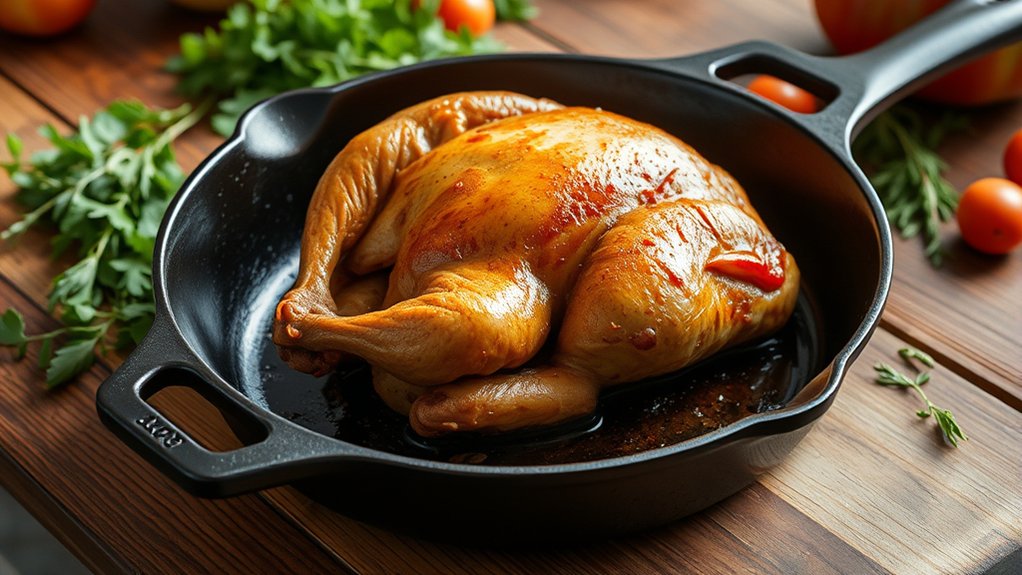
Picking the right skillet size is essential when cooking a turkey, as it directly affects how evenly your bird cooks and how easy it is to handle. Match the skillet dimensions to your turkey weight for best results. Too small, and the turkey won’t fit; too large, and heat distribution suffers.
| Turkey Weight (lbs) | Recommended Skillet Diameter (inches) | Notes |
|---|---|---|
| 6-8 | 10-12 | Small birds fit snugly |
| 9-12 | 12-14 | Ideal for most home cooks |
| 13-16 | 14-16 | Large turkeys need space |
| 17+ | 16+ | Consider multiple skillets |
Choosing the right skillet size guarantees even cooking and easier handling, so measure your turkey weight before selecting your cast iron skillet.
How to Cook Turkey in a Cast Iron Skillet
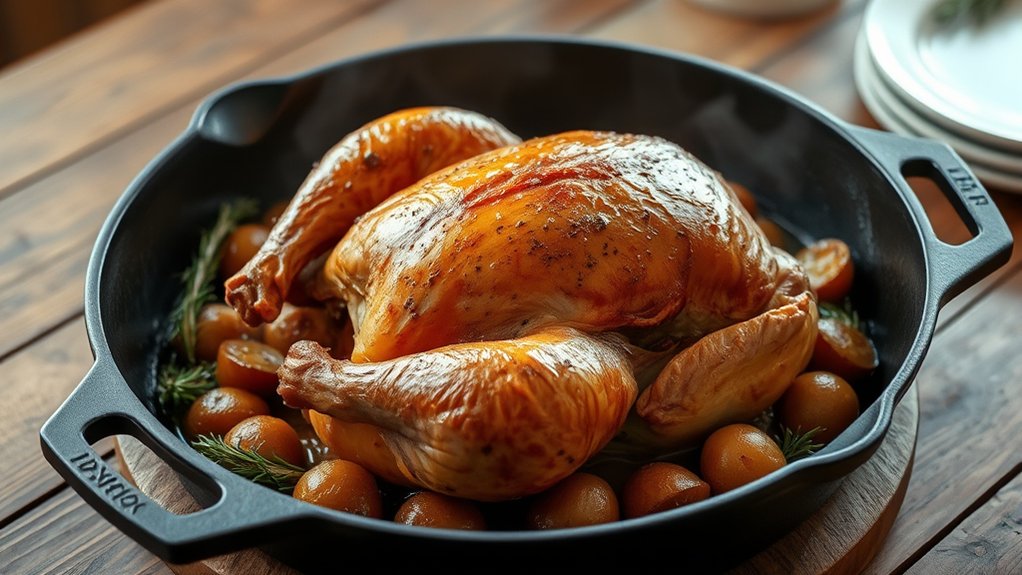
Cooking a turkey in a cast iron skillet requires careful preparation to confirm a juicy, flavorful result. Start by applying brining techniques. Soak your turkey in a saltwater solution for several hours to lock in moisture. This step is essential for tender meat.
Next, choose your seasoning suggestions wisely: use a blend of herbs like rosemary, thyme, and sage, combined with garlic and black pepper. Pat the turkey dry before seasoning to guarantee the spices stick well.
Heat your skillet over medium-high heat with a bit of oil, then sear the turkey skin-side down until golden brown. Transfer the skillet to the oven and roast, basting occasionally. Using these steps confirms your turkey cooks evenly, delivering rich flavor and perfect texture.
Tips for Juicy, Crispy Turkey in a Cast Iron Skillet
Although achieving the perfect balance between juicy meat and crispy skin can seem challenging, a few key techniques will help you master it in your cast iron skillet. Start by brining your turkey; this step locks in moisture, ensuring tender, flavorful meat.
When it’s time to season, use a blend of herbs, salt, and pepper. Seasoning tips like rubbing under the skin amplify flavor. Preheat your skillet, then sear the turkey skin-side down to develop a golden, crispy crust.
Basting periodically with pan juices keeps the meat moist. Finally, finish cooking at a moderate oven temperature to evenly cook through without drying out the turkey. With these tips, you’ll serve a juicy, crispy turkey that’s a feast for both eyes and palate.
Frequently Asked Questions
Can I Use a Cast Iron Skillet for Turkey Leftovers Reheating?
You can definitely use a cast iron skillet to reheat turkey leftovers. It evenly warms your turkey while preserving moisture.
Just guarantee proper turkey storage beforehand, and choose this reheating method for a delicious, crispy finish.
How Do I Clean a Cast Iron Skillet After Cooking Turkey?
You wouldn’t scrub a delicate painting, so avoid harsh cleaning techniques; instead, use warm water and a brush right after cooking. Dry thoroughly, then oil it lightly. That’s essential post-cooking maintenance for your cast iron skillet.
Is It Safe to Cook Turkey Skin-Side Down in Cast Iron?
Yes, you can safely cook turkey skin-side down in cast iron. This technique crisps the skin beautifully while ensuring even heat distribution.
Just monitor the temperature to maintain cast iron safety and prevent sticking or burning.
Can I Cook Turkey Breast Separately in a Cast Iron Skillet?
You can absolutely cook turkey breast in a cast iron skillet; don’t worry about dryness. The cast iron benefits include even heat and excellent searing, locking in juicy flavor while creating a crispy, golden crust.
What Oil Is Best for Seasoning a Cast Iron Skillet Before Turkey?
You’ll want to use oils with high smoke points and neutral flavor profiles like grapeseed, avocado, or flaxseed oil. These oil options season your skillet effectively without overpowering your turkey’s natural taste.
Conclusion
Cooking a turkey in a cast iron skillet might seem like fitting a giant puzzle piece into a small frame, but with the right size and technique, it’s totally doable. You’ll get crispy skin and juicy meat that sings with flavor.
Just remember to choose your skillet wisely and monitor your cooking time closely. With a little care, your skillet can turn into the unsung hero of your holiday feast, delivering delicious results every time.
So, can you cook a turkey in a cast iron skillet? Absolutely—this method can yield a beautifully cooked bird that’s sure to impress.



Leave a Reply